


Mainland spokesperson slams DPP authorities' restriction against actor Zhang Linghe, supports Jay Chou's identification as Chinese singer
The Taiwan Affairs Office of the State Council on Wednesday criticized Taiwan authorities for rejecting mainland actor Zhang Linghe's application to hold a fan meeting and other exchange activities on the island, while voicing support for Taiwan singer Jay Chou's identification as a Chinese singer.
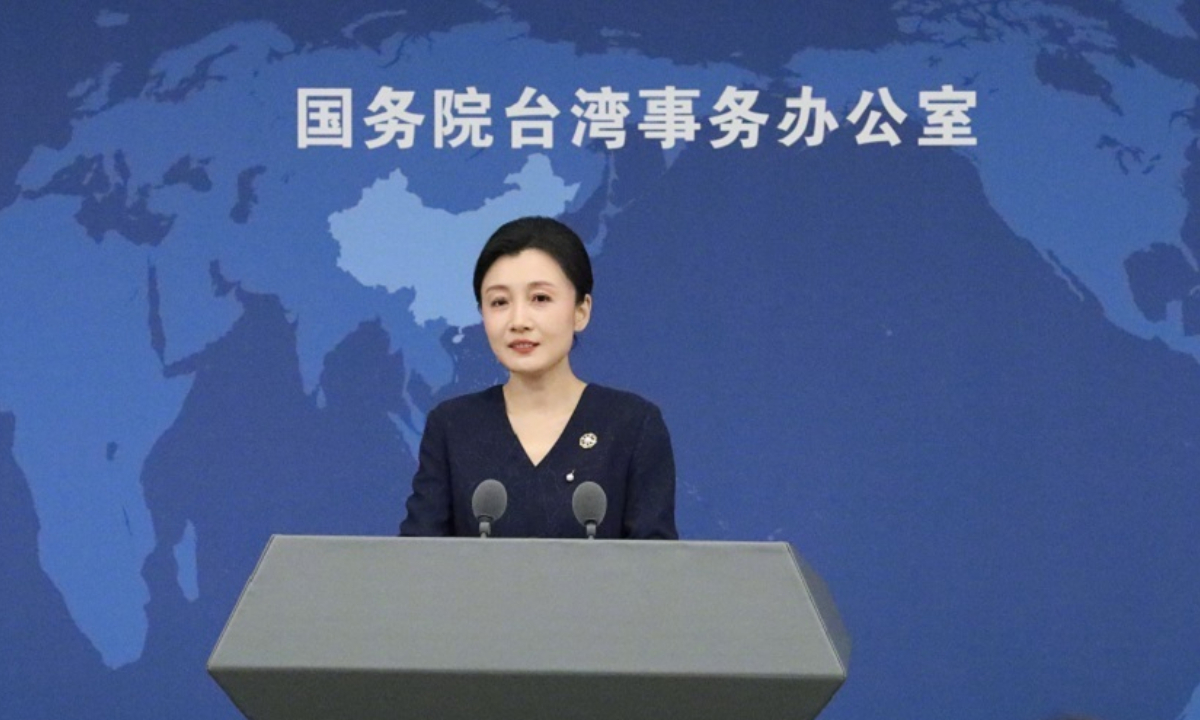
The Taiwan Affairs Office of the State Council spokesperson Zhang Han holds a press conference in Beijing on October 21, 2026. Photo: People’s Daily
At a regular press conference, Zhang Han, the spokesperson, said exchanges involving mainland performing artists are welcomed and anticipated by people on both sides of the Taiwan Straits and could help deepen mutual understanding.
The spokesperson said that the Democratic Progressive Party (DPP) authorities had rejected applications by mainland performing artists to visit Taiwan for exchanges for political purposes, disregarding the wishes of local residents, particularly young people.
Such restrictions undermine cross-Straits cultural exchanges and run counter to the wishes of Taiwan residents, the spokesperson said, urging the DPP authorities to abandon political manipulation, remove unreasonable restrictions and facilitate cultural exchanges.
In response to a separate question about Chou, the spokesperson said people on both sides of the Taiwan Straits are all Chinese, adding that an artist from Taiwan stating that he is a Chinese singer was a genuine expression of his identity.
Chou recently attended the tennis Shanghai Masters event, at which the host described him as a Chinese singer. He subsequently reposted and liked the video clip on social media.
Chou, one of the best-known figures in Chinese-language pop music, has created numerous songs incorporating traditional Chinese musical and cultural elements over the years, making his music part of a shared cultural memory for young people on both sides of the Straits.
Zhang said forces advocating "Taiwan independence" opposed the emotional and cultural connections between people on both sides of the Straits and had sought to label and attack artists. Such forces were attempting to use political means to restrict residents in Taiwan from expressing their views, the spokesperson said.