


Sparks of Long March inspire ethnic unity on the grasslands
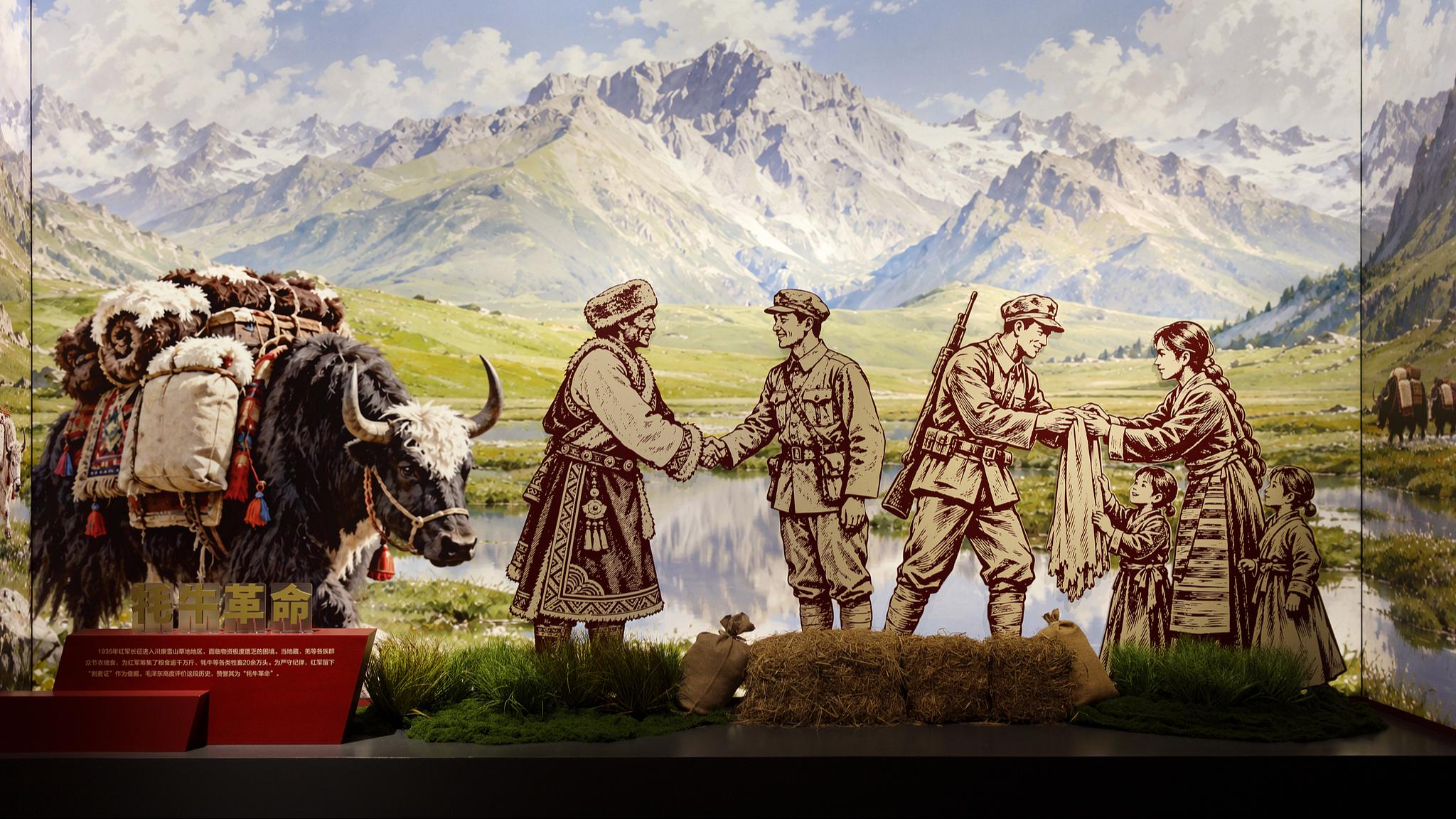
To commemorate the 90th anniversary of the victory of the Red Army's Long March, a thematic exhibition on "Ethnic Unity on the Long March" opened at Sichuan Museum, Chengdu, Sichuan Province, southwest China, October 21, 2026. (Photo: VCG)
The Long March tested the ethnic policies and convictions of the Communist Party of China, and guided the Party in putting ethnic equality and unity into practice. From connecting with people of all ethnic groups along the Long March route to working together to build and develop hometowns and train ethnic cadres on the grasslands, generation after generation of people from all ethnic groups have kept to the original commitment to support one another.
On the Long March, the seeds of ethnic equality were sown
In 1935, Party leader Mao Zedong described the Long March as a "manifesto," a "dissemination team" and a "seeding machine" – a description of its political and strategic value. The Long March took the Red Army through more than 10 provinces, and over half of the route ran through ethnic minority or multi-ethnic areas. Along the way, the Red Army promoted its call for resistance against Japanese aggression and its ethnic policies among local people. Through respect and self-discipline, it helped people of ethnic groups understand the Party and the Red Army – and won their trust.
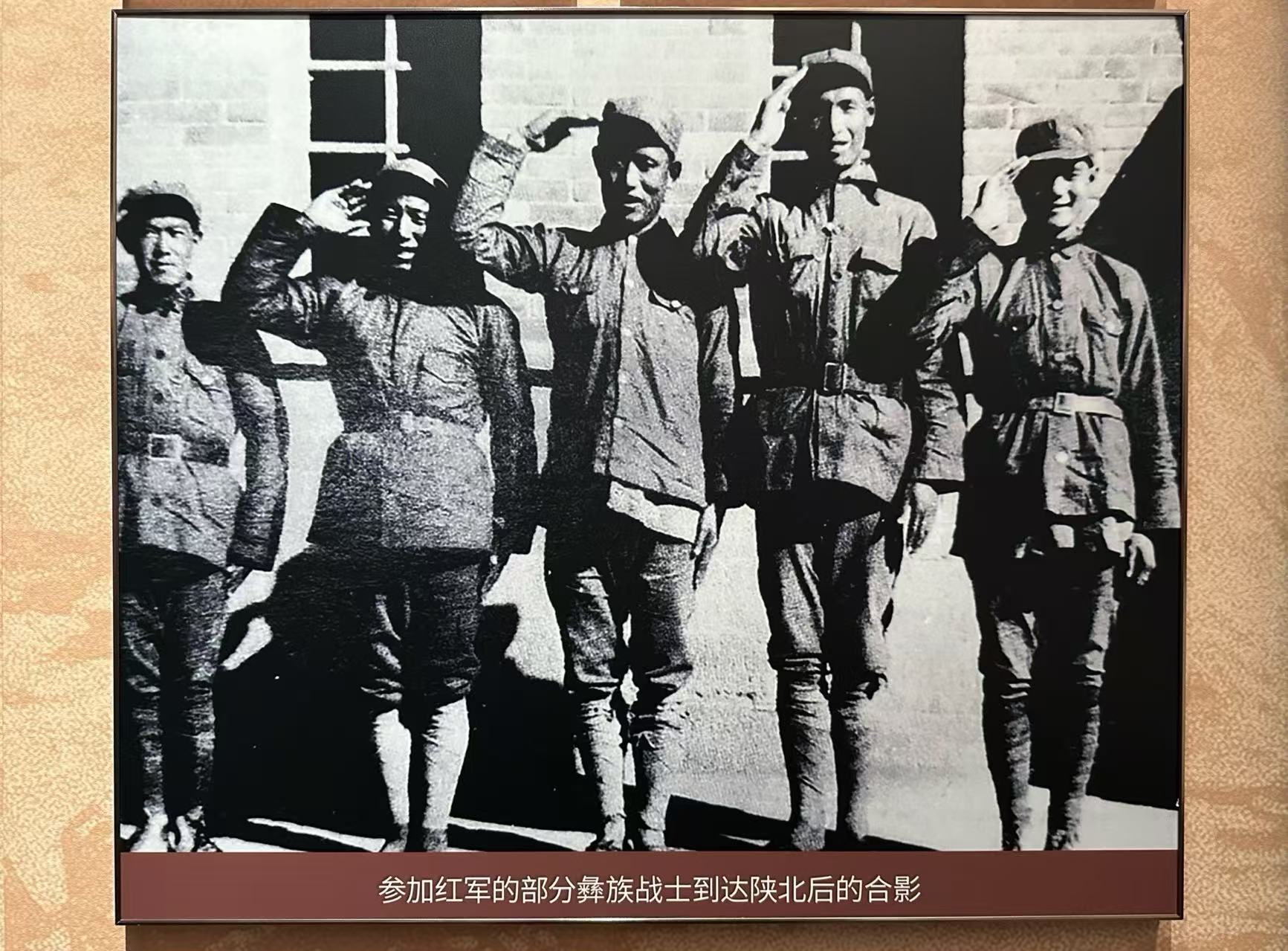
A group photo of Red Army soldiers of the Yi ethnic group after their arrival in northern Shaanxi, at Wuqi Revolutionary Memorial Hall in Wuqi County, Yan'an City, Shaanxi Province, September 17, 2026. (Photo: CGTN)
The "Yihai Alliance" is one particularly representative story. In May 1935, the Red Army planned to pass through the Yi ethnic area in the Daliang Mountains of Sichuan on its way north. Long-standing ethnic oppression had left the local Yi people deeply wary of outside forces, and they would not allow the Red Army to pass through. The Red Army's advance unit strictly respected local customs, reached out to communicate, and issued public notices explaining its ethnic policies.
The Red Army's sincerity won over Xiaoyedan, leader of the Guojia clan branch of the Yi people. Following Yi tradition, he and Liu Bocheng – chief of staff of the Red Army and commander of the advance unit – became sworn brothers by the Yihai Lake. The Red Army also gave him a detachment flag. With Xiaoyedan's help, the Red Army passed smoothly through the Yi area, crossed the Dadu River, and continued north, breaking the Kuomintang's plan to encircle and destroy the Red Army there.
Salt lakes and a well bring soldiers and civilians together
The Red Army later brought its ideas on ethnic relations to the grasslands of Inner Mongolia. During the westward campaign in 1936, the Red Army established in Sanduandi (now part of Otog Front Banner, Inner Mongolian Autonomous Region) the Party's earliest revolutionary base area in Inner Mongolia. It was at the forefront of the Party putting its ethnic policy of "equality and unity" into practice.
The salt lakes near Sanduandi produced plenty of salt, which was both an daily necessity and an important source of income for local people. After the westward Red Army took Yanchi County, it recovered the salt lakes that had been seized by warlords and returned them to local Mongolian managers.
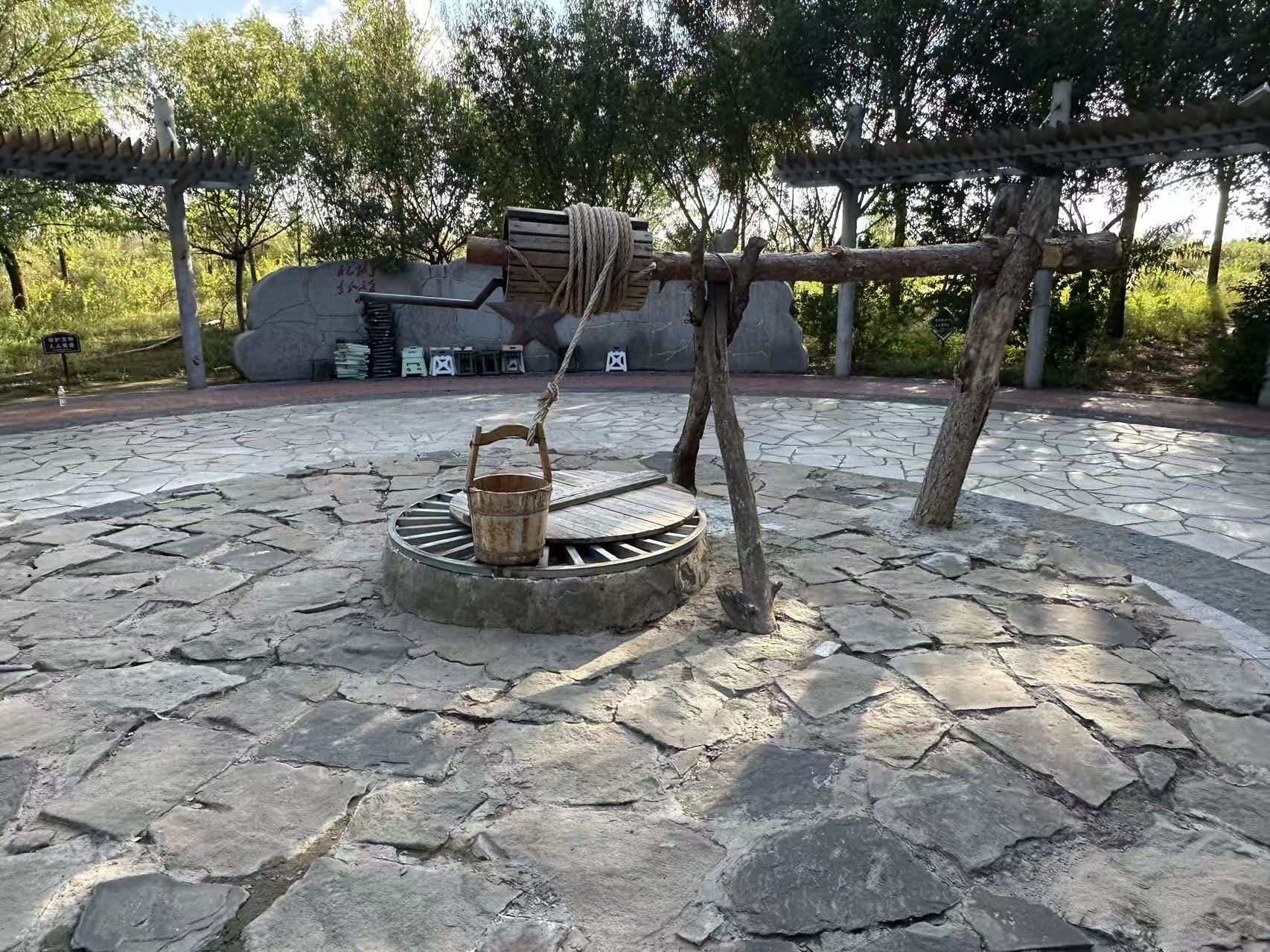
Wang Zhen Well, dug in 1944, still yields water today, Wang Zhen Well Memorial Park, Chengchuan Town, Otog Front Banner, Ordos City, Inner Mongolia Autonomous Region, north China, September 18, 2026. (Photo: Wu Yan/CGTN)
In 1944, Wang Zhen – who later became vice chairman of the People's Republic of China – led the Eighth Route Army in production and construction in Chengchuan (now part of Otog Front Banner). The area was dry and short of water, so officers and soldiers worked together with locals to survey water sources and dig wells. After more than 40 days, they finished a well 13.2 meters deep and solved the drinking water problem. People later called it "Wang Zhen Well." Soldiers and civilians also reclaimed wasteland together and developed farming and livestock raising, turning barren land into farmland and pasture.
Huang Gang, a guide at the Wang Zhen Well Memorial Park, said that back then a patchwork of competing forces existed on the grasslands. The Kuomintang forcibly reclaimed local Mongolian land, sparking local resistance; the church, using privileges brought by unequal treaties, acquired land, collected rent and exploited the people. "When you compare what all these different forces were doing, you can see why ordinary people were willing to support the Communist Party of China," Huang Gang said. "From the very beginning, the Party's ethnic policy has been aimed at serving the people – regardless of ethnicity or region."
From cave dwellings to the grasslands: a cradle for ethnic cadres
To meet the needs of the War of Resistance against Japanese Aggression and push forward ethnic work, the Yan'an Institute for Nationalities was set up in a cave dwelling in Yan'an in 1941. It was the first school the Party created specifically to train cadres from ethnic minorities, and Mao Zedong chose "Unity" as its motto. In its six years, the institute enrolled more than 300 young people from ethnic groups including the Han, Mongolian, Hui, Manchu, Tibetan, Miao and Yi. Even though it moved several times, classes never stopped.
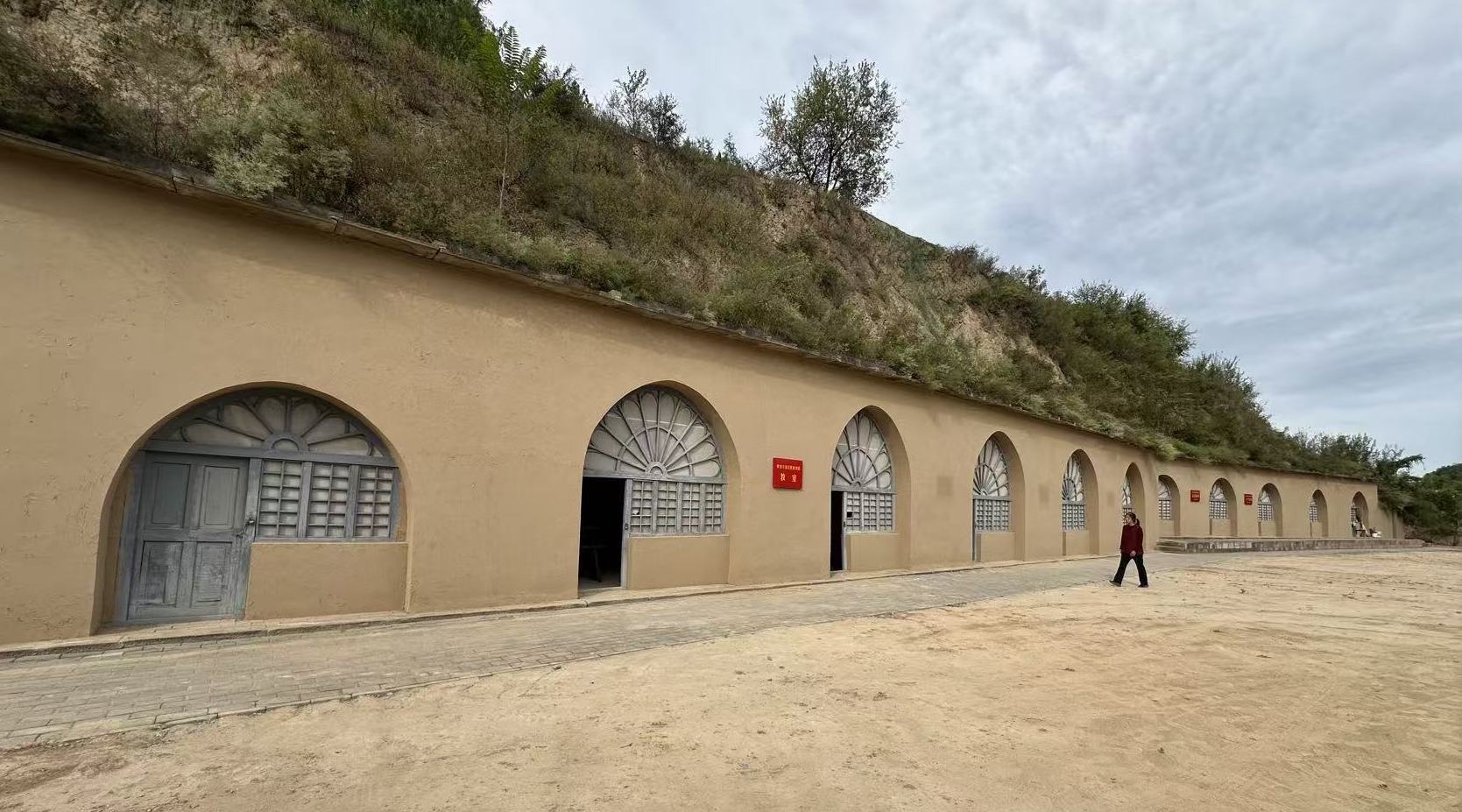
Former site of the Yan'an Institute for Nationalities, Yan'an, Shaanxi Province, September 16, 2026. (Photo: CGTN)
While the institute was in Chengchuan, its "primary school class" took in young people from different ethnic groups aged 10 to 16. Many students could not speak Chinese or read when they entered. To meet their real needs, the school taught Chinese and ethnic minority languages such as Mongolian and Tibetan, explained ethnic theory and policy, and offered practical courses like military training and battlefield first aid. It also set up simulated autonomous areas for the Mongolian, Hui and other ethnic groups so students could explore ethnic regional autonomy and run forward-looking experiments. This gave the Party its first experience for the system of ethnic regional autonomy that was introduced after the founding of the People's Republic of China.
A number of ethnic minority cadres came out of the institute. They knew local languages and customs, so they could explain Party policies clearly to ordinary people, and also bring people's views back to the Party. A representative figure was the Tibetan student Tianbao. He studied at the institute, later rooted himself in Xizang, and served as Party secretary of the Xizang Autonomous Region, devoting his life to border construction, ethnic unity and regional development.
3,000 orphans and their grassland mothers
The story of different ethnic groups helping one another continued. In the early 1960s, food was in short supply in China, and thousands of children in welfare homes in east China were facing malnutrition. Inner Mongolia Autonomous Region was also going through hard times, yet it still reached out to help, taking in about 3,000 orphans. Children who were in better health and a bit older were taken home by herders to raise; those who were very young, frail or sick were first placed in infant care homes for medical treatment and recovery, and after they grew stronger, they were sent to live in herders' homes in the pastoral areas.
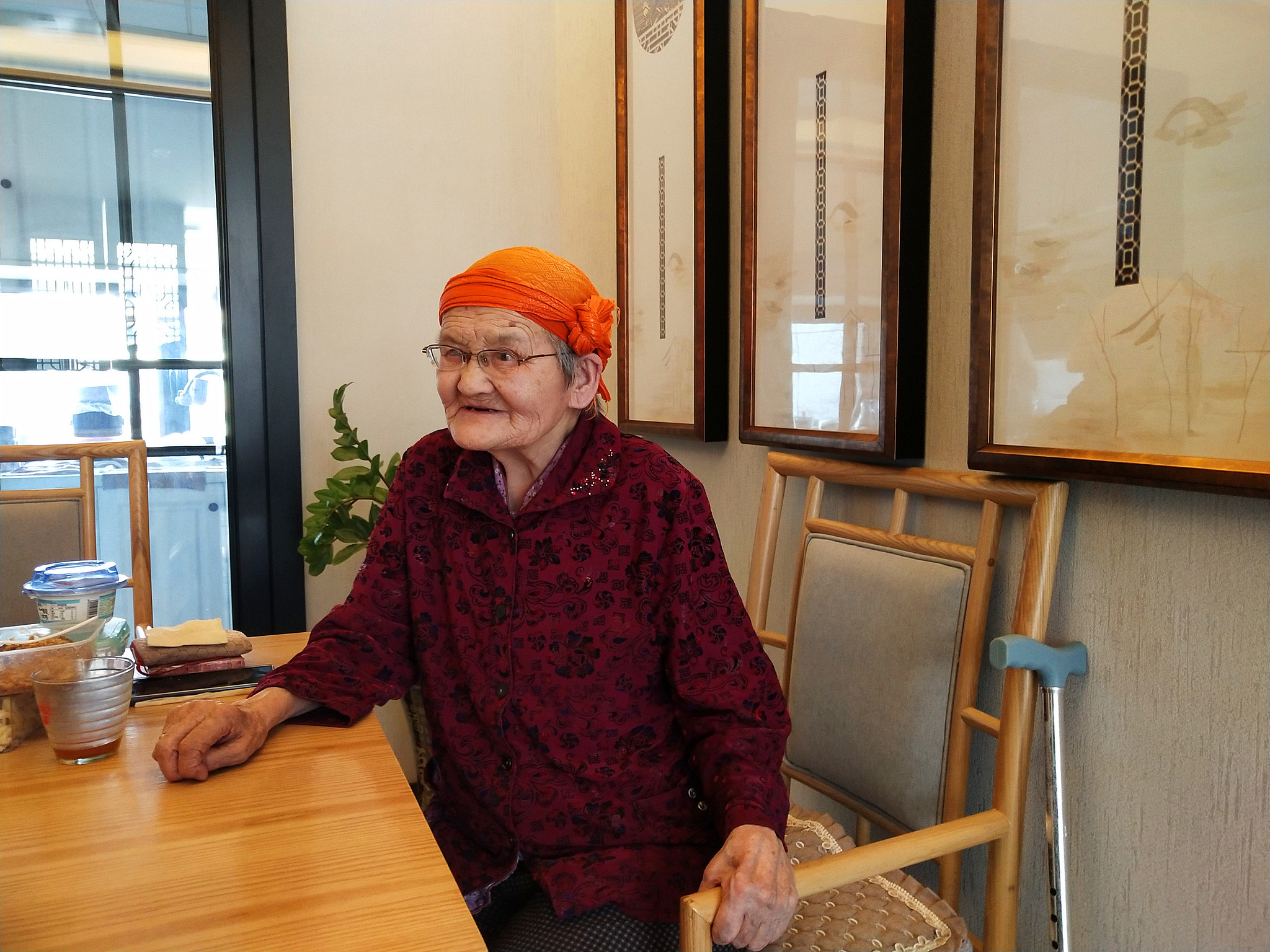
Dugima tells the story of 3,000 orphans entering Inner Mongolia Autonomous Region at her home in Siziwang Banner, Inner Mongolia Autonomous Region, March 10, 2021. (Photo: VCG)
In 1961, Dugima, a 19-year-old Mongolian nursery worker, was responsible for caring for 28 young and frail children at a health station in Siziwang Banner. On the grasslands, where supplies were scarce and medicine and doctors were hard to come by, she watched over them day and night and tried every means to find medical treatment. All 28 children survived. In 2019, Dugima was awarded the national honorary title "People's Role Model."
These children share one name – "the children of the nation." Today, most of them have built their lives, and are surrounded by their own children and grandchildren. This plain but profound love from the grasslands has become a moving story of ethnic unity that has been passed down through generations.