


Ceramics and glass drive cultural spending in Zibo, Shandong
The China Ceramics and Glass Museum in Zibo, Shandong province, has become a textbook example of how cultural tourism is driving consumer spending in this central Shandong city, as record-breaking visitor numbers and soaring sales of cultural products reflect broader spending habits.
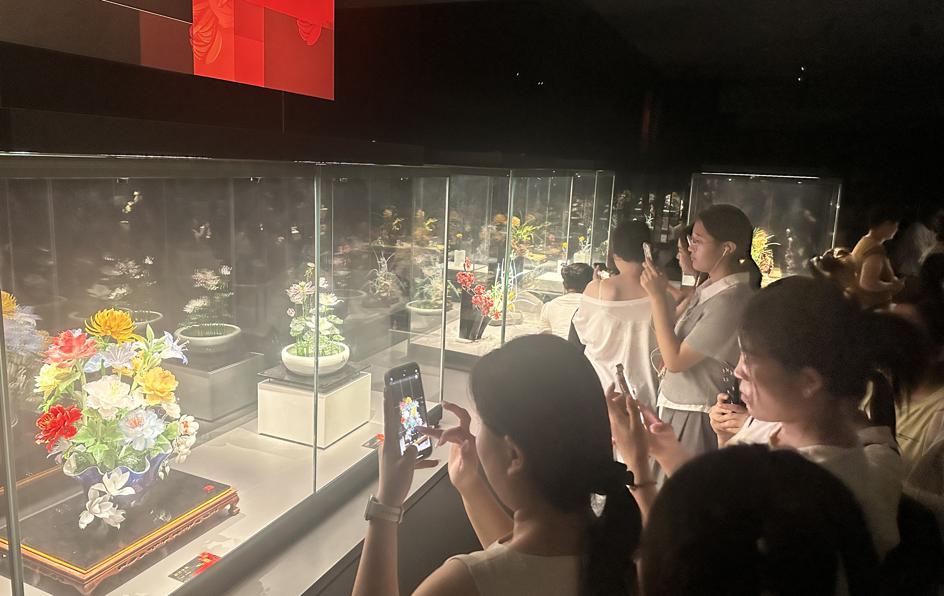
Visitors photograph glass artworks at the China Ceramics and Glass Museum in Zibo, Shandong province. (Photo: China Daily)
The museum has seen its popularity surge amid a nationwide museum craze. During the three-day Mid-Autumn Festival holiday in late September and the weeklong National Day holiday in early October, it received a record 330,000 visits. Visitors from outside Zibo account for more than 90 percent of the total, reflecting the city's growing appeal beyond Shandong.
A common sight has become the queue for photos with a glass artwork set that represents the flowers of each month. It is one of the many attractions that have turned the museum into a cultural hotspot.
There's also a line to see an intricate phoenix crown. Created by Sun Qiye, a 25-year-old local glass artist, the crown comprises nearly 5,000 components, including 4,800 handcrafted glass pearls as small as 2.5 millimeters in diameter. "Every petal and decorative piece requires repeated firing, shaping, and assembling," said Sun.
Wang Wenyan, a university student from Jinan, recently visited the museum for the third time. "Every time I come, there is always a long queue in front of the phoenix crown. It's a perfect blend of glassmaking techniques and modern youth aesthetics," he said.
The glassworks draw crowds of visitors, many of whom are eager to purchase cultural products inspired by such exhibits. The museum has developed over 400 series of cultural and creative products, with sales hitting new highs, according to curator Liu Lianjing. "As visitor numbers rise, so does the desire for creative souvenirs," said Liu.
Among the standout successes is the ceramic series created by the studio of Wang Zhi, an inheritor of Zibo soft pottery. Her studio is known for miniature works inspired by Chinese history, everyday life, and classical art. Two years ago, one of Wang's products, Long Dada, generated 4 million yuan (roughly $600,000) in sales. It is a round-bodied dragon with a playful expression that challenges conventional depictions of the mythical creature. The Horse series created for this year, the Year of the Horse, garnered over 1 billion views online.
"Successful cultural products come from the unity of cultural depth, emotional resonance with young consumers, and sound business logic," said Wang.
Zibo has developed a complete ceramic and glass industrial system to tap the potential of its time-honored glassmaking craftsmanship and culture. The sector covers multiple categories, including daily-use ceramics, art ceramics, architectural ceramics, and art glass, said Sun Yaozu, director of the Zibo traditional industry development center.
In the first half of this year, daily-use and artistic ceramics enterprises above designated size generated 518 million yuan in revenue, up 16.9 percent year-on-year, while the artistic glass sector posted nearly 100 million yuan, a 9 percent increase.
"With its blend of ancient craftsmanship and modern aesthetics, Zibo has not only attracted record numbers of young visitors but has also spurred a thriving cultural product market, contributing to the city's broader push to boost cultural tourism and consumption," said Sun.