


Global business school deans convene in Shanghai
Over 200 business school deans, academic leaders and industry representatives from more than 30 countries and regions gathered in Shanghai to explore new pathways for business education amid technological disruption and shifting global dynamics.
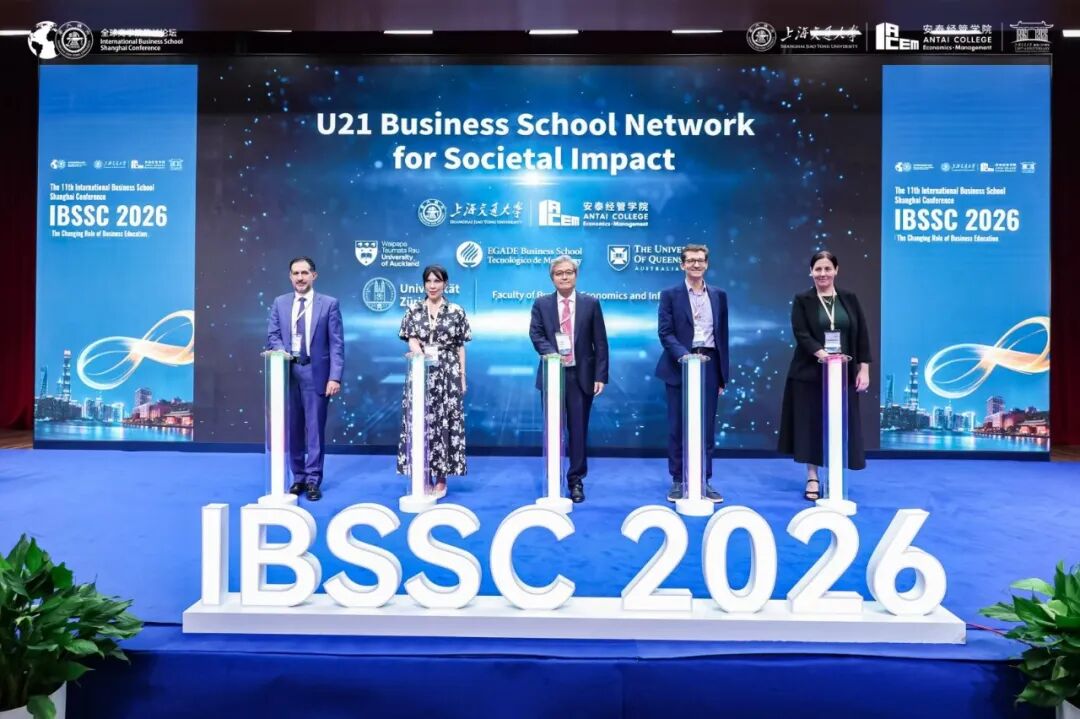
The conference witnesses the official launch of the U21 business school network for societal impact. (Photo: China Daily)
The 11th International Business School Shanghai Conference, held from Oct 21 to 23 at Shanghai Jiao Tong University's Antai College of Economics and Management, brought together educators to address pressing challenges as artificial intelligence reshapes industrial logic and geopolitical landscapes evolve.
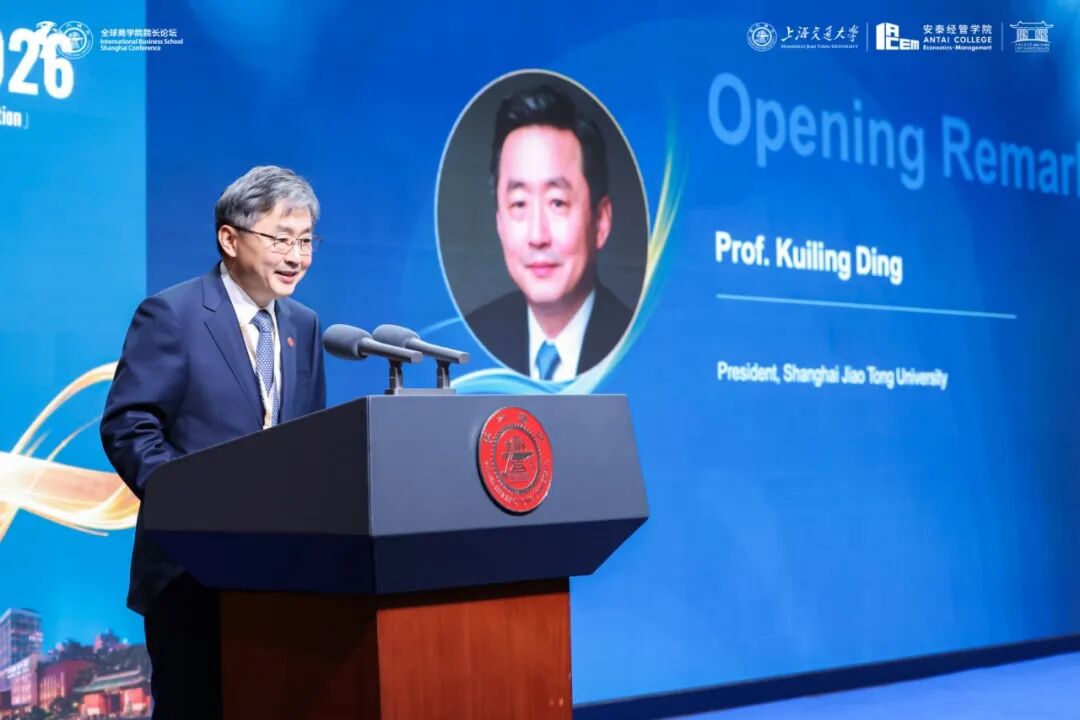
Ding Kuiling, president of Shanghai Jiao Tong University, at the 11th International Business School Shanghai Conference. (Photo: China Daily)
"The world is undergoing profound changes, and the rapid rise of artificial intelligence is revolutionizing business education," Ding Kuiling, president of Shanghai Jiao Tong University noted in his opening address.
He emphasized that the conference has fostered East-West dialogue for two decades as a flagship international platform. As the university celebrates its 130th anniversary, it remains committed to cultivating talent and advancing toward becoming a world-class comprehensive, innovative and international institution, Ding said.
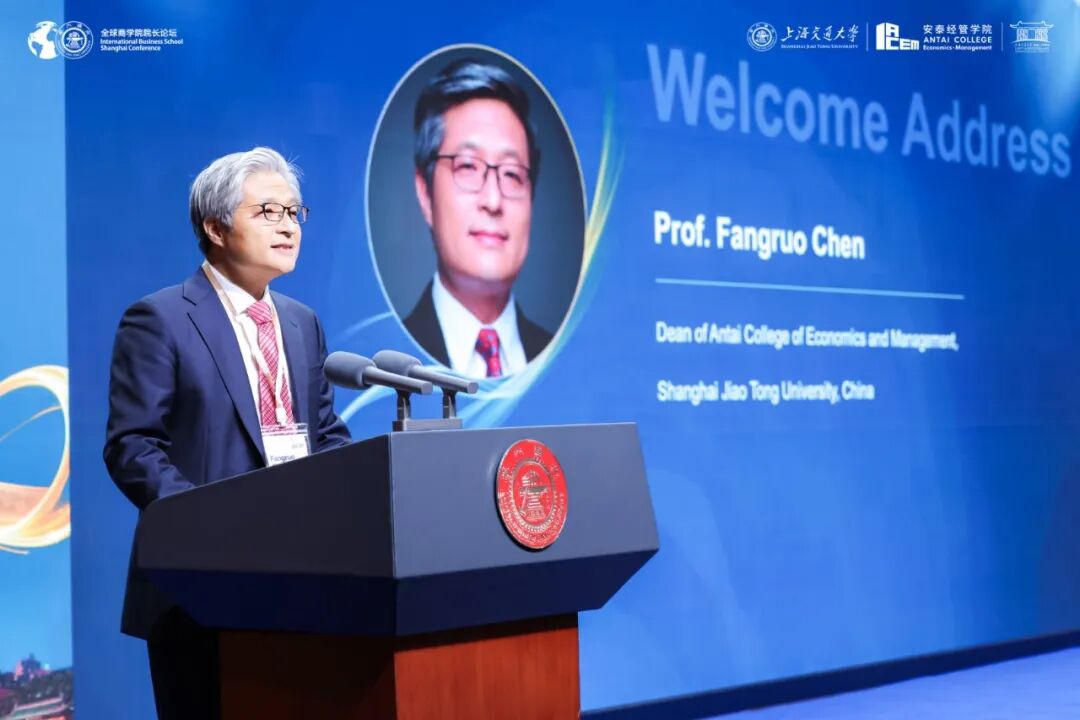
Chen Fangruo, dean of Antai College of Economics and Management, at the 11th International Business School Shanghai Conference. (Photo: China Daily)
Chen Fangruo, dean of Antai college, pointed out that technological iteration, geopolitical shifts and rising social expectations are fundamentally reshaping the underlying logic of business education.
He stressed that business schools must proactively drive transformation, with Antai pursuing the integration of academic rigor with industry practice while promoting connectivity across sectors, technology and global partnerships.
Sarah Soule, dean of the graduate school of business, Stanford University, proposed that AI-era business education should construct a three-dimensional framework encompassing thinking, action and character development, emphasizing critical thinking and decision-making capabilities alongside AI literacy.
Jun Yang, dean of Nanyang business school, Nanyang Technological University, argued that technology tools do not equal competitive advantage, urging schools to focus on cultivating critical thinking, character and collaboration skills as knowledge becomes increasingly accessible.
Tian Xuan, dean of Peking University Guanghua School of Management, highlighted that ethical grounding, empathy and value judgment, which are qualities AI cannot replicate, represent the unshakable foundation of business talent cultivation.
The conference witnessed the official launch of the U21 business school network for societal impact, initiated by Antai college alongside institutions from Switzerland, New Zealand, Mexico and Australia. This alliance marks a transition from dialogue to institutionalized collaboration among global business schools.
Two roundtables addressed business school transformation in a fragmented world and international cooperation strategies.
Participants reached consensus that while embracing technological change, business schools must preserve their educational mission, cultivating uniquely human capabilities including critical judgment, ethical values and cross-cultural collaboration.