


China targets over 22 high-value invention patents per 10,000 people by 2030
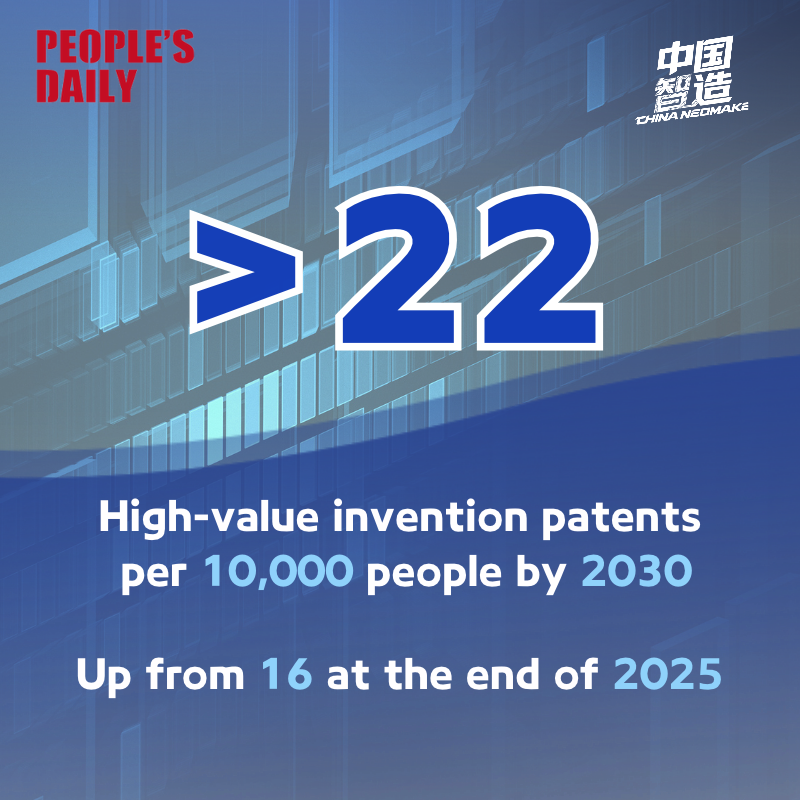
China aims to increase the number of high-value invention patents per 10,000 people to more than 22 by the end of the 15th Five-Year Plan period (2026–2030), up from 16 at the end of 2025, according to the intellectual property plan recently issued by the State Council.
The target reflects a shift from patent quantity toward quality, with greater emphasis on innovation value and practical applications.
Focusing on high-value innovation
China classifies high-value invention patents into four categories: those in strategic emerging industries, those with corresponding patents granted overseas, those maintained for more than 10 years, and those that have received national science and technology awards or China Patent Awards.
More than 70 percent of China's high-value invention patents are in strategic emerging industries, including artificial intelligence, advanced manufacturing, integrated circuits, biomedicine and new energy. This share is expected to rise further during the 15th Five-Year Plan period, supporting the development of emerging industries and the cultivation of future industries.
To improve patent quality, China is encouraging universities and research institutions to assess inventions before filing patent applications. More than 1,200 universities and research institutions have established pre-application evaluation systems to improve application quality and direct innovation resources toward key fields.
Enterprises drive innovation
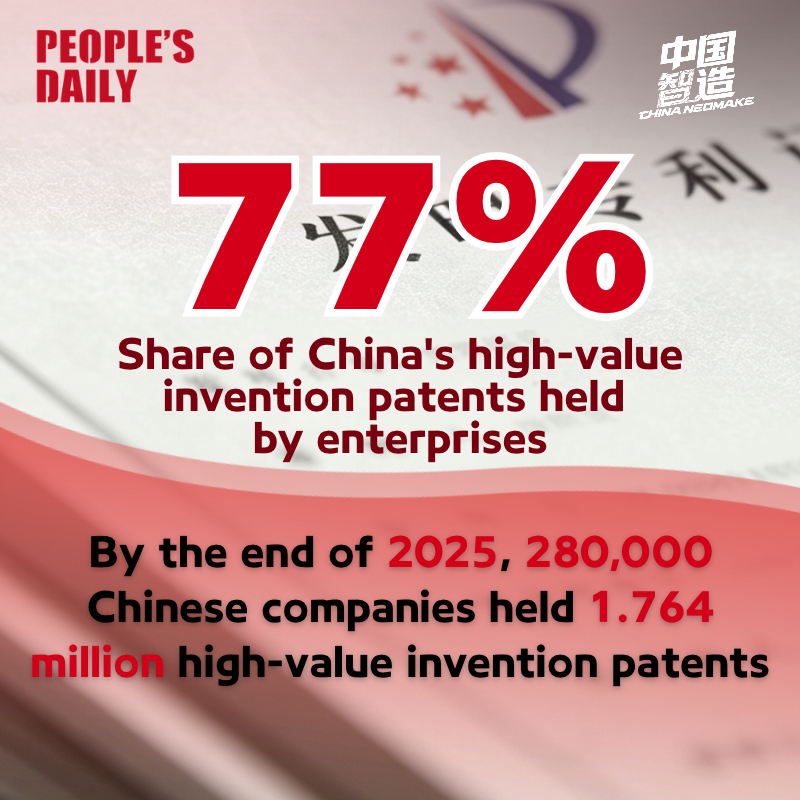
Enterprises are major contributors to high-value invention patents. By the end of 2025, about 280,000 Chinese companies held 1.764 million such patents, accounting for 77 percent of the national total.
As businesses invest more in research and intellectual property, high-value patents are helping drive technological innovation and strengthen market competitiveness. Feedback from commercial applications can also help align research with industry needs.
Turning patents into practical results
Alongside efforts to improve patent quality, China is promoting the commercialization and practical application of intellectual property to better translate research into economic and social benefits.
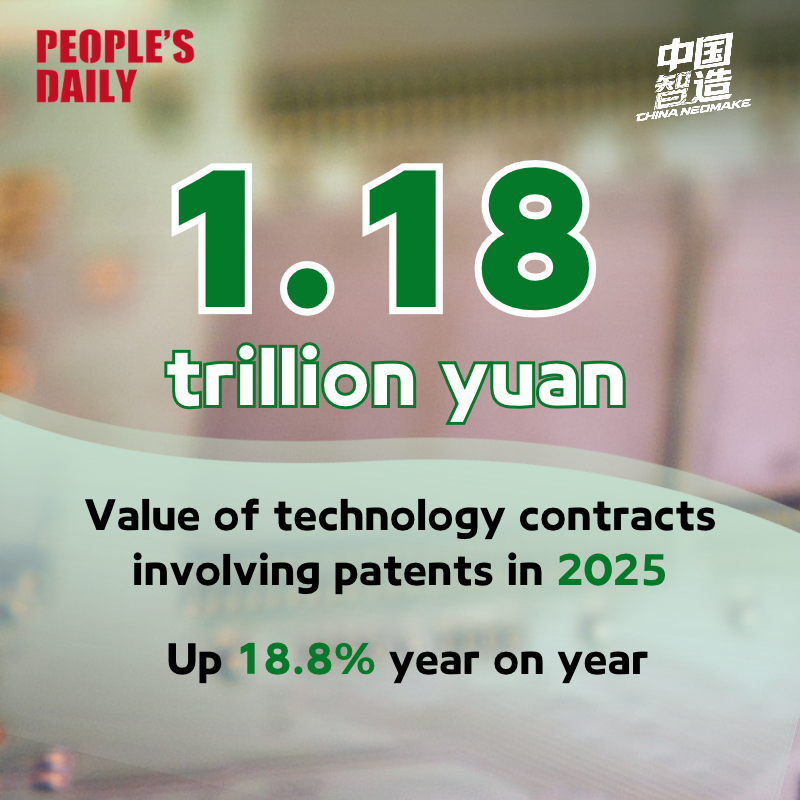
By the end of 2025, the average examination period for invention patents had fallen to 15 months. In 2025, technology contracts involving patents reached a total transaction value of 1.18 trillion yuan, up 18.8 percent year on year.
During the 15th Five-Year Plan period, China plans to further strengthen intellectual property protection and improve the commercialization of patent results, supporting technological innovation, industrial development and high-quality economic growth.
(Produced by Li Yuanxin, Ni Tao, interns Sun Meiyin and Bi Xinru)