


Large-scale debris flow test base opens in Sichuan's Beichuan county
A large-scale debris flow field test base was put into operation on Tuesday in Beichuan Qiang autonomous county, Sichuan province, bridging a critical gap in large-scale simulation testing for global compound hazard chains.
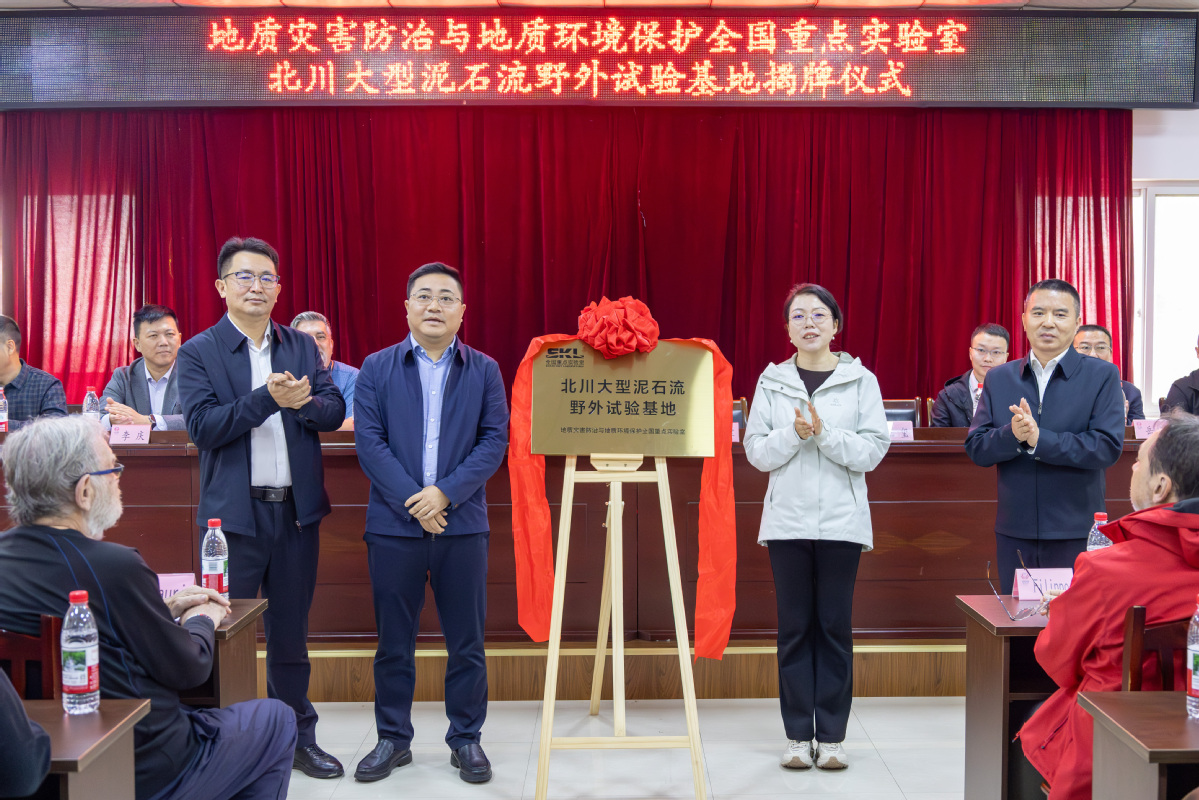
A large-scale debris flow field test base is put into operation on Tuesday in Beichuan Qiang autonomous county, Sichuan province. (Photo: China Daily)
Built by the State Key Laboratory of Geohazard Prevention and Geoenvironment Protection at the Chengdu University of Technology, the base is said to be the longest and most fully equipped of its kind in the world.
"Under the combined impact of earthquakes, extreme weather, and climate change, the risk of long-chain compound geohazards in China's western mountain areas continues to rise, and large-scale field tests are key to revealing the mechanisms behind such disasters," said Professor Fan Xuanmei, director of the laboratory.
Located in the central Longmen Mountain fault zone, Beichuan was one of the worst-hit areas of the 2008 Wenchuan earthquake. Its complex geological environment makes it a natural testing ground for studying debris flows and the evolution of compound hazard chains in earthquake-affected areas.
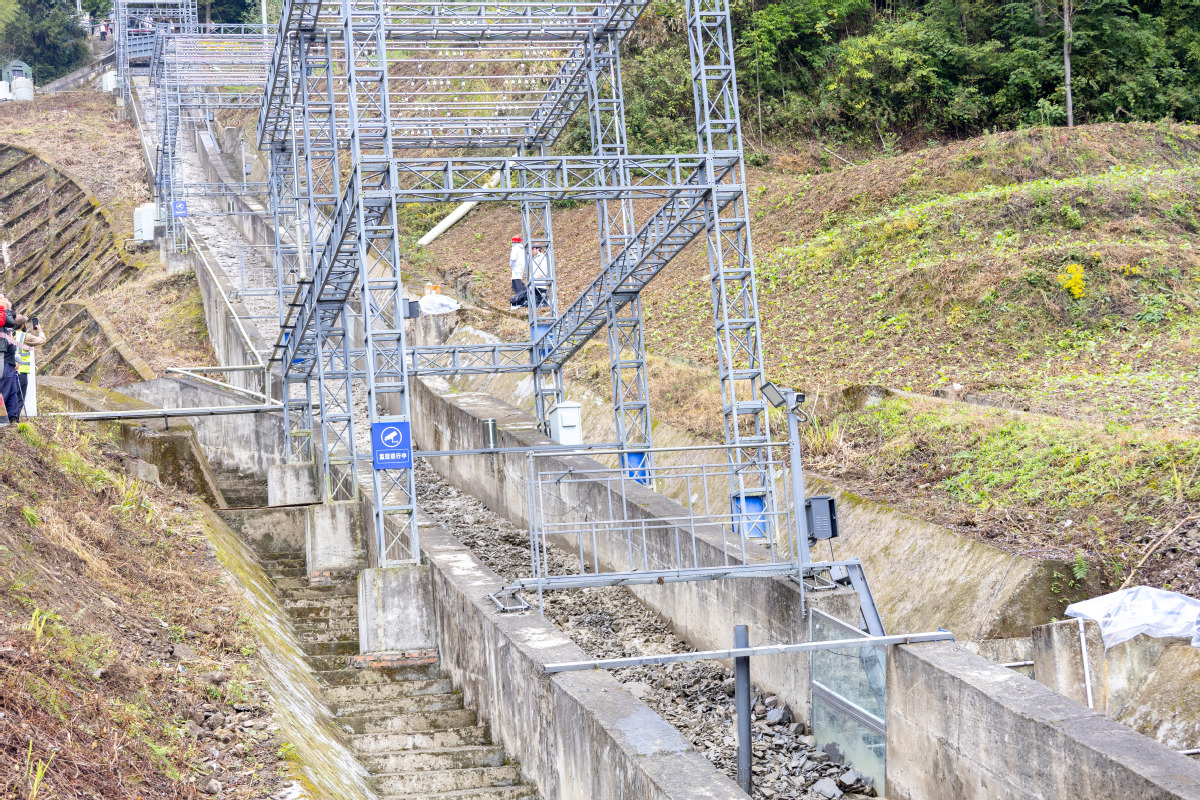
A large-scale debris flow field test base is put into operation on Tuesday in Beichuan Qiang autonomous county, Sichuan province. (Photo: China Daily)
The base has a 240-meter two-channel test waterway with four adjustable slope settings, plus a 142.5-meter curved waterway. According to the laboratory, this setup lets researchers simulate how a chain of hazards can build up and spread over long distances under different channel conditions and where multiple channels meet.
The base will serve as an open international research platform while applying its findings to local geohazard prevention in Sichuan, Fan said.
More than 30 scholars in the geohazard field from home and abroad attended the launch ceremony and observed the base's first official debris flow simulation test.
Filippo Catani, a professor at the University of Padua in Italy, said the base enables full-scale tests of compound hazard chain phenomena that cannot be simulated in laboratories or short-flume devices, calling it an achievement of great significance for advancing the international geohazard discipline.