


Rudong offshore wind project generates over 10.3 billion kWh since 2021
About 50 kilometers off the coast of Rudong in Nantong, Jiangsu province, 200 wind turbines turn steadily above the waves. A 15-story-high offshore converter station sticks out of the sea. Every day, tens of millions of kilowatt-hours of green electricity converge here. After conversion and voltage boosting, the power travels along ±400 kV DC submarine cables to the land and into millions of households.
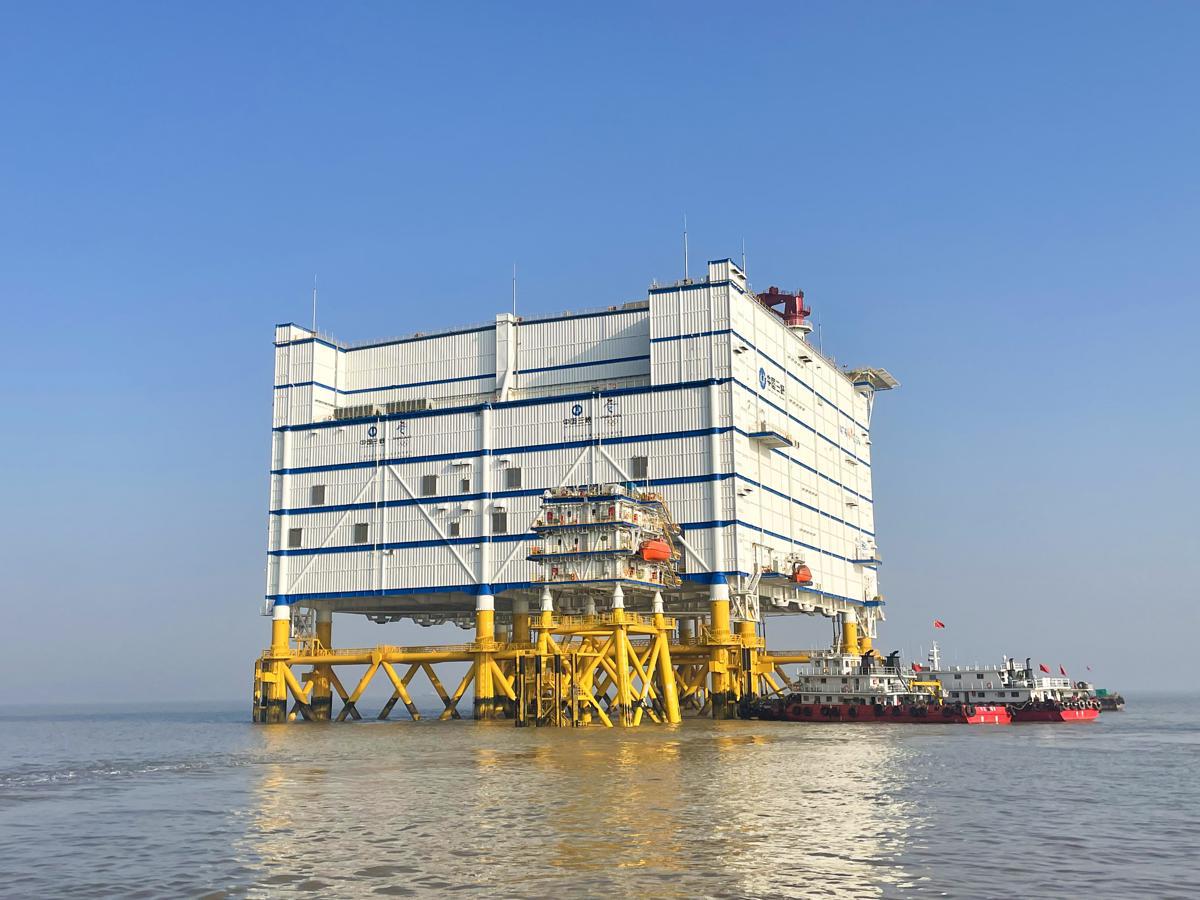
The China Three Gorges Jiangsu Rudong 800-megawatt offshore wind power project in Nantong, Jiangsu province. (Photo: China Daily)
Located in the waters of the Huangshayang sea area, the China Three Gorges Rudong offshore wind power project was fully connected to the grid in December 2021 and has generated over 10.3 billion kilowatt-hours of electricity since then. The facility is Asia's first offshore wind power project to utilize flexible direct current transmission technology.
The project leverages advanced technologies to tackle intermittent wind output and power loss over long transmission distances. Flexible DC transmission has become a preferred technical solution for the sector.
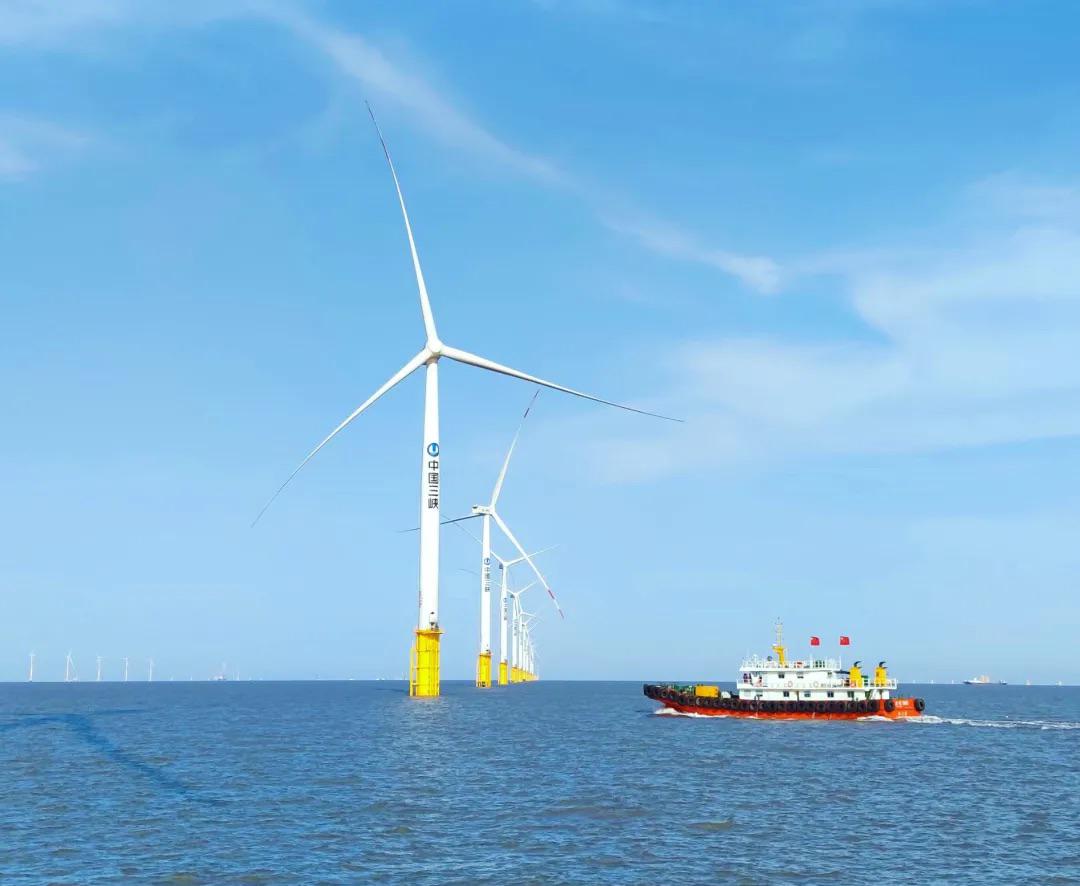
The China Three Gorges Jiangsu Rudong 800-megawatt offshore wind power project in Nantong, Jiangsu province. (Photo: China Daily)
The transmission loss has been reduced by approximately 1.2 percentage points compared to traditional alternating current transmission methods, which is equivalent to sending out an additional 120 million kilowatt-hours of electricity, sufficient to power 48,000 households for a year.
"The project has saved over 735 million yuan (about $110 million) in transmission costs in total," said Wang Xuefeng, deputy general manager of Nantong Company at China Three Gorges Corporation's Jiangsu Branch.
Located far from the shores of Nantong, the maintenance personnel have to overcome the harsh natural environment, including humidity and frequent seasonal typhoons, while completing daily operations.
The Rudong project has gradually formed a mature operation and maintenance system through long-term practice. Rail-mounted robots and drones replace manual labor for intelligent inspections; helicopters and high-speed maintenance vessels enhance maritime transport and emergency support capabilities. Combined with 24/7 dual sea — land duty and data-fingerprint trend analysis, these form a closed-loop smart operation and maintenance system.