


New quality productive forces driving momentum of the industrial economy
The latest data suggest that China's economic restructuring is beginning to pay substantial dividends with its industrial economy vibrant. Industrial enterprises with annual main business revenue of at least 20 million yuan ($2.98 million) reported combined profits of 6.03 trillion yuan in the first nine months of 2026, up 15.5 percent year-on-year, according to the National Bureau of Statistics. Profits in high-tech manufacturing jumped by more than 50 percent, accounting for over one-fourth of total industrial earnings, while electronics manufacturers saw profits more than double, contributing 9.6 percentage points to overall industrial profit growth.
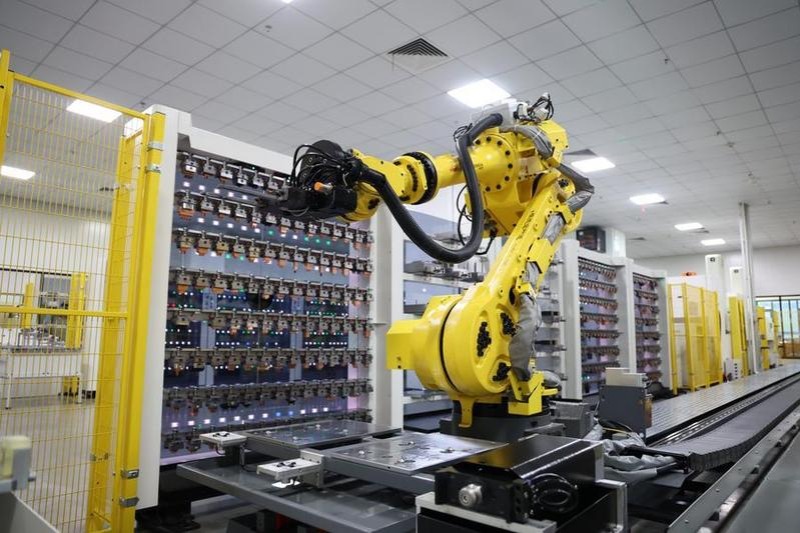
(File photo: China Daily)
Behind this impressive performance lies something more consequential: supported by increasingly targeted macroeconomic policies, industrial transformation is gathering momentum. Artificial intelligence is creating demand across an expanding industrial ecosystem, spanning semiconductors, advanced memory, optical communications and computing infrastructure.
Electricity consumption, a key indicator of economic activity, corroborates the transformation. Power use in high-tech and equipment manufacturing increased by 8.7 percent in the first three quarters year-on-year, more than twice the industrial power consumption growth during the same period. Across five southern provincial-level regions, electricity consumption by robotics manufacturers soared by 65.5 percent. China's new quality productive forces are becoming tangible sources of productivity, competitiveness and profits.
The recovery also illustrates the resilience of China's exceptionally diversified industrial system. Manufacturing profits rose by 17 percent, while mining earnings increased by 38.2 percent. Although higher commodity prices contributed to the latter, the broader improvement reflects the combined effects of industrial upgrading, cost reductions and policy support. Operating costs per 100 yuan of revenue declined by 0.45 yuan, helping lift profit margins even as businesses navigate an uncertain international environment.
The central authorities have effectively combined countercyclical macroeconomic adjustments, support for technological innovation, measures to stimulate consumption and efforts to curb price competition. This strategy has helped stabilize expectations and strengthen the recovery. Policymakers have nurtured new growth engines while addressing the challenges faced by traditional industries.
Yet higher input costs and fierce competition continue to squeeze some downstream manufacturers. Industrial accounts receivable and inventories have increased, suggesting that stronger profitability has not yet translated into healthier corporate cash flows.
Yet that should not obscure the economy's potential. The problems highlight where policy implementation must become more effective. Local governments, in particular, need to translate the central authorities' directives into concrete improvements in the business environment, ensuring fair competition, facilitating payments to enterprises and promoting private investment. Curbing price wars requires consistent enforcement rather than moves that merely shift distortions elsewhere.
The household sector deserves equal attention. Domestic tourist trips increased by 6.2 percent in the first three quarters, though spending rose by only 2.2 percent. That gap suggests considerable untapped consumption potential. Better social security, stronger income growth and wider access to healthcare, childcare and elderly care services would help convert households' precautionary savings into purchasing power.
China has already introduced policies to ensure the technological revolution becomes more job-friendly. Encouraging AI adoption in smaller enterprises, investing in retraining and expanding labor-intensive services would allow productivity gains to circulate beyond a relatively narrow group of high-tech champions.
The central authorities have established a policy framework for navigating this transition. The aim is to help businesses and households better profit from sharing in the industrial and foreign trade growth. Notably, China's exports and imports rose 18.8 percent to $5.94 trillion from January to September year-on-year.
The country's industrial resurgence demonstrates that its economic potential remains substantial, its manufacturing foundations robust and its policy toolkit well-stocked. The next stage is not simply about making more profits but also about turning industrial strength into broader prosperity. That would make the recovery not only more inclusive, but also more durable.