


Why China's import expo considered int'l public good?
SHANGHAI, Nov. 4 (Xinhua) -- The ninth China International Import Expo (CIIE) will be held in Shanghai from Nov. 5 to 10, bringing together exhibitors from around the world.
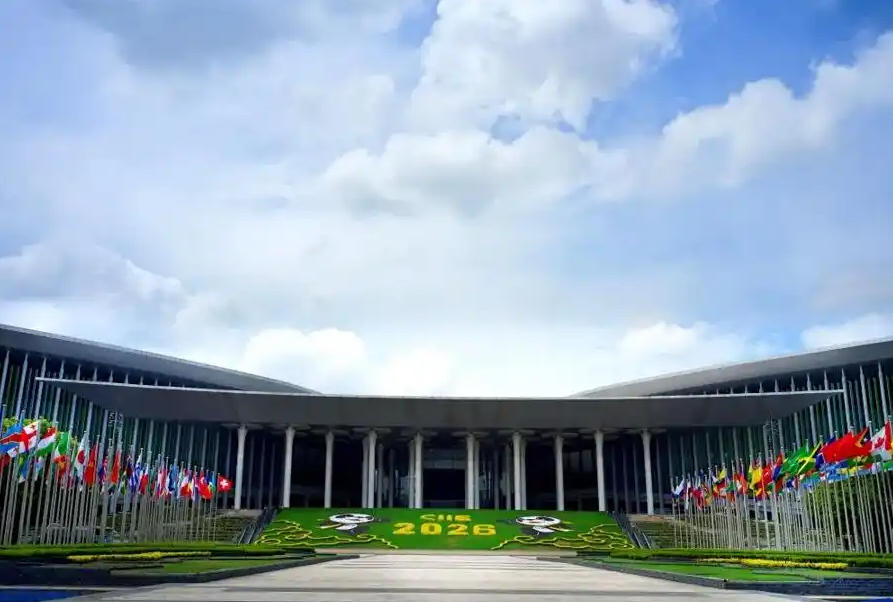
File photo: Agencies
China has described the expo as "an international public good shared by the world," highlighting its role in opening up market opportunities, fostering long-term economic cooperation and facilitating international exchanges.
SHARED MARKET OPPORTUNITIES
Launched in 2018 as the world's first national-level expo dedicated to imports, the CIIE has become an important gateway for foreign businesses seeking access to China's vast consumer and industrial markets.
According to China's Ministry of Commerce, this year's expo is expected to attract 4,142 overseas exhibitors from 148 countries and regions, including more than 2,000 first-time exhibitors. Overall, 162 countries, regions and international organizations will participate.
Companies from the United States, Germany, Britain and France will occupy the largest exhibition areas. Meanwhile, the expo has expanded support for the world's least developed countries, increasing the free exhibition space allocated to them by 17 percent from last year, when more than 160 companies from 37 such countries participated.
Myanmar's Plan Bee, a social enterprise working with more than 100 beekeepers, first attended the CIIE in 2023 to explore the Chinese market and returned in 2025 to showcase its products. This year, it hopes to find distributors for its honey and beeswax products.
"Major expos such as the CIIE give us access to solid trade channels," its CEO, Thida Win, told Xinhua.
LONG-TERM ECONOMIC BENEFITS
The CIIE's economic impact extends beyond its six-day run, as trade opportunities develop into longer-term business partnerships, investment and industrial cooperation.
Shanghai has established year-round trading platforms to help maintain commercial ties after the expo, Shanghai Vice Mayor Lu Shan said at a press conference in October.
Some exhibitors have also moved beyond trading to invest in and establish manufacturing operations in China to serve global markets, he added.
Asilia Zanzibar, a seaweed exporter based in Tanzania's Zanzibar, first attended the CIIE in 2024 and now deals directly with Chinese buyers it connected with at the expo, reducing its reliance on middlemen.
The company recently shipped five 40-foot (about 12 meters) containers of seaweed to China and received further orders, according to its director, Nassor Rajabu Dachi. This year, it will also showcase seaweed-based cosmetics made by local women's groups as it seeks to develop higher-value exports.
For German intralogistics company Jungheinrich, which has been a regular CIIE exhibitor since 2018, China has become a manufacturing and innovation base serving global markets.
Products from its Shanghai plant are now sold in 42 countries and regions. At this year's expo, the company will make the Asia-Pacific debut of an AI-assisted warehouse planning platform developed in part by its China-based engineers.
GLOBAL EXCHANGES
For Canada, serving as a guest country of honor at this year's CIIE means more than simply promoting exports. The designation is expected to raise the country's profile, attract media attention and create opportunities for official exchanges, according to Canada's Trade Commissioner Service.
Canada is among 69 countries and international organizations participating in the country exhibition, where they showcase their cultures, economic strengths and investment opportunities.
The expo also offers foreign businesses insights into China's development priorities.
Juan Esteban Musalem, president of the Chilean-Chinese Chamber of Commerce, Industry and Tourism, said a better understanding of China's 15th Five-Year Plan (2026-2030), particularly its emphasis on technological innovation and high-quality development, could help Chilean companies identify new areas for cooperation.
Beyond the exhibition halls, the Hongqiao International Economic Forum brings together policymakers, business leaders, scholars and international organizations to exchange views on shared economic challenges, ranging from the multilateral trading system to technological change.
This year's forum will feature a session co-hosted by the International Trade Centre and China's Ministry of Commerce, focusing on global economic rebalancing, industrial cooperation and inclusive development.
The forum will also release the World Openness Report 2026 and a new Export-to-China Capacity Development Report, providing research on global openness and recommendations to help trading partners strengthen their capacity to export to China.