


China's central bank to step up re-lending policy to support stock repurchases, shareholder buy-backs
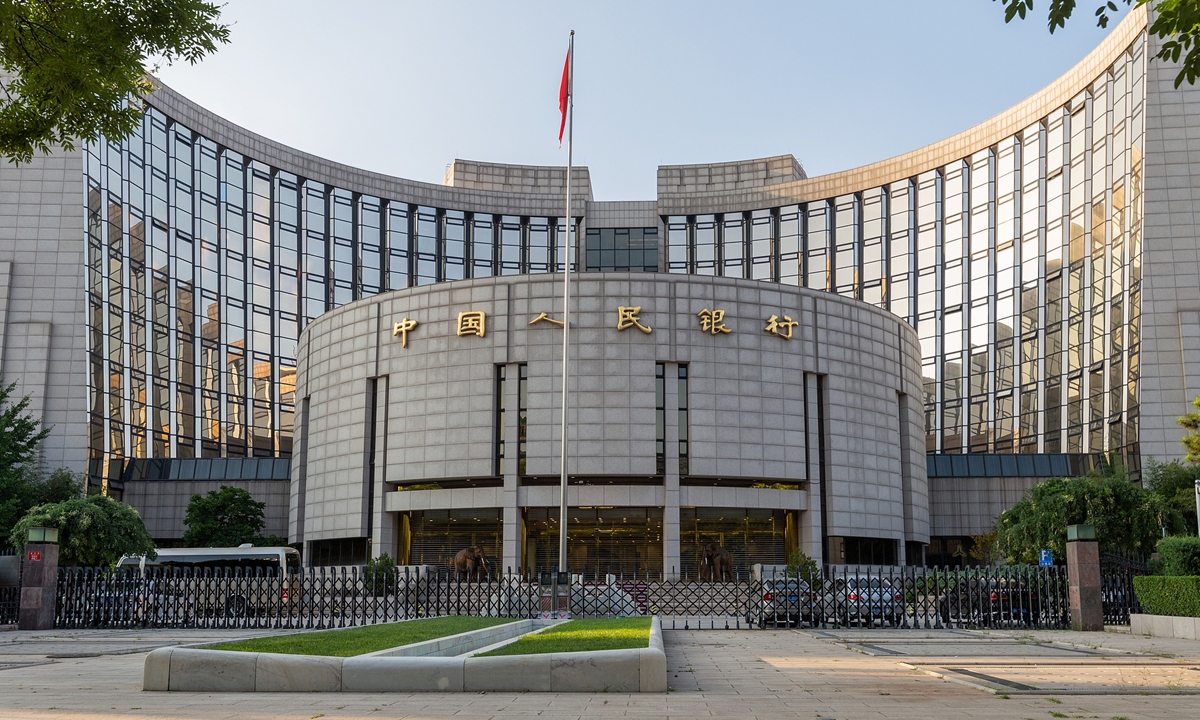
The People's Bank of China (Photo: VCG)
China's central bank said on Wednesday that it has stepped up implementation of stock repurchase and shares buy-back relending policy, cutting the relending facility rate by 0.25 basis points to 1 percent effective on Wednesday, in an attempt to maintain stable operation of the country's capital market.
The facility is available to 21 national-level commercial banks and five systemically important city-level banks. It covers 100 percent of eligible loans, has a term of one year and can be extended according to the banks' needs, according to an announcement by the People's Bank of China (PBC) on Wednesday.
Banks are allowed to add a reasonable margin on top of the relending rate and independently determine the maturities and pricing of stock repurchase and shareholding increase loans. They are encouraged to accelerate loan disbursements and enhance listed companies' and major shareholders' capacity for market value management, the PBC said.
The central bank also pledged to provide sufficient relending quota support.
Following several meetings on the program on Monday, banks have submitted quota applications totaling more than 200 billion yuan ($29.9 billion), and the PBC said it will continue to fully meet banks' relending needs and support them in actively addressing the financing demand of listed companies and major shareholders.
Wednesday's rate cut followed an announcement by the PBC earlier this week to shift the relending program from a temporary arrangement to a permanent institutional arrangement, and lower the relending rate from 1.25 percent to 1 percent. The program is one of two policy tools supporting the capital market, alongside the Securities, Funds and Insurance Companies Swap Facility.
Industry analysts said the latest measures taken by the central bank are fresh moves to support the stable and healthy development of the capital market. They are expected to channel more funds into the stock market by helping financial institutions expand their investment capacity, while broader participation by institutional investors could help strengthen market confidence.
Global Times