


Qinzhou: Bridging rivers and seas, opening to the world
Situated on the Beibu Gulf coast in south China's Guangxi Zhuang Autonomous Region, Qinzhou has served as a maritime gateway since ancient times, linking inland waterways with the open sea.
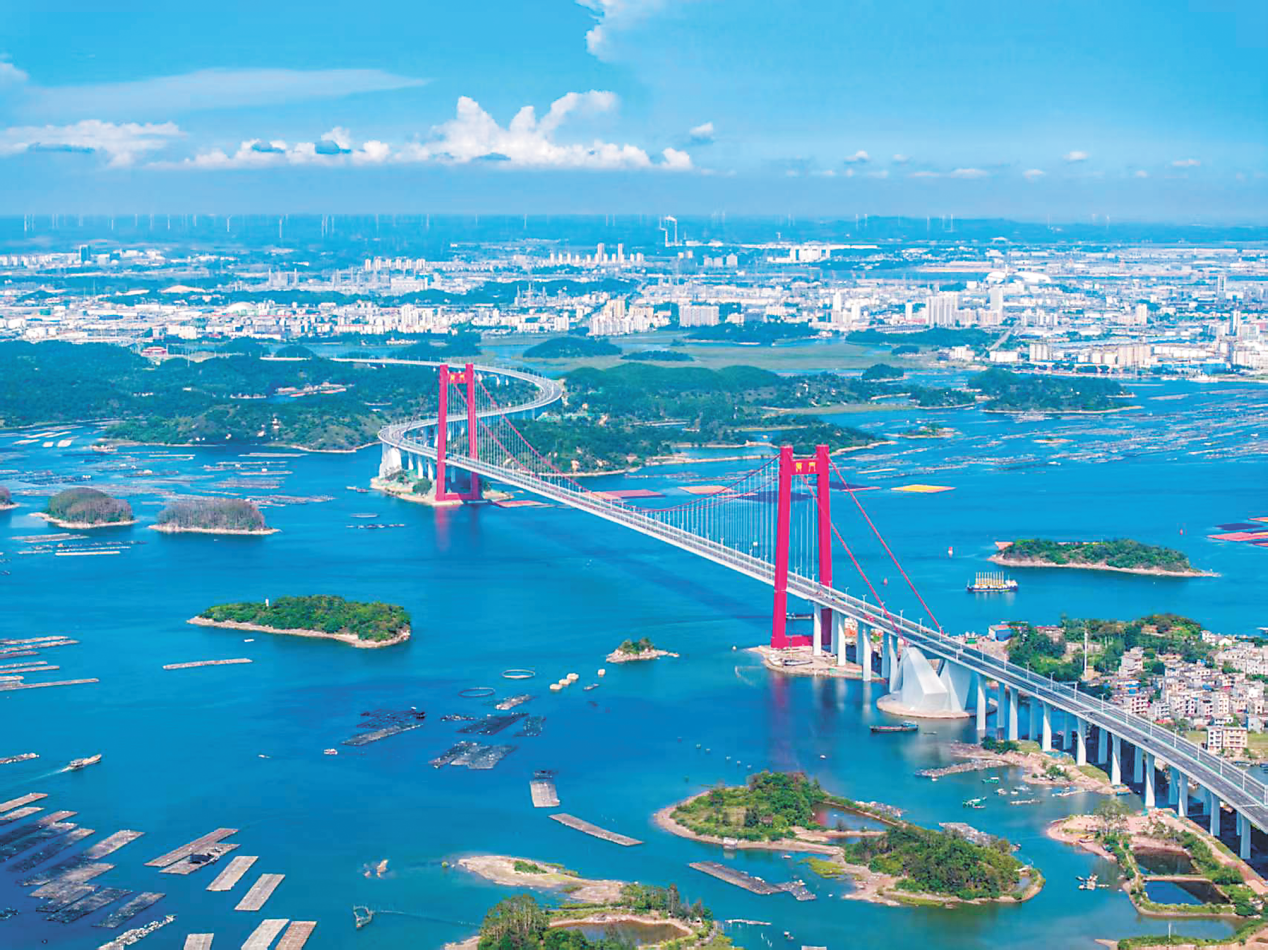
Photo shows an aerial view of Longmen Bridge in Qinzhou, south China's Guangxi Zhuang Autonomous Region. (Photo: Chu Naiqin)
Today, propelled by the expansion of the Beibu Gulf International Gateway Port, the New International Land-Sea Trade Corridor, and the China-Malaysia Qinzhou Industrial Park, the city is forging a dynamic new path toward deeper maritime engagement and global integration.
A modern maritime hub: Streamlining connectivity and multimodal transport
At the automated container terminal of Beibu Gulf Port, cargo operations run continuously around the clock.
Nearby, at a bulk cargo berth, the vessel Dubai Nature—carrying imported soybeans—has just docked. On deck, Bangladeshi crew member Rajib oversees mooring operations. Watching giant vessels pass one after another along the channel, he said: "The port is spacious. Operations run in an orderly manner, and the staff are friendly and responsible. It has left a deep impression on me."
Qinzhou Port currently has 96 operational berths, including berths capable of accommodating vessels of up to 300,000 tonnes. It operates 92 container shipping routes, connecting with more than 200 ports in over 100 countries and regions worldwide.
In June this year, Moiz Farooq, executive editor of Pakistan Economic Network, visited Qinzhou. At the Smart Port Innovation Center of Beibu Gulf, he watched demonstrations of smart port operations, including the precise dispatching of autonomous container trucks.
"Qinzhou has world-class port facilities, and landmark projects such as the Pinglu Canal give it outstanding advantages in developing foreign trade," Farooq said.
"I hope to see more Pakistani companies come to Qinzhou and explore cooperation opportunities in areas such as logistics, port development, maritime trade, and the digital economy."
On September 16, the landmark Pinglu Canal opened for navigation. "The waterway establishes a new link between the inland waterway network and the sea, effectively shortening transport distances and reducing costs. It will also spur industrial clustering and port-related economic development in Qinzhou, enhancing regional competitiveness," said Philippe Gourbesville, president of the International Association for Hydro-Environment Engineering and Research, after visiting the canal.
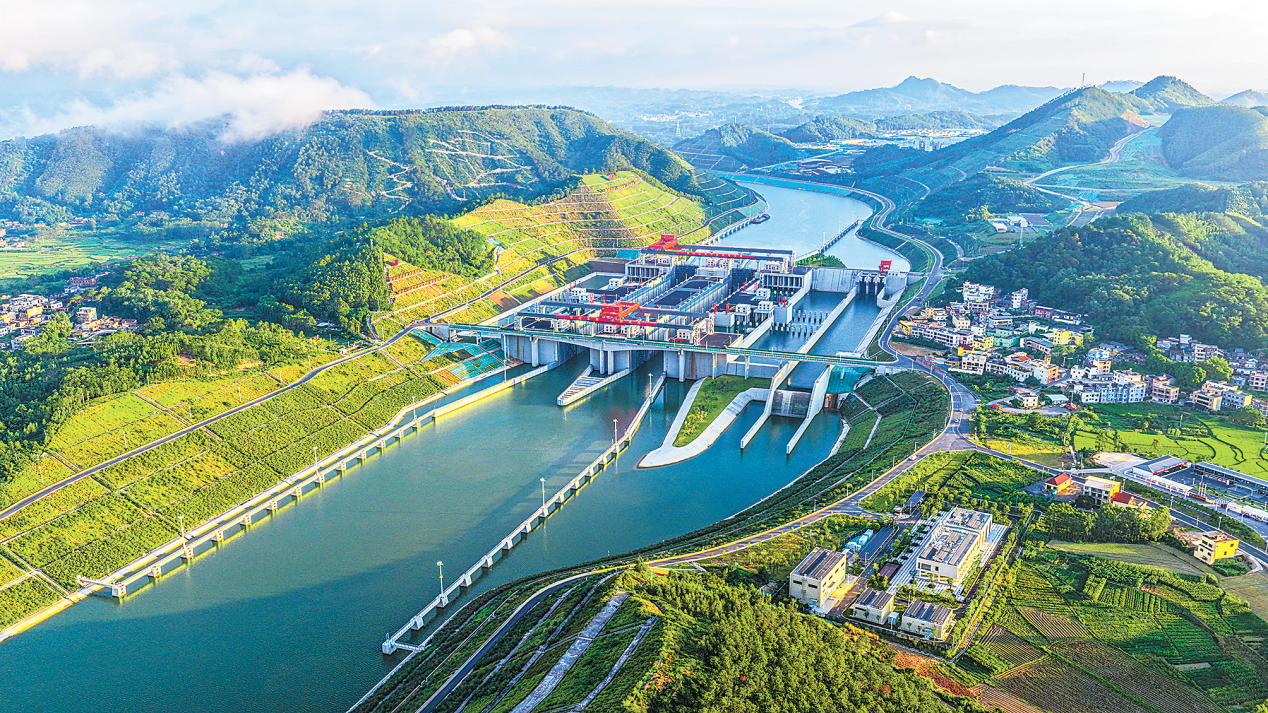
Photo shows an aerial view of the Madao hub on the Pinglu Canal in Lingshan county, Qinzhou, South China's Guangxi Zhuang Autonomous Region. (Photo courtesy of Pinglu Canal Group)
Fostering industrial growth and streamlining business services
To support business development, Qinzhou has set up dedicated service teams at both municipal and county levels to assist enterprises in the real economy. Staff members regularly visit businesses and follow up on concerns raised through online platforms, providing ongoing support to help businesses resolve operational difficulties.
Han Seong Woo, a South Korean manager at Guangxi Lingshan Delin Toys Co., Ltd. in Lingshan county, Qinzhou, once encountered difficulties with identity verification when applying to change his company's business address.
Recognizing the complexity, staff members promptly coordinated across departments and guided him through the necessary steps. What he anticipated would be a lengthy bureaucratic process was resolved efficiently.
Thanks to multiple opening-up platforms, including the China-Malaysia Qinzhou Industrial Park and the Qinzhou Port area of the China (Guangxi) Pilot Free Trade Zone, Qinzhou is now home to 211 foreign-invested enterprises. Foreign-funded projects in light industry, aquatic products and port-related industries are steadily being implemented, injecting fresh impetus into local development.
"Qinzhou offers not only a highly supportive business environment but also a rich historical and cultural heritage. Lingshan county, for example, is home to ancient buildings such as those in the ancient Dalu Village," Han said.
"As Qinzhou continues to open up, it will attract more South Koreans to work and invest here, further strengthening economic, trade and cultural ties between South Korea and China," he added.
Bridging cultures through education and people-to-people exchange
Inside a classroom at Beibu Gulf University in Qinzhou, students practice conversational Thai under the guidance of instructor Orawee Wei. Standing beside their desks, she uses expressive gestures to help learners master intonation and rhythm.
"After living in Qinzhou for many years, I have come to regard this place as my second home," she said.
Over recent years, schools in Qinzhou have established sister-school partnerships with their counterparts in Malaysia and other ASEAN countries, organizing a range of people-to-people exchange activities, including cultural and tourism exchange activities and study programs for young people.
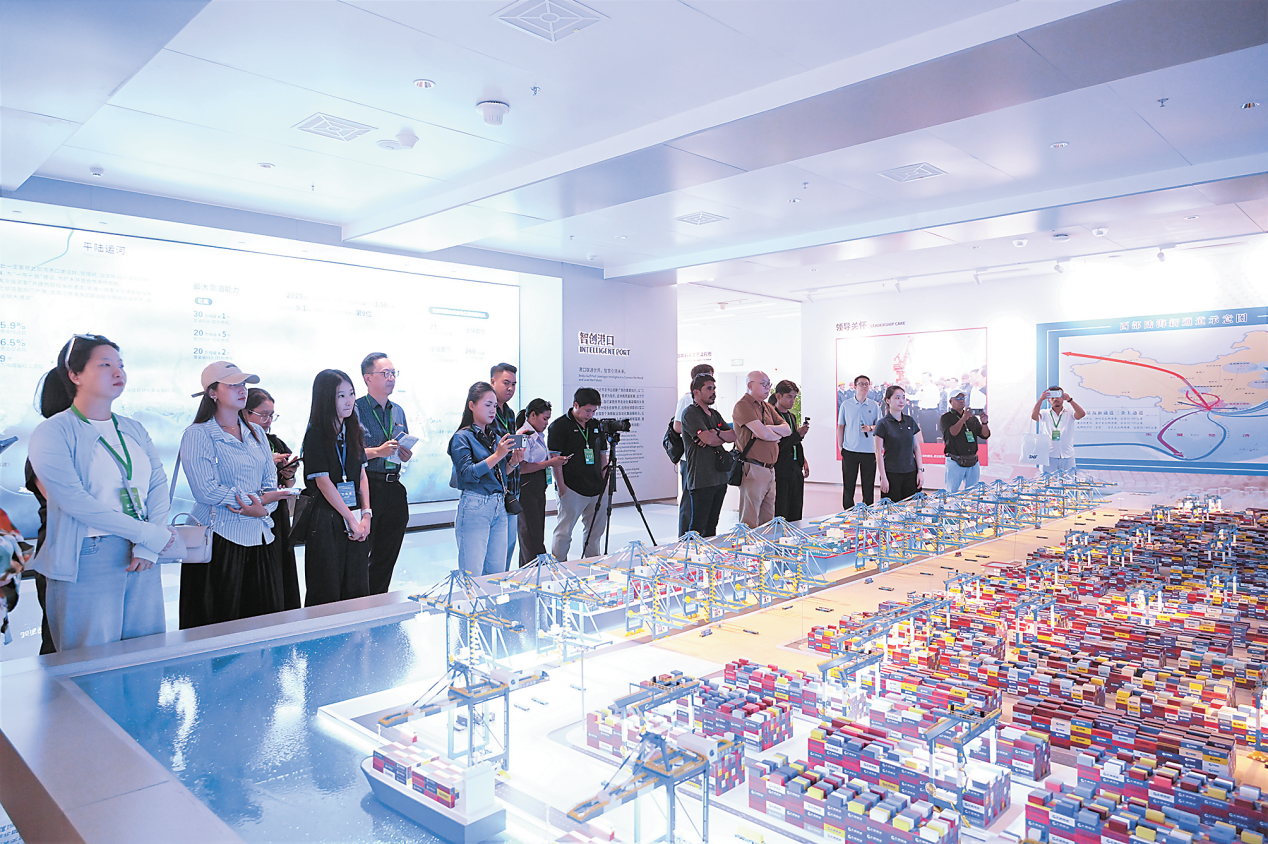
Journalists from ASEAN countries visit the Qinzhou automated container terminal of Beibu Gulf Port in Qinzhou, South China's Guangxi Zhuang Autonomous Region. (Photo: Liang Sheng)
Wei, who grew up in a family of teachers in Nakhon Sawan province, Thailand, and joined Beibu Gulf University in 2020.
"When I first arrived, only 80 students were studying Thai. Today, that number has grown to more than 200, with an increasing number of young Chinese people eager to learn the language," she said.
Wei teaches specialized courses such as Business Thai and Practical Thai for International Trade. She has seen five cohorts of her students graduate.
"My students are actively involved in Thailand-China economic and trade exchanges. They work as accompanying interpreters, business secretaries and foreign trade accountants for Thai and Chinese companies, helping strengthen economic and trade ties between Qinzhou and ASEAN," she said.
From an ancient port once bustling with sailing ships to a modern gateway now traversed by giant vessels, Qinzhou has become a key hub of the New International Land-Sea Trade Corridor.
Linking mountains and seas and creating opportunities, the city keeps goods moving, businesses thriving and people connected, offering a vivid example of cooperation and exchanges between China and the rest of the world.
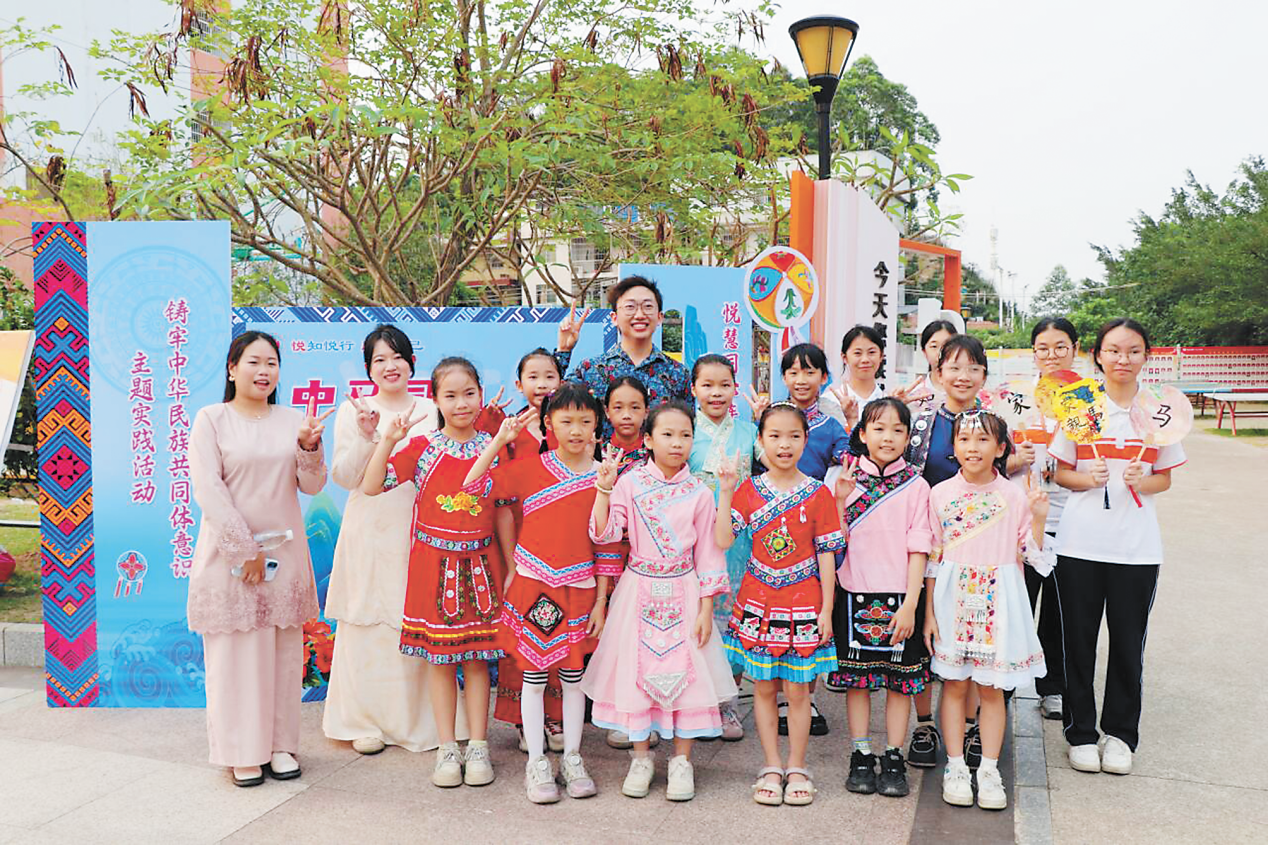
Representatives of Malaysian students in China pose for a group photo with Chinese students at the Experimental School in the Qinzhou Port Economic and Technological Development Zone in Qinzhou, South China's Guangxi Zhuang Autonomous Region. (Photo: Lu Yingming)