


Crossing the 'Valley of Death' Again: Herceptin co-developer Michael Shepard's next challenge in Shanghai

H. Michael Shepard (left) sits for an interview with the People's Daily. (Photo: Qian Zhongyuan/People's Daily)
On October 31, the second day of the World Laureates Forum (WLF) in Shanghai, H. Michael Shepard, co-developer of the breast cancer drug Herceptin and a 2019 Lasker Award laureate, wore a black suit, a white shirt, a blue-striped tie and polished black shoes. A small blue whale brooch pinned to his lapel added a playful touch to the otherwise formal outfit.
"That's the Ruijin whale, our hospital's mascot," Shepard said with a smile. Now in his second year at Ruijin Hospital, one of Shanghai's leading hospitals and an affiliate of the Shanghai Jiao Tong University School of Medicine, he serves as chief scientist of the hospital's newly established Frontiers in Therapeutics Research Center and holds distinguished professorships at both Shanghai Jiao Tong University and Ruijin Hospital.
At a WLF session, Shepard delivered a keynote address titled "AI and Drug Discovery" and joined a panel discussion on crossing the "Valley of Death": the high-barrier, intensive, years-long stretch between lab bench and patient where most promising findings fail to reach clinical use.
This was not the first time Shepard had publicly called attention to the Valley of Death. At the 2025 Shanghai International Biotechnology and Pharmaceuticals Symposium, he opened with a vivid metaphor: "The most famous 'gap' in the world sits between the London subway train and the platform." That gap, he said, is the chasm between basic research and clinical use.
It is a valley Shepard has crossed before.
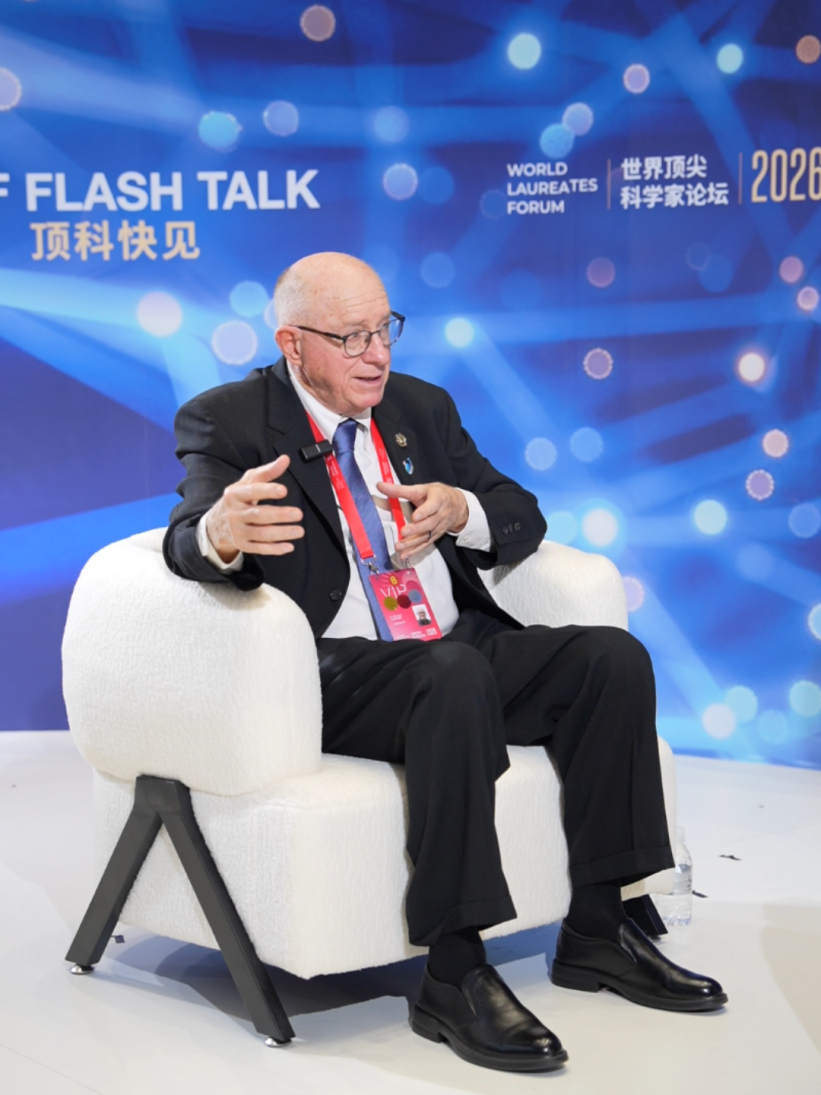
H. Michael Shepard (Photo: Huang Yining/People's Daily)
An antibody no one believed in
Herceptin (trastuzumab) is the milestone of Shepard's research career. A monoclonal antibody targeting the HER2 receptor, it is used to treat HER2-positive breast cancer and was the first humanized monoclonal antibody ever approved to treat a solid tumor. In 2019, he shared the Lasker Award for Clinical Medical Research, widely regarded as one of the most prestigious awards in biomedical research, with Axel Ullrich and Dennis Slamon for the drug's development.
But the drug, used by millions of individuals over the years, almost never crossed the Valley of Death in the first place.
Working with Ullrich at Genentech, Shepard recalled, the antibody passed every test they ran. Yet Genentech was reluctant to pursue cancer research involving monoclonal antibodies, and the company's previous setbacks had made it cautious about investing in another such project.
"So here I am, doing work on cancer in a company that says it's not doing cancer anymore," Shepard said. "But they didn't fire me."
To prove the drug's worth, he sent the antibody to researchers across the US and in Europe for independent testing. The results came back positive.
Still, Genentech's leadership and a group of prominent scientists remained skeptical. The prevailing view was that antibodies could not become drugs at all, because they could not efficiently penetrate solid tumors.
In pre-clinical animal studies, Shepard's team, working with Slamon at the University of California, Los Angeles, radiolabeled the antibody and tracked it on imaging scans, proving that it homed in on tumors and accumulated there. Gradually, a finding once dismissed by skeptics gained support, and the drug became the first antibody ever approved for a solid tumor.
"We all got together and we worked very hard over that Christmas vacation,” Shepard recalled.
The work was punishingly hard. Money was never what drove him. What keeps him going, he said, is the chance to do something for patients that no one else can.
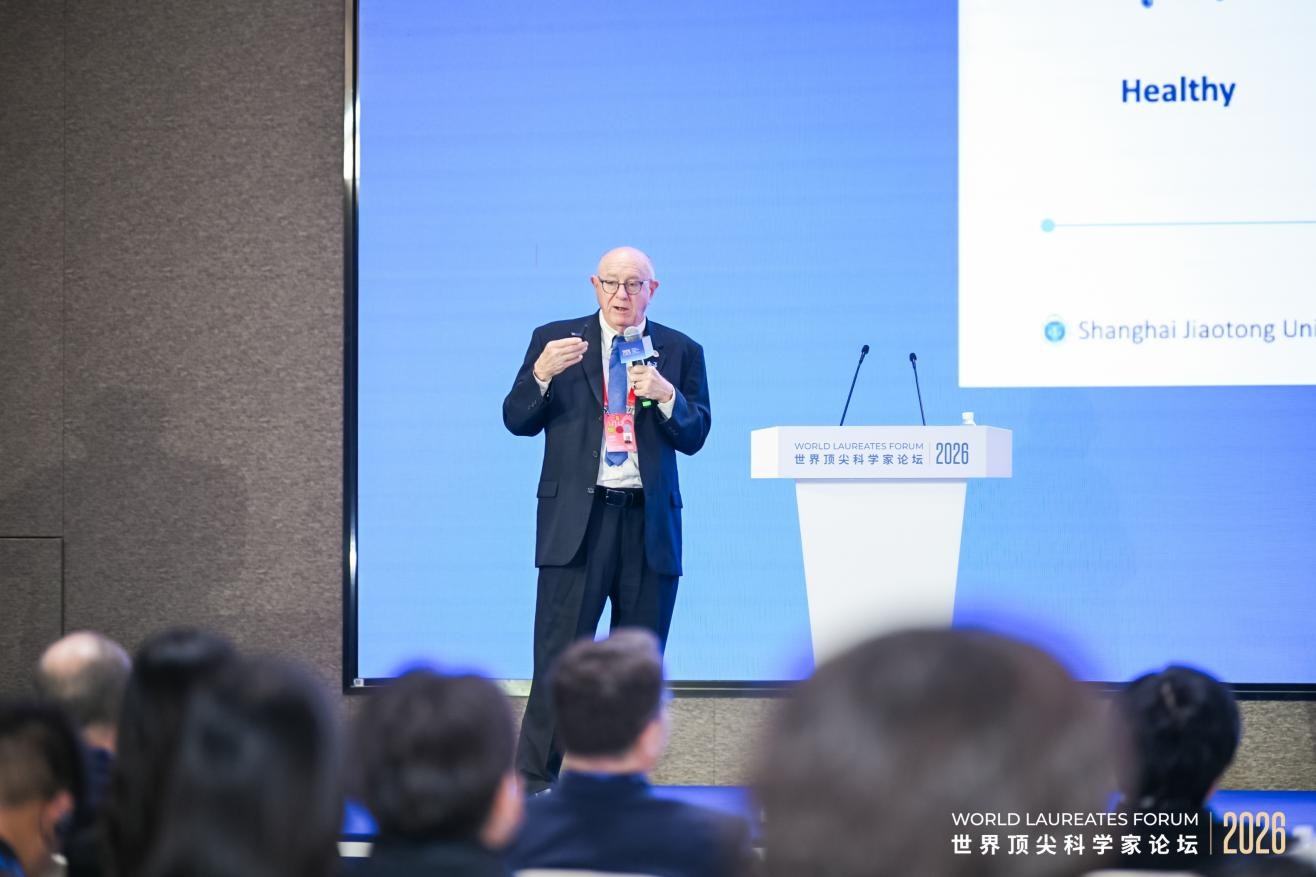
H. Michael Shepard delivers a keynote speech at the WLF. (Photo: Courtesy of WLF)
'Do what you really want to do'
Shepard's stubbornness goes back to his boyhood.
Shepard traced his interest in biology to childhood curiosity about living things. As a boy, he was fascinated by living things of every kind. He read biographies of biology giants like Louis Pasteur and hunted for fossils in the canyons near his hometown of Yorba Linda, California, tracing evolution in ancient remains.
His first research paper, written in high school, was on stem cells. In college, a course on human embryonic development hooked him: How a single fertilized egg becomes an embryo, and how different cell types arise. "I thought that was fascinating," he said.
By the time he reached graduate school, molecular biology was taking off, and he was among the first students in his developmental biology program to conduct molecular work. After earning his PhD in cellular, molecular and developmental biology from Indiana University Bloomington, he had planned to study embryology in Europe. Instead, a professor in his home department, Barry Polisky, invited him to stay and join his lab.
He considered a postdoc at Stanford, but chose Genentech instead, where he began building a research program focused on cancer therapeutics. A childhood curiosity about how life takes shape had found its way into the fight against cancer.
Asked what life advice he would offer young people, Shepard declined to dictate choices.
"I can't tell other people how to make decisions," he said. "There are so many factors in life. But if there are no other issues, then I always encourage someone to do what they really want to. And I would help them."
AI a tool, not a substitute for reading
Decades later, the same insistence on thinking for himself shapes how he talks to young researchers about a new force in science: AI.
In his keynote, Shepard laid out where AI is already changing drug discovery: screening candidate molecules, mapping new signaling pathways, and, paired with public databases, helping researchers spot potential targets and binding sites on receptors.
But he is careful not to overstate what AI can do. The danger, he says, is shallow thinking: Students ask a question, get a fast answer, and move on without reading the papers behind it.
"They don't know the whole story. They don't understand the question deeply—not unless they have read the story," he said.
Shepard uses AI himself, but he has his own rule. "When I ask an AI a question, I say, 'Please give me the literature references in your answer,'" he said. "Then I can go right through the references and get all the background that I need."
He half-joked that this is the way "old guys" work. They do not settle for a few sentences; they read the whole paper, trying to understand what the authors meant and how they reached their conclusions.
To fight that tendency, his lab now holds a monthly journal club. One lab member reads an entire paper, from first page to last, and presents it. "At least one person in the lab reads one paper every month," Shepard said, and paused before adding, "That's a great breakthrough."
The people he works with
In Shepard's view, international collaboration is essential to scientific progress. On the "top incubator" panel, he argued that when countries open up cooperation and coordinate research rather than pursuing the same lines of work in parallel, progress can speed up considerably. To bring early-career US researchers together with their Chinese peers, he helped organize a conference that brought young US scientists to Shanghai; it was well received.
His decision to come to Shanghai, he said, was shaped in part by the structure of China's healthcare system. "China's medical system is more centralized than the medical system in the US," he pointed out. "There are more patients. Here, most of the leukemia patients go to one or two or three hospitals in the whole country."
Also, he is openly appreciative of China's research environment. "China has a well-developed regulatory system that keeps research work on standardized tracks," he said.
Asked how it feels to work alongside Chinese scholars, he kept it simple.
"I don't regard the people I work with as Chinese, or American, or African, or European," he said. "They're just the people I work with."
For Xiao Shujun, an assistant researcher at Ruijin who has worked with him, Shepard is more of a gentle, rigorous mentor than a boss. The lab atmosphere is relaxed and lively.
"During discussions, any new idea can be brought up at any time," Xiao said. When Xiao sent him a near-finished paper for review, he came back with detailed comments on everything from the overall argument down to grammar and phrasing. She was struck by how thorough he was.
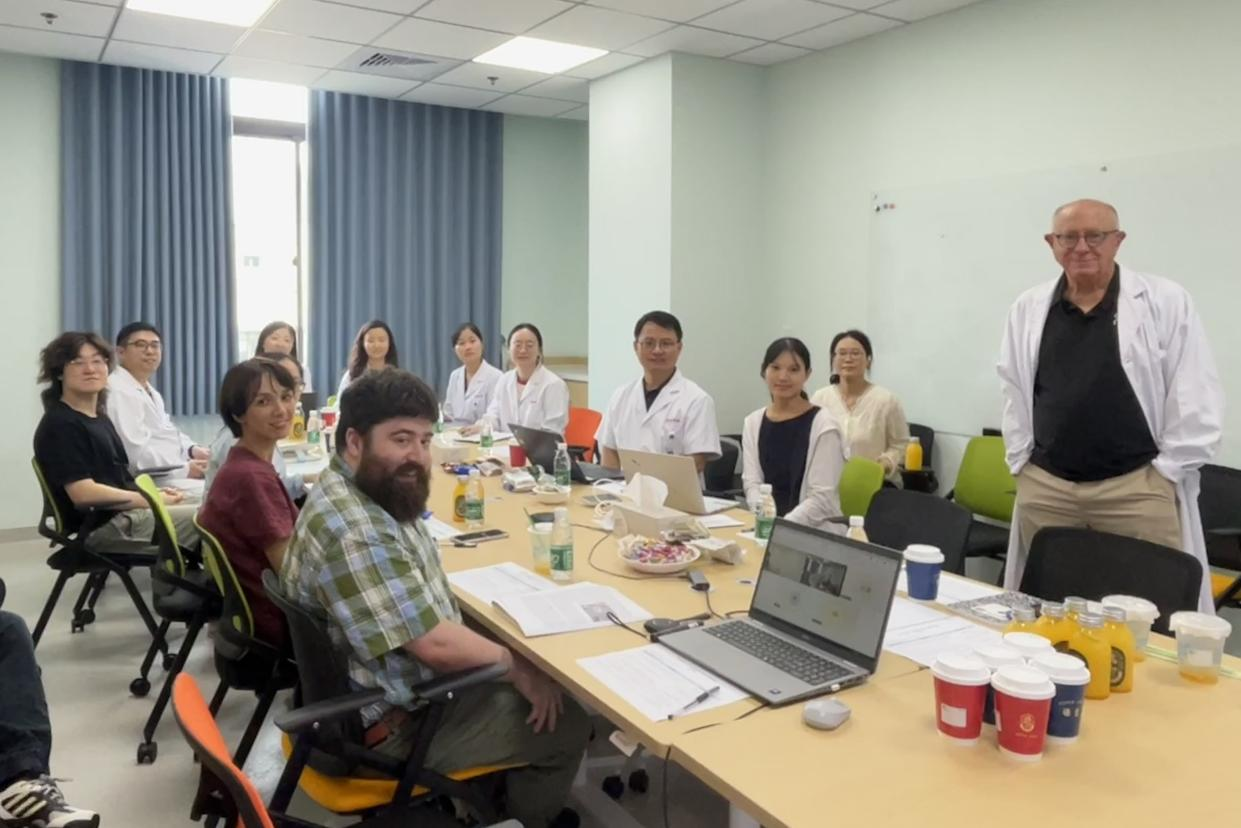
H. Michael Shepard (right) holds a group meeting at Ruijin Hospital. (Photo: Xiao Shujun/People's Daily)
Beyond his own lab, Shepard has started convening regular closed-door meetings for postdocs and PhD students across Ruijin, inviting them to present and discuss their work. Xiao said this is how he learns what is happening across the hospital.
From shipping antibody samples to researchers across two continents in the 1980s to sitting in on lab meetings and editing papers line by line at Ruijin today, Shepard is still looking for people who want to push research forward together. Now, at 77, Shepard has turned his attention to acute myeloid leukemia (AML), a particularly aggressive blood cancer. The challenge, he said, is daunting.
"Acute myeloid leukemia. It looks impossible right now. It really looks impossible. So that's why I’m working on it. I'm trying to find something," he said.
(Interns: Huang Zixuan, Ji Shuangshi, Huang Yining; Executive Editors: Wu Yan, Li Hongbing, Wu Jing; Academic Mentor: Dou Fengchang; Produced by Da Jiang Dong–Fudan Media Convergence Innovation Studio; Compiled by interns Shang Yajie, Xu Yichen and Lin Xuanyu)