


New frog species discovered in China's island province Hainan
HAIKOU, Nov. 8 (Xinhua) -- A new amphibian species has been discovered in south China's island province of Hainan, a finding that underscores the improving health of the local rainforest ecosystem.
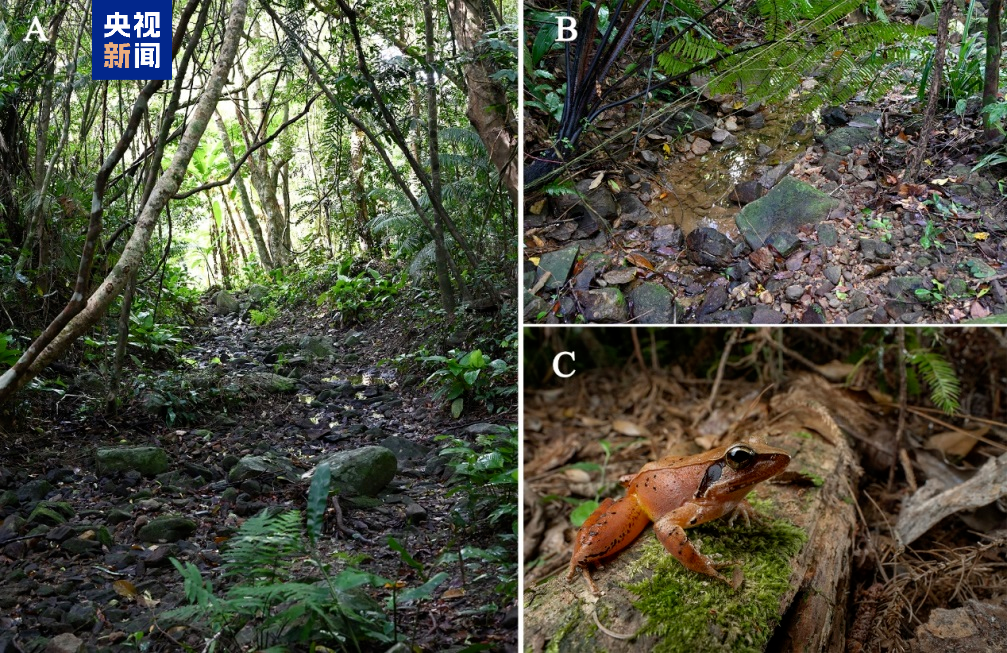
Photo: CCTV News
The species, found inside the Hainan Tropical Rainforest National Park by researchers from the School of Life Sciences at Hainan Normal University and other universities, has been named the Hainan groove-toed frog (Rana hainan). The findings were published in ZooKeys, an international journal on animal taxonomy.
From 2024 to 2026, the research team conducted field surveys of amphibians in the national park and identified frogs with distinctive traits that set them apart from known species. Cross-verification through further tests and comparative analyses, molecular phylogenetic analysis and morphological evidence confirmed that these frogs represent a new species.
So far, the Hainan groove-toed frog is known to inhabit several protected zones within the Hainan Tropical Rainforest National Park. It lives mainly in tropical rainforests at elevations between 350 and 950 meters, with evergreen broad-leaved forests as its primary habitat.
Wang Jichao, dean of the School of Life Sciences at Hainan Normal University, said the discovery marks a major outcome of biodiversity surveys conducted across the national park and its surrounding areas, further enriching amphibian diversity on Hainan Island.
"It stands as the strongest evidence of the steadily improving ecological condition of the park," Wang said.
Established in 2021, the national park hosts one of China's most concentrated and best-preserved tracts of tropical rainforest and serves as a core stronghold for biodiversity conservation on Hainan Island. Its varied forest vegetation, mountainous terrain and stream habitats offer abundant niches for wildlife and nurture a unique array of species.
According to the park administration, more than 90 new wildlife and plant species have been discovered in the past five years, and more than 95 percent of Hainan's primary forest and over 55 percent of its natural forest have been effectively protected.