


China hands over remains of US airmen who aided China's resistance against Japanese aggression during WWII
The Chinese and US militaries on Tuesday held a ceremony in Chengdu, Southwest China's Sichuan Province, for the handover of US military remains, with China transferring to the US side a batch of remains of American airmen who aided China's resistance against Japanese aggression during World War II (WWII), according to China's Ministry of National Defense.
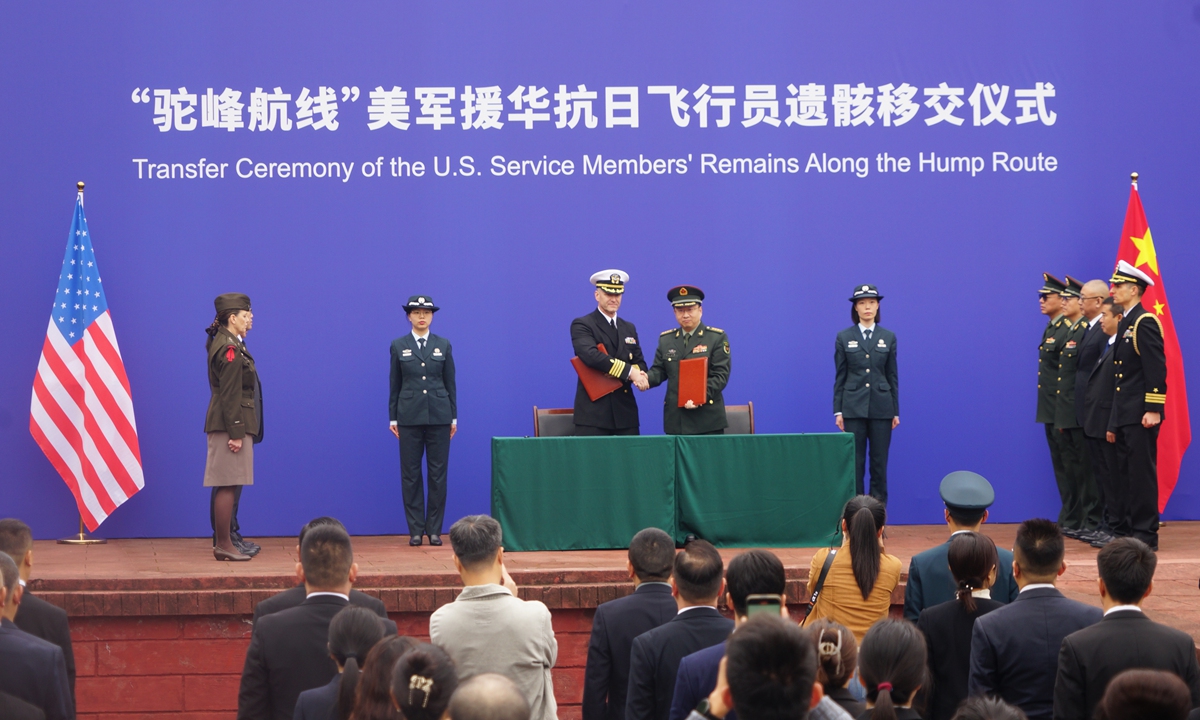
A transfer ceremony of the US service members' remains along the Hump Route is held in Chengdu, Southwest China's Sichuan Province, November 10, 2026. (Photo: Courtesy of Sichuan Jianchuan Museum)
These remains were recovered in areas along the Hump Route. The Hump, or the "death route" over the Himalayan mountains was operated jointly by China and the US from 1942 to 1945 to transport military supplies from India to Southwest China.
The mountain ranges crossed by the Hump Route have an average elevation of about 5,000 meters, with the highest peaks reaching 7,000 meters - altitudes that were at the limits of what transport aircraft of the time could handle, according to the Xinhua News Agency. Statistics show that more than 1,000 Chinese and US aircrew members sacrificed their lives along this route.
The remains handed over this time were recovered by a specially dispatched team from the Sichuan Jianchuan Museum, a civilian organization. Pei Yuan, a staff member of the museum, told the Global Times on Tuesday that the remains were recovered in Nyingchi, Southwest China's Xizang Autonomous Region, and belonged to crew members of a US military transport aircraft that flew the Hump Route.
Video footage released by Xinhua showed that during the ceremony, two Chinese honor guards slowly carried a casket bearing the remains of US military personnel and placed it on a table, while US personnel receiving the remains placed an American flag over the casket and accepted the handover.
According to Sichuan-based Red Star News, when a US representative solemnly uttered the words "Bring him home" at the ceremony, the moment moved those present to tears.
Pei said the search lasted more than half a month, with team members trekking deep into glacial terrain at altitudes of over 5,700 meters and crossing rivers on cableways along the way.
"As the site was inaccessible to heavy machinery, all search equipment had to be carried by hand, and the entire excavation was carried out manually," Pei added.
Fan Jianchuan, curator of the museum, said that however arduous the search had been, it was worth the effort.
"We found these remains so that these heroes could return to their homeland. The Chinese people never forget a kindness. We will never forget the selfless assistance and deep friendship of the American people, and we hope that friendship between China and US will endure," Fan said, according to Red Star News.
He added that this years-long search effort for the remains of the aircrew members also represents a precious memory in cultural exchanges between China and the US.
Cooperation in searching for the remains of missing US military service members in China is a vivid testament to the history of China and the US fighting side by side against Japanese fascism during WWII, China's Ministry of National Defense said.
For years, guided by humanitarian principles, China has assisted the US in locating the relevant remains. The Global Times learned that in 2024, a joint investigation team of the Chinese and US militaries unearthed more than 80 suspected human bone fragments, along with suspected aircraft wreckage, pilot jacket buttons, bullets, magazines and wing fragments at Xinbai village in Central China's Hunan Province.
After the remains were identified, China and the US held a handover ceremony in April 2025, and the US later confirmed that the remains and personal effects belonged to Morton Lewis Sher, a young Flying Tigers pilot.
His remains were interred at Beth Israel Cemetery in Greenville, South Carolina, on December 14, 2025.
China stands ready to continue pragmatic cooperation with the US in the recovery of the relevant remains, injecting positive impetus to the development of a constructive China-US relationship of strategic stability, said the China's Ministry of National Defense.
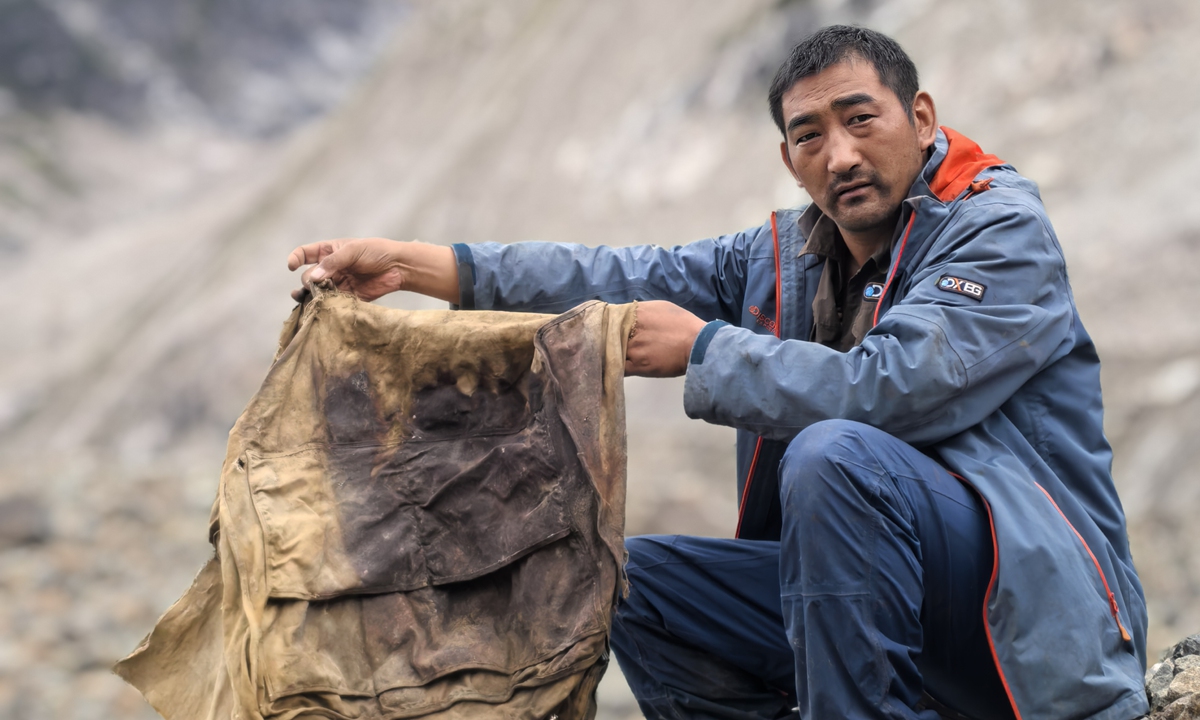
A team member recovers a canvas transport bag used by US military personnel on the Hump Route. (Photo: Courtesy of Sichuan Jianchuan Museum)
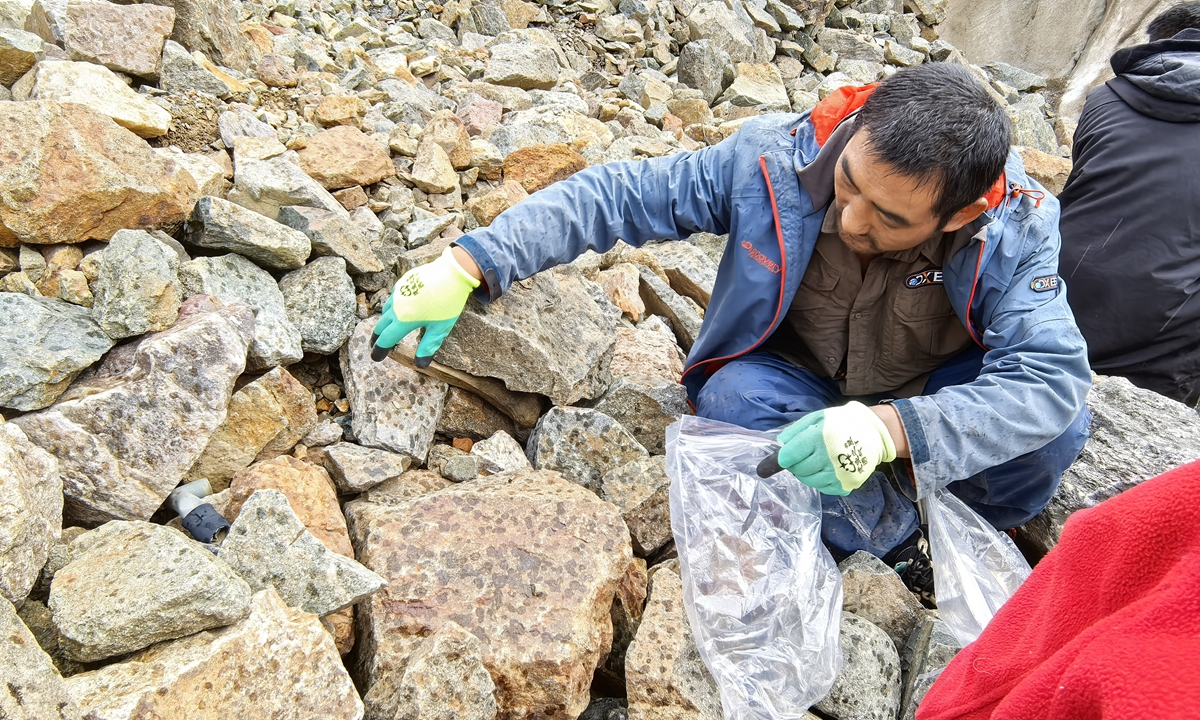
A team member searches for the remains in Nyingchi, Southwest China's Xizang Autonomous Region. (Photo: Courtesy of Sichuan Jianchuan Museum)