


How far is 'China travel' from 'China haul'? The next stop for inbound tourism
From viral videos of foreigners marveling at China's futuristic cityscapes to vlogs of tourists haggling at local night markets, the hashtag "China travel" has become a global social media sensation. Yet, as the initial hype settles, a deeper transformation is underway. The inbound tourism narrative is shifting from mere sightseeing to immersive lifestyle experiences, with the consumption chain extending far beyond traditional souvenirs.

Mexican tourists and their tour guide (1st L) pose for photos at the Tiantan (Temple of Heaven) Park in Beijing, capital of China, Jan. 7, 2026. (Photo: Xinhua)
The question now facing the industry is no longer just how to attract visitors, but how to turn this massive influx of tourists and online enthusiasm into sustainable consumption power.
'Chinese living'
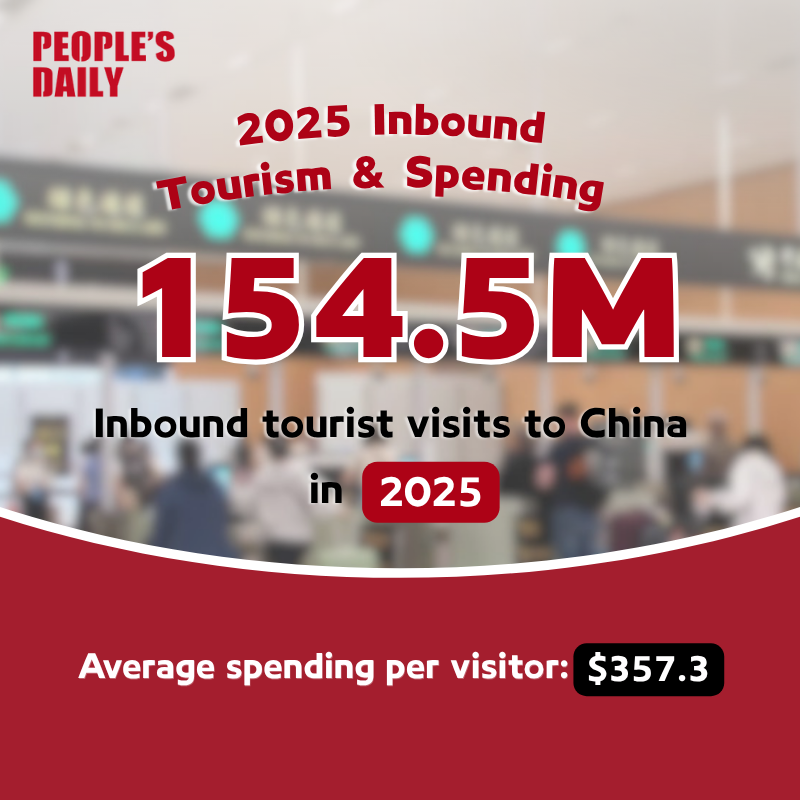
According to the China Inbound Tourism Development Annual Report 2026, released by major travel agency Trip.com Group, international tourist arrivals reached 150 million in 2025 and continue to grow, creating favorable conditions for China's inbound tourism sector.
China received more than 35 million foreign visitors in 2025, a year-on-year increase of 30 percent, while international tourism revenue rose nearly 40 percent, according to the report. It attributed much of this growth to the country's expanding visa-free policies, which now cover nearly 80 countries.
However, the profile of the modern inbound tourist has changed. Visitors are no longer satisfied with simply checking in at renowned tourist attractions such as the Great Wall or the Forbidden City. Instead, they are seeking to experience everyday Chinese life and discover the products, brands and cultural experiences that come with it. This shift has extended the tourism consumption chain, moving it from ticket-based sightseeing to experience-based spending.
Several categories have already broken out of the domestic market and captured the hearts of international visitors. Chinese consumer electronics, particularly drones from DJI and the latest smartphones, have become must-buy items for tech-savvy travelers. Homegrown designer handbag brands such as Songmont and niche Chinese perfume brands such as To Summer, which blend traditional Chinese aesthetics with modern design, are gaining traction among fashion-conscious tourists.
Factory tours are also emerging as a new trend. Visitors are flocking to manufacturing hubs for a closer look at China's industrial prowess. Factories producing new energy vehicles, consumer electronics and even traditional tea are now offering professional English-guided tours, turning industrial sites into educational and experiential attractions.
For example, Chinese tech company XPENG has received more than 20,000 international visitors since launching its industrial tourism program, which tourists can book through major travel service platforms. The company told People’s Daily that highlights include the intelligent vehicle production line at its Guangzhou smart manufacturing base and flying cars developed by ARIDGE, an XPENG ecosystem company, which often attract strong interest from overseas visitors.
This evolution has given rise to the concept of "China haul," a term referring to tourists voluntarily sharing their shopping sprees and lifestyle discoveries on social media. Through these videos, foreign visitors are sharing more than just products; they are also spreading Chinese cultural trends and lifestyles to global audiences.
Existing challenges
Although the emerging trend of shopping in China has helped bring some homegrown brands into the spotlight, a challenge remains: the massive scale of inbound tourist arrivals has yet to translate fully into a corresponding consumption advantage. Turning visitors from "viewers" into high-value spenders will require addressing several bottlenecks.
A report by the Chinese Academy of International Trade and Economic Cooperation under the Ministry of Commerce found that inbound tourism revenue averaged $357.3 per international tourist trip in 2025, just 29.1 percent of the global average. The gap points to considerable room for improvement in the services, products and experiences available to international visitors.
First, public services and infrastructure need to be upgraded. According to Trip.com Group's China Inbound Tourism Development Annual Report 2026, visitors still encounter difficulties with travel information, payments, transport connections, language support and internet access. An unclear booking page or a failed payment can be enough to put someone off an activity they had planned.
Language services remain a particular challenge. While major tourist attractions may have English signage and information, smaller retail stores and local transport hubs often lack detailed multilingual guides, menus and product instructions. As China's inbound visitor markets become more diverse, the supply of multilingual tourism services has yet to catch up.
Figures shared by Sun Guizhen, president of the tour guide professional committee under the China Association of Travel Services, in late 2024 showed that foreign-language guides accounted for just 8.4 percent of the approximately 660,000 licensed tour guides nationwide. Expanding language services beyond English would allow more visitors to join guided tours and ask questions about what they see.

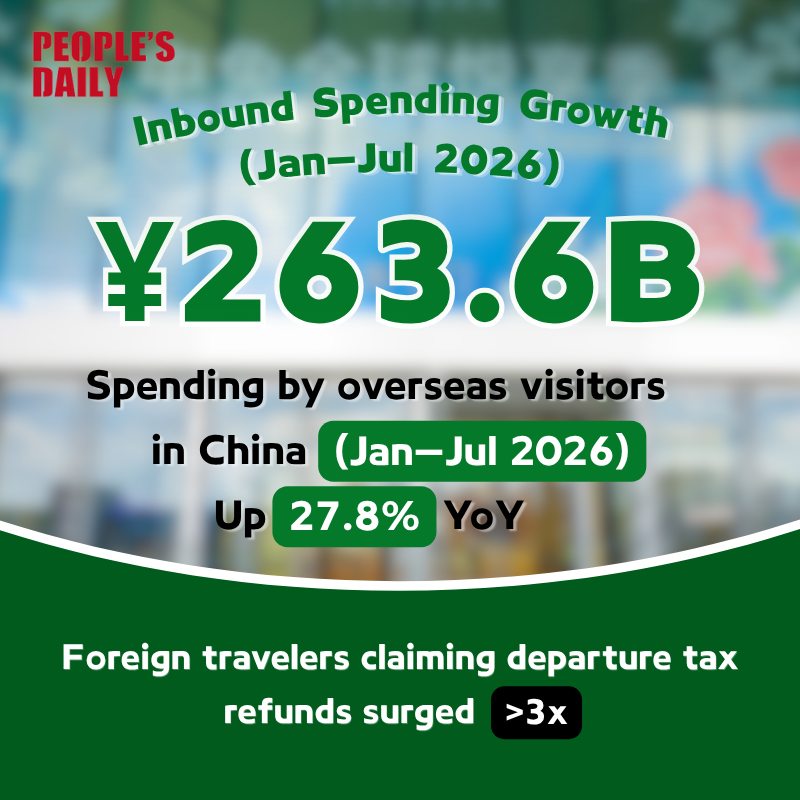
Payment and tax refund services also need to reach beyond major cities. In an article published in August 2026, Ren Jilei, an associate research fellow at the Chinese Academy of International Trade and Economic Cooperation under the Ministry of Commerce, noted that departure tax refund services remain unevenly distributed across the country. In 2025, Shanghai, Beijing, Guangzhou, Tianjin and Chongqing together accounted for two-thirds of China's departure tax refund sales, while smaller cities and distinctive tourist destinations still have considerable room to improve the quality and accessibility of these services. Clear information about eligible purchases and refund procedures would make it easier for travelers to plan shopping stops along their routes.
Beyond convenience, products must also be suitable for international buyers. Some locally popular items still need packaging that meets international air travel requirements, multilingual user manuals and accessible after-sales services for overseas customers. Without such support, potential "China haul" favorites may struggle to turn one-time purchases into lasting consumer relationships.
China also needs to offer visitors more compelling reasons to spend in the first place. Local specialties, museum souvenirs and cultural products have considerable potential, but many still lack distinctive designs, recognizable branding or compelling stories. The China Tourism Association's 2026 First-Half Tourism Market Report identified product homogeneity as a widespread problem, noting that many destinations offer similar sightseeing activities, performances and cultural merchandise. The report also pointed to a shortage of personalized, immersive and high-quality tourism experiences.
More distinctive products and experiences that better reflect local culture could give visitors more reasons to explore what makes each destination unique.
The next stop
There is also an opportunity to make better use of the growing number of international arrivals. Visa-free entries by foreign nationals reached 17.815 million in the first half of 2026, up 30.6 percent year-on-year. While not all visa-free visitors are transit passengers, the increase points to an opportunity for cities to attract more short-stay visitors.
More half-day city tours, convenient airport connections and multilingual travel information could encourage travelers with limited time to venture beyond airports and transport hubs. By making it easier for visitors to experience local culture, explore neighborhoods and discover local products, even during a short stopover, cities can create more opportunities for tourism-related consumption.
From "China travel" to "China haul," online trends have shown that international curiosity about China can translate into real-world interest. But sustaining that interest requires more than attracting visitors or encouraging them to shop. It means building an ecosystem in which travel is convenient, products are appealing and experiences are distinctive. The next step is not simply bringing more visitors to China but giving them more reasons and more opportunities to explore, experience and enjoy it.
(Interns Zhang Yixin, Sun Meiyin and Liu Xinru also contributed to the story. )