


IEA Chief: China's clean energy development supports global energy transition
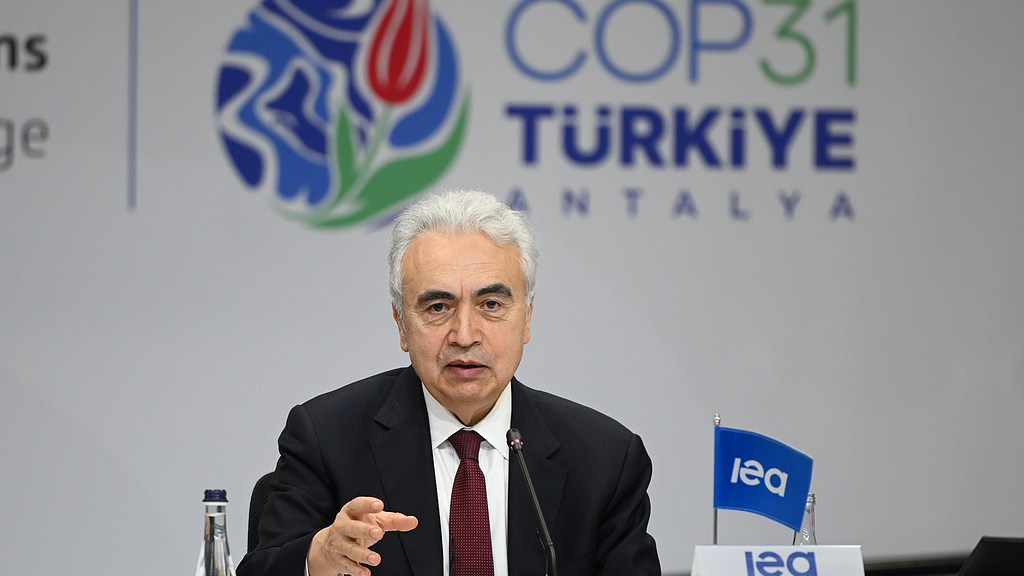
International Energy Agency Executive Director Fatih Birol holds a press conference on the sidelines of COP31 in Antalya, Türkiye, November 13, 2026. (Photo: VCG)
Energy transition has become a major focus for delegates at the 31st United Nations Climate Change Conference (COP31). In an interview with China Media Group (CMG), International Energy Agency (IEA) Executive Director Fatih Birol said balancing energy security with the green transition is a common challenge worldwide, noting that China's clean-energy development and advances in green industries will help more countries advance their low-carbon transitions.
Birol said intensifying geopolitical conflicts are prompting countries to speed up their energy transitions, which are not only about tackling climate change but are also closely tied to energy security and economic development.
Energy security is currently a major concern for many Asian countries, he said. The US-Iran conflict has heightened concerns about energy security, and high energy prices are also a major burden on economies.
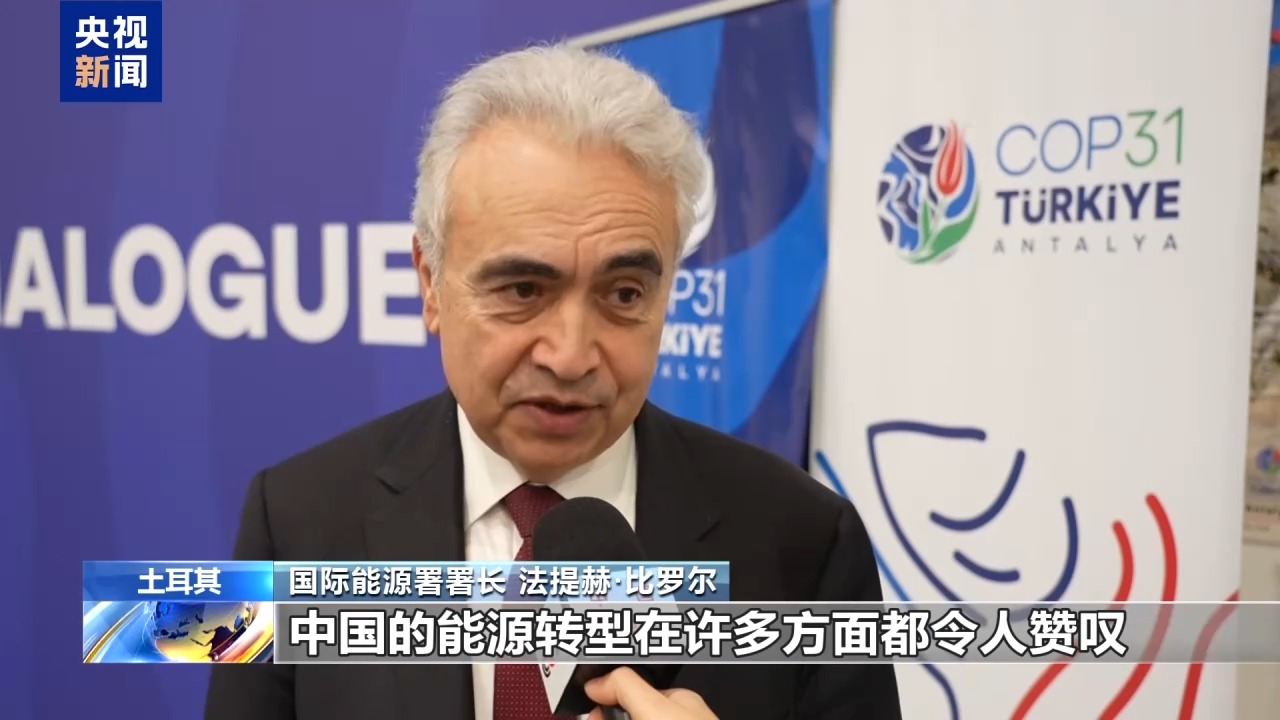
International Energy Agency Executive Director Fatih Birol during an interview with China Media Group. (Photo: CMG)
Over the past decade, Birol has visited China several times. He said he has been impressed by the country's progress and achievements in developing its clean energy industries.
"China's energy transition has been very impressive" in many respects, from solar manufacturing and deployment to onshore and offshore wind power and later battery storage and the electric vehicle industry, said Birol.
China decided to pursue green development many years ago and has followed through on that decision. "As a result, China has become a superpower of the clean energy technologies," he said.
Birol also stressed that turning clean energy technologies into wider practical applications is also a realistic challenge for countries in accelerating energy transitions. China's industrial and technological strengths are creating opportunities for more countries to drive their transitions through international cooperation.
"China has already proven that China can manufacture solar panels, wind mills, nuclear power [equipment] and others at a cost that could be accessible for many countries," said Birol. "This made it possible for many countries to make use of these different clean energy technologies."