


The Choice: An Austrian doctor's quest to make penicillin in a cave laboratory
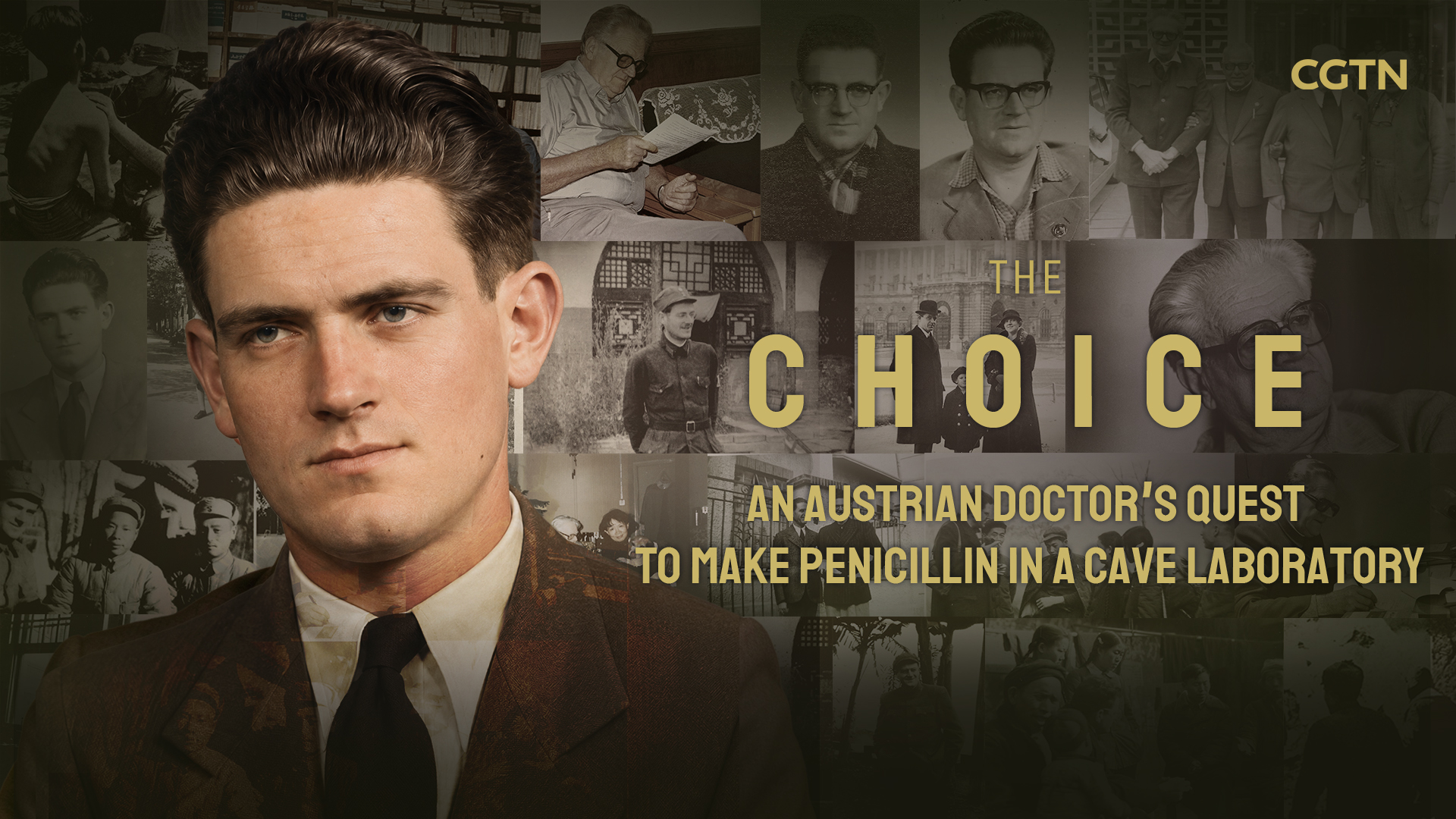
In a cave in Yan'an in the 1940s, an Austrian doctor was trying to produce crude penicillin with improvised equipment. There was no sophisticated laboratory, no air compressor and few resources. Yet Fu Lai was determined to find a way to help wounded soldiers suffering from infections.
Born Richard Stein in Vienna in 1920, Fu Lai came to China as a young man after Nazi Germany annexed Austria in 1938. He joined the fight against Japanese aggression, became a member of the Communist Party of China (CPC) and spent the rest of his life in China. Why did he make that choice?
A journey in search of a cause
Opposed to fascism, Fu Lai was aware that the CPC was fighting Japanese aggression in China. He decided to travel there in search of the Party. After 28 days at sea, he arrived in Shanghai in early 1939 and continued north, eventually reaching the Shanxi-Chahar-Hebei Border Region, according to Ma Shuqin, a Chinese writer who wrote the nonfiction book The Great Doctor Fu Lai.
There, he met Nie Rongzhen, who gave him the Chinese name Fu Lai. He also changed his English name to Richard Frey, as the surname sounded similar to the German word for "freedom."
Determined to communicate directly with the people around him, Fu Lai refused an interpreter and set about learning Chinese. Preparing a one-hour lecture could take him seven or eight hours: he wrote it in German, looked up the Chinese words and added phonetic notes, said Ma.
He also began putting his medical skills to work. With malaria widespread and medicines such as quinine in short supply, he studied the use of acupuncture by sewing needles to treat the disease from traditional Chinese medicine practitioners.
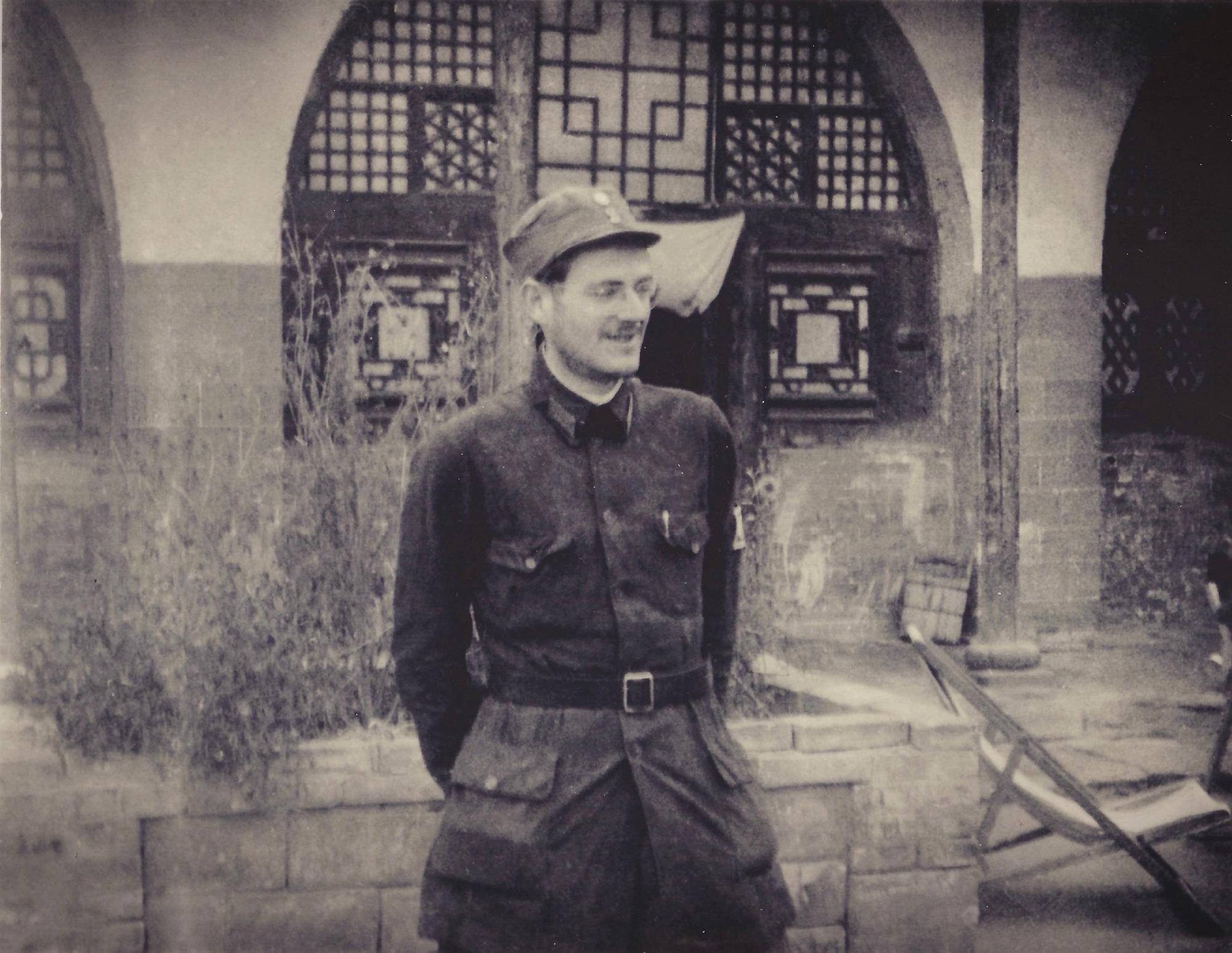
Fu Lai in front of a cave dwelling in Yan'an, northwest China's Shaanxi Province, photographed by Ma Haide, also known as George Hatem. (Photo: The Choice)
Medicine under difficult conditions
At the then Bethune Medical College in north China's Hebei Province, Fu Lai saw firsthand how medical work could serve soldiers and ordinary people. He repeatedly applied to join the CPC, and after more than two years, his application was approved with Nie Rongzhen's sponsorship.
In 1944, he went to Yan'an. There, seeing wounded soldiers die from infections, he learned about the use of penicillin by Allied forces and decided to try producing it locally.
Working in a laboratory in a cave dwelling, Fu Lai had to improvise almost everything. He built a heating system using a heated brick bed to maintain the temperature needed for production and used a hand pump in place of an air compressor. Repeated efforts paid off, as he produced crude penicillin that was effective in treating many soldiers.
China became home
Fu Lai's commitment to China extended beyond his work. He joined the CPC and later became a Chinese citizen when the People's Republic of China (PRC) conducted its first national census in 1953.
In 1962, he returned to Austria to visit his family after over 30 years away. When people congratulated him on going home, he replied, "I'm Chinese. I'm not returning home; I'm going abroad to visit my family."
His wife, Jiang Guozhen, remembers not only his dedication to medicine but also his love for China. Despite having the opportunity to return to Austria, Fu Lai never considered leaving for good.
"I cannot bear to leave the ordinary Chinese people. They are truly great. Without them, China would not be what it is today. Our Communist Party of China could not have achieved victory without their support. When I think of them, I love them. I cannot leave them," Jiang recalled him saying.
After the establishment of the PRC, Fu Lai carried out extensive work on preventing and treating hookworm disease in southwest China. He also contributed to establishing China's first large-scale computerized medical literature retrieval system in the 1980s.
Supervisor: Zhang Jingwen
Producer: Yang Sha
Director: Chen Hongyu
Copy editors: Wang Dewei, Lu Wei, Du Junzhi, Chen Chen, Zhang Yuying, Zhao Ying
Videographers: Wan Hui, Zhang Zhiyuan
Cover: Jia Jieqiong
Photos courtesy: Jiang Guozhen