


From the lab to the last mile: How Chinese medical AI is going global
In a remote mining community in northeastern Nigeria, tuberculosis screening is taking place outdoors rather than in a hospital in 2026. Health workers use an ultra-portable X-ray machine supplied by a Chinese company, with artificial intelligence (AI) helping analyze chest images and flag people who may need further examination. The approach brings screening closer to communities with limited access to specialist medical care.
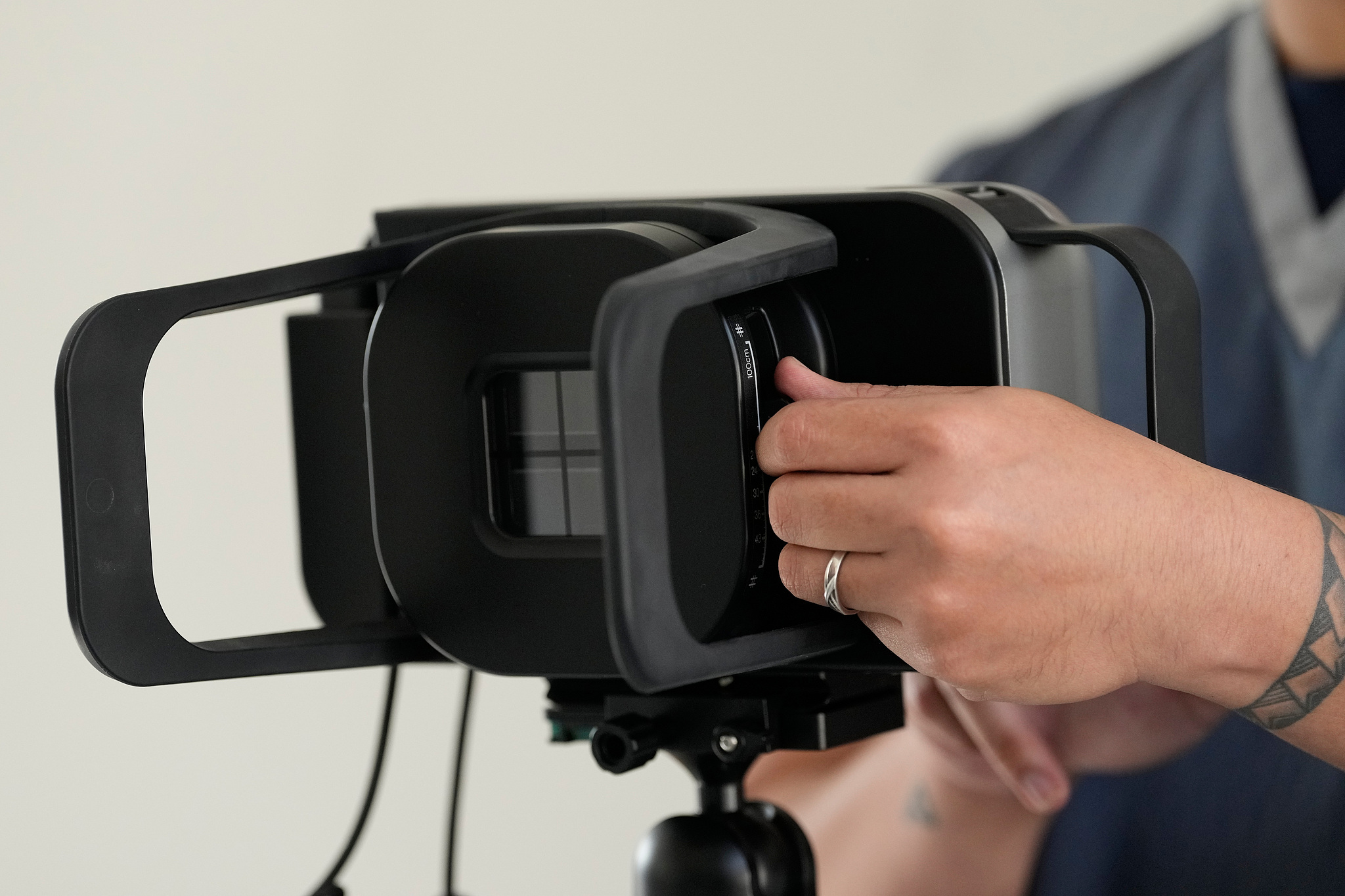
A health worker operates a portable X-ray machine equipped with AI-powered computer-aided detection (CAD) software to screen for tuberculosis, March 23, 2026. (Photo: CFP)
The need remains substantial. According to the World Health Organization's (WHO) Global Tuberculosis Report 2026, an estimated 10.6 million people fell ill with tuberculosis worldwide in 2025, while 8.4 million were newly diagnosed and officially notified to the WHO. The gap reflects both underdiagnosis and underreporting, underscoring the need to expand access to screening and diagnosis.
AI-assisted chest imaging is one tool being used to address that challenge. In June 2025, the WHO identified six computer-aided detection software products that met its performance standards for tuberculosis screening using chest X-rays, including a Chinese-developed product.
"The low rate of detection of pulmonary TB cases remains one of the biggest challenges in prevention and control," said Lu Shuihua, director of the Pulmonary Medicine Department at Shenzhen Third People's Hospital. New technologies and proactive screening are needed to help meet the goal of ending the tuberculosis epidemic by 2035, he said. AI can rapidly identify typical signs of the disease, flag possible abnormalities and help frontline doctors screen more people efficiently.
China's medical AI ambitions extend beyond infectious disease screening. At this year's China Import and Export Fair, Italian buyer Fabio Galante told China Media Group, "I think China has reached a very high level in smart healthcare research and development. Its AI technologies have strong practical applications, and the medical robotics industry is steadily maturing." With Italy's aging population, he added, smart medical robots have considerable potential.
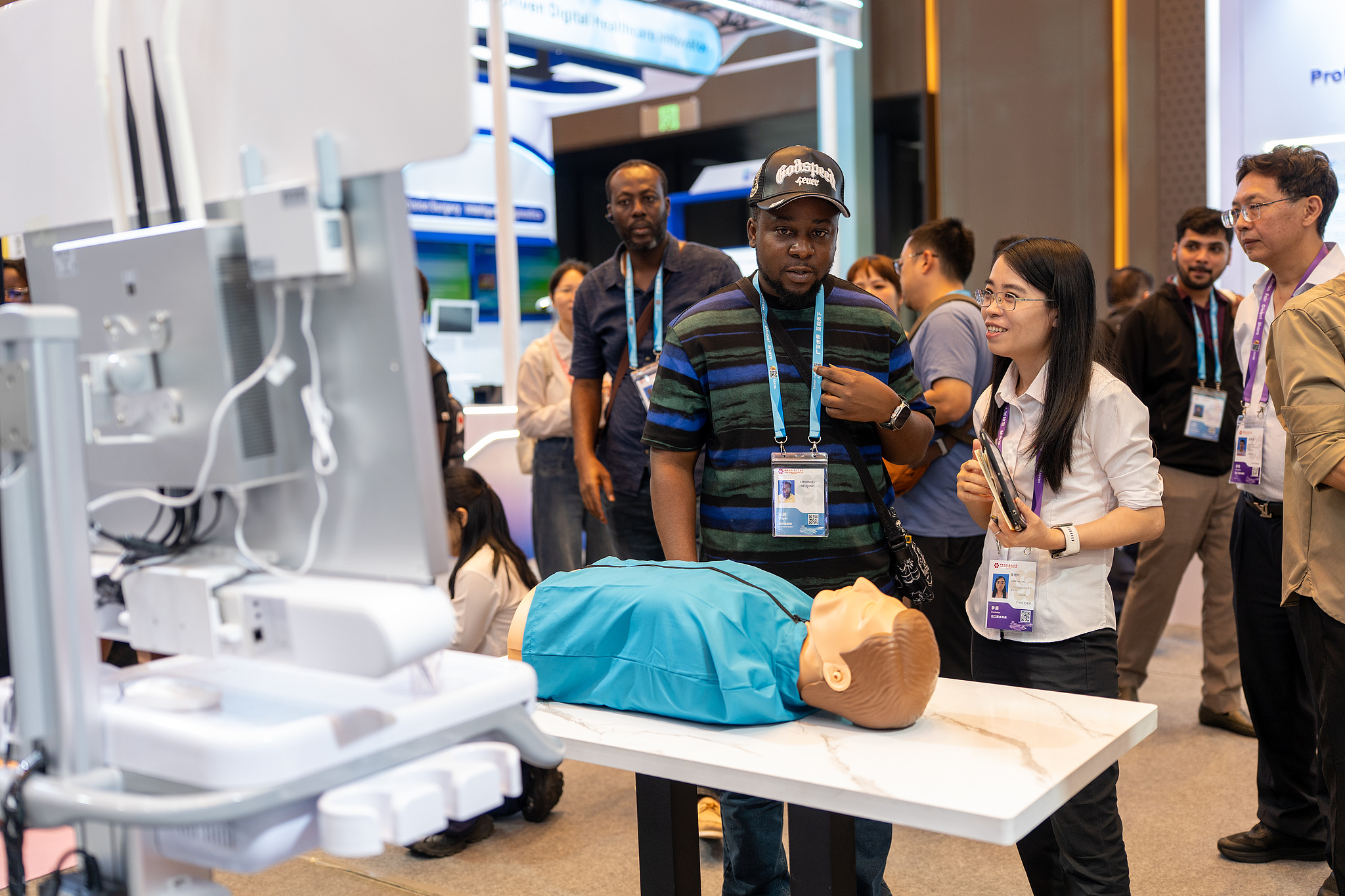
Visitors explore the smart healthcare zone at the China Import and Export Fair in Guangzhou, south China's Guangdong Province, October 31, 2026. (Photo: CFP)
The 2026 Future Health Index, released in November and commissioned by Philips as a global study based on surveys of healthcare professionals and patients in 10 countries, found that 87% of Chinese clinicians surveyed said AI had improved workflow efficiency, while 47% reported saving at least 132 hours a year through the use of AI. More than 80% of Chinese clinicians and patients surveyed believed AI could help improve healthcare services in rural and underserved areas.
The market outlook also points to growing demand for digital healthcare technologies. P&S Intelligence, a market research and business consulting firm, projects that the tech-enablement segment of the global digital health market, including AI, data analytics and interoperability solutions, will grow at a compound annual rate of 22.1% through 2032.
Yet expanding medical AI across borders involves challenges beyond technological development. Writing for the World Economic Forum in July 2026, Geoffrey Clapp, the chief product officer at US fertility benefits management firm Progyny, argued that deploying healthcare AI without a clear clinical purpose risks placing efficiency ahead of patient trust and human connection. Differences in data protection laws, regulatory requirements and technical standards also need to be addressed as companies enter overseas markets.
Experts have highlighted the complexity of these issues. In an analysis, Deng Yibin, dean of the School of Medical Imaging and deputy head of the Affiliated Hospital at Youjiang Medical University for Nationalities, identified cross-border data transfers, regulatory differences and limited interoperability as key challenges. He also noted that algorithms trained on one population may not perform equally well in another, where disease patterns and clinical characteristics can differ.
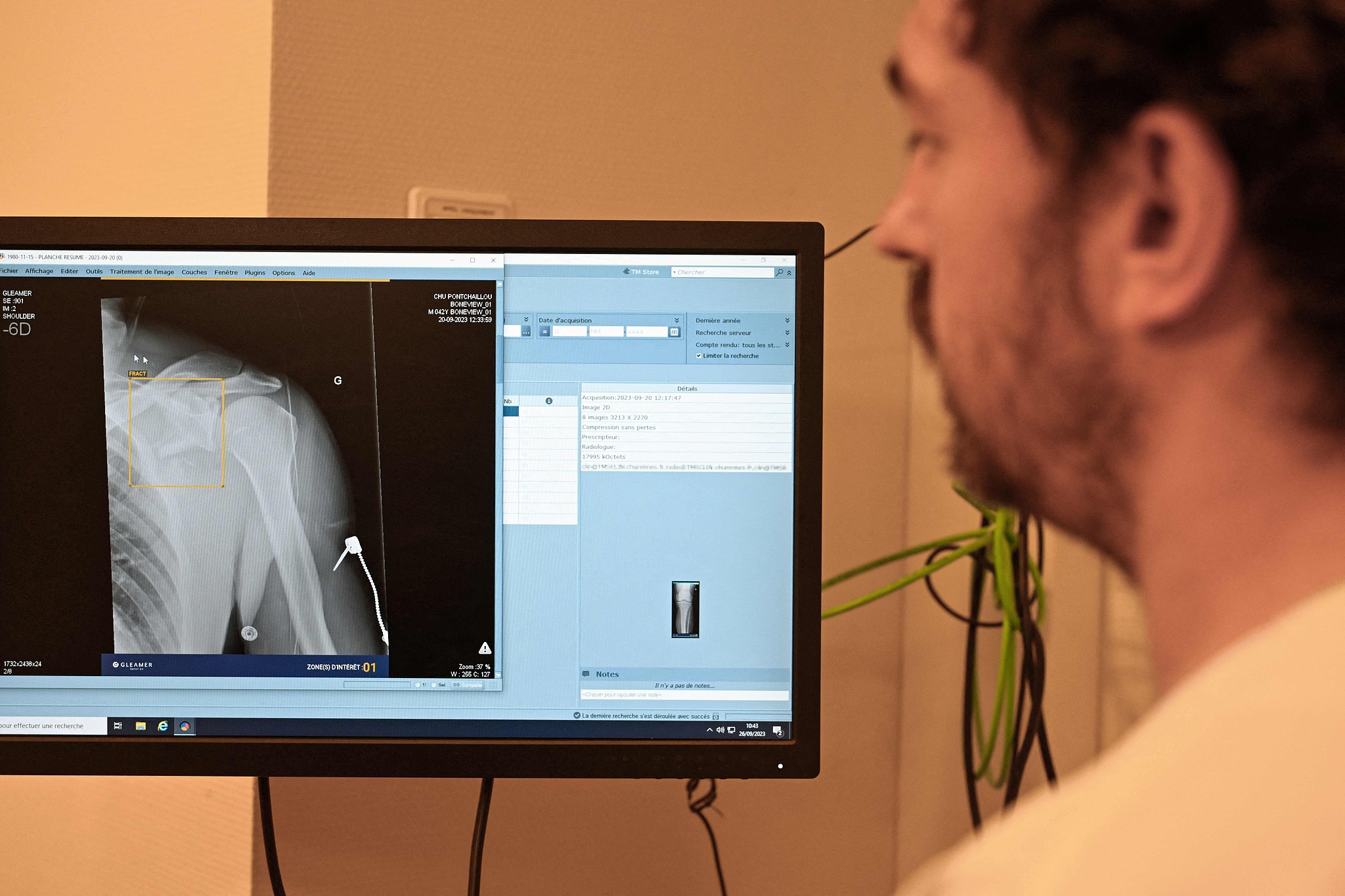
A doctor examines an X-ray scan on a monitor at a university hospital, assisted by medical imaging AI that flags potential bone fractures and dislocations. (Photo: CFP)
Addressing these challenges requires effective governance alongside technological innovation. According to Ma Dawei, an academician of the Chinese Academy of Sciences and director of the Drug Discovery Center at the Institute of Oncology and Basic Medicine, AI should be regarded as a tool rather than a replacement for human expertise. He stressed that stronger data sharing, standardization and disclosure mechanisms are essential to supporting pharmaceutical innovation and its international expansion.
For Chinese medical AI companies, overseas growth will depend not only on technical performance but also on adapting solutions to local clinical needs, building partnerships with healthcare institutions and navigating different regulatory systems. The wider adoption of these technologies will ultimately depend on how well they can be integrated into local healthcare systems and improve access to medical services.