


Reaching markets beyond villages
A football made of Zhuang brocade is not something usually associated with the FIFA World Cup. Yet the traditional textile craft of the Zhuang ethnic group in the Guangxi Zhuang autonomous region has found its way into the tournament's officially licensed merchandise range, giving rural craftswomen an unusual connection to one of the world's most-watched sporting events.
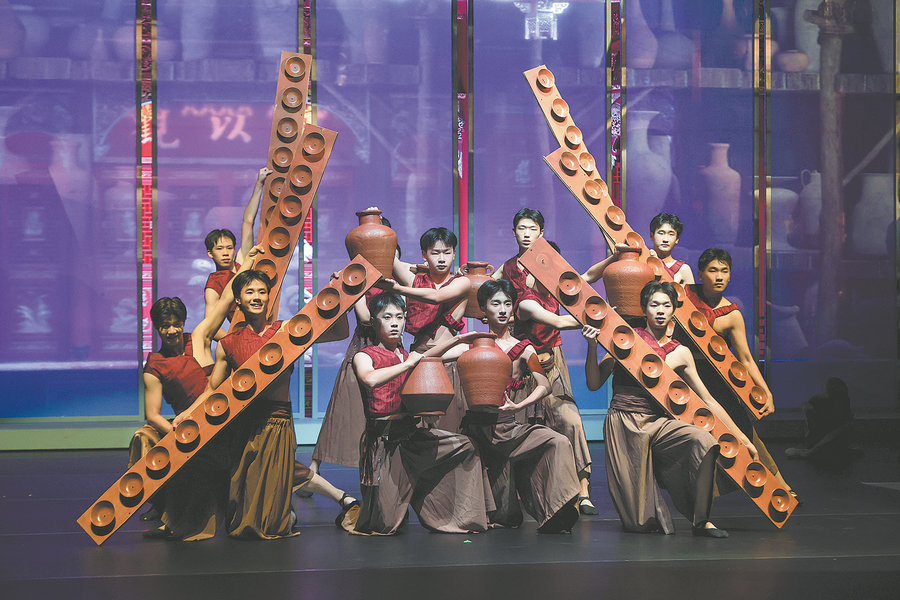
Young performers re-creating the process of shaping clay on a potter's wheel (pictured), a lantern-making inheritor interacting with young performers, and a traditional bench dragon dance are among the highlights of the Insight Through Intangible Cultural Heritage program at the China Intangible Cultural Heritage Museum. (Photo: China Daily)
For the women who make the products, the appeal is not only the opportunity to see their work reach a global audience, but also the income it generates. Each World Cup-licensed Zhuang brocade football brings its maker more than 20 yuan ($3) in processing fees, while experienced craftswomen can earn an additional 3,000 to 5,000 yuan a month, according to Zhu Yuhong, vice-chairwoman of Guangxi's women's federation.
"The value of handicrafts lies not in the raw materials, but in the skills involved," Zhu said.
To help craftswomen turn their skills into marketable products, the federation has partnered with the China Women's Development Foundation to establish five workshops specializing in local crafts. It has also worked with government departments and financial institutions to provide training, market access and entrepreneurship loans.
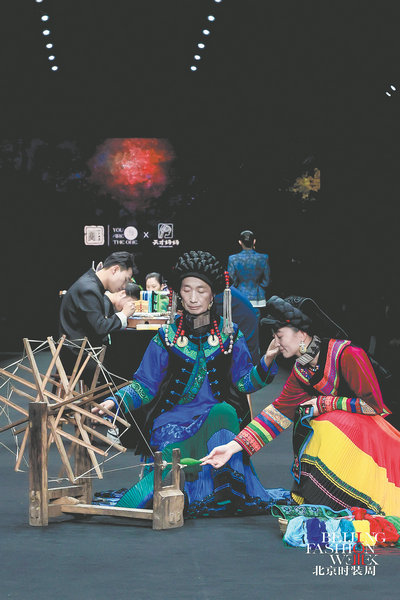
Artisans participating in the Genius Mom program showcase traditional handicrafts during Beijing Fashion Week in September. (Photo: China Daily)
The initiative is part of a broader effort to create employment opportunities through traditional craftsmanship. Under its Bagui Qiaoniang brand, developed in partnership with The Genius Mom, a national public welfare initiative launched by the foundation, the federation has established nearly 50 workshops across Guangxi.
More than 10 billion yuan in loans has been provided to support women's entrepreneurship, while more than 2,000 women's bases for rural vitalization have been established across the region. The initiatives have helped more than 100,000 women find flexible, home-based work, Zhu said.
The products have also reached markets beyond the villages where they are made, through retail outlets, tourism venues and online sales channels. Zhuang brocade designs have featured in international fashion events, while jasmine-scented sachets, embroidered balls and tiger-head bags have reached retail and cultural venues in Beijing.
For Zhu, the key is to fit handicraft production into daily rural life.
"Intangible cultural heritage is a living tradition … making it possible for rural women to work at home, doing farm work during busy seasons and handicrafts when the agricultural workload eases," she said.
The growing interest in traditional crafts is not limited to products that consumers can take home. Research by property consultancy JLL in 2025 found that consumers born after 2000 accounted for nearly half of intangible cultural heritage-related cultural and creative product purchases. More than 60 percent of surveyed consumers favored heritage-themed everyday items, such as tableware and calendars.
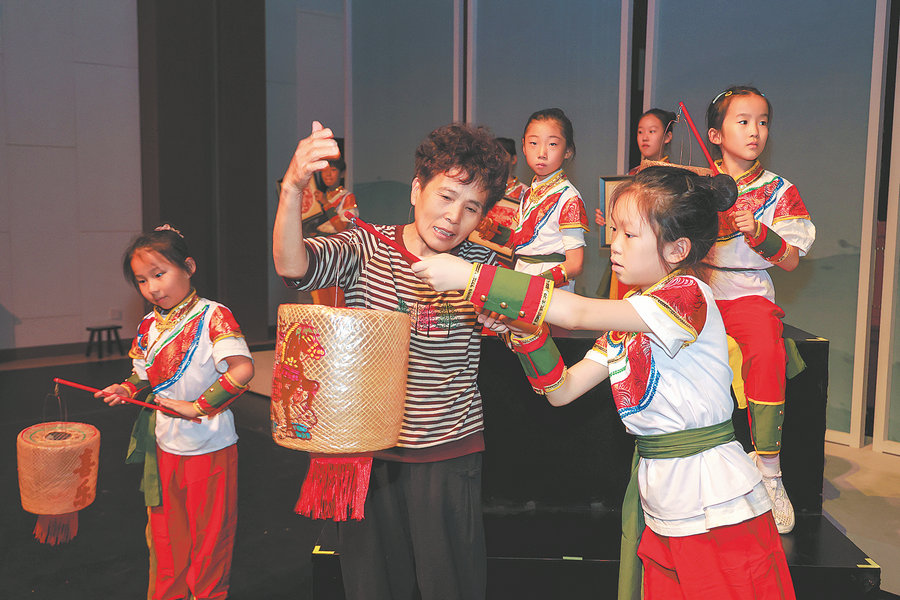
Young performers re-creating the process of shaping clay on a potter's wheel, a lantern-making inheritor (pictured) interacting with young performers, and a traditional bench dragon dance are among the highlights of the Insight Through Intangible Cultural Heritage program at the China Intangible Cultural Heritage Museum. (Photo: China Daily)
At the China Intangible Cultural Heritage Museum, the Insight Through Intangible Cultural Heritage program takes a different approach, bringing traditional techniques and the people who practice them onto the stage and inviting children and teenagers to participate in performances.
Launched in 2025, the project has three components: Performance, Community and Tour. Its performance program follows the seasons with four chapters — Spring Tea, Summer Porcelain, Autumn Dyeing, and Winter Festival — bringing more than 20 intangible cultural heritage practices to the stage through music, dance and drama.
Li Yan, director of the museum's social services department, said the project was designed to take audiences beyond just watching traditional culture.
"We hope performances inspire understanding, community activities bring people together, and study tours turn understanding into action," she said.
The performers are largely nonprofessionals, including heritage practitioners, high school students and children. Traditional craft practitioners move from their workshops onto the stage, while younger participants, many with little or no previous performance background, undergo intensive training before taking part.
"They are genuine, unpretentious and natural. They show that ordinary people, too, can have their moment in the spotlight. That is what moves the audience," Li said.
The four chapters use traditional crafts to tell stories of growth. In Spring Tea, students use movement to portray the emergence of tea buds, echoing the youthful awkwardness of those stepping onto the stage for the first time. In Summer Porcelain, clay entering the kiln and being tempered by intense heat becomes a metaphor for young people developing character through challenges.
The autumn chapter draws on the image of silkworms emerging from their cocoons, while the winter performance incorporates red lanterns and the traditional bench dragon dance to evoke the warmth of returning home for Spring Festival.
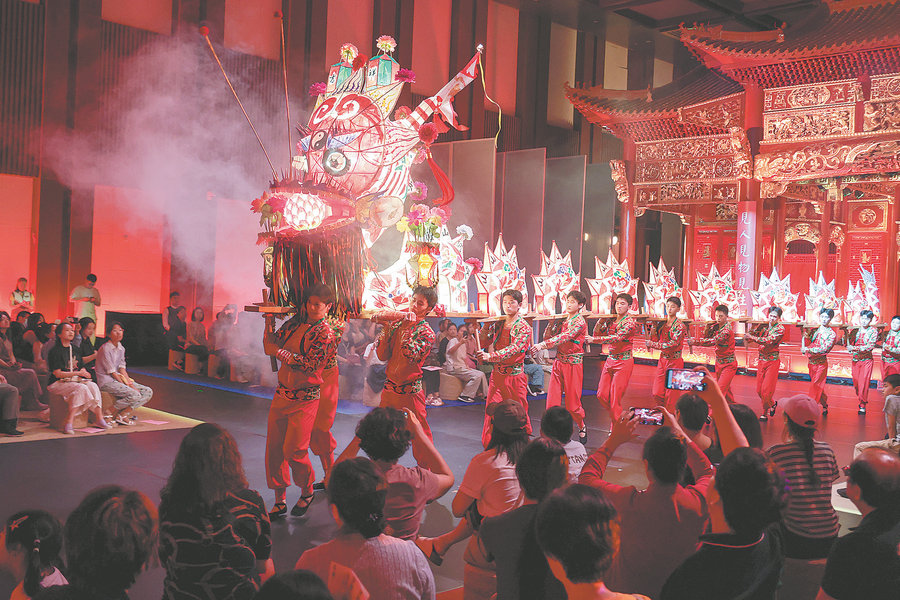
Young performers re-creating the process of shaping clay on a potter's wheel, a lantern-making inheritor interacting with young performers, and a traditional bench dragon dance (pictured) are among the highlights of the Insight Through Intangible Cultural Heritage program at the China Intangible Cultural Heritage Museum. (Photo: China Daily)
To help the young performers understand the traditions they represent, the museum arranged public-interest training sessions in which inheritors introduce them to the crafts before they participate in the shows.
During the National Day holiday, the museum also invited students from Sierra Leone and children from the Kazak ethnic group in the Xinjiang Uygur autonomous region. Li said the experience had helped children from different backgrounds build friendships while allowing international participants to encounter Chinese culture.
The project's community activities allow audiences to meet the creative team, inheritors and young performers; join discussions; and try traditional crafts. Five study-tour routes are also being developed to take participants to places where particular traditions originated, according to Li.
Traditional craftsmanship is also finding a place in the film merchandise market, where familiar characters and stories are being reinterpreted through traditional techniques.
Drawing on the folk legend of the Eight Immortals, which was included on China's national intangible cultural heritage list in 2008, the animated film All Wishes Come True! has inspired a range of products incorporating traditional crafts.
Lin Yi, from one of the film's production companies, Pearl Studio, said the team had developed a line of products using intangible cultural heritage techniques alongside more conventional film merchandise. The aim was to give the film's intellectual property a life beyond its theatrical release.
"Box-office revenue will pass, and the excitement will eventually cool," Lin said.
The film has attracted more than 57 million cinema visits in China and been released in more than 20 overseas markets. Lin said the two product lines serve different purposes.
"Cards, character merchandise and dolls address the emotional excitement around a film's release and serve its core fan base. The intangible cultural heritage line, by contrast, is about long-term cultural recognition and everyday use," he said.
"They are complementary, not substitutes for each other."
The collection includes a folding fan combining fan-making, Shu (Sichuan province) brocade and woodblock watermark printing, as well as character-inspired Shu brocade buttons, sachets featuring Qiang embroidery and Shu brocade, and a framed portrait of the Eight Immortals woven with about 40,000 threads.
The products were developed through cooperation between the film's IP team, specialist partners and craft practitioners. Pearl Studio provided authorized visual materials, research into historical texts and a collection of design motifs. Its partners then matched the designs with inheritors and artisans able to realize them through traditional techniques.
"Simply put, the IP owner defines the boundaries and provides the assets, the partner determines the approach, and the inheritors bring the craft skills," Lin said.
For the team, the appeal of these products lies partly in their potential to become part of everyday life, rather than remain film souvenirs.
The team is now looking to extend the film's visual elements into home decorations, seasonal gift sets and craft kits for parents and children, while exploring opportunities to take the products overseas.
Lin said traditional materials and techniques do not need elaborate embellishment to appeal to contemporary consumers. Products used in everyday life, he added, could keep a film's imagery visible long after its theatrical release.
"A button seen and asked about every day can be much more effective in spreading culture than an ornament kept in a cabinet," he said.