


Explainer: The 1992 Consensus and the one-China principle
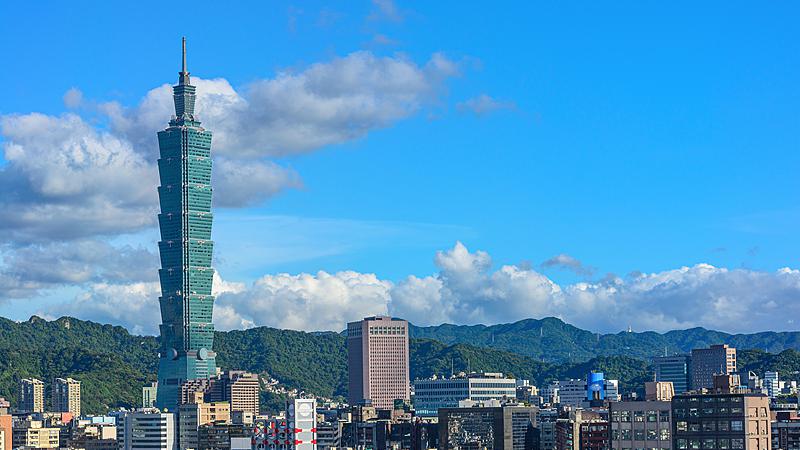
File photo of the Taipei 101 skyscraper in Taipei, China's Taiwan region. /VCG
The Chinese mainland said on Sunday that it will continue to uphold the one-China principle and the 1992 Consensus and work with Taiwan compatriots to deepen cross-Strait exchanges and cooperation as well as integrated development.
Zhang Han, a spokesperson for the State Council Taiwan Affairs Office, made the remarks while commenting on the results of Taiwan's local elections held on Saturday.
Zhang said that the mainland will resolutely combat "Taiwan independence" secessionist forces, oppose interference by external forces, and firmly advance the peaceful development of cross-Strait relations and the cause of national reunification.
CGTN explains what the 1992 Consensus is and why it is significant for cross-Strait relations, based on official statements and reports.
What's the 1992 Consensus?
The 1992 Consensus refers to the agreement on the one-China principle reached by the mainland-based Association for Relations Across the Taiwan Straits (ARATS) and the Taiwan-based Straits Exchange Foundation (SEF), with the authorization from authorities on both sides of the Strait.
On August 1, 1992, the Taiwan authorities reached a "conclusion" on the meaning of "one China" in talks between the ARATS and SEF, confirming that "both sides of the Taiwan Strait adhere to the one-China principle."
Later that same year, with authorization from authorities on both sides of the Strait and through repeated communication, consultation and correspondence, the two organizations reached the consensus that "both sides of the Taiwan Strait adhere to the one-China principle," which became known as the 1992 Consensus.
Although expressed orally, the 1992 Consensus was backed by written records that articulated the shared commitment to the one-China principle across the strait.
A spokesperson for the Taiwan Affairs Office of the State Council reiterated in January that relevant Taiwan authorities "could not be unaware of the history of interactions between the ARATS and the SEF, yet they are deliberately confusing the public."
From 2008 to 2016, the ARATS and the SEF signed a series of agreements based on the 1992 Consensus, which brought real, tangible benefits to people on both sides of the strait, especially those in Taiwan.
Why does the 1992 Consensus matter so much?
The Taiwan question stems from a full-blown civil war fought between the forces led by the Communist Party of China (CPC) and the Chinese Kuomintang (KMT) about eight decades ago. In 1949, the remnants of the defeated KMT retreated to Taiwan, and the CPC founded the People's Republic of China.
The unresolved civil war and foreign interference have left the two sides of the Taiwan Strait in a prolonged state of political confrontation. However, that Taiwan is an inalienable part of China's territory has never changed.
The essence of the 1992 Consensus is that both sides of the Taiwan Strait belong to the same China and will work together toward national reunification.
It clearly defines the nature of cross-Strait relations, which recognizes that this relationship is neither "state to state" nor "one China, one Taiwan."
Thanks to the 1992 Consensus, breakthroughs have been made in cross-Strait ties over the decades.
For example, a spokesperson for the Taiwan Affairs Office of the State Council reiterated in October 2024 that the importance of upholding the 1992 Consensus – that has laid the political foundation for the development of cross-Strait relations – is very clear-cut:
– It is thanks to this political foundation that cross-Strait consultation and negotiation have been started, exchanges between the political parties of the two sides have been facilitated, and institutionalized consultation and communication across the strait have been established.
– It is thanks to this political foundation that comprehensive, direct, two-way "Three Links" (of mail, trade, and transport services) have been realized across the strait, ushering in an era of extensive exchanges, interactions, and cooperation in various fields, greatly enhancing the well-being of residents on both sides.
– It is thanks to this political foundation that questions concerning the Taiwan region's participation in the activities of international organizations such as the World Health Assembly and the International Civil Aviation Organization could be arranged in a reasonable and appropriate manner.
– It is thanks to this political foundation that the first meeting between leaders from both sides of the Strait since 1949 took place in 2015, bringing cross-Strait political interaction to a new height.
Under the one-China principle, which is a universal consensus of the international community and a basic norm governing international relations, the Taiwan region, unless given approval by the Chinese central government, has no basis, reason or right to participate in the activities of international organizations.
Why is the 1992 Consensus an anchor of cross-Strait peace?
Since May 2016, the Democratic Progressive Party (DPP) authorities have adhered to a secessionist stance, refused to recognize the 1992 Consensus, and unilaterally undermined the political foundation for cross-Strait consultations.
Facts have proven that the 1992 Consensus serves as an anchor of peace and stability across the Taiwan Strait. Adhering to the 1992 Consensus can bring peace to both sides of the Taiwan Strait and benefit Taiwan compatriots, and denying the 1992 Consensus and departing from the one-China principle will only lead to tensions and instability in cross-Strait relations and harm the interests of compatriots in Taiwan.
The mainland has repeatedly urged the DPP to return to the 1992 Consensus.
It has consistently reiterated that on the basis of upholding the 1992 Consensus and rejecting "Taiwan independence," the mainland is ready to work with political parties, groups and people from all walks of life in Taiwan to promote cross-Strait exchanges and cooperation, advance the peaceful development of cross-Strait relations, secure the well-being of Taiwan compatriots, and strive for national rejuvenation.