


Wu Opera, also known as Jinhua Opera, is the second most prominent theatrical genre in east China's Zhejiang Province. Boasting a rich history spanning over 500 years, the art form derives its name from Wuzhou – the ancient designation for Jinhua City – where it remains a beloved cultural staple. Recognizing its profound legacy, Wu Opera was officially designated as a national intangible cultural heritage in June 2008.
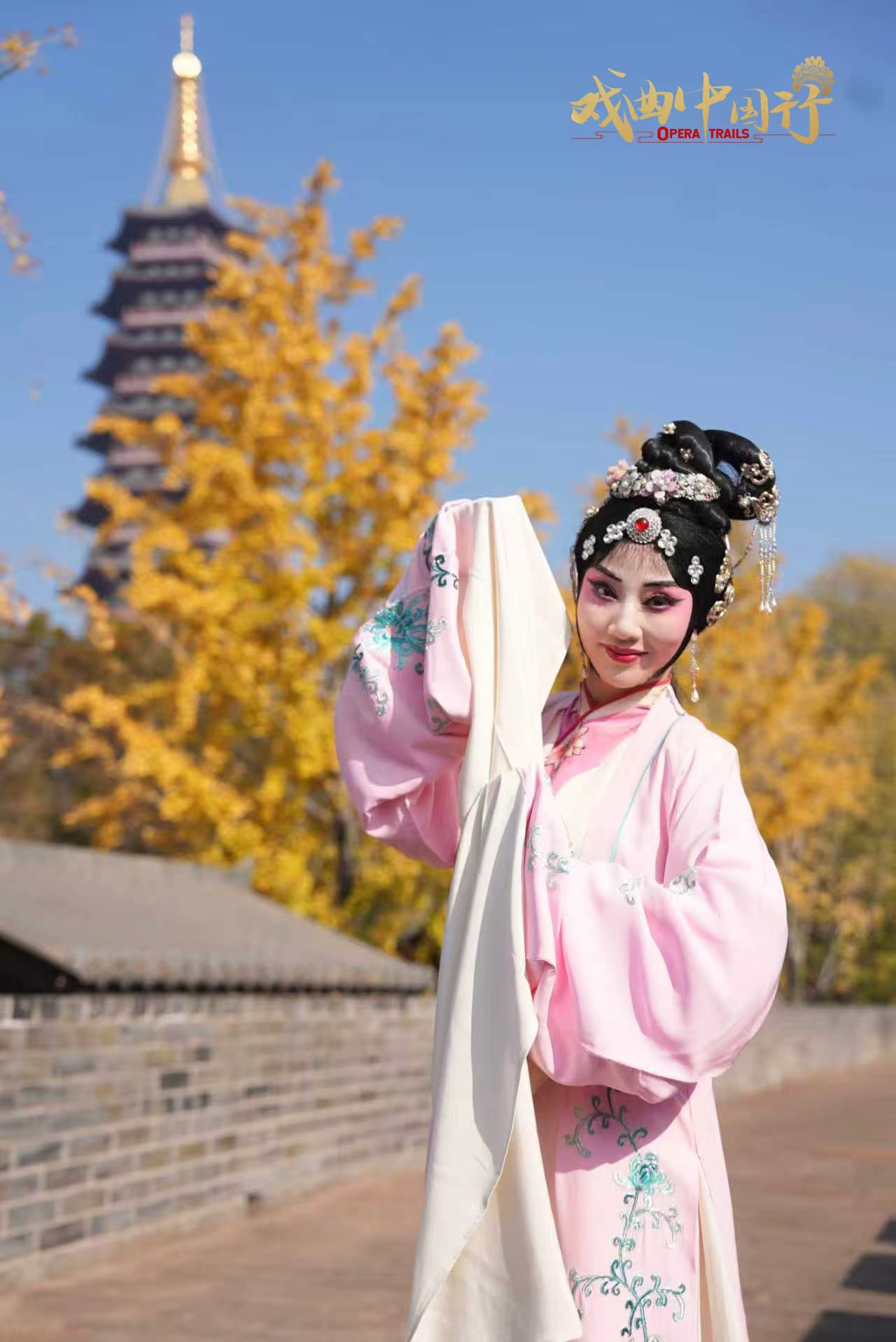
Wu Opera actress Lou Yiting stands against the Wanfo Pagoda in Jinhua City, east China's Zhejiang Province. /CGTN
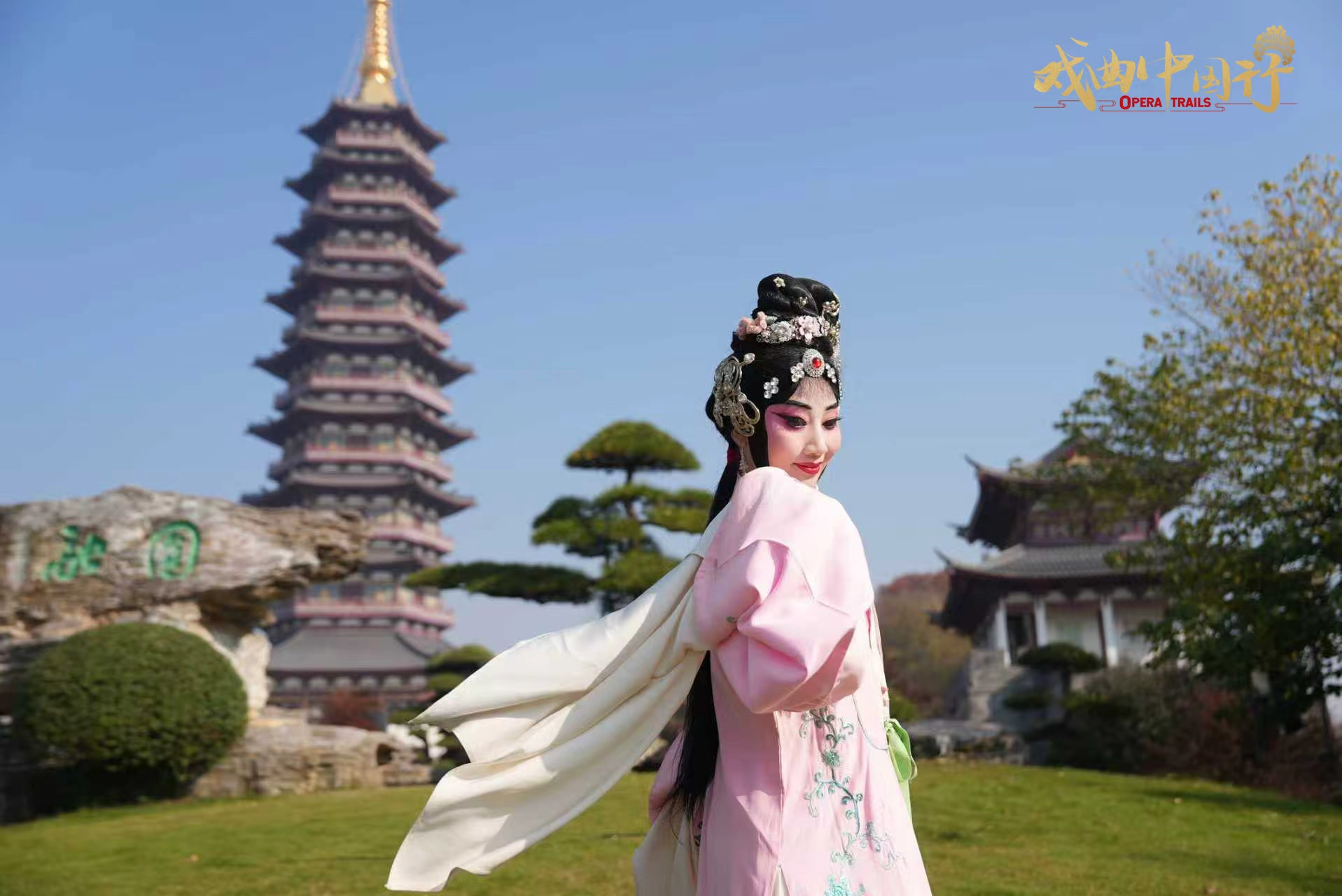
Wu Opera actress Lou Yiting stands in front of the Wanfo Pagoda in Jinhua City, east China's Zhejiang Province. /CGTN
The genre is perhaps most famous for the breathtaking "triple transformation" of Baigujing (the White Bone Demoness) in "Sun Wukong Subdues Baigujing." In a matter of seconds, the performer executes a seamless costume-and-face change to portray the demon's shifting forms.
Beyond these "instant changes," the technical repertoire of Wu Opera is a masterclass in physical dexterity. The stage comes alive with high-energy martial arts and unique stunts, ranging from the delicate coordination of handkerchief-spinning and double hard whips to the incredible balance required for "lamp-rolling," where an actor maneuvers fluidly on a bench with a lit oil lamp balanced atop their head. This blend of evocative vocals and gravity-defying acrobatics ensures that Wu Opera remains one of China's most dynamic performing arts.
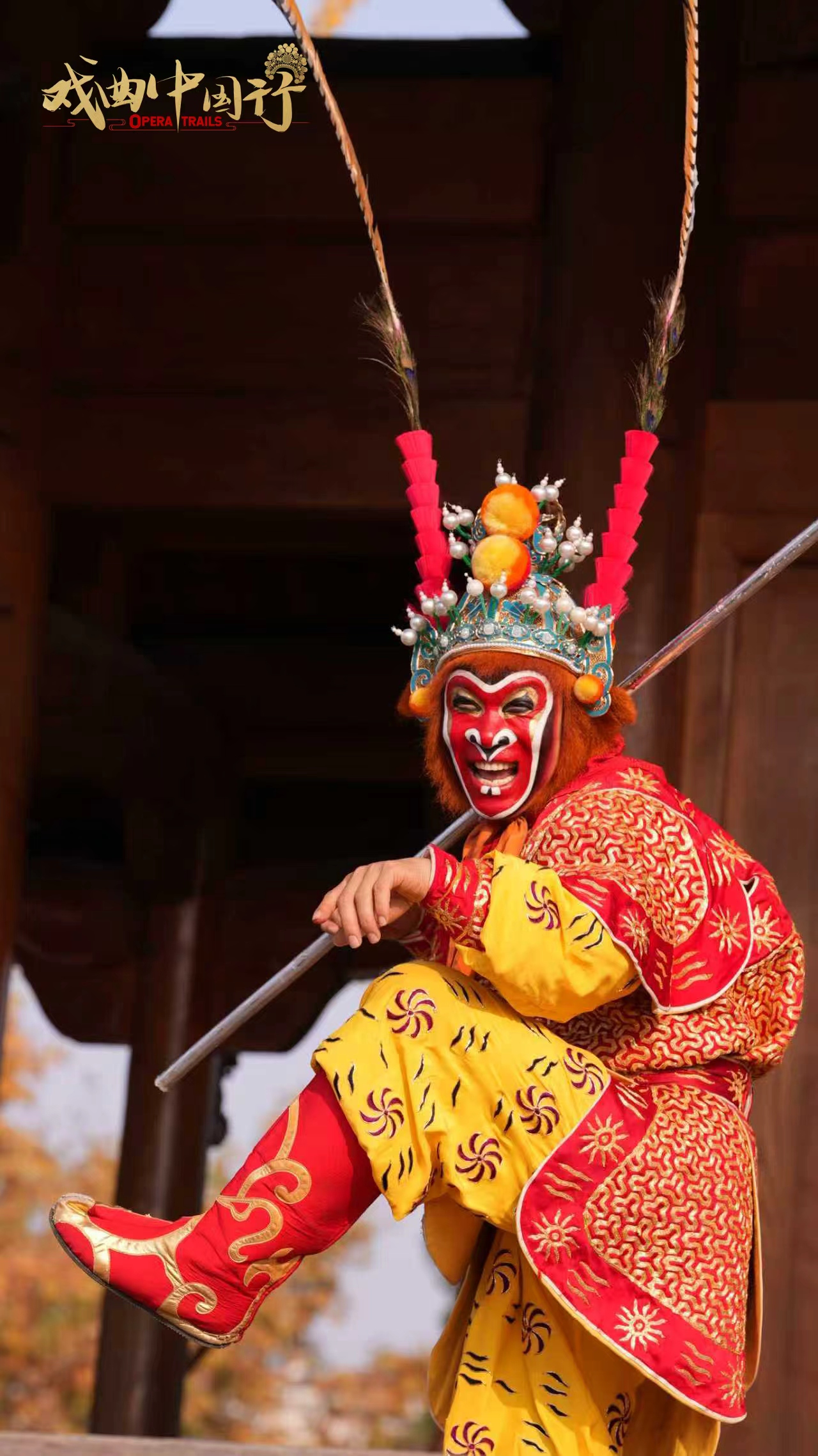
Wu Opera actor Wang Weixuan dresses as the Monkey King in "Golden Monkeys Welcoming Spring." /CGTN
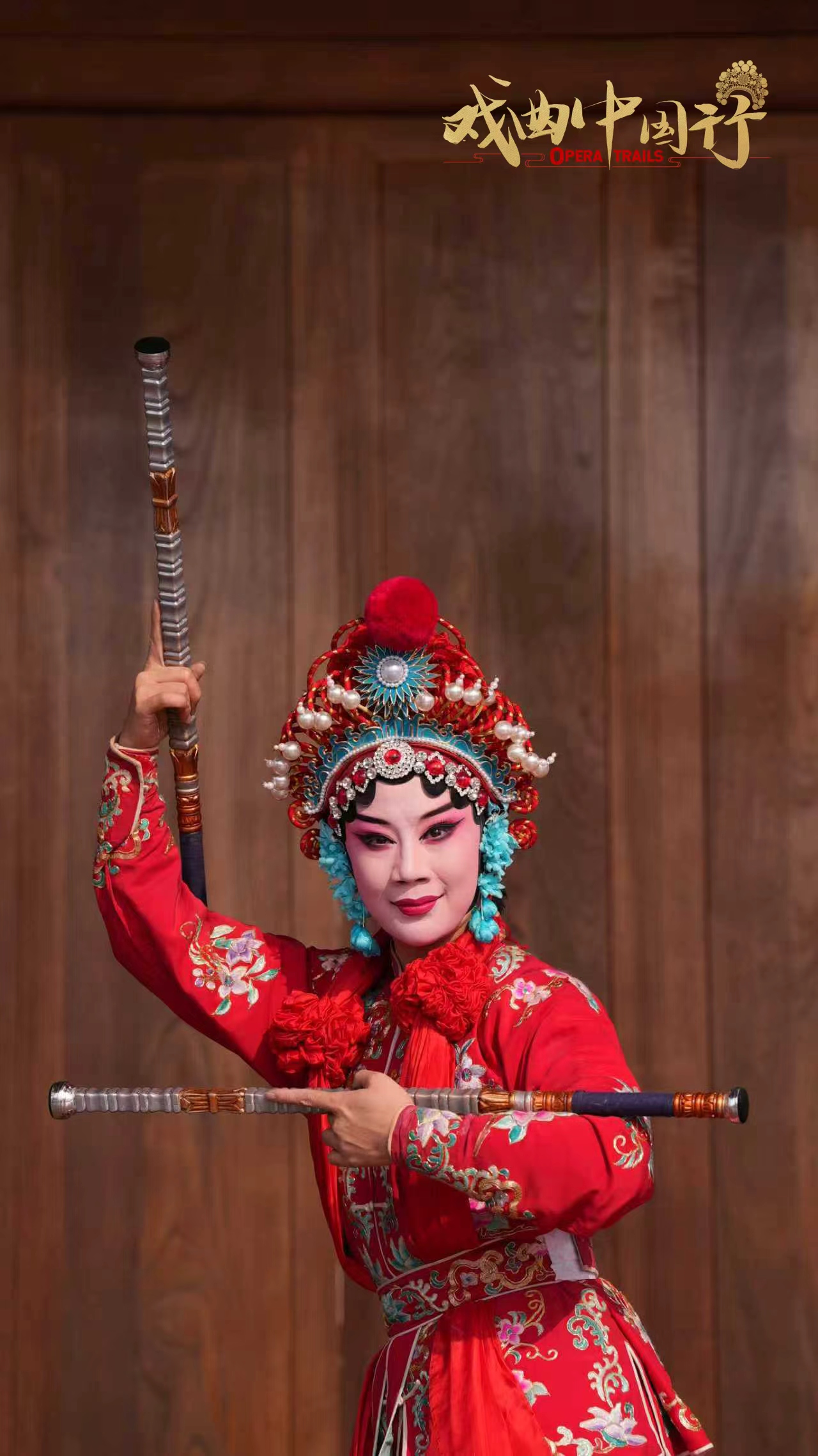
Wu Opera actress Wang Xingxing dresses as the Water Nymph of "Sizhou City." /CGTN
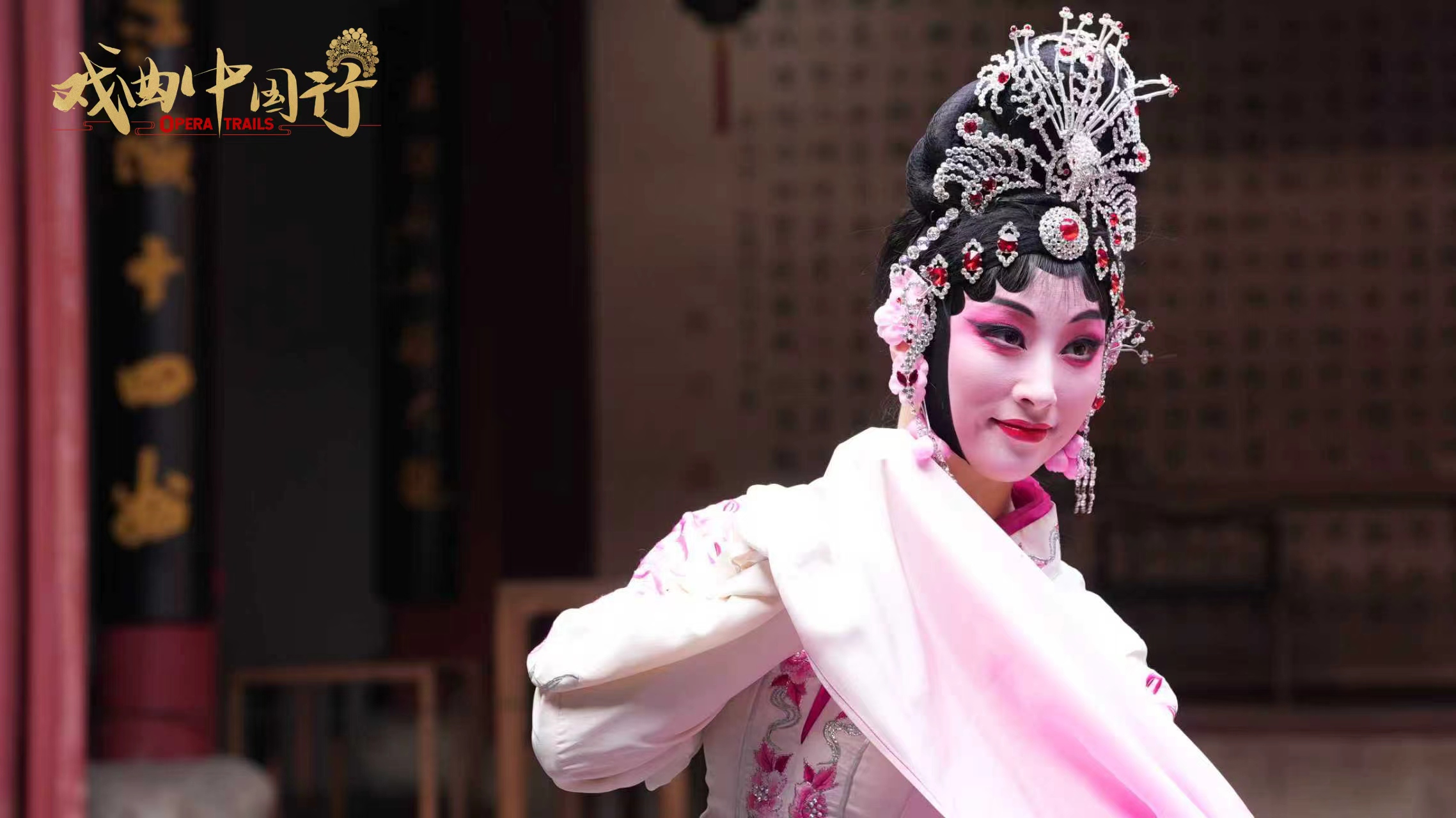
Wu Opera actress Ye Xiaohua dresses as the Celestial Maiden of "Celestial Maiden Scattering Flowers." /CGTN
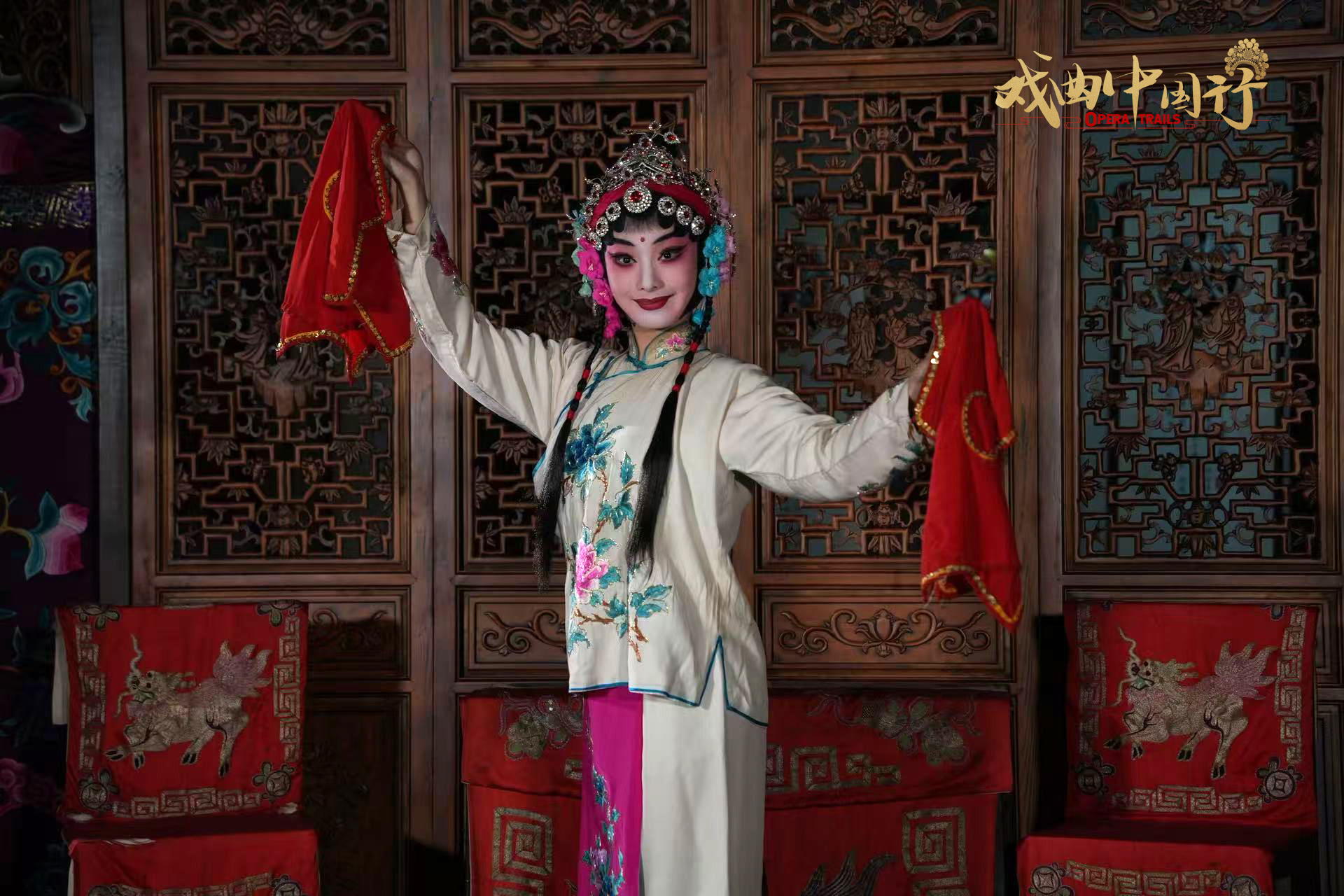
Wu Opera actress Ma Xifei dresses as Yelv Hanyan of "Hanging Up the Portrait." /CGTN
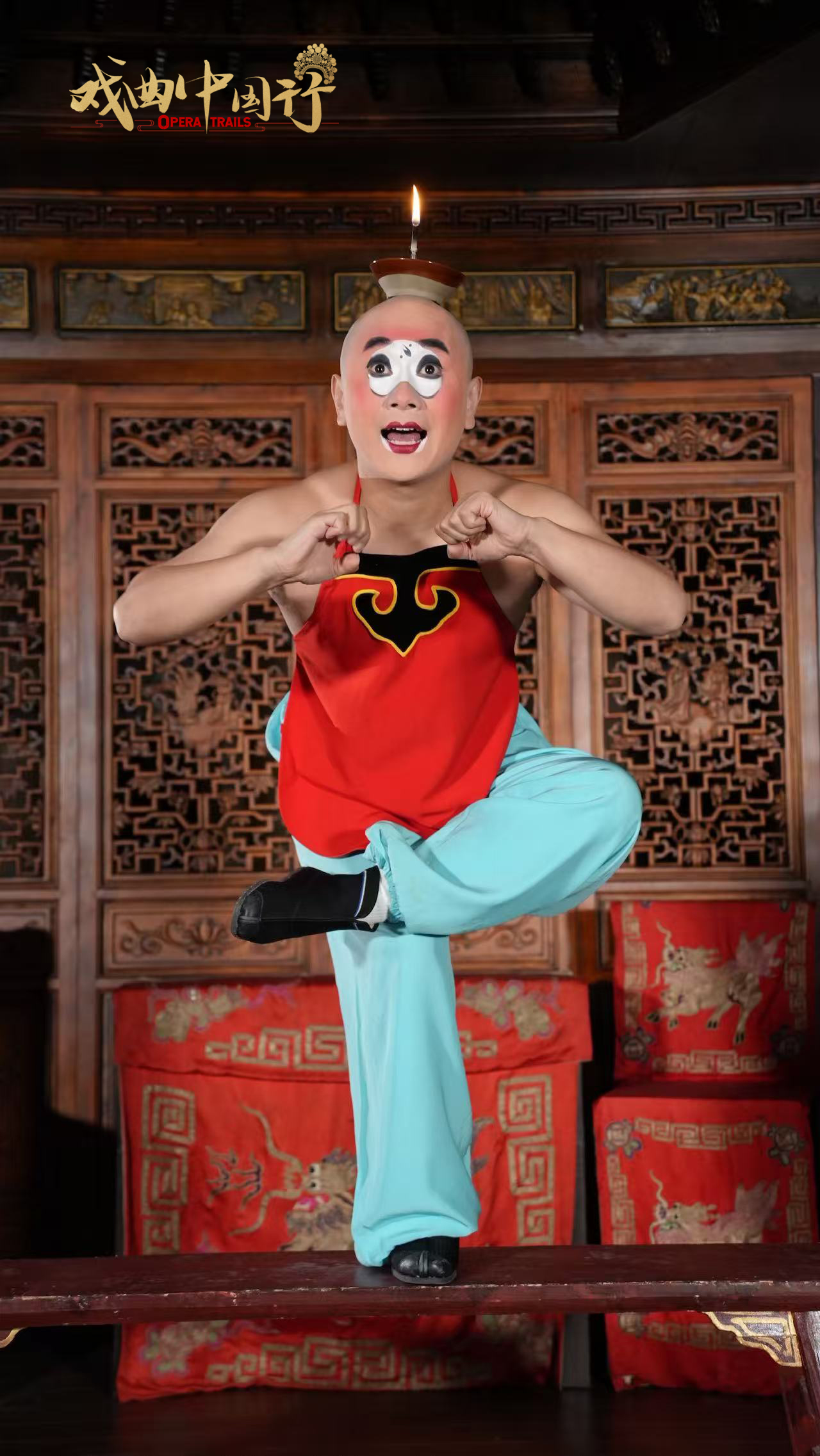
Wu Opera actor Xu Pengjiang dresses as Pijin of "Pijin Rolling Lamp." /CGTN