


For Chinese people, the Spring Festival is not merely a holiday -- it is the heartbeat of a civilization. Evolved through millennia, it has become the annual homecoming for the world's most enduring culture.
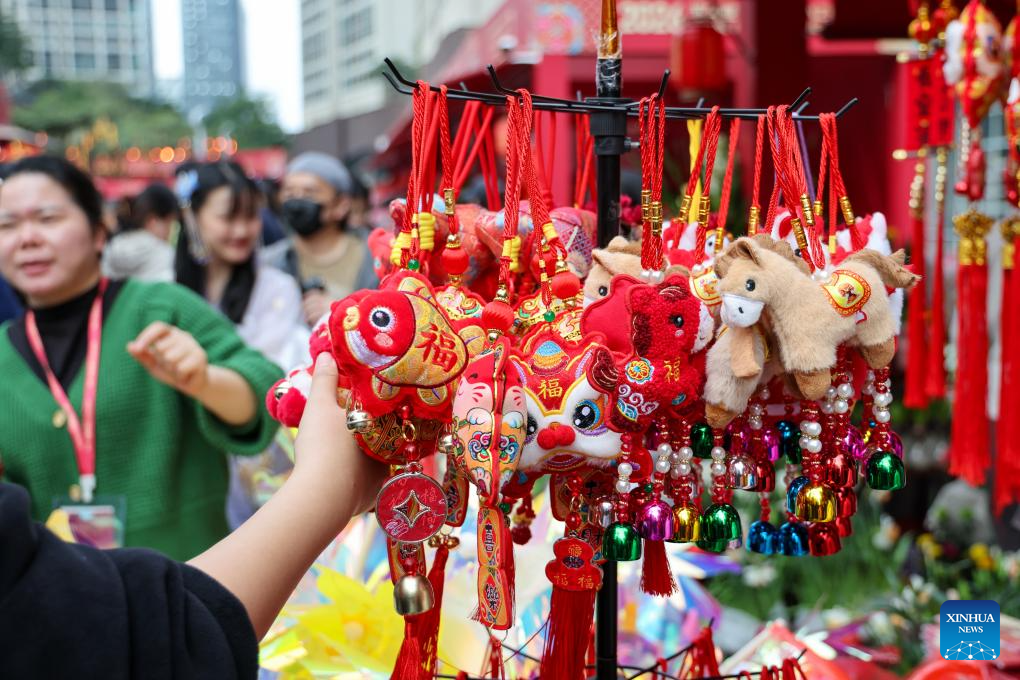
People buy new year's goods at a flower market in Futian District of Shenzhen, south China's Guangdong Province, on Feb. 10, 2026. (Photo: Xinhua)
Originated from an activity known as Winter Sacrifice in primitive society 4,000 years ago, it was an occasion when people offered sacrifices to the gods and their ancestors with the bounty from hunting, fishing and the fields, as a way of appreciating the blessings of nature, celebrating their good fortune and praying for a good harvest in the coming year.
In 104 BC, during the Western Han period, a new calendar system was introduced, officially establishing the first day of the first month as New Year's Day.
Over years, the celebration has evolved into a much greater variety of activities, from incorporating the color red and firecrackers to drive away Nian, an imaginary ferocious beast, to decorating one's door with couplets and the character Fu (blessing) written on red-colored paper.
From the north to south, Chinese people celebrate Chinese New Year's Eve with a reunion dinner, usually a feast that brings together all the best delicacies of a family and a town, with jiaozi (dumplings) observing the end and the beginning of a year and niangao (glutinous rice cakes) conveying the hope for a better life year after year. Now with the development of business and e-commerce, the dinner table of Chinese New Year's Eve abounds with food from everywhere in China and even other countries.
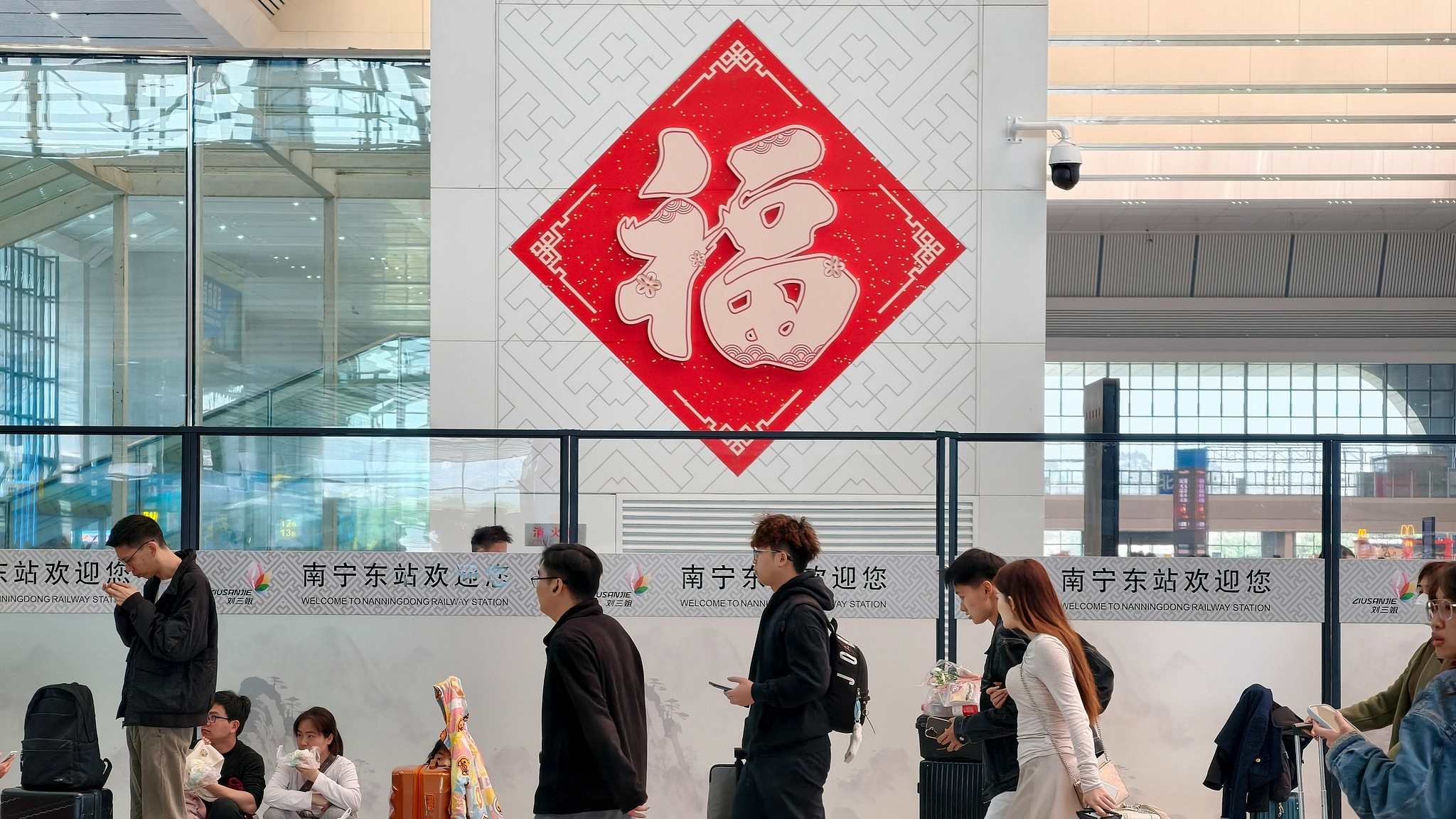
Passengers wait in the departure hall at Nanning East railway station, Nanning, Guangxi Province, China, February 14, 2026. (Photo: VCG)
The Spring Festival is an occasion to reward oneself and one's family with New Year goods. This year features "happy shopping" with three particular gifts from the government: 62.5 billion yuan ($9 billion) in national subsidies for a trade-in system for new items; 1 billion yuan allocated for the nine-day holiday for prizes exchanged for invoices for 100 yuan and above purchases in 50 pilot cities; and discounts for airfare, hotel, dining and attractions. In addition to New Year markets, people can also enjoy shopping at their fingertips on various e-commerce platforms with the launch of the "New Year Online Shopping Festival" on January 19. Statistics show that as of February 8, national online retail sales had reached 989.73 billion yuan.
Attracted by festival celebrations and experiences, global visitors are flocking to the country during the Spring Festival thanks to China's visa-free policies. As a new global travel highlight, China's inbound tourism surged with estimated average daily cross-border trips nationwide reaching 2.05 million. China is hosting international visitors with various policies that enable them to enjoy a Chinese-style holiday with ease and joy. Multilingual Spring Festival cultural maps allow international visitors to easily find temple fairs, lantern festivals, time-honored brands, and intangible cultural heritage markets. A total of 13,000 outbound tax refund stores welcome international foreign friends with an additional 10 percent discount during the Spring Festival.
Most importantly, it is an occasion for family reunion. As an old saying goes, "A thousand miles of longing can be measured in the steps taken toward home during the Spring Festival." Nowadays, while many people still travel home to join with their families, an increasing number of young people are instead bringing their parents in rural villages to their urban homes to celebrate the Chinese New Year and experience city life. The year 2025 saw an increase of 30 percent among people aged 60 and over taking part in this "reverse reunion." With a strong yearning for "taking me home," it is estimated around 9.5 billion trips will be made across the country during the Spring Festival, the largest human migration on earth.
Watching the Spring Festival Gala on Chinese New Year's Eve is the highlight of the celebrations that night. A televised variety show that originally debuted in 1983 and has evolved from a single studio broadcast to multiple locations with diverse programming, the gala had 2.13 billion live views on new media platforms in 2025, with the mobile audience reaching 372 million people, up 52 percent year-on-year.
In the past, the Spring Festival has been an occasion to pay New Year visits to friends and relatives. In virtual settings, people send greetings and their best wishes through social media, in particular, WeChat. The most electric moment remains the Chinese New Year midnight countdown at the Gala, when Chinese people across 15 time zones cheer together with the most extensive "New Year Greeting" ceremony imaginable -- soldiers guarding remote border posts, navy personnel on distant voyages, astronauts aboard the Tiangong space station, international students in foreign classrooms, diplomats representing the nation abroad, and state leaders extending wishes to the people -- making the Gala the largest family reunion in human history.
Underpinning the greetings is the concept of collective well-being, one of the most treasured values in Chinese people's minds. Among these countless streams of best wishes, Chinese people express their wishes for the well-being of family, the nation and "everything under heaven" (tianxia).
Over thousands of years, the way Chinese people celebrate the Spring Festival has changed, but what has remained unchanged is their hope for a better life full of reunions, harmony and prosperity.
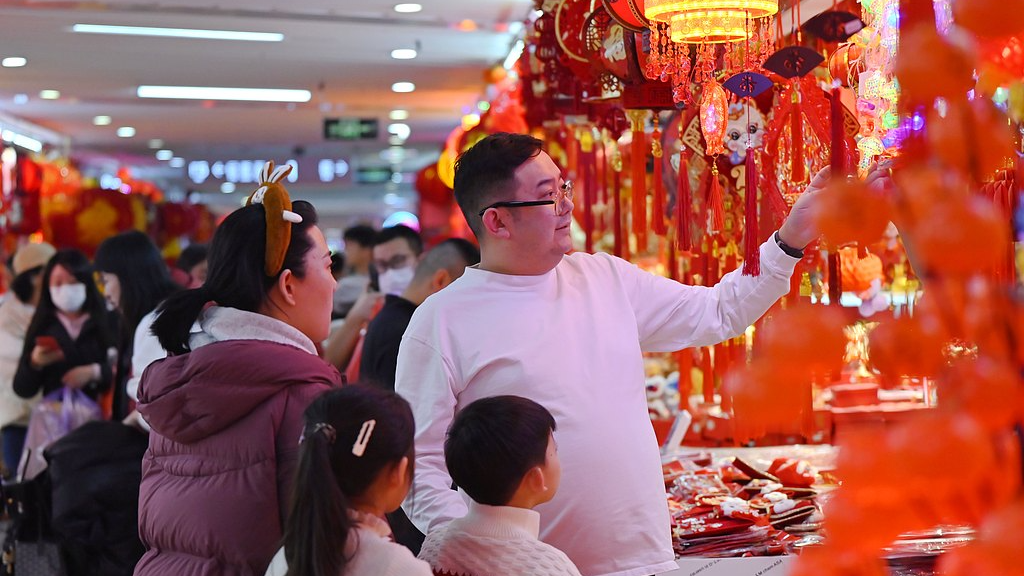
Shoppers pick out Spring Festival decorations at a shopping mall in Beijing, capital of China, February 11, 2026. (Photo: VCG)
In the past, Chinese people pinned their hopes on gods to bring them a good harvest. Today, people rely on the state and nation to realize their wishes. As illustrated in the lyrics of the song "State-home,": "The country is vast, yet essentially is a home; Home is the smallest state and the state is the biggest home." Echoing those sentiments elaborated on in many other forms of arts and literature, the nation is conceptualized as an extended family. That's why for the four decades of the Spring Festival Gala, the last performance of the night has always been the chorus "Tonight Last in Memory,"when all the performers sing the lyrics "Together we wish our motherland prosperity (gongzhuyuan, zuguohao).
East or West, home is best. This simple truth lies at the heart of the Spring Festival's enduring power. Despite all the changes in forms and formats, the festival's core values remain as constant as the North Star. It essentially serves as the "spiritual code" of Chinese culture. Those deeply held values not only define identity and shape the thinking and behavior of Chinese people, but also speak to universal human desires that transcend cultural boundaries.
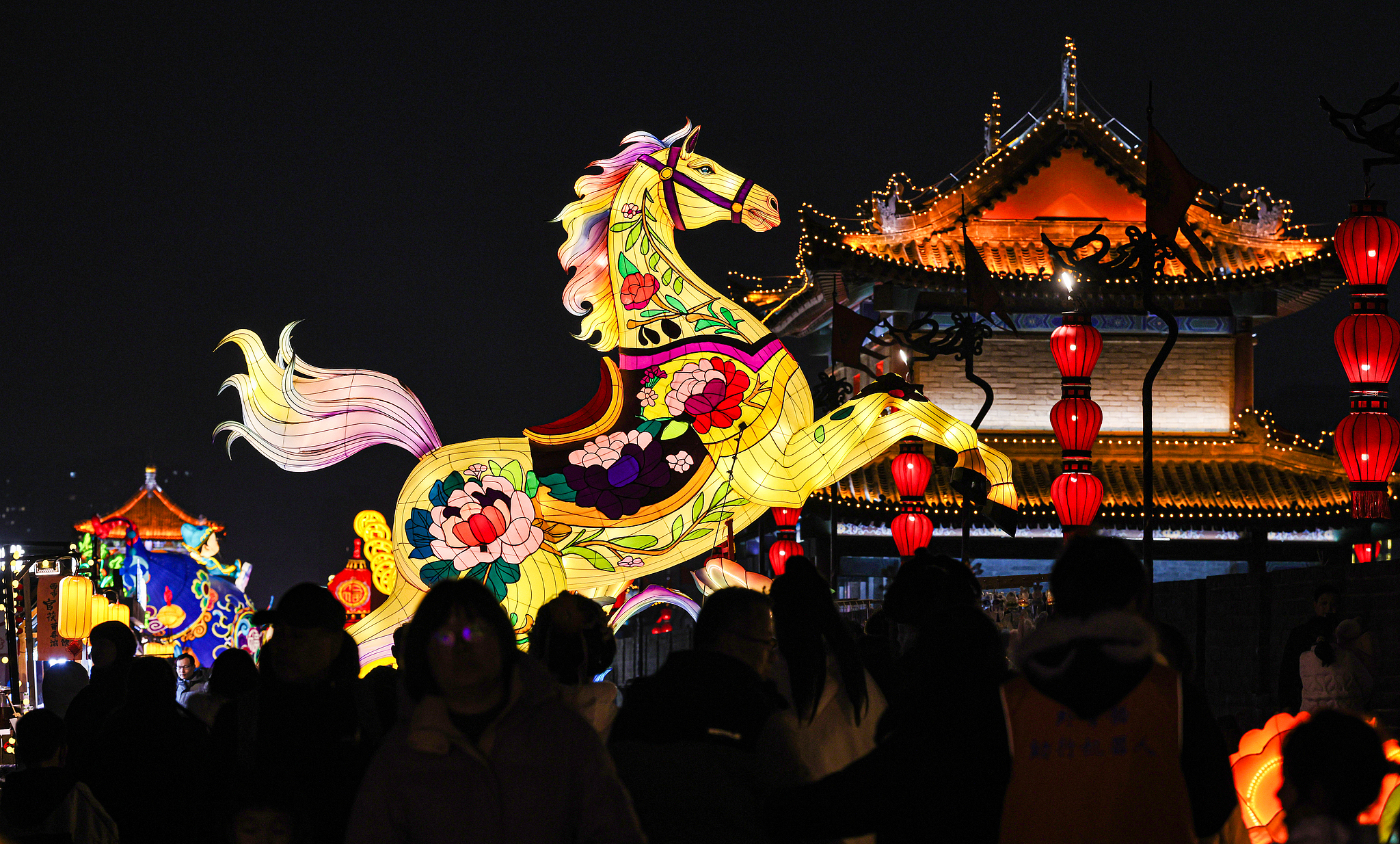
Tourists visit the lantern show at the Xi'an City Wall Scenic Area, experiencing the strong festive atmosphere of the Spring Festival, in Xi'an, Shaanxi Province, February 6, 2026. (Photo: VCG)
This year is the Year of Horse. In Chinese culture, the horse is a symbol of strength and ceaseless progress. As the horse gallops forward, it carries with it 4,000 years of tradition, now empowered with digitized means and contemporary vitality, shared across oceans and cultures. In the celebrations of the Spring Festival, China will embrace another year with more strength and continuous progress that blesses its people and the world with happiness and prosperity.
Hopefully, year after year, when people around the world join Spring Festival celebrations, be they gathered around the same table or connected through screens across oceans, they will celebrate together the peace, joy, and hope that this eternal festival brings to all who embrace its spirit.
(The author Wang Yan is an associate research fellow at Beijing Foreign Studies University)