



Moviegoers walk past a wall of film posters. As multiple releases hit the big screen during the Spring Festival holiday, audiences not only flock to cinemas to celebrate the season but also go to the scenic spots featured in the movies.(Photo: CFP)
During China's 2026 Spring Festival travel season, the Year of the Horse is bringing more than family reunions and box-office buzz. With the longest Spring Festival movie season on record and the launch of the "2026 Film Economy Promotion Year," Chinese cinema is turning iconic film landscapes into real-world travel destinations, reshaping how audiences spend their holidays.
"Activities such as film-themed fairs, tourism routes, culinary promotions, and intangible heritage exhibitions have extended movie consumption into broader holiday spending," said Sun Yanbin, an associate professor from Beijing Film Academy.
From simply "watching a story" to fully "stepping into the scene," moviegoers are increasingly turning their ticket stubs into travel passes. Spring Festival has become a testing ground for how film and tourism can empower each other.
From natural wonders to cultural immersion
The family film "Panda Plan: The Magical Tribe" takes audiences deep into Wengding Village in Cangyuan County in southwest China's Yunnan Province. The Wa ethnic settlement, with over 400 years of history, appears on screen amid misty mountains, primitive forests and ancient cliff paintings. Its cinematic exposure has quickly translated into real foot traffic.
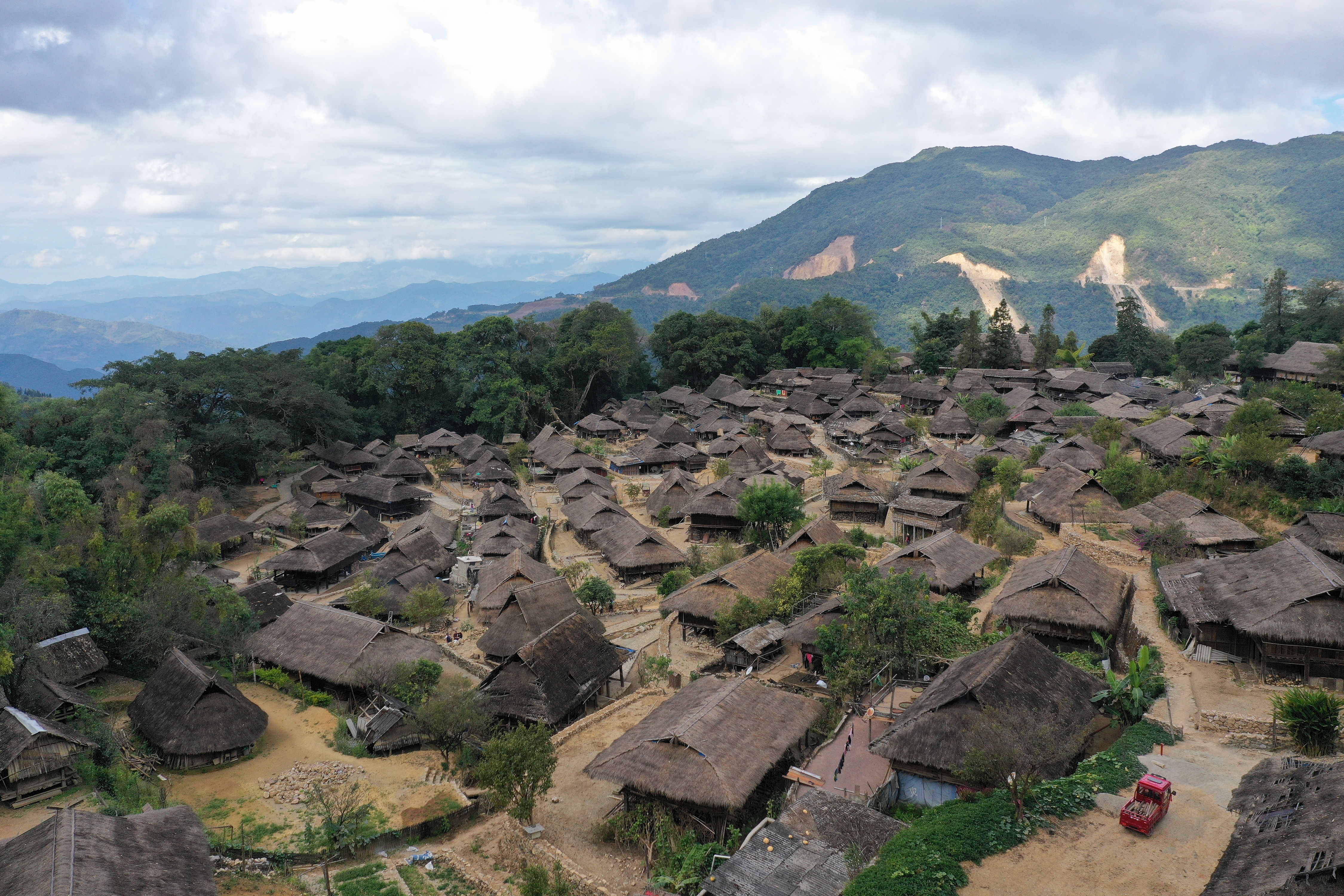
The film "Panda Plan: The Magical Tribe" brings Wengding Village in Cangyuan County in southwest China's Yunnan Province to the big screen.(Photo: CFP)
Capitalizing on the film's popularity, local authorities introduced an immersive cultural tourism plan. During the Spring Festival, visitors can take part in Wa drum festival experiences, learn traditional rattan weaving and embroidery, and make film-themed handicrafts.
For family travelers, research camps combine ethnic culture with nature exploration. As Sun noted, filmmakers are now consciously incorporating elements with strong copyright development potential, linking films with cultural heritage and tourism destinations.
A very different landscape comes alive in "Blades of the Guardians." Shot in Xinjiang's Karamay, the film places classic wuxia (martial arts heroes) storytelling against dramatic Yardang landforms carved by wind and time. The epic desert imagery has turned the once-remote Gobi scenery into a Spring Festival hotspot. Visitors can enter the scenic area for free with a movie ticket and participate in immersive martial-arts-themed role-playing experiences.
High on the plateau roads of Sichuan Province, "Pegasus 3" brings its racing plot to Ganzi Tibetan Autonomous Prefecture in southwest China. Alpine lakes and steep gorges frame the high-speed action, inspiring fans to follow the film's routes. Ticket-based discounts on scenic spots, restaurants and even gas stations have attracted tourists to hop on film-inspired road trips during the holiday.
City branding through the camera lens
Urban tourism is also benefiting from the big screen. In Shenzhen, "Scare Out" turns metro stations, cultural centers and the CBD skyline into the backdrop of an espionage story. Nearly 90 percent of the film was shot in the city, reinforcing its image as a futuristic hub. Visitors can follow dedicated "movie city walk" routes during Spring Festival, with filming locations precisely marked on digital maps. Ticket holders enjoy discounts at hundreds of hotels, restaurants and cultural venues.

A photo spot is set outside the Fanshen Metro Station in Shenzhen. Nearly 90 percent of the film "Scare Out" was filmed in Shenzhen.(Photo: CFP)
In Chongqing, the animated hit "Boonie Bears: The Hidden Protector" creates a festive city inspired by the mountain metropolis. Elements of Hongyadong and the Qiansimen Jialing River Bridge are woven into the animation. Families can attend temple fairs and experience traditional crafts.
Beyond the screen: A new film economy
Hengdian World Studios in east China's Zhejiang Province, where "Per Aspera Ad Astra" opens its sci-fi adventure to the public, has become a testing ground for the film industry's expanding strategy. Visitors can explore filming locations, learn green-screen techniques and take part in film-themed night markets.
"Fueled by AI and the influence of animation, cinema is no longer bound to recreating the physical world," said Zuo Heng, director of the Film Culture Research Department at the China Film Archive. "It's a profound shift that will overflow the screen, building entirely new universes and fundamentally reshaping our cultural landscape."
During this Spring Festival, strong box-office performance and heavy holiday travel are converging, with film locations across China emerging as new drivers of tourism spending.