


The US-Israeli campaign against Iran entered its 19th day on Wednesday, with strikes targeting the South Pars gas field, prompting Iran to retaliate against regional energy facilities. The attacks have driven oil prices higher, raising fears of a major energy crisis if the region's key energy infrastructure continues to be hit.
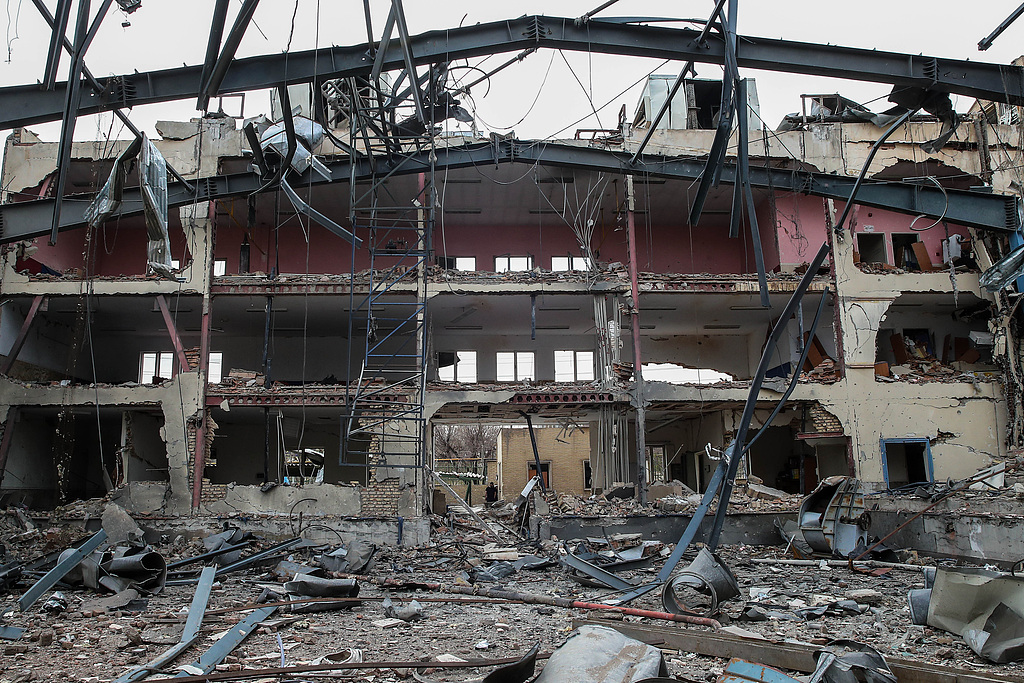
A view of the destruction at Shohadan-e Esmaeili Sports Complex, which was targeted by US and Israeli air strikes on Iran, Tehran, Iran, March 17, 2026. /VCG
Intensified strikes
Israel on Wednesday said its air force struck more than 200 targets across western and central Iran, including facilities associated with ballistic missiles, drones, air defense systems and weapons production.
Iranian authorities reported that key energy sites, including parts of the South Pars gas field and petrochemical facilities in Bushehr Province, were hit in joint US-Israeli operations. Israeli media, citing unnamed sources, said the country's air force carried out the strike.
The South Pars gas field, known as the North Dome in Qatar, is the world's largest natural gas field located in the waters between Iran and Qatar, processing a significant share of the country's gas supply.
According to the International Energy Agency, the field holds an estimated 1,800 trillion cubic feet (51 trillion cubic meters) of in-situ natural gas and some 50 billion barrels (7.9 billion cubic meters) of natural gas condensates.
Iranian officials strongly condemned the attacks. President Masoud Pezeshkian warned that such "aggressive acts" will complicate the situation and "could have uncontrollable consequences, the scope of which could engulf the entire world."
Parliament Speaker Mohammad Bagher Ghalibaf framed the strikes as an attempt by adversaries to offset battlefield setbacks, signaling what he described as a shift toward an "eye for an eye" new phase in the conflict.
Regional countries including Qatar, Oman and United Arab Emirates also condemned the attacks on Iran's energy facilities, warning the strikes represent a dangerous escalation that threatens regional security and global energy supplies.
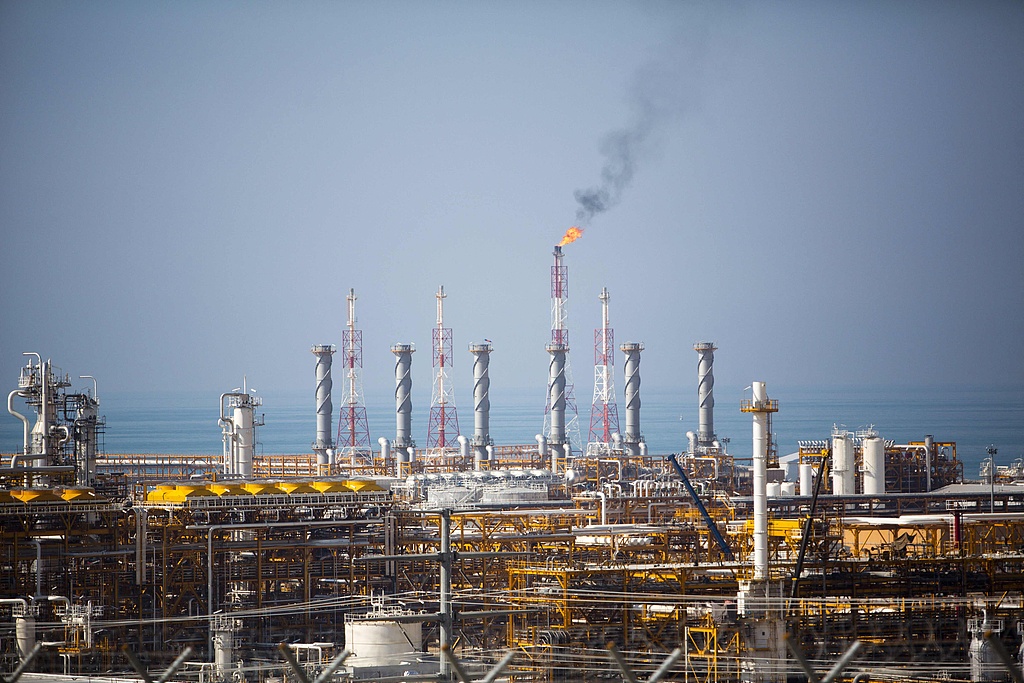
A view of the phase 12 of the South Pars gas field facilities near the southern Iranian town of Kangan on the shore of the Gulf, January 22, 2014. /VCG
Senior Iranian officials killed
The situation has been further exacerbated by the killing of several high-ranking Iranian officials in recent strikes.
President Pezeshkian confirmed the death of Intelligence Minister Esmail Khatib, alongside other senior figures, including Ali Larijani, secretary of Iran's Supreme National Security Council, and Defense Minister Aziz Nasirzadeh. Iranian authorities said some family members and aides were also killed.
Israel acknowledged targeting Khatib, with its defense minister stating that the intelligence chief had been eliminated in a recent operation.
Funeral ceremonies for Larijani were held in Tehran on Wednesday, as Iranian leaders vowed retaliation.
Pezeshkian said the deaths of the Iranian officials and others are "cowardly assassinations."
"I firmly believe that their path will continue with even greater resolve than before," said the Iranian president.
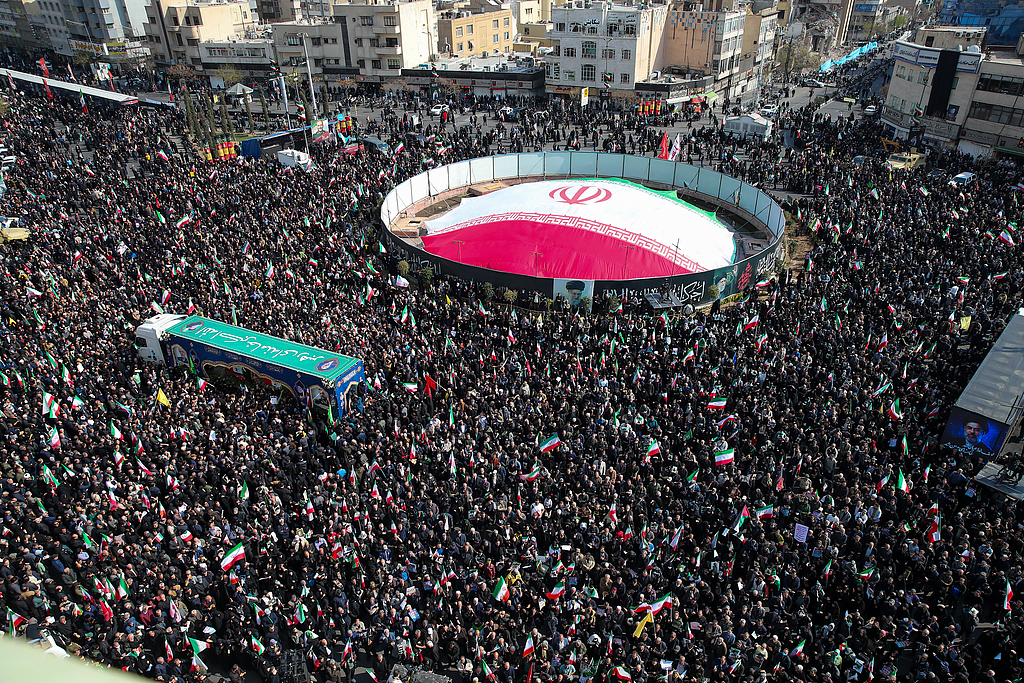
People gather and hold Iranian flags during the funeral of Iran's Supreme National Security Council Secretary, Ali Larijani, who was killed during the US-Israeli Iranian conflict, Tehran, Iran, March 18, 2026. /VCG
Iran launches retaliatory operations
Iran's Islamic Revolutionary Guard Corps (IRGC) announced a new wave of operations under "True Promise-4," describing it as a direct and proportional retaliation for attacks on its infrastructure.
Hours after an attack on the South Pars gas field, the IRGC issued an urgent warning, calling for the evacuation of oil and gas facilities across Persian Gulf countries. The warning specifically named energy sites in Saudi Arabia, Qatar and the United Arab Emirates, saying these locations could be targeted in the coming hours. The IRGC called on citizens, residents and employees to "immediately leave these areas and move to a safe distance without any delay."
The facilities named as potential targets included the SAMREF refineries and the Al Jubail petrochemical complex in Saudi Arabia, the Al Hosn gas field in the United Arab Emirates, and the Mesaieed petrochemical complex and Ras Laffan refinery in Qatar.
"Our list of targets is updated. Oil facilities associated with America are now on par with American bases and will come under fire with full force," IRGC Navy chief Alireza Tangsiri wrote on X.
Reports from the region indicated disruptions, including a missile strike in Qatar's Ras Laffan Industrial City that caused significant material damage, and temporary suspension of operations at gas facilities in the UAE due to falling debris from intercepted missiles.
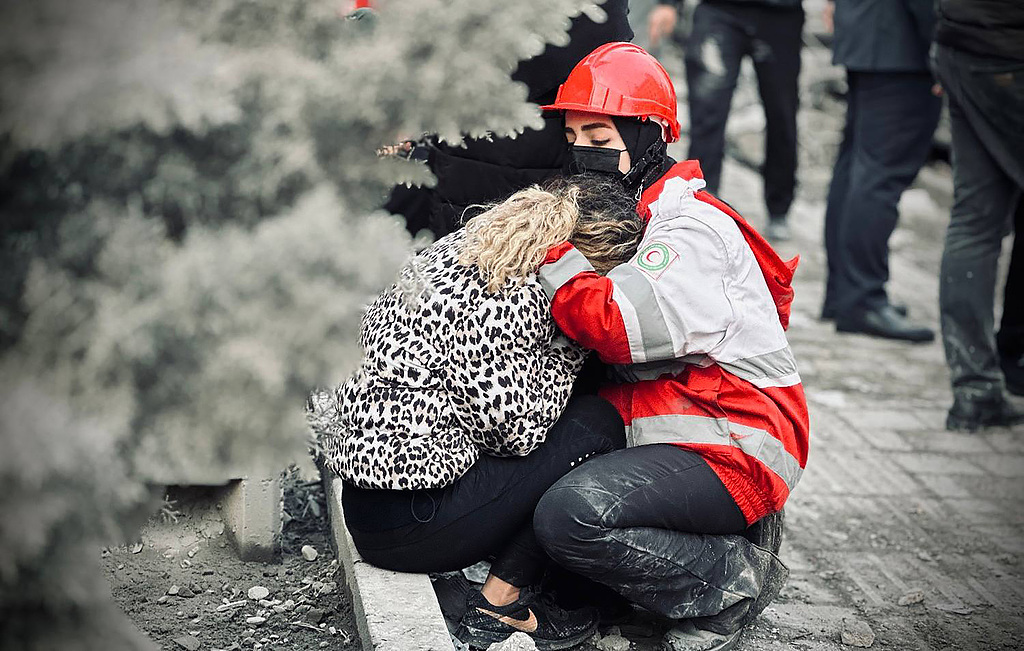
Rescue workers from the Iranian Red Crescent assist an injured woman after a US-Israeli air strike targeted a residential building in central Tehran, Iran, March 17, 2026. /VCG
Divergence between US, Israel
US President Donald Trump on Wednesday hinted he is considering further action against Iran's current leadership, while also suggesting that countries reliant on shipping through the Strait of Hormuz should take greater responsibility.
Trump later also criticized the Israeli raid on Iran's South Pars field. In a statement on his Truth Social platform, Trump said: "Israel, out of anger for what has taken place in the Middle East, has violently lashed out at a major facility known as South Pars Gas Field in Iran. A relatively small section of the whole has been hit."
"The United States knew nothing about this particular attack, and the country of Qatar was in no way, shape, or form, involved with it, nor did it have any idea that it was going to happen. Unfortunately, Iran did not know this, or any of the pertinent facts pertaining to the South Pars attack, and unjustifiably and unfairly attacked a portion of Qatar's LNG Gas facility. NO MORE ATTACKS WILL BE MADE BY ISRAEL pertaining to this extremely important and valuable South Pars Field," Trump wrote.
Reports also suggest differences between the United States and Israel over long-term objectives. While Washington appears focused on weakening Iran's military capabilities and limiting escalation, Israel is said to place greater emphasis on targeting senior leadership and potentially pursuing regime change.