


This season's Shanghai Fashion Week opened with a clear shift in positioning: it is no longer just a platform for domestic exposure but a key bridge linking Chinese designers with international markets. The emphasis has moved beyond showcasing creativity to enabling real market entry and expansion.
Diversity within one ecosystem
Inside the venues, the energy extends far beyond the runway. What defines the scene is the mix of participants, international buyers, overseas media, local influencers, independent designers, brand founders, and supply chain players – all circulating through the shows and showrooms with a shared goal: identifying brands that can scale beyond China and compete globally.
Unlike traditional fashion capitals, where prestige and image often dominate, Shanghai's strength lies in its commercial orientation. Here, the runway is closely tied to the marketplace, and success is measured not just by visibility, but by conversion into orders and partnerships.
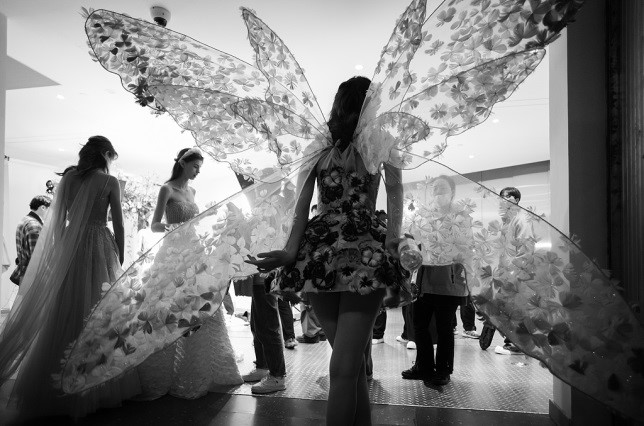
Shanghai Fashion Week, which runs until mid-April, is a bridge linking Chinese designers with international markets. /VCG
At the core of this model is Shanghai's broader industrial ecosystem. Positioned within the Yangtze River Delta, one of the world's most integrated manufacturing and supply chain hubs, the city offers designers an accelerated pathway from concept to consumer. Ideas can be prototyped, refinedrefined, and brought to market in a matter of weeks. For international buyers, this responsiveness is a major draw: Shanghai is not only a place to discover emerging talent but also a testing ground for how quickly and effectively brands can translate design into scalable business.
Chinese designers on the rise
Feng Chen Wang, one of the most recognized Chinese designers on the global stage, has shown in London, ParisParis, and Tokyo. She told CGTN that even though her brand was founded in London and gained early recognition at New York Fashion Week, her work has always maintained a strong Chinese cultural touch. With elements like bamboo, tea culture and traditional-style prints, her design is a fusion of Eastern cultural identity and Western tailoring – a balance that has become increasingly popular among an emerging new wave of Chinese designers.
This year, Feng Chen Wang opened Shanghai Fashion Week with a celebratory runway show to mark the 10th anniversary of her eponymous label. The show was not only a milestone for the brand but also a symbolic moment for Shanghai Fashion Week as a whole, highlighting how Chinese designers are now moving confidently and effectively between global fashion capitals and their home market.
Today, a new generation of Chinese designers is approaching global fashion with growing confidence in their cultural voice. Rather than adapting to external expectations, they are integrating elements such as traditional fabrics, tailoring techniquestechniques, and cultural motifs into contemporary design frameworks. The outcome is not a revival of "traditional Chinese style," but the emergence of a hybrid design language, rooted locally, yet fully aligned with global aesthetics.
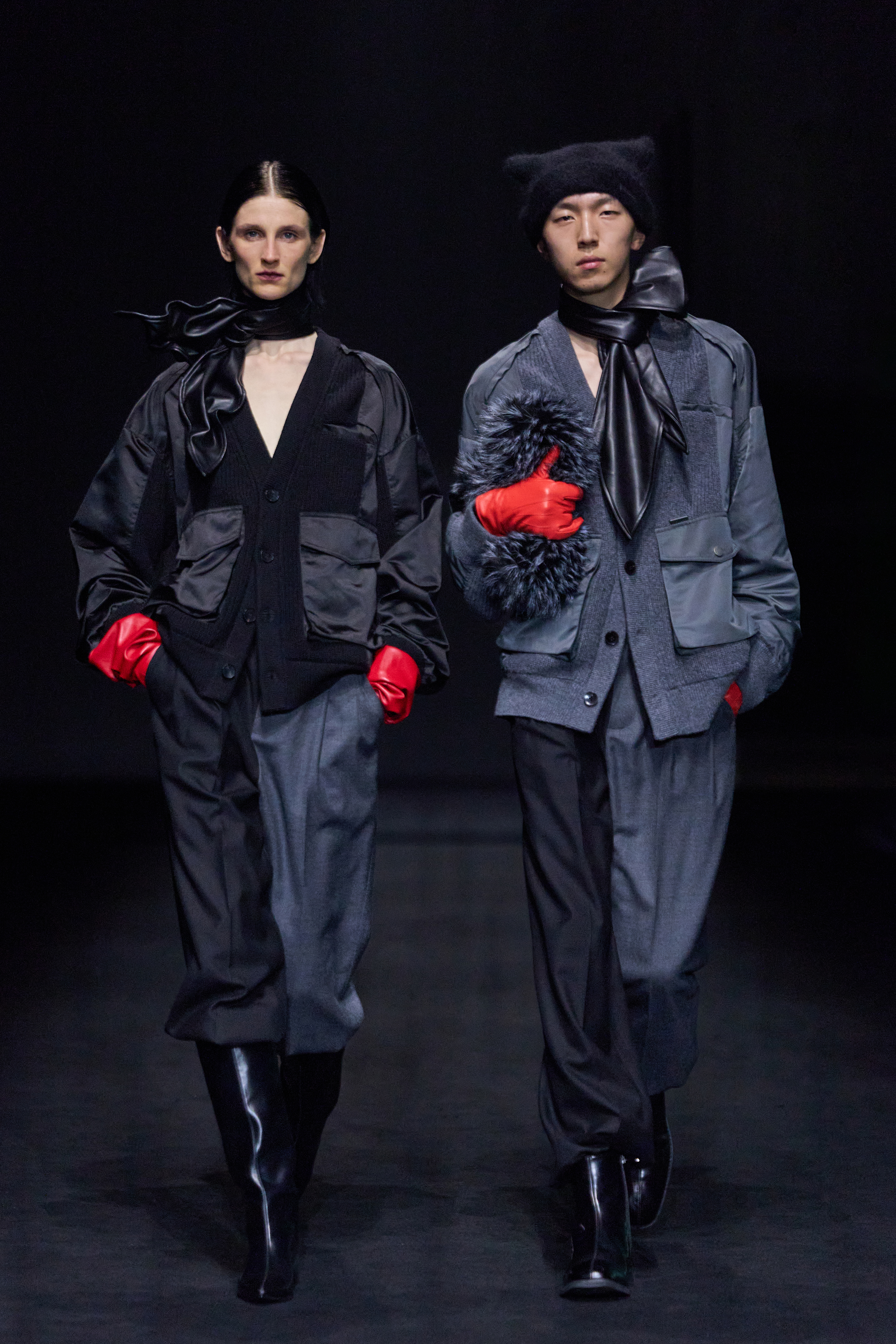
Feng Chen Wang kicks off Shanghai Fashion Week in this picture taken on March 26, 2026. /CGTN
For Feng Chen Wang, the past decade reflects a shift from runway recognition to sustained international expansion. Beyond the shows, the brand has built a broad retail footprint and now works with more than 100 buyer stores worldwide. Its presence across markets including Italy, the UK, Spain, Japan, Singapore and the Middle East, which illustrates a wider trend: Chinese designers are no longer positioned on the periphery of the global fashion system but are actively operating within it, shaping both supply and demand.
Yet despite her international footprint, Shanghai is becoming the next key step for the brand – this time not just as a show venue, but as a base for her own studios and retails. The plan, however, is deliberately cautious. As she put it, "The fashion brand is turning into a more lifestyle-inclusive brand, but there's no rush.”
Beyond the runway
What is happening in Shanghai reflects a larger shift in global fashion. The center of this enormous industry is no longer defined only by Paris, Milan, LondonLondon, or New York. Shanghai is carving out a different role – not just as a fashion capital but as a fashion business hub where designers, manufacturers, buyersbuyers, and digital platforms are closely connectedintricately connected.
Shanghai, with its mix of local consumers, international residents and strong retail culture, offers the perfect testing ground for that transition. For many Chinese designers who have built their reputation overseas, the Chinese market is no longer just a manufacturing base: it is now one of the most important consumer markets and brand-building platforms. This is also why the significance of Shanghai Fashion Week extends far beyond the runway.