


Where Beijing wears its imperial legacy grandly and Guangzhou leans into its "commercial capital" energy, Nanjing has always stood out for its distinct literary identity.
As China's only UNESCO City of Literature, it holds 1,800 years of written culture – from the Ming Tomb ad the Sun Yat-sen Mausoleum to the exquisite artistry of Yunjin brocade. In total, boasting over 2,400 heritage sites.
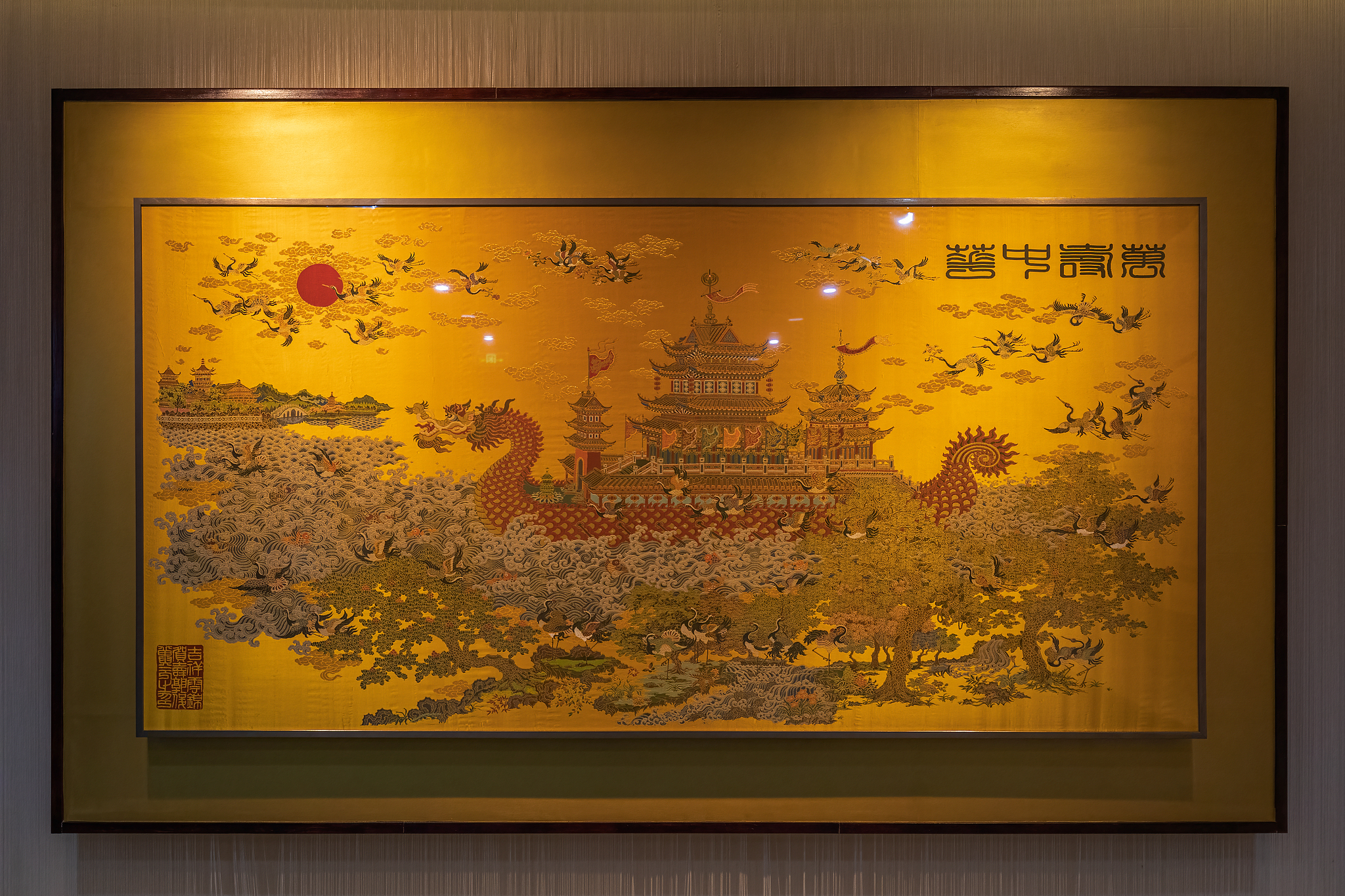
Nanjing Jiangning Textile Museum showcases intangible cultural heritage through Yunjin brocade designs, including motifs of the Yellow Crane Tower, dragon boats and cranes, China. (Photo: VCG)
In the broader East Asia regional analysis of the 5th edition of the World Culture Cities Forum Report (WCCR), Nanjing proudly claims the title of the "24-hour cultural metropolis" and serves as a leading example of cities using digital tools to connect new and younger audiences with traditions.
How literature becomes part of urban infrastructure
Drawing on more than 1,800 years of literary history, Nanjing has developed a "City of Literature Digital Spatial Network," using big data, virtual and augmented reality to enrich cultural landmarks. The city has installed over 1,000 QR codes which link physical locations to literary content. These QR codes generate more than 40 curated routes – walking itineraries that turn the city itself into a sort of readable text.
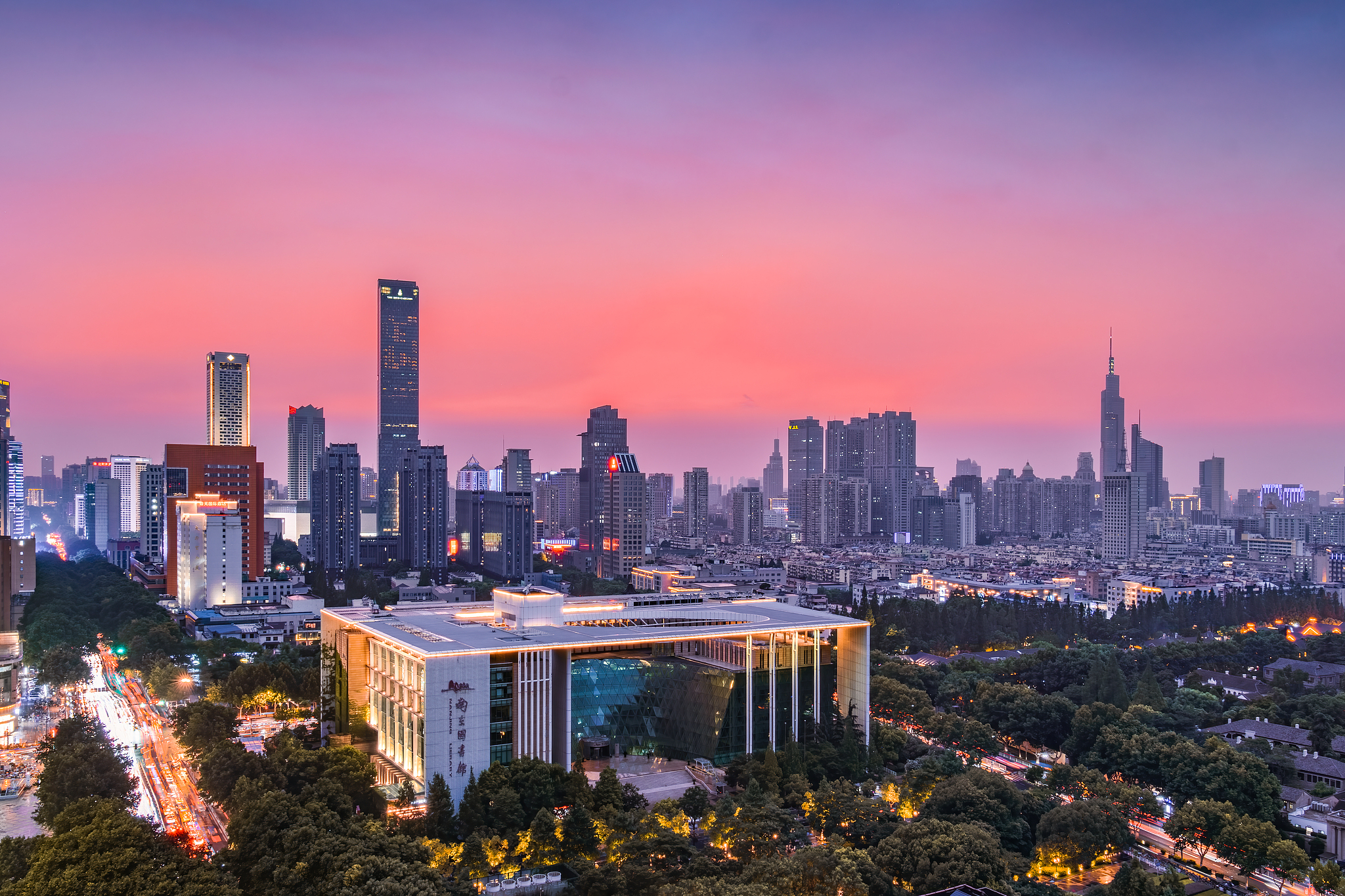
Dusk sets over Daxing Palace and Nanjing Library, Nanjing, China. (Photo: VCG)
Literary tourism, which the WCCR names as one of Nanjing's key contributions to East Asian cultural trends, has become a genuine economic and civic force here.
The infrastructure and the ambition
The institutional backdrop to all of this is substantial. Nanjing has 72 museums, 651 heritage and historical sites, 39 theaters, 26 live music venues and 115 cultural centers. Some 688,000 people work in the cultural and creative sectors – a remarkable figure for a city of 9.5 million. The culture department budget runs to approximately 2.89 billion yuan (more than $423 million), and 100 new or upgraded studio theaters are planned citywide as part of the 2024 cultural strategy. Over 500,000 cultural practitioners are active in the city, supported by a strong volunteer culture that the report notes as a distinctive feature of Nanjing's civic life.
With 57 higher education providers and 103 million tourists annually, the city has both the intellectual infrastructure and the visitor economy to sustain its ambitions.
'Dream of the Red Chamber': Classical literature meets immersive tech
The single most striking project in Nanjing's WCCR profile is its immersive adaptation of "Dream of the Red Chamber." Having debuted in July 2024, this project is a digitally driven exhibition that uses immersive technology to bring the novel's world to life in physical space.
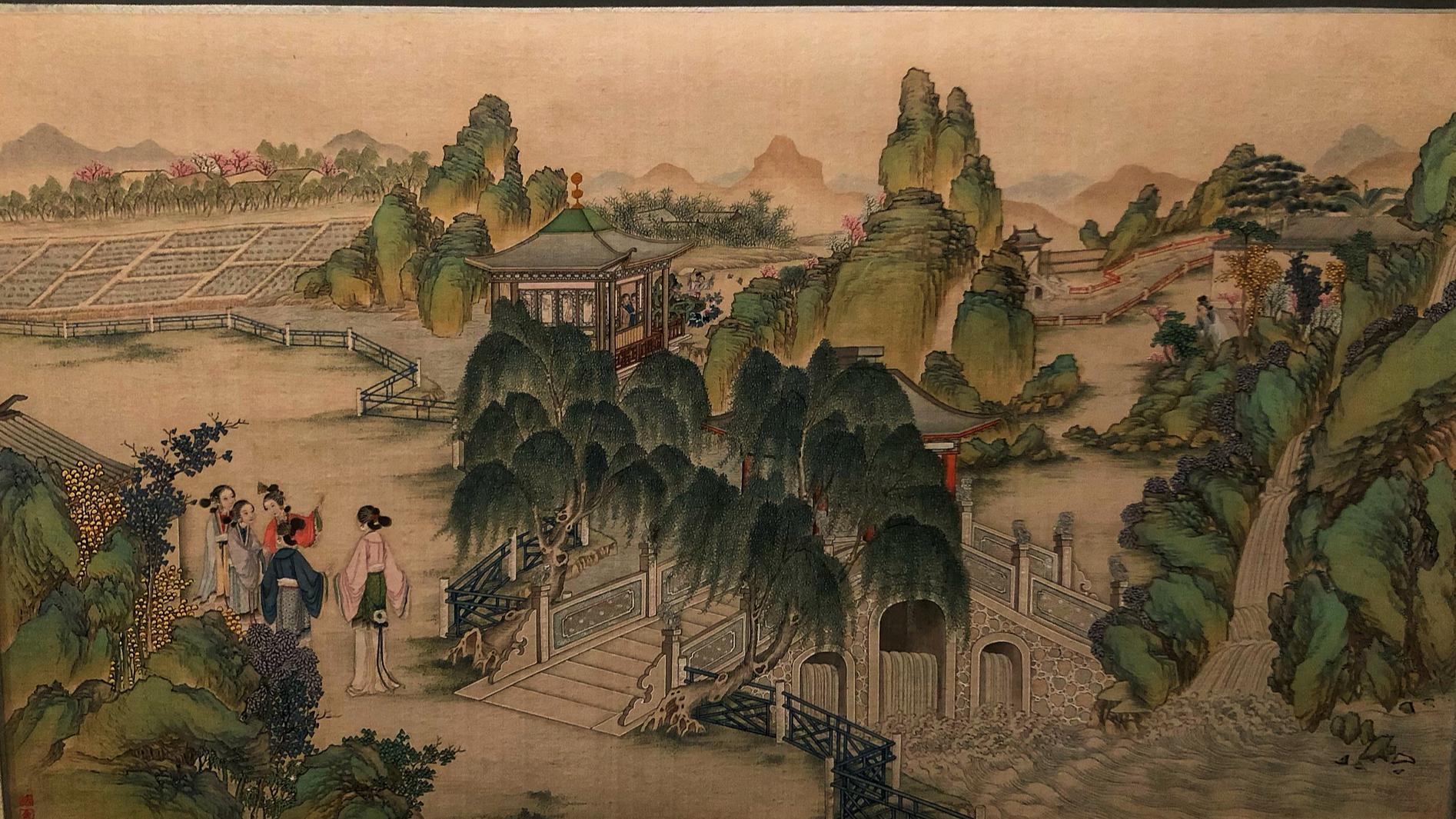
A page from the complete illustrated edition of Dream of the Red Chamber, Lushun Museum, Nanjing, China. (Photo: VCG)
"Dream of the Red Chamber" is widely considered one of the greatest novels ever written, described by noted literary critic Anthony West as holding the same place in Chinese culture that Proust holds for the French or Dostoevsky for the Russians.
Written by Cao Xueqin in the 18th century, the novel follows a once-great noble family's slow decline, painting an extraordinarily rich portrait of the social, cultural and spiritual life of its era. It has a special connection to Nanjing, where Cao Xueqin's family lived and whose early 1700s atmosphere deeply shaped the book's world.
Mao Zedong, founder and leader of the Communist Party of China and the People's Republic of China, reportedly read the novel five times and urged others to do the same. The beloved 1987 TV adaptation brought it to an even wider audience, becoming a cultural touchstone in much the same way the Colin Firth and Jennifer Ehle "Pride and Prejudice" did in Britain.
The results of the 2024 project exceeded expectations. Over 10,000 visitors attended, generating more than one million yuan in revenue. What's more important, the project sparked renewed interest in Chinese literary heritage among younger audiences.
Night culture: The Confucius Temple and the Changjiang Road District
The report cites Nanjing at the forefront of cities recognizing that what happens after dark is an integral part of their cultural identity and economy. With 217 nightclubs and dance halls, 292 bars and an active night-time economy strategy in place, this is a core part of how the city functions.
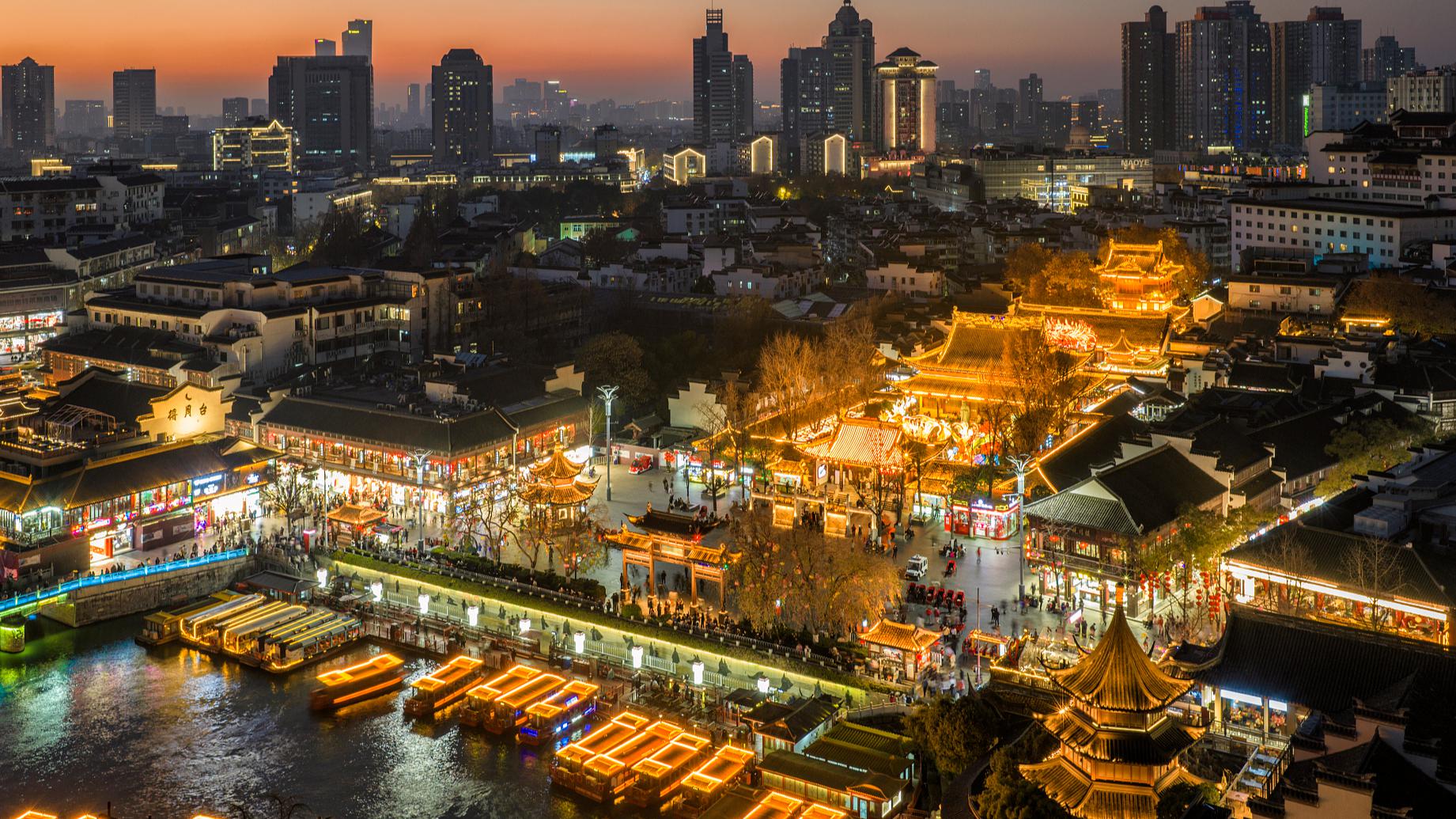
A panoramic view of the Confucius Temple and the Qinhuai Scenic Belt, Nanjing. (Photo: VCG)
The Confucius Temple in the Qinhuai Scenic Area is perhaps the best illustration of the approach. The "three streets, one district" concept at the Confucius Temple integrates museum exhibits, local brand activations and a food street into a coherent visitor experience, making it far more effective in drawing visitors in the way a museum alone rarely can.
Meanwhile, the Changjiang Road Historical and Cultural District has become a hub for night-time cultural tourism, with night museum tours and evening cultural programs combining retail, culture and hospitality into a single offer.
What Nanjing gets right
Nanjing's contribution to the urban centers worldwide is a lesson in how a city can leverage a very specific identity – literary, in its case – and use it as the organizing principle for contemporary cultural innovation. "The Dream of the Red Chamber" exhibition, the uniquely creative QR code literary network, the Confucius Temple night economy are all examples of what constitutes this city's greatest strength.
In a landscape where many cities are chasing the same digital cultural trends, Nanjing has found a way to innovate what could only have come from itself.