


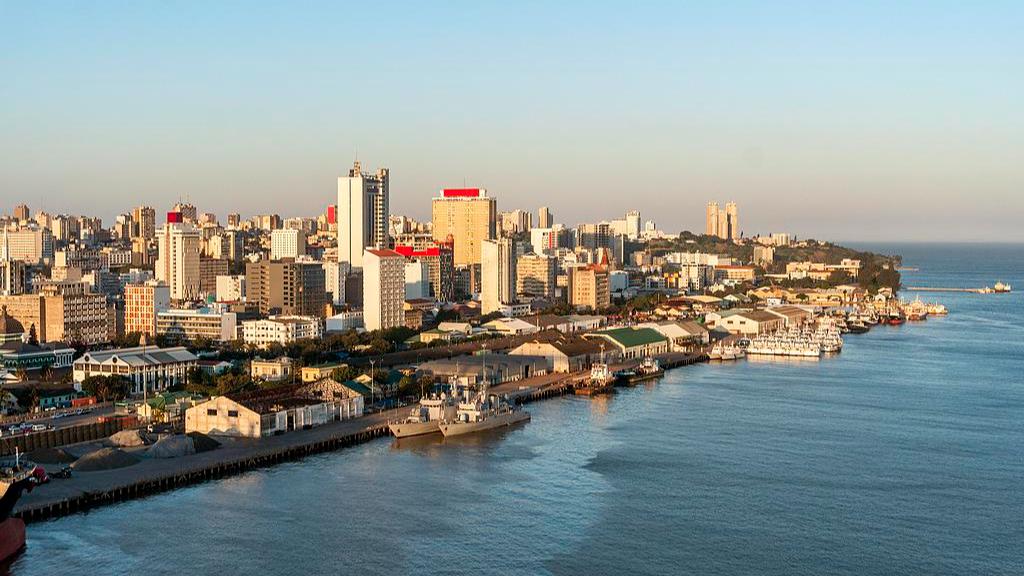
Cityscape of Maputo, Mozambique. (Photos: VCG)
As 2026 marks a year dedicated to cultural exchange between China and Africa, ties between China and Mozambique are evolving beyond long-standing friendship into something more grounded and personal.
From medical outreach and language education to youth engagement and public infrastructure, a people-centered network of exchanges is taking shape.
These connections are not abstract. They can be seen in everyday moments.
On June 12, 2025, a Chinese medical team working in Mozambique held a free clinic at a rural health center in Katembe district, Maputo. Ten doctors specializing in orthopedics, spinal surgery, pain management and acupuncture treated around 360 patients and distributed free medicines. The team also prepared Portuguese-language materials on common diseases, helping local residents better understand basic health care and prevention.
Similar efforts are taking place across the region. On March 29, 2026, a two-day medical outreach program in Dar es Salaam, Tanzania, treated more than 1,000 patients and provided over 800 batches of medicine.
Local officials noted that beyond medical services, such programs help build trust and mutual understanding at the community level. In this sense, healthcare has become one of the most direct and tangible forms of people-to-people exchange.
If healthcare addresses immediate needs, education offers something more lasting.
On April 20, 2022, students at a Confucius Institute teaching site affiliated with Eduardo Mondlane University in Mozambique gave a performance in Chinese that featured recitations, songs, and short comedy acts. Since the university introduced Chinese language studies in 2020, their program has continued to grow despite challenges such as the pandemic and limited teaching resources.
That momentum has carried forward. On August 18, 2025, a Chinese song competition was held in Maputo, where 14 finalists performed in Mandarin, blending language learning with cultural expression. The event aims to deepen students' understanding of China through language while bringing the two societies closer together.
Building on this, young people are increasingly shaping the direction of cultural exchange.
On March 31, 2026, an event marking the launch of the China-Africa cultural exchange year was held in Mozambique, alongside the start of a short video competition between participants from both countries. More than 100 representatives attended. The initiative encourages young people to tell their own stories through video, offering a more personal and immediate way to connect.
At the same time, more structured cooperation is also taking shape. In 2025, marking the 50th anniversary of diplomatic ties, China and Mozambique held a vocational education exchange in Beijing. A digital education platform supported by China was introduced in Mozambique, aimed at expanding access to skills training and supporting the country's shift toward more modern vocational education.
As these exchanges expand from individuals to wider society, their impact is becoming more visible in everyday life.
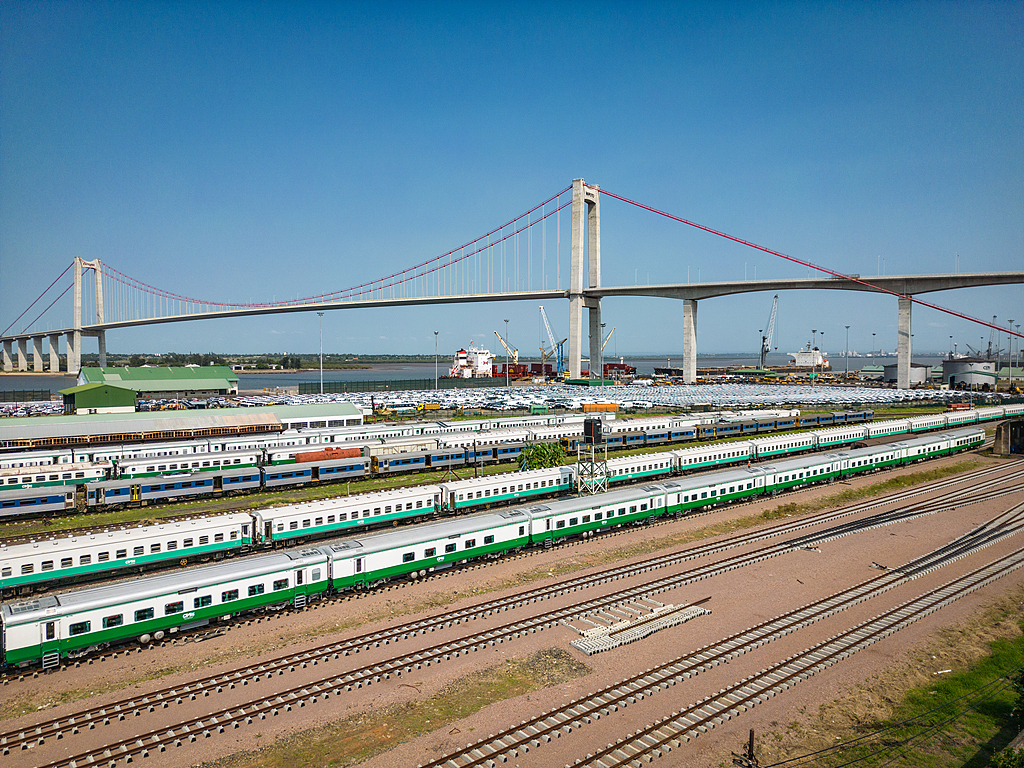
The Maputo–Katembe Bridge.
The Maputo–Katembe Bridge, opened to traffic in 2018, has become a key transport link in the capital and a landmark project built with Chinese participation. Over the years, Chinese companies have also contributed to projects such as the Maputo ring road and telecommunications upgrades. Public facilities including a national stadium, an airport, and a cultural center have been completed with Chinese support, improving infrastructure and public services.
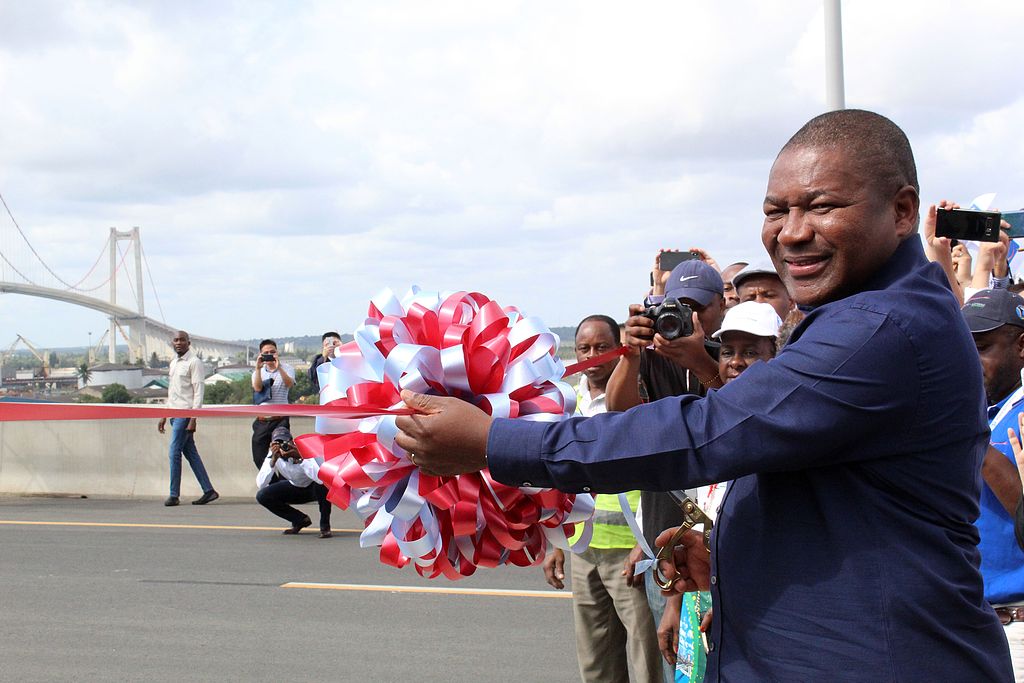
President Filipe Nyusi attended the inauguration ceremony of the Maputo–Katembe Bridge in Maputo, Mozambique on November 11, 2018.
Cooperation has also extended into broader social issues. On October 13, 2025, a Mozambican minister attending a global conference on women's development in Beijing highlighted the importance of continued collaboration in advancing gender equality. Engagements like this reflect a widening scope of exchange, reaching beyond traditional sectors.
Seen together, these efforts reflect a shift toward more grounded, people-centered exchange. Whether in classrooms, clinics, or community projects, connections are being built step by step. Over time, these interactions are adding a new dimension to China-Mozambique ties – one shaped as much by everyday contact as by formal cooperation.