


(Illustration: GT)
Recently, the film Dear You has gained widespread praise, having crossed the 1 billion yuan ($146 million) mark at the box office, deeply touching countless viewers with family letters from over half a century ago. Each qiaopi, the handwritten letters and remittances sent home by overseas Chinese migrants, traveled across mountains and seas. Their words are limited, but their meaning is endless, expressing a lifetime of longing and love.
Why do these family letters have such a lasting emotional impact? What features of Chinese literature, language, and culture does the film's text reveal? To answer these questions, the People's Daily interviewed Li Junyong, a professor at the School of Chinese Language and Literature of Hebei University, and Liu Fei, an assistant researcher at the Film and Television Research Institute at the Chinese National Academy of Arts.
Qiaopi forms the core narrative thread of the film, with the words in the letters meant to express longing, yet never directly saying "I miss you." Instead, they describe the moon and the writer's hometown. Li Junyong pointed out that this reflects the aesthetic of subtlety and reserve in Chinese literature. Chinese poetry and prose established an appreciation for subtle beauty early on. Strong feelings are often not spoken out directly; saying them outright would lessen their weight. Simply saying "I miss you" ends the emotion, but with something to relate to, like the moon, the words go beyond themselves and can be described again and again, producing a lingering effect.
In another letter in the film, the wife, Ye Shurou, turns her deep longing for her husband into a description of everyday life. She does not talk about missing him, only daily matters: "I have made new quilts; they are warm, and we need not fear the cold," she wrote, ending with, "Don't worry about us." All her care, reserve and gentleness are hidden in these simple words.
The film's dialogue also showcases the unique style of Chinese expression. The lines reflect characters showing great forbearance, care, and understanding when facing hardships. For example, when middle-aged Ye Shurou mistakenly thinks her husband remarried overseas, she just says, "You told me so late," and then quietly covers her face and weeps.
Liu Fei noted that these stories and lines reflect the value of ordinary people as narrators. Most of the time, traditional history focuses on emperors and heroes - a narrative of elites. By making ordinary people the protagonists and observing life from their perspective, the film truly roots itself in the lives and emotions of everyday families. It captures all sorts of emotions - love, friendship, patriotism, brotherhood, heroism, and great love. Kindness, compassion, hard-working and courage are traits that generations of the Chinese people have displayed when facing life's challenges.
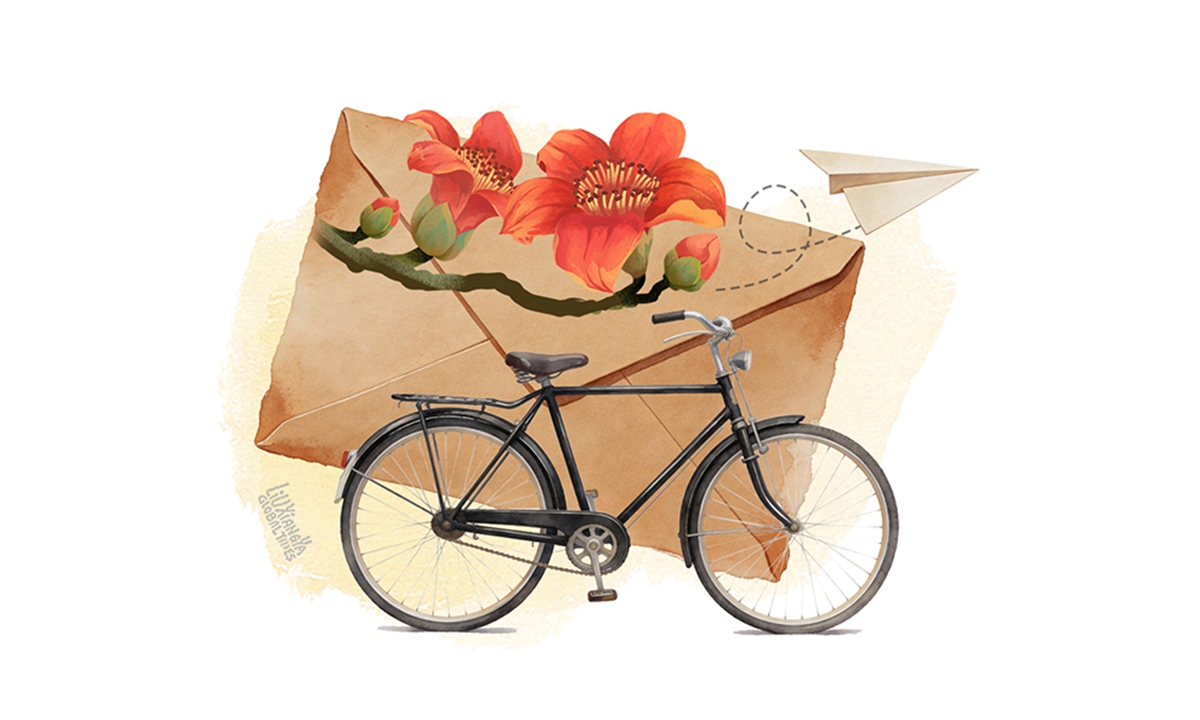
Liu noticed that when the film uses ordinary things that are part of daily life such as olives, kapok flowers, salted pork and bicycles, these objects are not made into cultural symbols, but merge naturally with the logic of family life.
The film also features teacups. When actors are at home in the Chaoshan region, mainly the cities of Chaozhou and Shantou in South China's Guangdong Province, they drink kung fu tea in every scene, blending traditional Chinese culture into the story naturally without needing close-up shots. Small things express deep feelings and everyday life carries great meaning - this is a mark of Chinese artistic expression in film.
"These objects, wrapped in ordinary life logic, quiet wisdom and humor, reflect the characters' love for life and creative spirit. Silently, they link the years and longing, becoming a kind of living text - even more vivid and powerful than lines," Liu said.
In overseas Chinese communities, many letter senders and receivers were illiterate; professional letter-writers would translate local dialect and spoken words into concise, rich, and slightly literary written expressions. Liu noted that this use of written language gives daily communication more expressive power. With just a few words, strong emotions - endless longing, understanding, resilience, and responsibility - are carried on the paper. This is the power of Chinese letters, and the reason they touch people so deeply.
This is especially true for qiaopi. After the Opium War, overseas Chinese continued to send qiaopi, which became an important source of foreign exchange for China. From 1864 to 1980, over 30 million qiaopi letters were received nationwide; overseas remittances totaled about $10.8 billion, making a great contribution to China's development. The love for the motherland among overseas Chinese can be found between the lines of these family letters. Though the letters are short, they carry blazing emotions, Liu remarked.
"In summary: plain words, deep feelings; short letters, rich meaning. This is the way of Chinese expression," said Li Junyong.
The article was originally published in Chinese in the People's Daily Overseas Edition on May 21, 2026.
(Source: Global Times)