


In a workshop in Nanhua county, Chuxiong Yi Autonomous Prefecture, southwest China's Yunnan Province, embroiderer Gong Yongxiang carefully stitched delicate Yi embroidery patterns onto a peaked cap designed for the FIFA World Cup 2026.
The cap was one of 30 licensed products featuring Yi embroidery unveiled at a promotional event on May 25 for the "Intangible Cultural Heritage Meets the World Cup" project of the 2026 FIFA World Cup, which was approved by FIFA. The initiative marked the first inclusion of China's intangible cultural heritage elements in official World Cup merchandise.
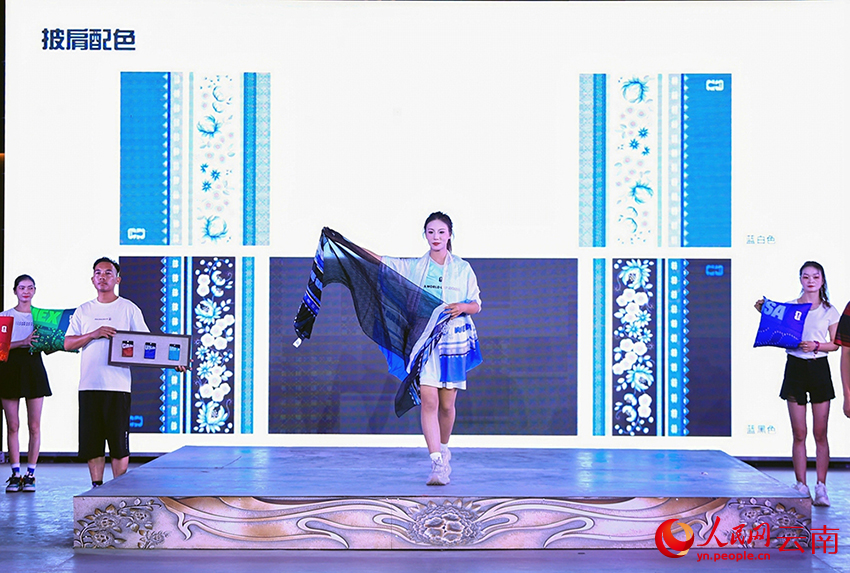
Models display products featuring Yi embroidery elements at a promotional event for the "Intangible Cultural Heritage Meets the World Cup" of the 2026 FIFA World Cup in Chuxiong Yi Autonomous Prefecture, southwest China's Yunnan Province. (Photo: People's Daily Online/Cheng Hao)
The collaboration reflects a broader transformation of Yi embroidery — a national intangible cultural heritage item — from a traditional craft practiced in remote mountain communities into a thriving industry.
A host of national- and provincial-level inheritors of intangible cultural heritages were specially recruited to contribute to the project's creative work, including Ding Lanying, head of Nanhua Qicai Yi Embroidery Cultural Communication Co., Ltd. and a provincial-level inheritor of the national intangible cultural heritage of Yi ethnic costumes. Ding led a team in designing the 30 FIFA-licensed products, blending traditional Yi embroidery patterns with modern sportswear aesthetics.
The promotional event will help elevate Chuxiong Yi embroidery in terms of heritage preservation, brand development, and market outreach, while accelerating its development into a branded, market-driven, and globally recognized intangible cultural heritage asset, said an official with the Publicity Department of the Communist Party of China Chuxiong Yi Prefecture Committee.
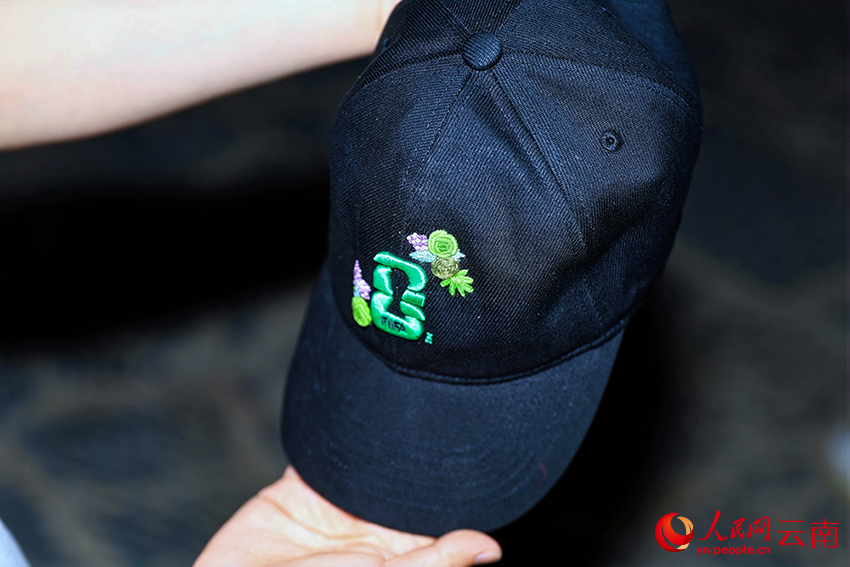
Photo shows a peaked cap embroidered with Yi embroidery patterns. (Photo: People's Daily Online/Cheng Hao)
Since 2022, Chuxiong has built 77 new Yi embroidery workshops and 513 village-level ones. The Yi embroidery industry has generated output exceeding 1 billion yuan (about $147.8 million) and helped more than 60,000 embroiderers increase their annual income by 20,000 to 40,000 yuan.
Gong's own story mirrors the sector's rise. Once a migrant worker who left home to make ends meet, she returned in 2009 to focus on developing her embroidery skills. Her monthly income now consistently exceeds 4,000 yuan, and one of her works has been collected by the China Disabled Persons' Federation.
Since 2025, the publicity department has leveraged both China Fashion Week and Chuxiong Fashion Week as high-end, internationally oriented platforms to showcase Yi embroidery, promoting its deeper integration with contemporary fashion.
Leading enterprises, including Nanhua Qicai Yi Embroidery Cultural Communication Co., Ltd., have played an inseparable role in the sector's innovation and upgrading. Ding has spent years leading her team in incorporating traditional Yi embroidery elements into a wide range of products — from scarves and accessories to cultural and creative merchandise — which have all proven popular with consumers.
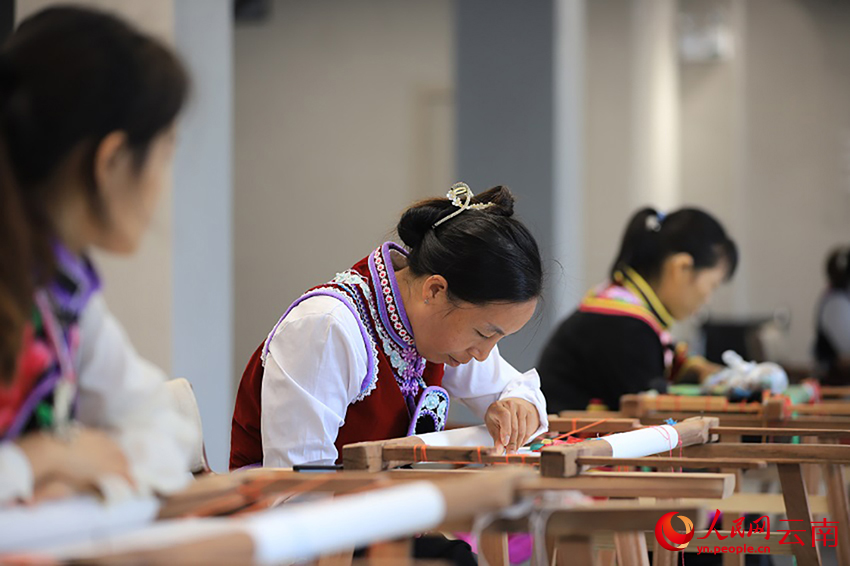
Photo shows embroiderers working in a workshop in Nanhua county, Chuxiong Yi Autonomous Prefecture, southwest China's Yunnan Province. (Photo: People's Daily Online/Li Faxing)
More and more Yi embroidery-inspired cultural and creative products are gaining widespread popularity and reaching a broader consumer market. From everyday accessories such as earrings and necklaces to home décor items like cushions and tablecloths, as well as practical products including tote bags and notebooks, Yi embroidery is being infused into a wide variety of designs, seeping into people's daily lives.
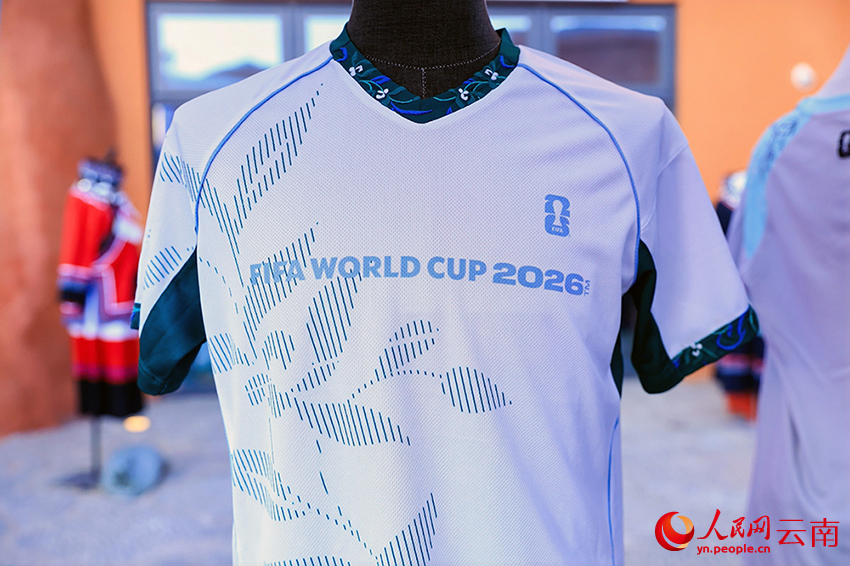
Photo shows a football jersey featuring Yi embroidery elements. (Photo: People's Daily Online/Cheng Hao)