


Located in Jiangxi Province, East China, Jingdezhen is renowned worldwide for its ceramic history and is widely celebrated as the "millennium porcelain capital." In January 2025, Jingdezhen's heritage sites of its handmade porcelain industry were officially submitted to UNESCO as China's nomination for the 2026 World Heritage List.
Jingdezhen possesses not only a millennia-old ceramic heritage but also a long tradition of openness. Historically, it was noted that only 20 to 30 percent of the city’s population were locals, while the rest were migrants drawn by a thriving porcelain trade.
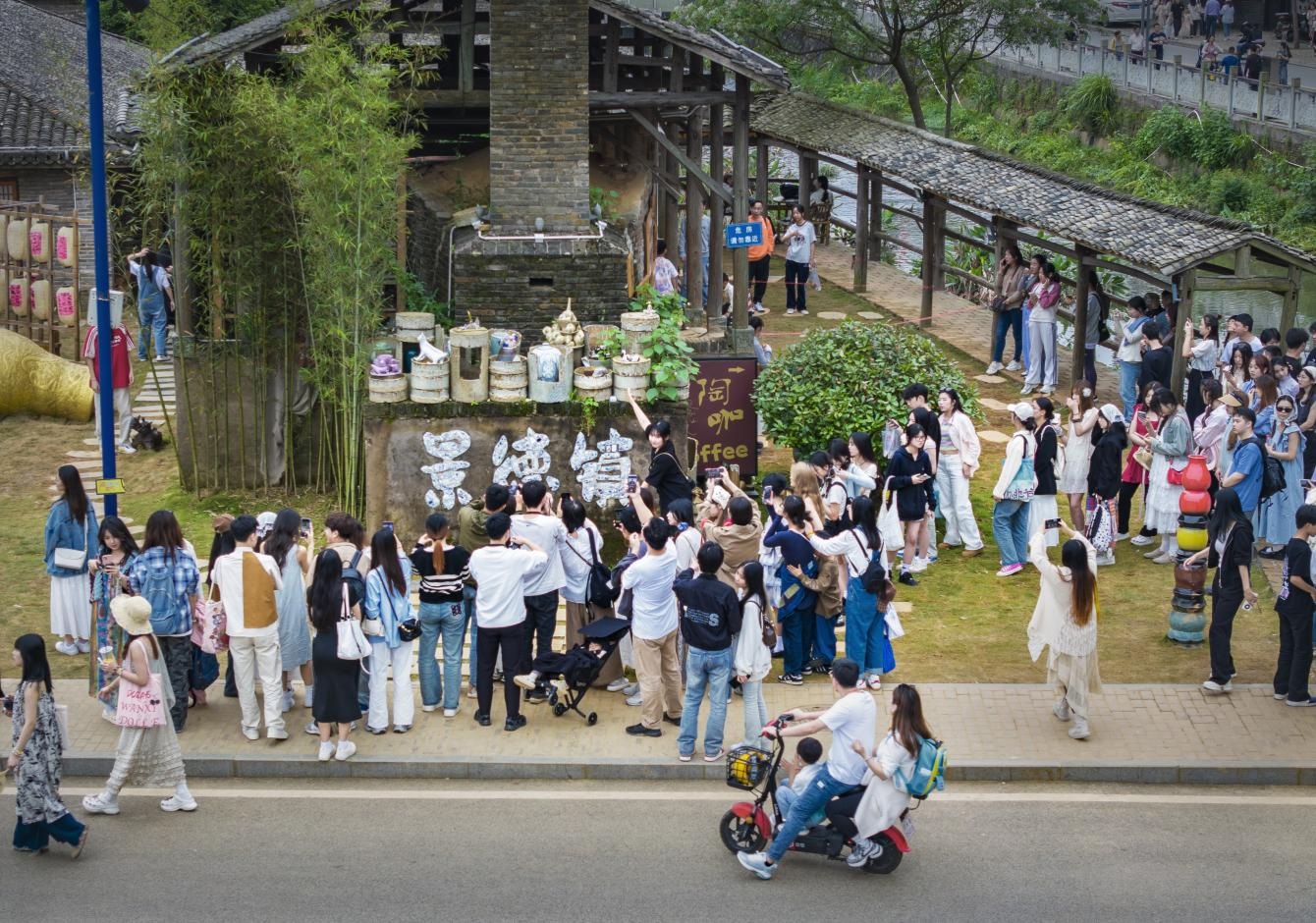
Tourists visit Sanbao village in Jingdezhen, East China's Jiangxi Province. (Photo courtesy of the media center of Zhushan district, Jingdezhen)
Today, around 5,000 foreign residents have made their homes here, known locally as "Jingdezhen drifters." They have seamlessly integrated into the city's daily life, serving as communicators of ceramic culture, contributors to urban development and co-creators of this global city of crafts and folk arts.
Discovering the cultural heart of Jingdezhen
Yann Colleu, from the French overseas territory of Reunion Island, first came to Jingdezhen in 2017 for a short-term study program and was immediately captivated by the atmosphere.
"I became obsessed with the place," he said with a smile.
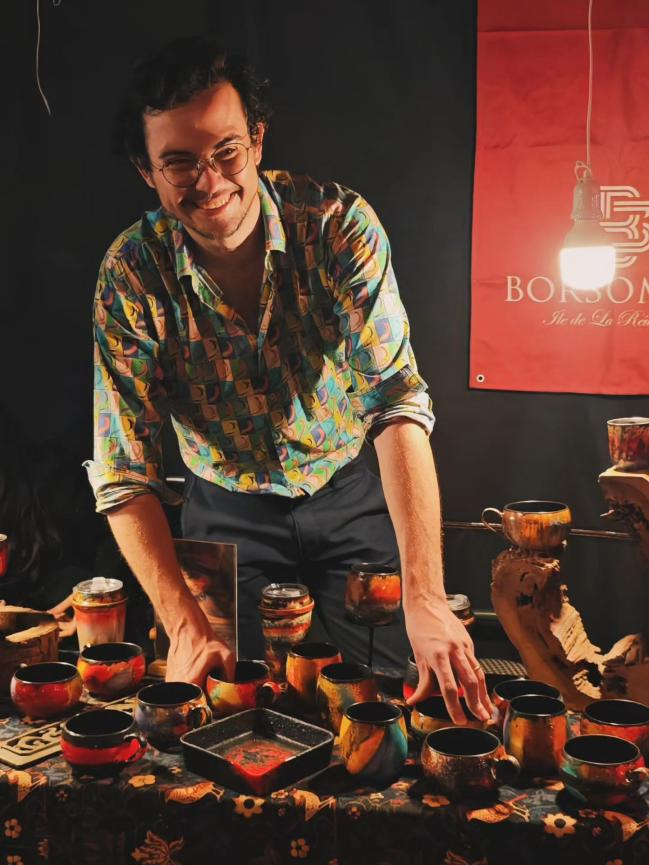
French artist Yann Colleu sells his works at his stall during a fair at Taoxichuan Ceramic Art Avenue. (Photo courtesy of Yann Colleu)
What stayed with him extended far beyond the masterful handiwork of seasoned local potters. Jingdezhen's ceramic traditions are not museum pieces frozen behind glass; they form a living tradition carried forward through daily practice, language, customs and patience.
In 2024, he and his wife returned to Jingdezhen to establish their own studio.
When he first arrived, he could not speak a word of Chinese. One day, a craftsman handed him a lump of clay and gestured, "Come on, give it a try!”
Colleu placed the clay on a wheel, and it collapsed three times. Each time, the craftsman patiently helped him reshape it, simply saying: "Take it slowly."
That afternoon, Colleu realized something fundamental: "Language is not a barrier, and hands are the best translators."
A young artisan in a neighboring workshop later repaired a dozen of his flawed clay prototypes completely free of charge, asking only that Colleu paint a few classic blue-and-white porcelain patterns for him as repayment down the line.
Once, when Colleu was selling ceramics at a night market, a local vendor running an adjacent stall stepped in to help him attract customers. "Foreign artist's work — very creative!" she called out. At that moment, he stopped feeling like an outsider.
By 2025, the annual output value of Jingdezhen's ceramic industry had exceeded 100 billion yuan (about $14.77 billion). The city is home to more than 58,000 handmade ceramic workshops and approximately 150,000 ceramic industry workers, while maintaining partnerships with more than 180 cities across 72 countries.
"No matter where you come from, as long as you respect tradition and are sincere about craftsmanship, people here will treat you as one of their own," Colleu said.
Today, he is pursuing a doctoral degree at Jingdezhen Ceramic University, researching historic bowls and porcelain fragments to trace deeper, earlier connections between Jingdezhen and the wider world.
From old kilns to new creative spaces
When Australian artist David Reid first visited Taoxichuan Ceramic Art Avenue in 2006, he saw an abandoned industrial complex, overgrown with vines and surrounded by aging red-brick factories.
He did not realize then that he was standing at the starting point of a major urban renewal project.
In 2018, he returned to establish a studio, learning the traditional blue-splashed glaze technique and transferring more than four decades of ink-painting experience onto porcelain.
Walking back into Taoxichuan, the transformation left him astonished. Former factory buildings had been transformed into museums and creative marketplaces, while old firing workshops hosted contemporary art exhibitions.
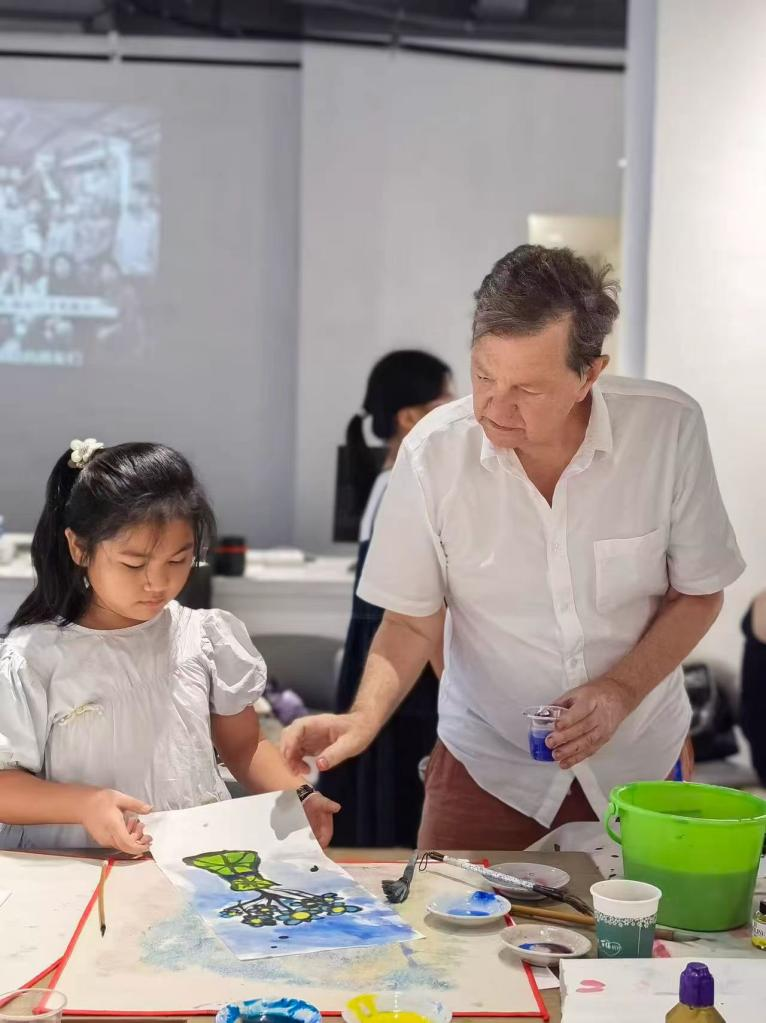
Australian artist David Reid paints with a young girl. (Photo courtesy of David Reid)
Today, Taoxichuan draws more than 33,000 creative "drifters" and has incubated over 4,500 independent ceramic brands. Old factories, ancient kilns and historical alleyways have not disappeared; instead, they continue their cultural legacy through updated functions. For instance, Sanbao village has transformed from a remote settlement into a thriving artistic community. The 1,127 residences from the Ming and Qing dynasties in Taoyangli have been meticulously restored, and ancient kilns like the Xu Family Kiln have resumed firing.
"Jingdezhen's transformation wasn't about tearing down the past and starting over," Reid said. "It was about allowing old factories and historical neighborhoods to take on new functions."
Last September, at the age of 70, he held a solo art exhibition in Jingdezhen featuring 41 works — a gift both to himself and to the city.
Making a home in Jingdezhen
Cultural appeal may initially attract people, and promising industry prospects bring many back for extended stays, but what truly keeps people is the sense of belonging built through everyday life.
French artist Camille Grandaty spent years traveling the world before 2015.
"I rarely lived in one country for more than two years," she said.
All that changed when she landed in Jingdezhen, where she has resided continuously for the past 11 years.
Last September, shortly after becoming a mother, she received her permanent residence ID card — widely known as the "five-star card” — becoming one of three foreign residents in Jingdezhen to obtain permanent residency in China.
In 2022, Jingdezhen introduced policies facilitating visas and residence permits for overseas residents, providing foreign nationals with multiple-entry visas and residence permits lasting between two and five years based on individual needs.
With a more open approach to global talent, Jingdezhen enabled Grandaty to establish roots and settle down.
"The treasure of Jingdezhen is its craftsmanship," she said. "It cannot even be called a living fossil, because it has never stopped living — it thrives every single day."
Driven to master all 72 traditional ceramic-making procedures, she chose to stay. Long-term life in Jingdezhen has gradually reshaped her artistic expression as well.
On her workbench stands a clay rooster sculpture, created in collaboration with the wife of her Chinese mentor.
"The rooster is a symbol of France," she explained. "This work is the direct product of cultural exchange between France and China."
Clay pulled from the earth, hardened under intense kiln fire and shipped across vast oceans to global markets — that is the historic story of porcelain.
People from every corner of the globe come to Jingdezhen to study, create and build their lives before sharing their experiences — that is the modern story of the city's "drifters."
These narratives continue year after year. They speak not only of the enduring cultural appeal of the millennium porcelain capital, but also of how a Chinese city is innovating through preservation, growing through cultural inheritance and connecting with the world through openness and inclusivity.
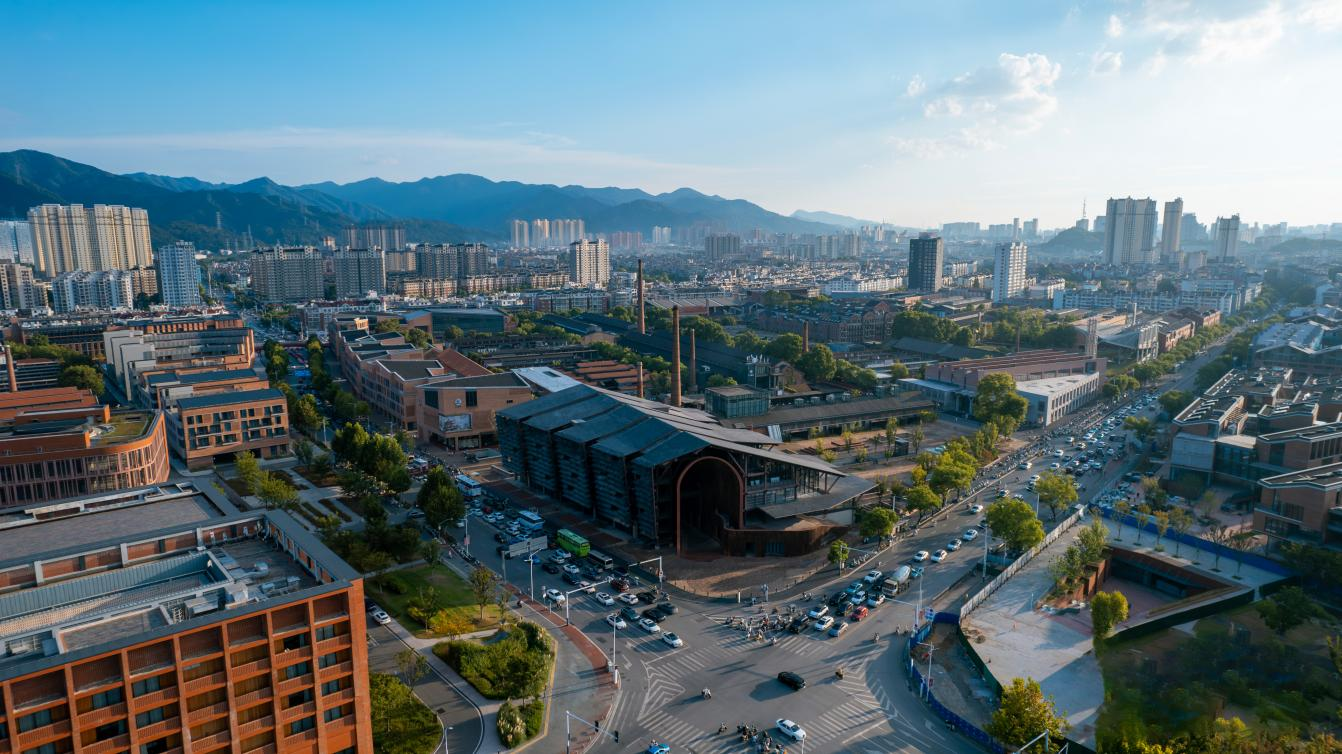
Taoxichuan Ceramic Art Avenue in Jingdezhen, East China's Jiangxi Province. (Photo provided to People's Daily)