


Lima (People's Daily)—In the early morning, a cool breeze sweeps from the Pacific Ocean into Callao, a major port city north of Peru's capital, Lima.
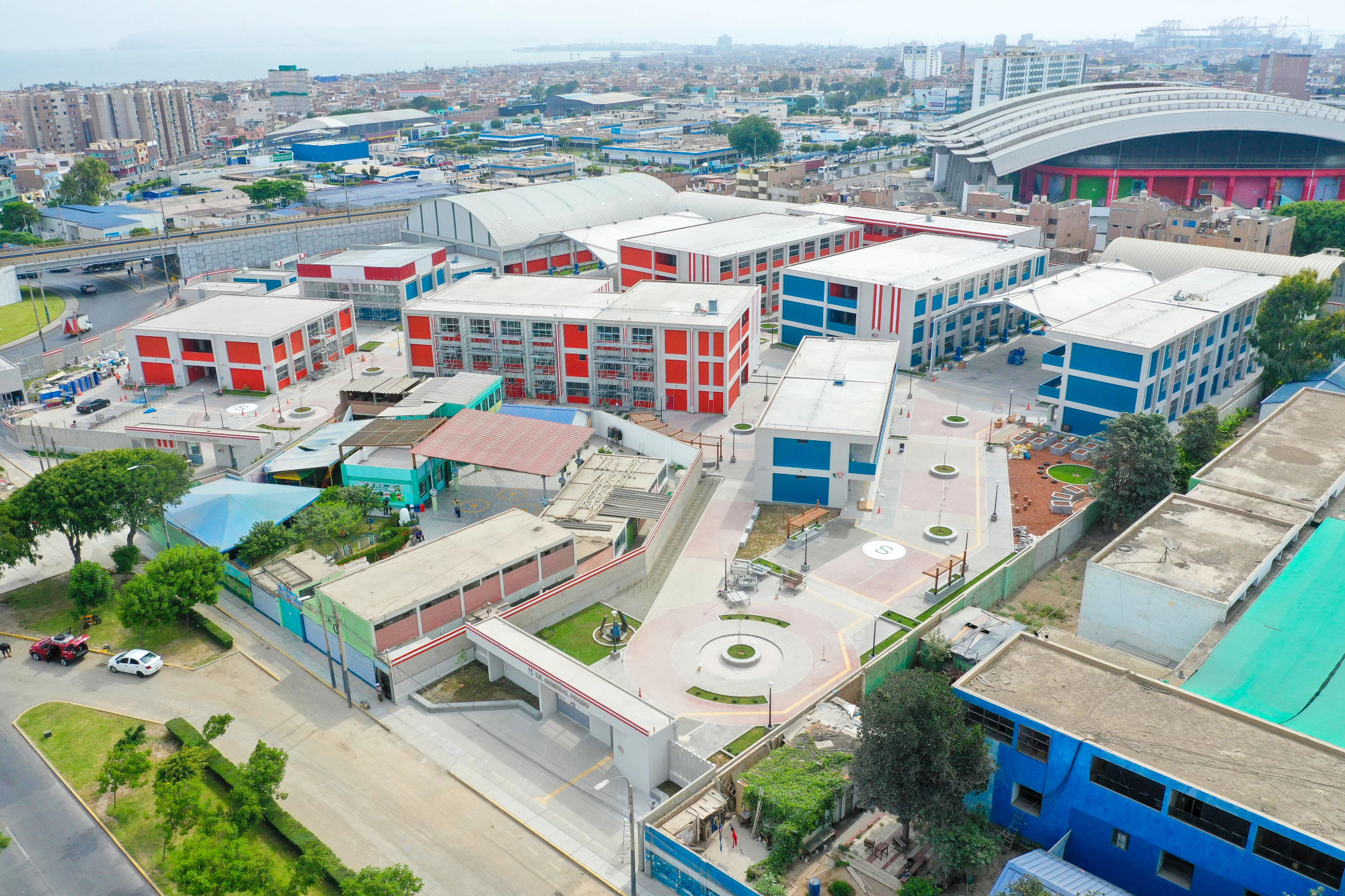
A panoramic view of General Prado School in Callao, a major port city north of Lima, Peru. (Photo: Shui Yuan)
"The school is right near the sea, where UV radiation is intense. Our sports field now features sunshade canopies, making it much more comfortable," said Marco Antonio Buendia Cayetano, principal of General Prado School. "Since the new campus opened, our school has become one of the most popular in the area."
To date, all 25 schools built by Power Construction Corporation of China (PowerChina) under Peru's Bicentennial Special Investment Project have entered operation.
A remarkable transformation
Walking through the brand-new campus, it is hard to imagine how General Prado School once looked. Back in 2024, classroom walls were crumbling, stuck windows blocked light and ventilation, and several aging structures posed safety hazards.
"Rebuilding had become urgent," Cayetano said.
When the new campus opened in April 2025, the 82-year-old institution was completely transformed.
Spanning nearly 23,000 square meters, the facility accommodates roughly 3,600 students, making it one of metropolitan Lima's largest and best-equipped schools. Elementary and middle school blocks stand in neat rows alongside a modern library, multi-purpose hall, gymnasium, and administrative hub.
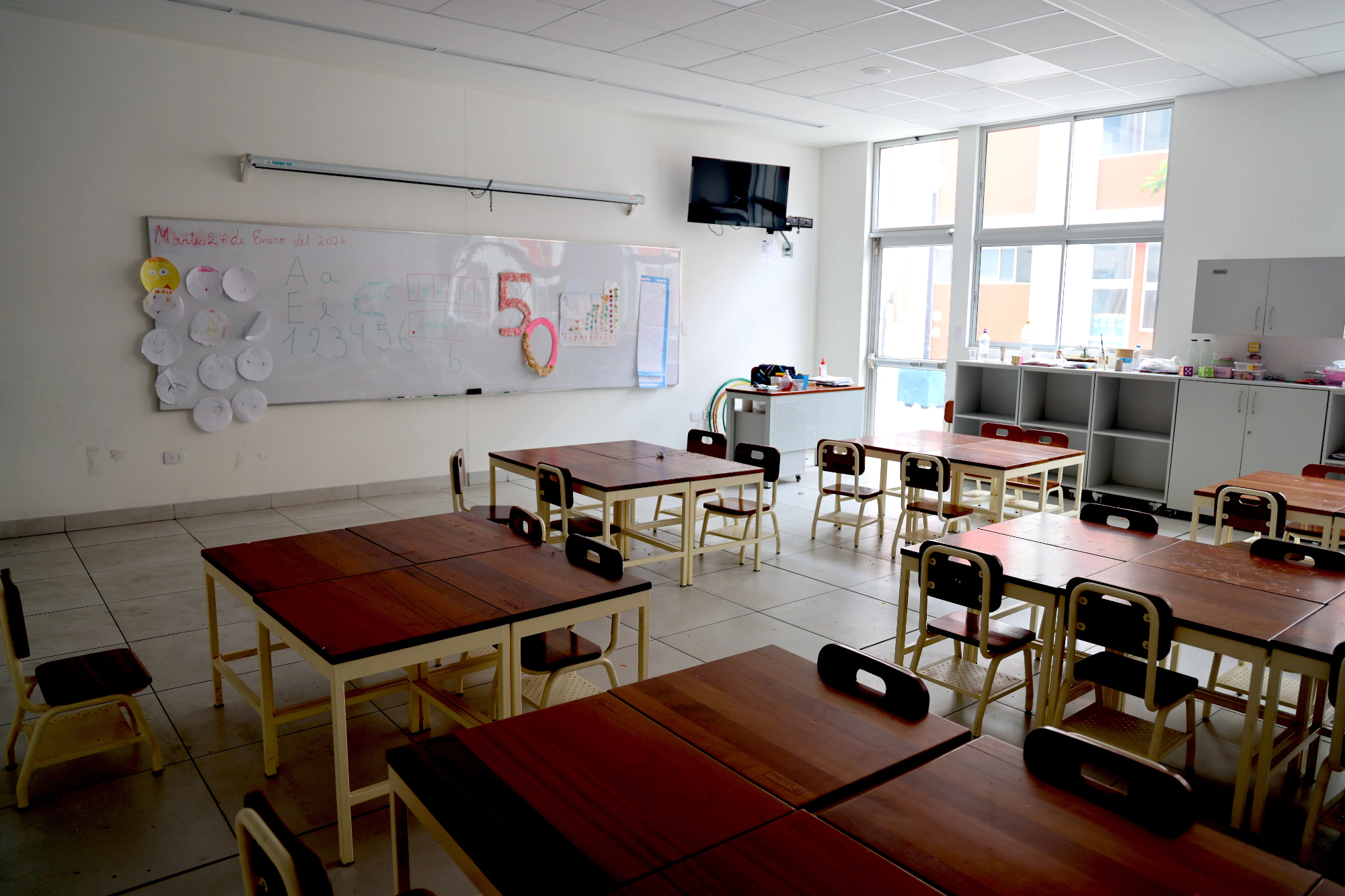
A bright and well-equipped classroom at General Prado School. (Photo: Shi Yuanhao/People's Daily)
Inside, spacious classrooms feature storage lockers along the corridors, while barrier-free ramps and handrails ensure full accessibility for students with limited mobility.
"This is our innovation lab," Cayetano said, gesturing toward a room fitted with 30 laptops, a digital projector, and smart teaching tools.
Every detail reflects thoughtful design—from outdoor drinking fountains and padded lamp posts to designated emergency shelters. Liu Shusheng, project manager for General Prado School, noted that all 25 PowerChina-built schools across Peru meet modern educational standards, complete with upgraded water, electrical, IT, and safety systems.
"The campus has undergone a dramatic makeover. My daughter enjoys learning conditions far superior to what we had," said Maria Silupu, a parent and alumna.
Putting users first
"My favorite spot is the science lab," said science teacher Gavi Campos. Previously, lack of equipment forced her to teach science purely through lectures. Now, students conduct experiments themselves. "Their enthusiasm and academic performance have both surged."
The school has also set up vocational workshops where students gain hands-on experience with machinery and practical tools.
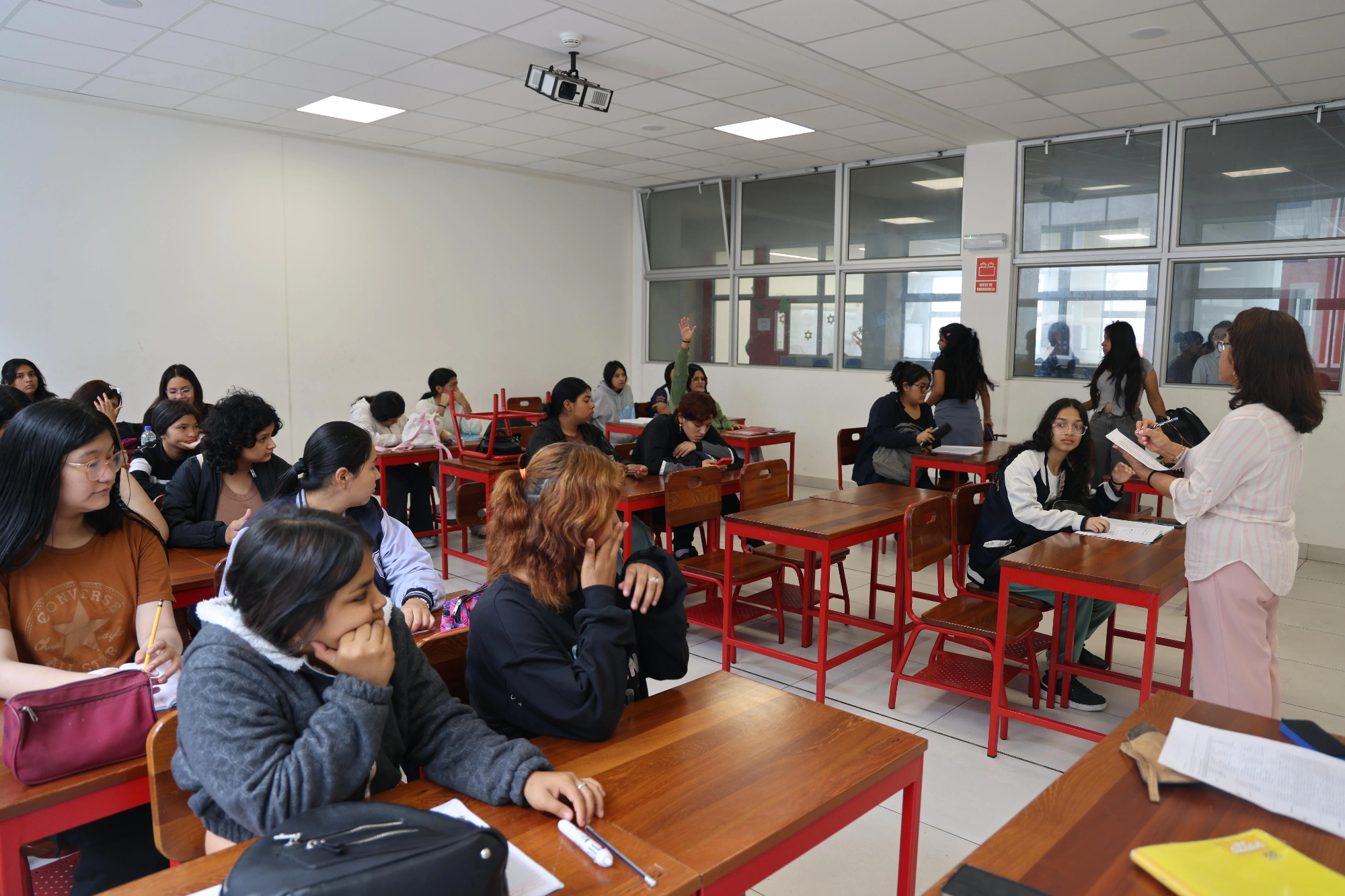
Students attend supplementary classes at General Prado School during break. (Photo: Shi Yuanhao/People's Daily)
Behind the classroom blocks lies an ecological garden filled with beets, scallions, and mint. "Each elementary class manages its own plot, helping children learn biology through hands-on practice," explained Sulema Cáceres, vice principal of the elementary school division.
Aldair Mantilla, a representative for the project owner, praised the Chinese team's attention to detail and willingness to incorporate feedback from teachers and students.
"The team prioritized natural lighting, accessibility and eco-friendly features—truly embodying a user-first philosophy," Mantilla said.
From underdeveloped outskirts of Lima to the heart of the Ucayali rainforest and the high-altitude regions of Puno and Cusco, these Chinese-built schools stand out as modern community landmarks. Architectural layouts were tailored to local climates and practical teaching needs, earning widespread praise.
Broader horizons
PowerChina is also restoring several additional schools under Peru's National Infrastructure Authority Reconstruction Programme, which will ultimately serve around 35,000 students.
Beyond upgrading facilities, the new schools offer students a window into China.
"Chinese food is amazing," "Much of our tech comes from China," and "China's technology is super advanced," local students eagerly shared.
Regina Huaman, vice principal of the middle school division, said the school plans to introduce Chinese culture courses and partner with Chinese institutions to foster deeper cultural exchange.
"This modern campus raises our expectations for quality education and injects new vitality into Peru's development," Cayetano said, hoping for expanded practical cooperation.
Mantilla echoed this sentiment: "We hope future collaboration expands into sharing educational resources—including teacher training, technical exchanges and online courses.”
Reporter's Notebook: investing in the future
By Chen Yiming
Education is ultimately an investment in tomorrow. Bright classrooms, modern labs and vibrant campuses reflect the shared aspirations of Peruvian teachers and students. As Morgan Quero, former Minister of Education of Peru, noted, a new campus gives young people not just a better learning environment, but a gateway to a broader world.
Across the Global South, education is increasingly recognized as a cornerstone of sustainable development. Facing shared challenges such as uneven regional development and resource shortages, more nations are choosing to exchange expertise, deepen practical cooperation, and share progress.
Ensuring every child has access to quality education will generate momentum for common prosperity across the Global South.