


The Chinese historical drama "Swords Into Plowshares" has drawn wide attention since its overseas release earlier this year.
The series is set during the tumultuous Five Dynasties and Ten Kingdoms period (907-960). At its heart is the King of Wuyue, whose peaceful surrender to the Song Dynasty (960-1279) marked a major step toward China's reunification.
The series scored 9.3 on the streaming platform Viki and topped TV360's overseas drama chart in Vietnam. Viewers have taken to social media to share their newfound interest in the period, with some saying they looked up every historical figure in the show.
The series is not alone. A growing variety of Chinese audiovisual content is making its way into the daily viewing habits of audiences worldwide this year, from long-form dramas such as "The Heir" and "Pursuit of Jade" to micro-dramas including "Enemy" and "The Lady from the Northeast," and variety shows like "Voice Beyond Horizon" and "Ride the Wind 2026."
High-quality long-form dramas have long been a driving force behind the overseas expansion of Chinese-language content. Historical costume dramas in particular have become a standout genre in international markets, drawing on distinctive Eastern aesthetics and rich historical heritage.
Niu Mengdi, a professor at Beihang University, said the genre's strength lies in combining strong cultural identity with emotional resonance. Costumes, ancient architecture, traditional rituals and intangible cultural heritage crafts offer fresh cultural experiences, Niu said, while themes such as family bonds and loyalty to one's country are easy for foreign viewers to relate to.
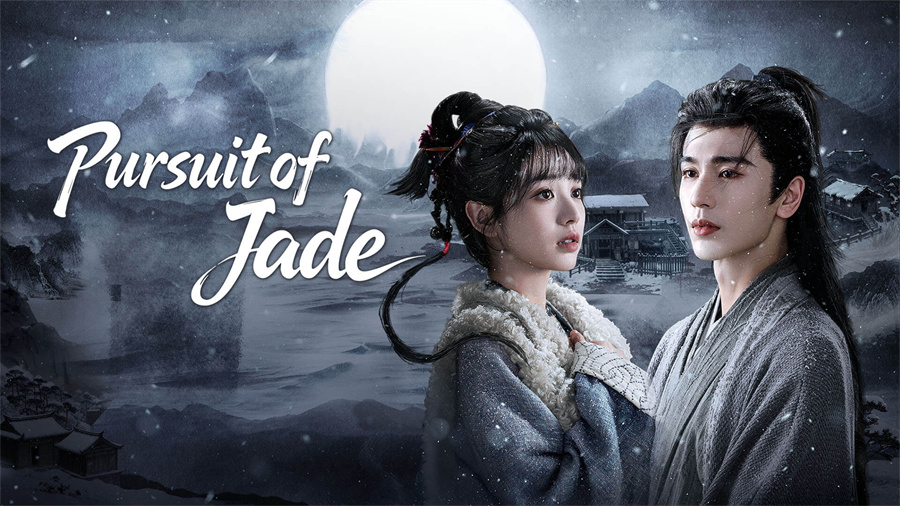
A poster of the drama Pursuit of Jade (Photo provided to chinadaily.com.cn)
"Pursuit of Jade" weaves personal growth into a larger narrative of loyalty to family and country, using a twist-filled plot to portray ordinary people who stay true to themselves while standing up for their homeland. It premiered in March on iQiyi, Tencent Video and Netflix, ranking first across every content category on iQiyi International. It has topped Google search volume among Chinese historical dramas worldwide since 2025.
"The Heir," a historical costume drama centered on Huizhou ink stick making, a traditional craft from east China's Anhui Province and a national intangible cultural heritage item, has topped trending charts in 13 markets on iQiyi International.
Niu said films and TV dramas themed on intangible cultural heritage resonate with audiences not by showcasing craftsmanship alone, but by explaining why practitioners hold on to tradition.
This model of emotional appeal followed by cultural depth is proving effective for high-quality costume dramas going overseas. The historical fantasy drama "Ashes to Crown," for instance, entered Netflix's global top 10 list of non-English TV shows in 37 countries and regions on its debut.
Beyond costume dramas, overseas viewers are also showing growing interest in genres such as urban romance and stories of personal growth.
Micro-dramas, meanwhile, are becoming an increasingly significant force in the global spread of Chinese-language content.
Shao Jiang, an associate professor at Beijing Union University, said the overseas expansion of Chinese micro-dramas is shifting from a scale-driven model built on downloads and ad spending to a value-driven one centered on content quality, intellectual property and cultural resonance.
The hit micro-drama "Enemy" blends a survival-game premise with elements of traditional Chinese culture including opera and ancient architecture. It has climbed charts in several countries including the United States, Mexico, Thailand and Indonesia since its release.
Technology is also giving the sector a boost, with AI applications significantly improving efficiency in production and distribution.
Quality content alone, however, is not enough. Distribution and localization matter too. "Pursuit of Jade" was released with subtitles in 14 languages and dubbing in five, helping overseas viewers follow the plot and enjoy a smoother viewing experience.
Offline events, meanwhile, have deepened the emotional bond between Chinese-language content and overseas audiences. Since launching its Starship program in 2024, iQiyi has brought cast members of several TV dramas to Singapore, Thailand and Malaysia for fan meet-and-greets.