



Foreign tourists visit the Qianmen pedestrian street in Beijing, China, May 25, 2026. (Photos: VCG)
A viral new term has taken global social media by storm in 2026: "Chinamaxxing." To date, related hashtags have garnered over 4 billion views on social media platforms.
Combining "China" with the Gen Z slang "maxxing" (meaning to optimize one's life around something), the term describes the growing enthusiasm among overseas internet users for adopting elements of Chinese daily life: from drinking warm water and practicing Baduanjin breathing exercises to traveling, shopping and consuming Chinese popular culture.
Beyond being a fleeting viral trend, it marks a profound generational shift in how Western audiences perceive China. For decades, Western mainstream narratives were dominated by the "China threat" rhetoric. Today, this stereotype is being dismantled, not by official statements but by a new generation of young Westerners.
From 'China threat' to 'Chinamaxxing': What's changed?
For a long time, "China threat" was a recurring buzzword in Western media coverage of China.
Australian website Pearls and Irritations once stated bluntly that the rhetoric stands as a prominent narrative in Western political discourse. Terms ranging from "threat" and "strategic challenge" to "competitor" have long dominated mainstream Western narratives.
Yet the tide is turning, as reflected in opinion polls conducted this year.
According to a survey by Pew Research Center, 34% of Americans under 50 hold positive views of China. Overall US favorability rose to 27%, climbing six percentage points from the prior year and nearly doubling figures from 2023.
A poll conducted by the Carnegie Endowment for International Peace found that 25% of Americans aged 18 to 29 say China is more powerful than the US. Across all age groups under 65, a clear majority believes China now holds either equal or greater influence than Washington.
Meanwhile, a February survey targeting young Europeans, carried out by France-based CSA Research, delivered an even more striking result: a significant 82% of Europeans aged 18 to 35 hold a positive view of China.
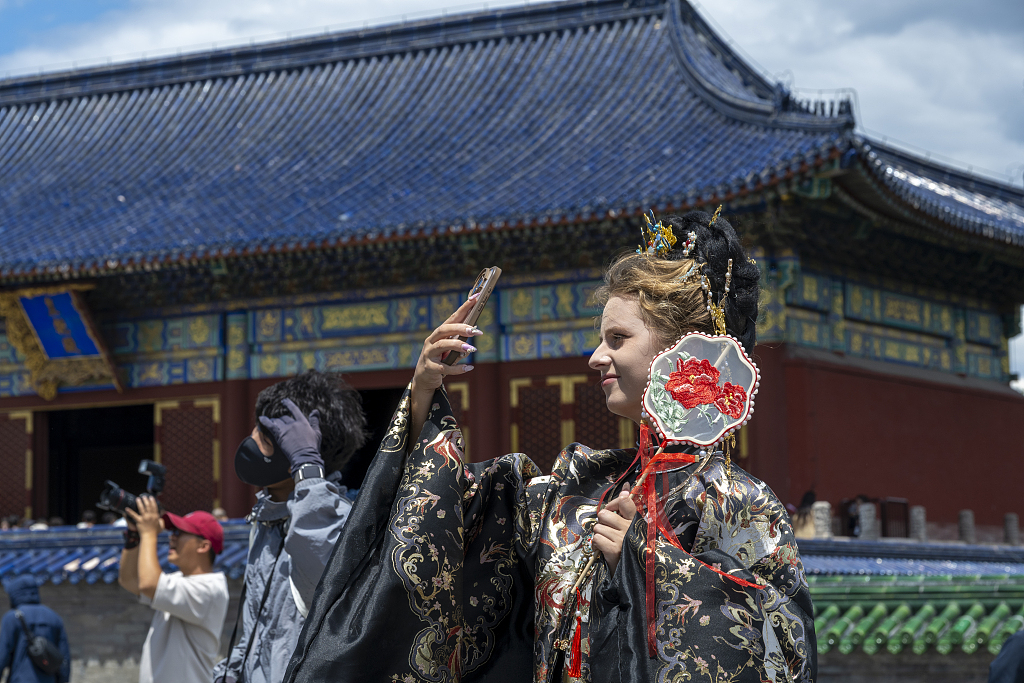
A foreign tourist takes photos in the Temple of Heaven in Beijing, China, June 9, 2026.
Why is Gen Z seeing things differently?
The answer may lie right in their smartphones.
The shift from viewing China as a "threat" to embracing its appeal stems less from age gaps than from divergent sources of information. French newspaper Le Monde observed that Gen Z tends to turn to social media apps such as TikTok and Instagram for information instead of traditional news outlets.
While older generations see a curated version of China via newspapers and television news, young people scroll through cyberpunk-style night views of southwest China's Chongqing and marvel at the idea that "Chinese people are living in 2050."
Last year, waves of American users flocked to Xiaohongshu – a popular social media platform in China, enabling direct connections between young Chinese and Americans on an unprecedented scale. This "digital encounter" is reshaping Western Gen Z's understanding of "China Cool."
Figures tell. American Gen Z spends more than twice the time searching for China-related content as older demographics, with the 18–24 age group demonstrating the strongest cultural curiosity and affinity.
The hashtag "China travel" has surpassed 28 billion views on overseas social media platforms. In the first half of 2026, China recorded 22.914 million inbound trips by foreign nationals, marking a year-on-year increase of 20.4%.

Foreign tourists experience a traditional archery game at a rural tourist attraction in Ganzhou City, east China's Jiangxi Province, May 10, 2026.
What is the Western media saying?
The mainstream media in the West has been caught off guard by this trend.
According to CNN reports, experts say the "Chinamaxxing" trend reveals deeper undercurrents like dissatisfaction among many Americans with life at home – from political turmoil, gun violence, immigration crackdowns and persistent racial tensions. All this has dulled the veneer of the American Dream, driving curiosity for American youths to see what life is like on the other side.
The New York Times argued that followers of "Chinamaxxing" appear to be grappling with anxiety over their own country's perceived decline.
Meanwhile, some news outlets have shown obvious frustration. An opinion piece in the New York Post struck a bitter tone, claiming the phenomenon reflects "Gen Z's desperation to shed their American identity." It even accused young people of "aesthetically, morally and politically defecting to another superpower."
The Washington Post asserted that the trend does not signal a deep, lasting global appeal for Chinese culture.
In hindsight, the anxiety among those Western media outlets speaks volumes. When a generation begins to see China through their own eyes rather than pre-set lenses, old narratives inevitably collapse.
As British freelance writer Coco Khan put it: "Instead of hectoring Gen Z about not 'loving their country,' offer them credible pathways to stability."
In the past, the West has consistently defined China through the lens of "threat." Yet, Gen Z is saying "no" through its actions. By drinking hot water, practicing Baduanjin, binge-watching Chinese dramas and traveling to China, they are expressing a yearning for a sense of order, security and a vision for the future.