


The Chinese anti-war film Once Upon a Time in the Middle East has sparked considerable discussion on overseas social media platforms even before its international release. Its narrative perspective, distinct from many conventional Hollywood portrayals of war, has prompted some viewers to describe it as one of the most direct and unvarnished critiques of Hollywood.
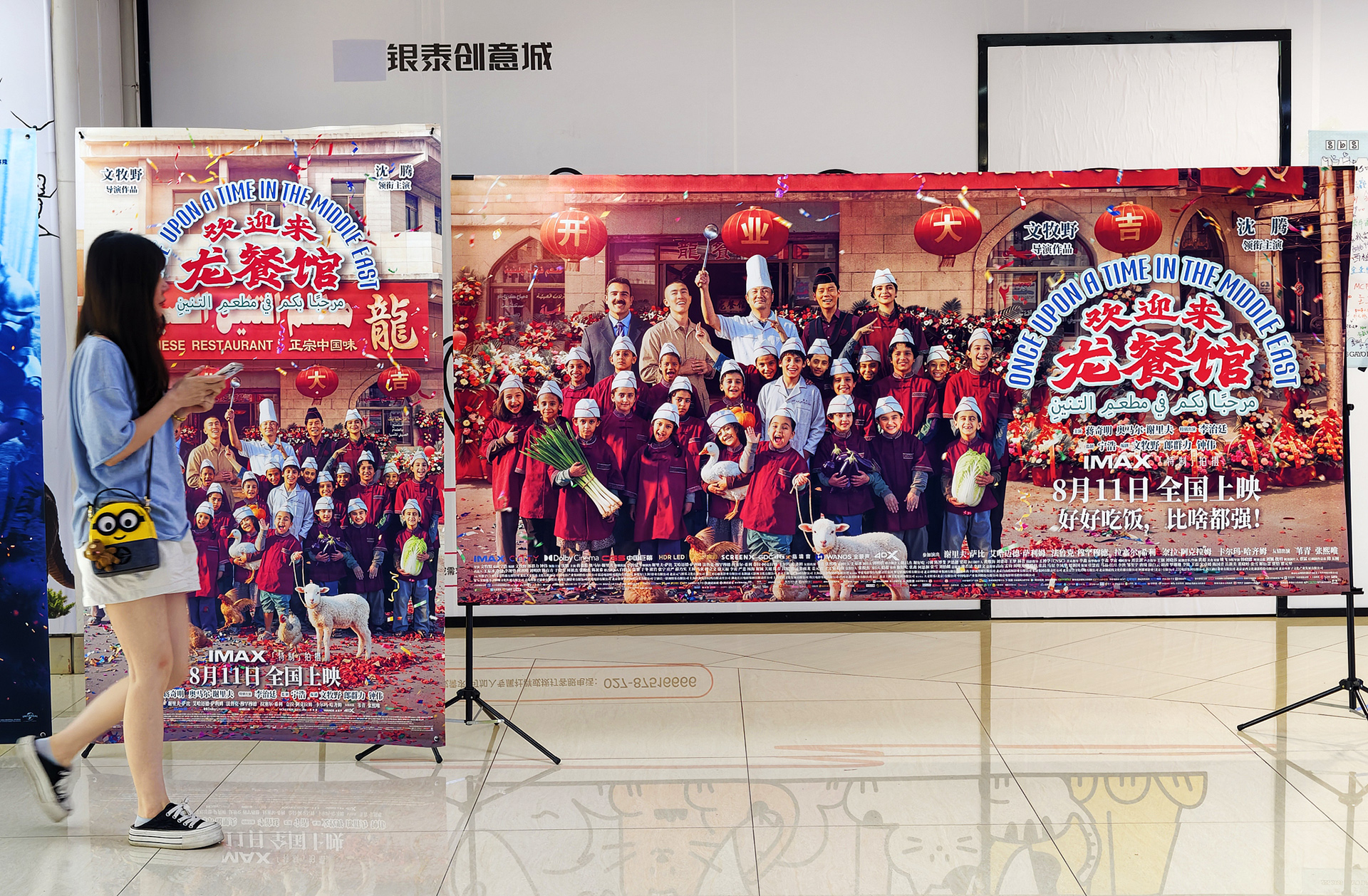
A woman walks past posters for the Chinese film "Once Upon a Time in the Middle East" at a cinema in Wuhan, Hubei Province on August 11, 2026. (Photo: VCG)
Trailers shared on platforms such as X and YouTube have drawn notable attention from international audiences, while some viewers who have seen the film have recommended it to others.
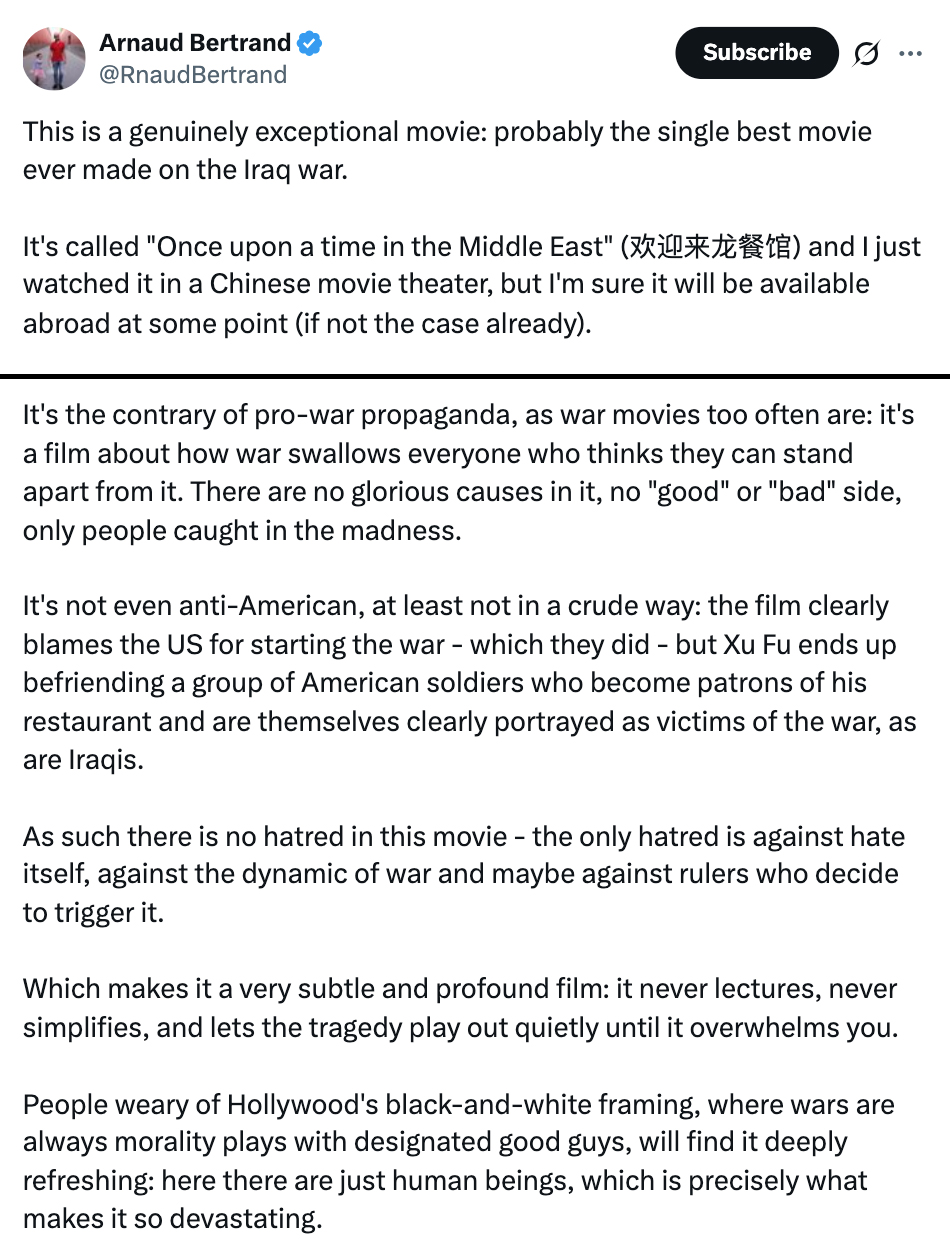
A composite screenshot of excerpts from French entrepreneur Arnaud Bertrand's review of the Chinese film "Once Upon a Time in the Middle East" on X.
The story follows Xu Fu, a Chinese chef who becomes embroiled in a desperate struggle to save lives amid the ravages of war in the Middle East. In contrast to long-established Hollywood conventions that often cast Western soldiers, agents or rescuers as central protagonists, the film turns its lens toward ordinary people caught in the grip of conflict. It depicts how individual lives are reshaped by the forces of history, while conveying a quiet sense of goodwill and offering a thoughtful reflection on the human condition.
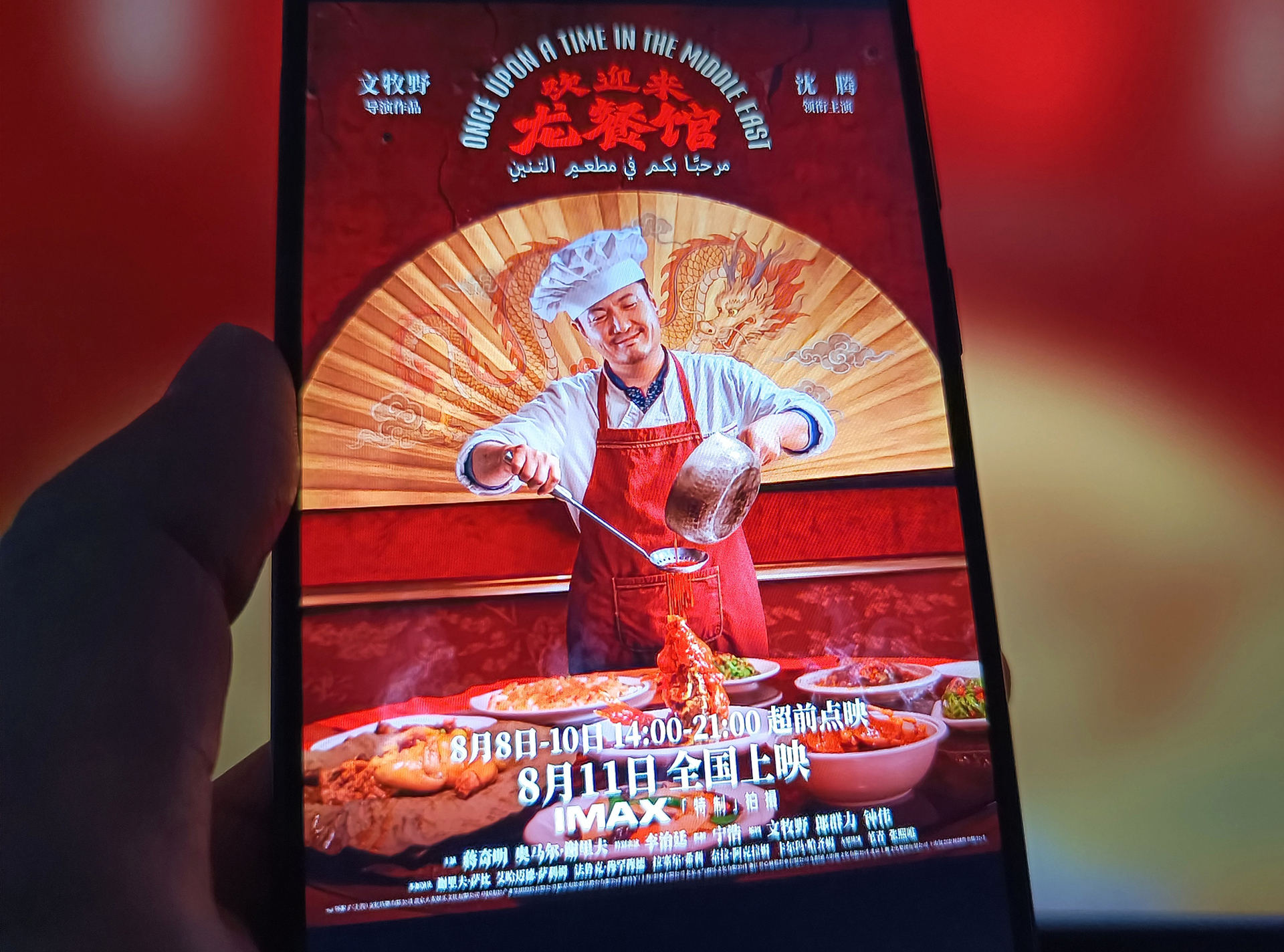
A poster for the Chinese film "Once Upon a Time in the Middle East" is displayed on a mobile phone. (Photo: VCG)
Against the backdrop of the United States' real-world pursuit of "America First" and unilateralism, which have increasingly raised questions about the credibility of the American-style hero archetype long celebrated in Hollywood blockbusters, Once Upon a Time in the Middle East challenges conventional narrative formulas while contributing to a broader rethinking of the logic and values that underpin global storytelling.