


Esports opens window on Chinese culture for Kenyan Gen Z
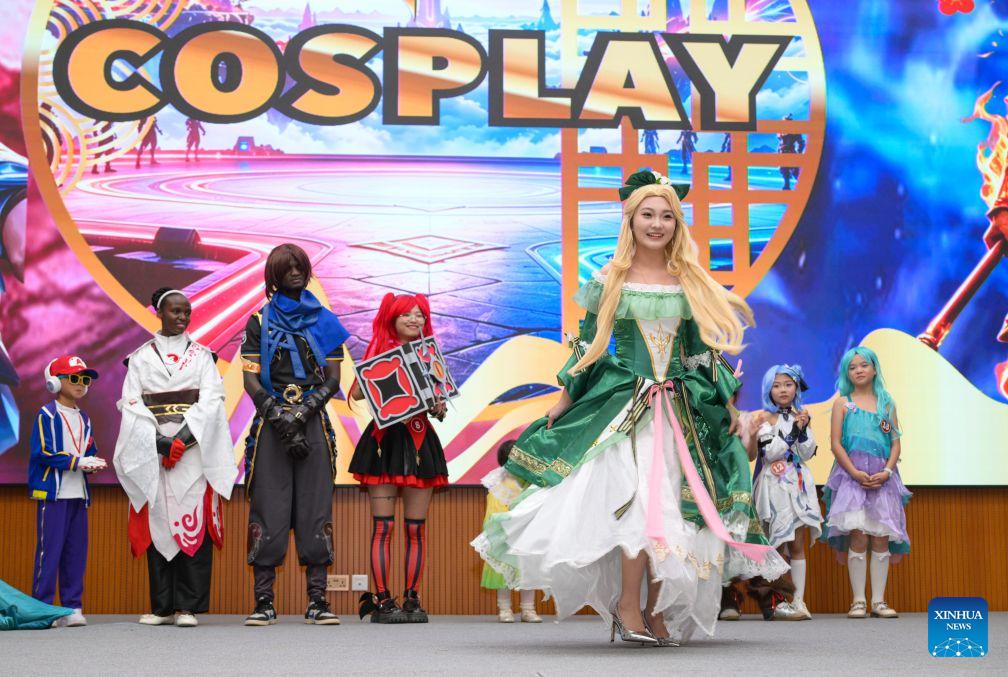
Game enthusiasts in costumes reenact game characters at a cosplay session during the first Kenya "Elephant Cup" Honor of Kings Esports Invitational Tournament and the 2026 Nairobi Youth Digital Entertainment Festival in Nairobi, Kenya, Sept. 20, 2026. Held from Saturday to Sunday in Nairobi, the event centered on the theme "Esports Connects the World, Youth Creates the Future." It served as a dynamic platform for China-Africa youth engagement, deepening cultural understanding through competitive esports, digital art, and gaming. (Photos: Xinhua)
NAIROBI, Sept. 21 (Xinhua) -- Dressed as Wukong, the legendary Monkey King from Chinese mythology, Asgar Mukadam captivated an energetic Nairobi crowd and took home the overall cosplay victory.
The 30-year-old lawyer from Kenya's coastal city of Mombasa spent two weeks crafting his winning costume using fabrics and cardboard weaponry inspired by the popular mobile game Honor of Kings.
"I'm very excited and very happy that the Chinese people have given me a good opportunity to showcase my skills because I have always been inspired by Chinese culture and their martial arts," Mukadam told Xinhua on Sunday.
Mukadam was among the young Kenyans who brought iconic Chinese legends to life during the first Kenya "Elephant Cup" Honor of Kings Esports Invitational Tournament and the 2026 Nairobi Youth Digital Entertainment Festival.
Held from Saturday to Sunday in Nairobi, the event centered on the theme "Esports Connects the World, Youth Creates the Future." It served as a dynamic platform for China-Africa youth engagement, deepening cultural understanding through competitive esports, digital art, and gaming.
Organized by the Kenya Chinese Youth Association and the Kenya Overseas Chinese Association, the tournament brought together nearly 200 players across almost 40 registered teams. Competitors faced off in Honor of Kings, the hit mobile multiplayer online battle arena game developed by Chinese internet giant Tencent.
The event also featured a friendly showdown between Kenyan and Chinese esports teams, highlighting deepening international camaraderie on the digital stage.
Fellow cosplay competitor Henry Wasonga, a 27-year-old finance officer at a Chinese-owned firm in Kenya, transformed into Li Bai, the legendary Tang Dynasty poet depicted in the game as an agile swordsman.
Wasonga, who faced hardship growing up, shared that he felt a deep personal connection to the character's journey of resilience and independence.
Completing the trio of vibrant transformations was Mercy Njihia, a 26-year-old sales and marketing executive, who embodied Mulan, the legendary Chinese woman warrior celebrated for her courage and depicted in the game wielding twin blades.
Local gaming leaders praised the growing popularity of Chinese digital entertainment across the region.
Dickson Ouya, 28, captain of the finalist esports team Kenyan Avengers, noted the surging popularity of Chinese mobile games among local youth, citing their high production quality and engaging mechanics.
Jefferson Amimo, captain of the Iron Stallion esports team, explained that African youth are drawn to Chinese games because they weave rich mythology directly into the gameplay, offering players an immersive cultural experience.
Anne Emurudu, captain of the all-female esports team Shadow Reign, expressed her enthusiasm for Chinese mobile games, praising their inclusive design and rich storytelling.
Canice Musa, leader of the Kenyan esports team Bot Nation, similarly underscored the widespread adoption and growing presence of Chinese titles within the country's vibrant gaming ecosystem.
Diplomats, sports administrators, and youth leaders emphasized that esports and digital entertainment represent a rapidly expanding frontier for cultural exchange and economic collaboration between China and Africa.
Zhang Zhizhong, minister counselor at the Chinese Embassy in Kenya, noted that high-performing games serve as a powerful medium for sharing deep cultural heritage across borders.
"A game needs advanced creative design and a rich cultural foundation to resonate globally," Zhang said, encouraging Kenyan participants to use the game's historical characters as a portal to explore Chinese history and language further.
Ronny Lusigi, president of the Esports Kenya Federation, underscored the economic and developmental potential of gaming for the nation's vast youth population.
"Esports is no longer just about gaming; it is a global industry creating careers, businesses, and new opportunities," Lusigi said, noting that over 11 million young Kenyans engage in gaming.
Lusigi called for deeper partnerships between Kenyan game developers and China's digital industry to help bring African stories to global audiences, noting that some publishers of Chinese esports games are already incorporating elements of African culture and blending them with Asian traditions, a fusion that fosters meaningful international, people-to-people exchanges.
Henry Rotich, director in charge of metrology and testing at the Kenya Bureau of Standards, praised the discipline, strategy, and teamwork displayed by the young competitors.
Rotich observed that while traditional bilateral relations are built through diplomacy and trade, long-lasting ties are equally rooted in sports, technology, and digital interaction among the youth.
Yang Min, president of the Kenya Chinese Youth Association, said that esports has become a common language shared by young people around the world.
"Through Honor of Kings, Chinese and Kenyan youth have come together out of shared interest. Through the Chinese mythological and historical figures featured in the game, young people can discover and experience Chinese culture in a natural and engaging way."
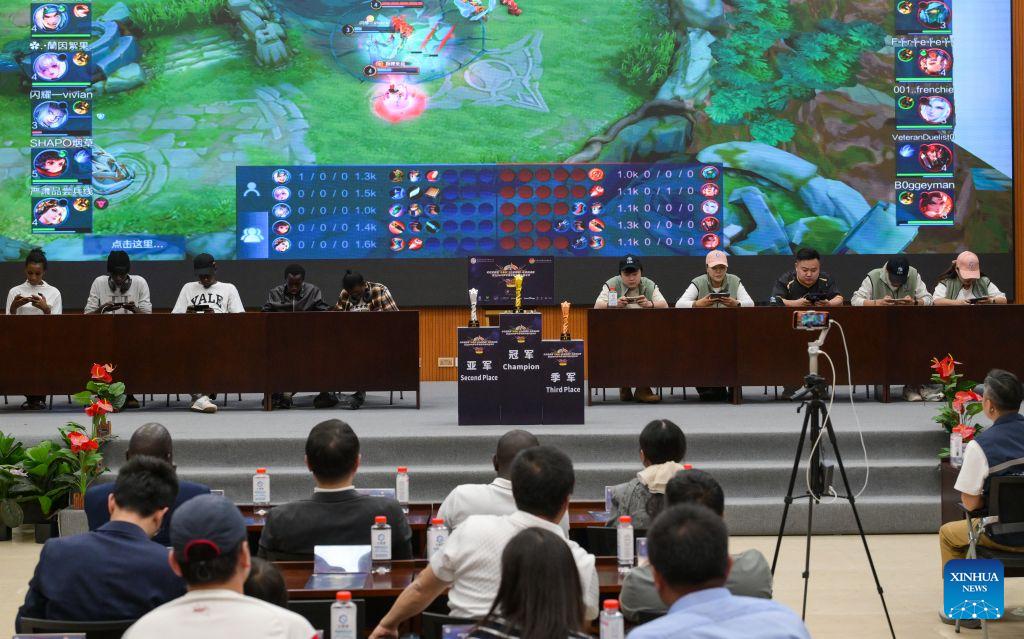
People watch an esports competition during the first Kenya "Elephant Cup" Honor of Kings Esports Invitational Tournament and the 2026 Nairobi Youth Digital Entertainment Festival in Nairobi, Kenya, Sept. 20, 2026. Held from Saturday to Sunday in Nairobi, the event centered on the theme "Esports Connects the World, Youth Creates the Future." It served as a dynamic platform for China-Africa youth engagement, deepening cultural understanding through competitive esports, digital art, and gaming.