


China's higher-educated population reaches 270 mln as universities expand enrollment, adjust programs
BEIJING, Sept. 23 (Xinhua) -- China now has 270 million people with a higher education background, or nearly one in five of its population, as the country expands higher education while adjusting its university system to changing demographics and evolving demand for talent, according to the Ministry of Education.
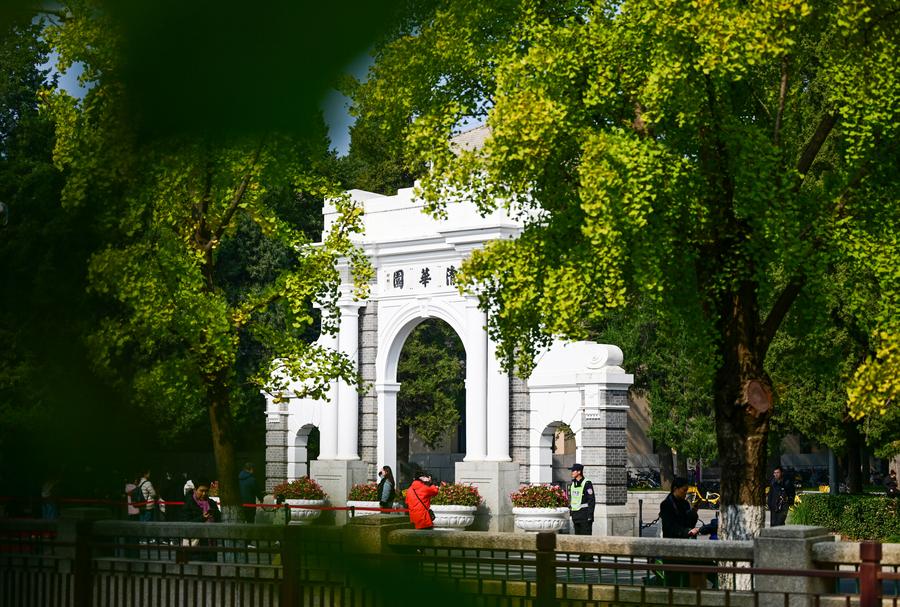
This photo taken on Oct. 23, 2025 shows a view of the autumn scenery at the campus of Tsinghua University in Beijing, capital of China. (File photo: Xinhua)
China's gross enrollment rate in higher education reached 61.3 percent in 2025, with total enrollment standing at 48.73 million, said Guo Peng, head of the Ministry of Education's development planning department, at a press conference.
According to official data, the number of people in the age group for higher education is expected to peak in 2032, underscoring the need to expand the overall supply of higher education resources and increase the supply of high-quality educational resources.
Against that backdrop, universities under China's "Double First-Class" initiative will expand undergraduate enrollment by 76,000 places from 2027 to 2030, Guo said. The initiative supports a select group of universities and academic disciplines with the goal of achieving world-class status.
The expansion will involve more than simply increasing enrollment, Guo said. Universities will adjust academic programs and improve the structure and quality of higher education to better match the needs of national and regional socioeconomic development, as well as industry demand.
The country's outline plan for the development of the education sector during the 15th Five-Year Plan period (2026-2030) calls for expanding quality undergraduate enrollment and graduate training, with a focus on science, engineering, agriculture and medicine, while increasing the proportion of graduate-level education.
Guo said the government will provide greater support to emerging fields such as artificial intelligence, integrated circuits, biomedicine and new energy.
The government will also use central government funding and ultra-long special treasury bonds to support "Double First-Class" universities in building new campuses and upgrading basic facilities, including dormitories, cafeterias, sports facilities and laboratories, Guo said.
Despite a decline in the working-age population, China's total effective human resources are expected to remain at a high level over the next 10 to 15 years, initially rising slightly before edging down, said He Dan, head of the China Population and Development Research Center.
She said the trend highlights the advantages in human-resource quality brought by improvements in education and health sectors.