


When the moon fills the East: A handbook to China's Mid-Autumn Festival
Editor's note:
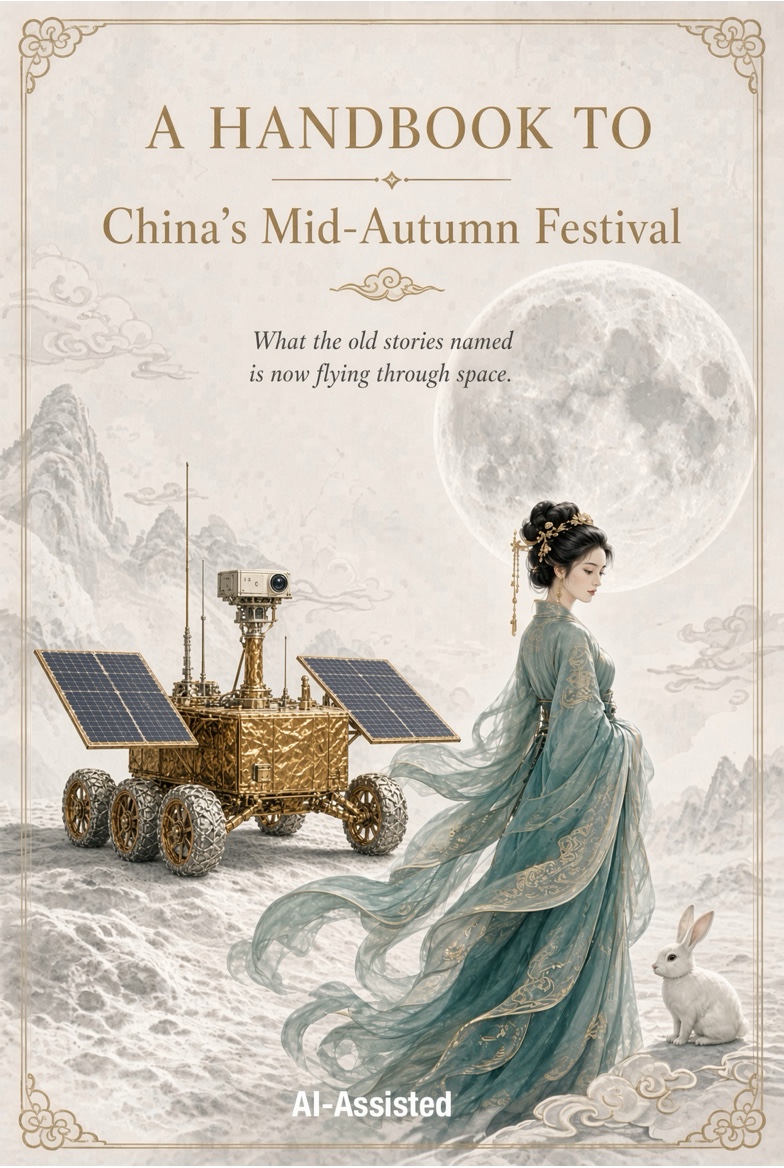
Mid-Autumn Festival is almost here. To people in China, the moon is not just a rock in the night sky. It stands for reunion, longing, and a distinctly Chinese kind of romance. Everyone in China knows the legend of Chang'e flying to the moon and the Yutu, or Jade Rabbit, pounding medicine, but far fewer visitors know that Chang'e and Yutu are also the names of spacecraft. What ancient China imagined about the full moon is now flying through space. Read this handbook and you will know enough for the special night: how to eat a mooncake, how to watch the moon, and where those names in orbit came from. If you only learn one line, learn this: 中秋快乐 — Zhōngqiū kuàilè — Happy Mid-Autumn Festival.
Reunion under the moon
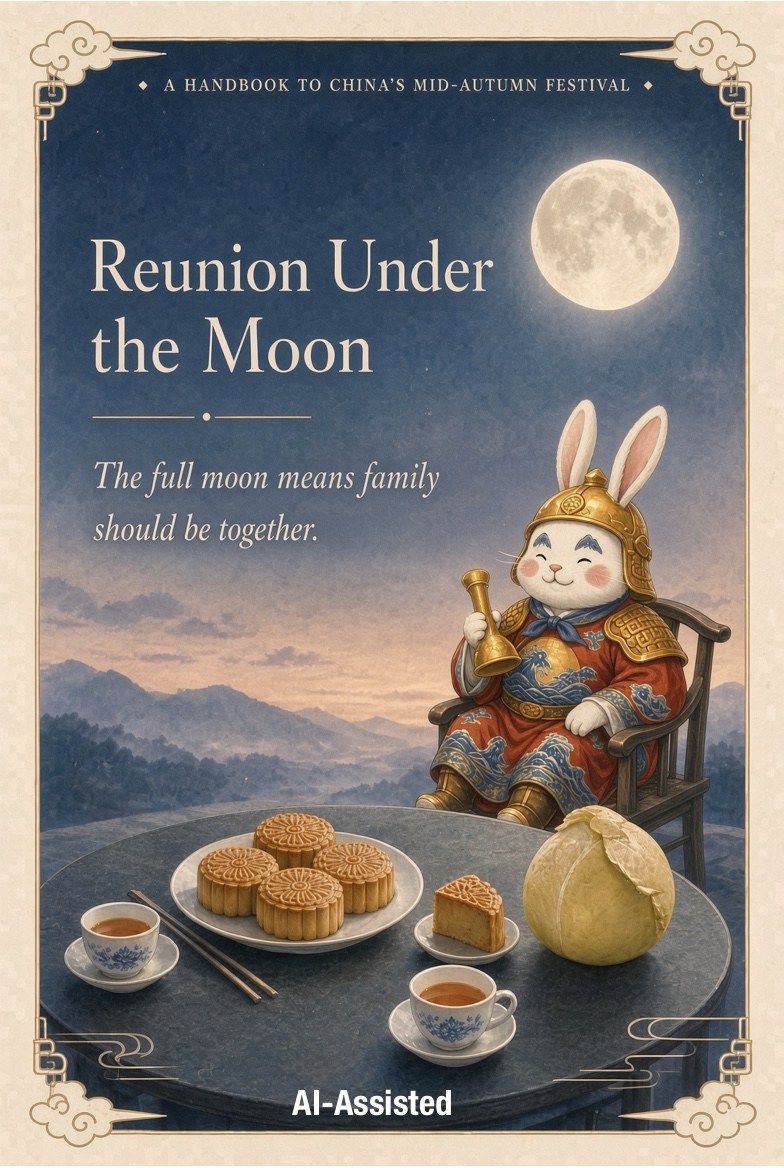
Mid-Autumn falls on the 15th day of the eighth month in the Chinese lunisolar calendar, right in the middle of autumn. It is also called the Reunion Festival, and in importance it comes second only to Spring Festival. For centuries, the full moon has meant a family in one place. That has not changed.
The classic scene is simple: a round table, a box of mooncakes, a few plates of fruit — often pomelo — and sometimes lanterns. The mooncake is cut according to the number of people at the table, one piece each. If someone did not make it home, that piece is set aside until they return. Only then is the circle complete.
Customs change from city to city. In Xiamen, southeast China's Fujian Province, there is Bo Bing, a dice game once played to comfort homesick soldiers and now listed as a national intangible cultural heritage. In Beijing, try a park or the old city moat, and look for Tu'er Ye, or Lord Rabbit, the clay rabbit figurines. In Shanghai, a park or the riverfront will do; Cantonese, Suzhou-style, and new-school mooncakes are easy to find. In Hong Kong, people cut mooncakes in a teahouse and walk with lanterns.
Good to know
Mid-Autumn follows the Chinese calendar, so the Gregorian date moves each year, usually landing in September or October. In 2026, the festival falls on Sept. 25.
Try this
Sit down at a moon-viewing table. Watch how the table is set, how the mooncake is cut, how tea is poured. Say 中秋快乐, Zhōngqiū kuàilè!
Then this
Cut the mooncake yourself, one piece per person. Enjoy your share. Leave the piece for the absent loved one untouched.
The taste of mooncakes
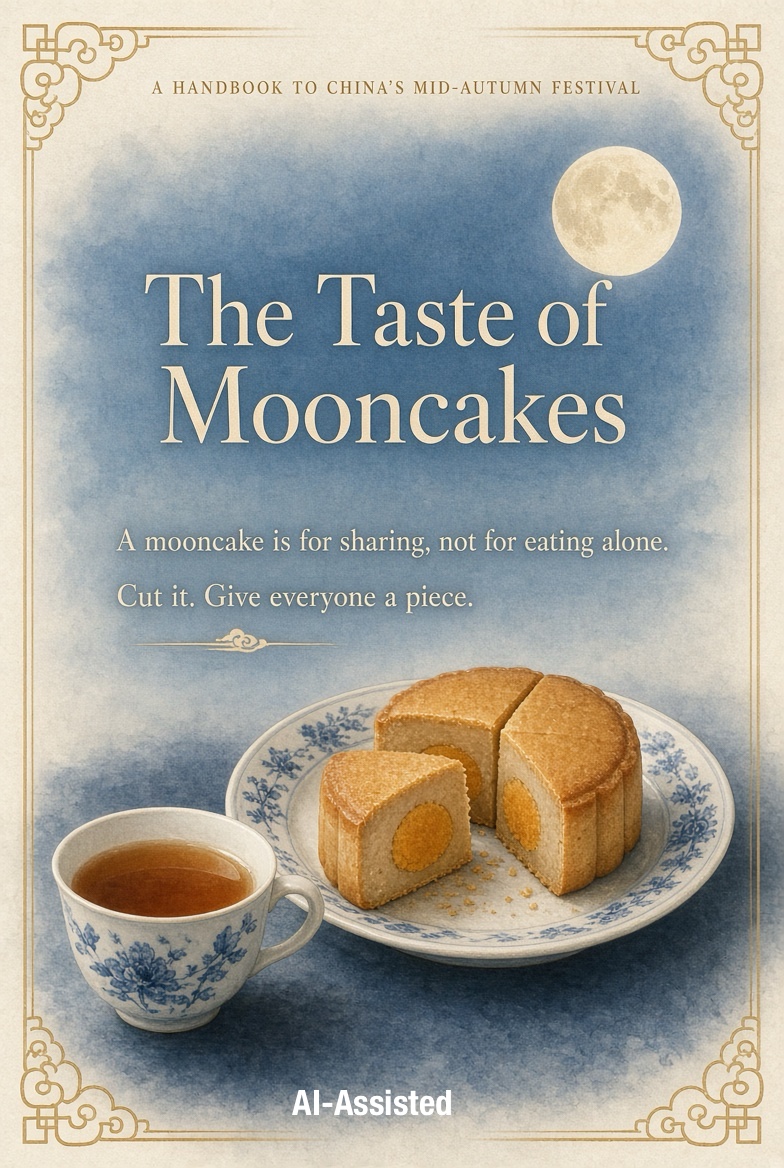
Mooncakes began as offerings to the moon. Later the round pastry became a symbol of family reunion. Eating one is only half the ritual. Cutting it and handing a piece to everyone is the other half.
Crust and filling vary by region. Five styles turn up most often. Cantonese: thin skin, plenty of filling, the one you will see everywhere. Beijing-style: moderate sugar and oil, a richer bite. Suzhou-style: flaky layers that shed crumbs when you bite. Teochew-style: a shorter crust, a finer filling, rich without sitting heavy. Yunnan-style: ham mooncakes are the signature — savory first, sweet second. This is not dessert. Ask before you bite.
Lotus seed paste with salted egg yolk is the safest first pick, then red bean and coconut. Five-nut splits the room among young Chinese eaters; save it for another night. A classic Cantonese mooncake is heavy on oil and sugar, so do not treat a whole one like a slice of cake. In southern China, people cut them into small pieces and eat them with hot tea or pomelo. For your first try, start with lotus seed paste and salted egg yolk, red bean, snow skin, or a lava center.
Good to know
Cut the mooncake by the number of people at the table. Save a share for anyone who could not come home. That is what reunion means here.
Try this
Buy one classic Cantonese lotus-paste-and-yolk mooncake. Eat it with hot tea.
Then this
Join a mooncake-making session. Try an ice-cream or fruit version.
Chang'e flies to the moon
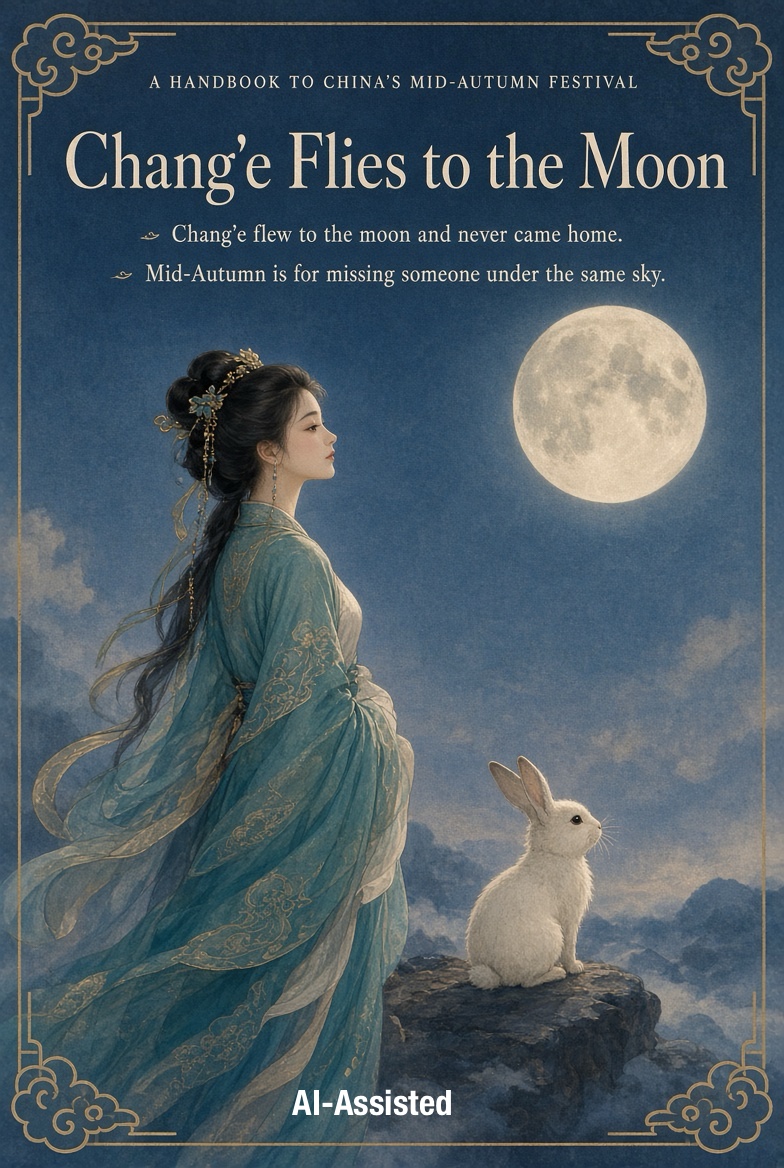
The heart of China's moon myths is not a goddess with a long biography. It is longing, and the wish to sit together again. Three figures keep turning up on the moon.
Chang'e swallowed the elixir of immortality and flew to the Moon Palace. She and her husband Hou Yi have watched each other across that distance ever since. When people pay respects to the moon at Mid-Autumn, they are, in large part, paying respects to her.
Yutu, the Jade Rabbit, pounds medicine on the moon. In Beijing the rabbit becomes Tu'er Ye: a blessing in clay, and a toy in children's hands.
Wu Gang stands under a laurel tree and chops it forever. The tree heals as fast as he cuts. The work never ends, and neither does the longing.
China has no shortage of moon poems. The line people still reach for is Su Shi's: "May we live long, and share this moonlight across a thousand miles." You may not make it to the same table. You can still look at the same full moon. In that poem, the beauty being shared is the moon itself.
Good to know
Before Chang'e flew, Hou Yi shot down the extra suns and won the elixir. She swallowed it and rose. He made an offering from afar. Moon worship starts there.
Try this
Listen to the three stories — Chang'e, the Jade Rabbit, and Wu Gang.
Then this
Make a rabbit lantern. Write one line of your own about the moon.
China's journey to the moon
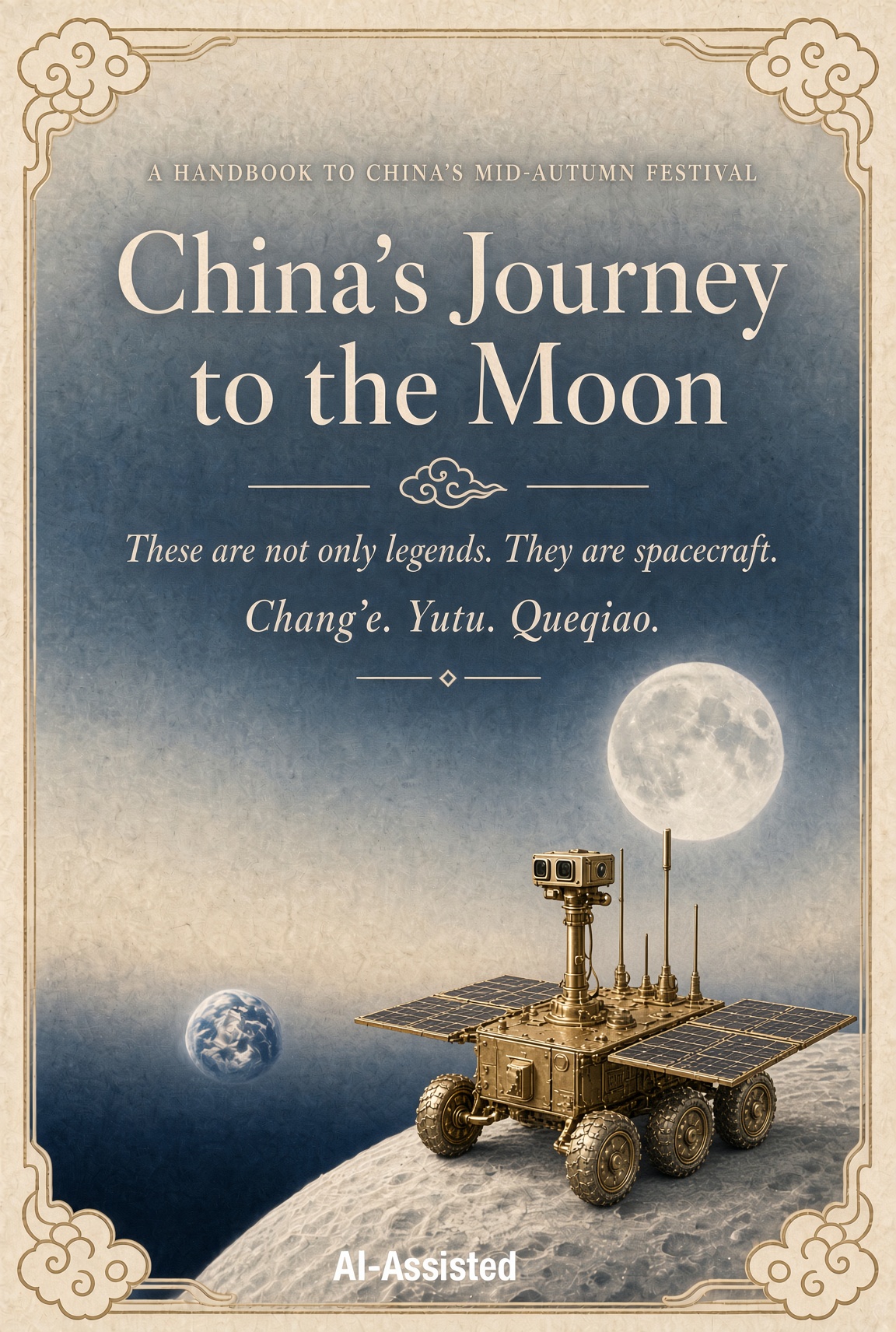
China's lunar exploration program was approved in 2004, with its first probe launched in 2007. The romance stayed in the names. The probes are called Chang'e. The rover is Yutu. The relay satellite that sends signals from the far side of the moon is Queqiao — Magpie Bridge, from the legend of the Cowherd and the Weaver Girl, a bridge that lets two separated sides meet again.
Over the past decade, China's Chang'e lunar exploration program has secured many achievements. Chang'e-4 realized the world's first soft landing on the far side of the moon. Chang'e-5 completed lunar sampling and return, while Chang'e-6 accomplished humanity's first sample return from the moon's far side.
The significance of China's lunar exploration program has transcended national achievement. It has made unique contributions to lunar study for the wider world and provided an open platform for international cooperation.
Good to know
Three steps: orbit, land, return. Chang'e-4 landed on the far side. Chang'e-5 and Chang'e-6 brought samples home.
Try this
Watch a short documentary on Chang'e-6 sampling the far side.
Then this
Go to a planetarium or a space exhibition and find the missions named Chang'e, Yutu, and Queqiao.
New ways to keep the night
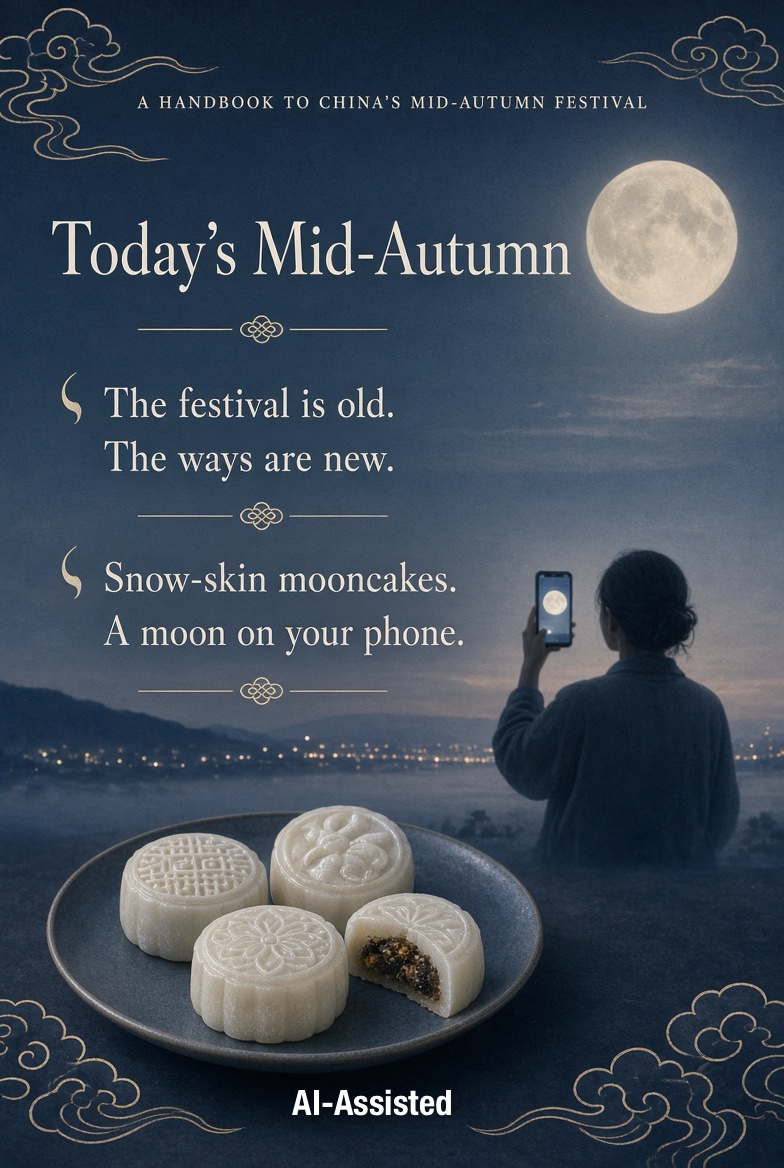
Mooncakes are no longer only dense with oil and sugar. Ice cream, chocolate, and even more unusual flavors now sit on the same shelves. Young people swap photos of the moon on social media or put on Hanfu and walk through a museum for a moon-themed exhibition.
Some malls even sell mooncakes for pets — playful enough to make people smile. The forms keep changing. The moon does not.
You do not need an incense table from an ancient painting to mark the night. A new-style mooncake and an evening spent looking up are already enough. If you want to include a pet, find a mooncake recipe made for animals.
Good to know
The new classics are ice cream and chocolate.
Try this
Taste a chocolate or ice-cream mooncake.
Then this
Make a lower-sugar mooncake. If it is for a pet, use only a pet-friendly recipe.