


Zhejiang's cultural centers experience a youthful reboot
Learning a new skill at night school after work, catching a free outdoor concert on the weekend or stumbling into a village gala while traveling — young people across China are finding them all in the same unexpected place: cultural centers.
Young employees at cultural centers are driving that shift — filling service gaps, responding to public demand and turning ideas gathered from social media into reality. A recent visit to several centers in east China's Zhejiang Province showed how far that work has gone.
Turning a covered bridge into a cultural landmark
Gu Haodong, a lawyer born after 1995, recently stepped onto the Xizi bridge — a covered bridge by Hangzhou's West Lake — in traditional-style clothing to perform an original song with his 10-member pop group.
"Those three minutes on the bridge were the highlight of my life," he said. Not long before, he had simply been another bystander filming performances on his phone.
The show was part of a "blind-box concert" series — surprise pop-up performances with no set schedule — created by the Zhejiang Provincial Cultural Center.
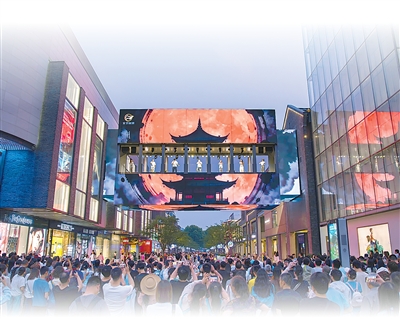
A pop band performs on a corridor bridge in Hangzhou, east China's Zhejiang Province. (Photo courtesy of the Zhejiang Provincial Cultural Center)
Zou Jiayu, a tourist in his early twenties, happened upon one of the shows. The Nanjing native called it "an amazing travel experience," and after he posted a few clips online, friends immediately recognized the location. Only then did he realize he had walked into one of Hangzhou's most talked-about cultural events.
The idea came from staff born in the 1980s in the cultural center's arts training department. "We set up social media accounts to gather public feedback on what people wanted to see," said Zhao Yaqian, deputy head of the department who was born after 1985.
The feedback showed that young people wanted new stages and new kinds of performances. Buoyed by a well-received lakeside concert in 2024, the team went looking for another venue and found one ready-made: a covered bridge over a nearby pedestrian shopping street, fitted with lighting and 36 retractable LED screens. That October, they launched the first blind-box concert — no tickets, no reservations — and it soon went viral.
The format now spans everything from traditional opera to songs inspired by popular video games and films, with performances by professional troupes, celebrities and children with autism — the last of these staged for the National Day for Helping Persons with Disabilities.
"The Xizi covered bridge is no longer just a bridge — it's become a cultural landmark," Gu said. The bridge has hosted more than 100 shows, drawing over 4.2 million visits and more than 9 billion views online, with young people making up over 60 percent of the audience.
Building rural culture from within
Zhang Lingling, a resident of Shiqiaotou town in Wenling, Zhejiang Province, now looks forward to a weekly tie-dye class at a rural art school housed in more than 20 renovated farmhouses in Santouli village.
"I've never been so hooked on a class," she said. She is also interested in pottery, calligraphy and other crafts, and sometimes brings her child along to enjoy what art and culture have to offer.
The idea of running rural art schools came from Zhang Yiyan, who heads Wenling's cultural center and was born in the 1980s. Villagers had long wanted to learn a craft themselves or perform on stage, she said. Since 2020, the city has opened rural art schools in 556 village cultural halls and community centers, offering classes tailored to local interests, from yoga and piano to folk dance.
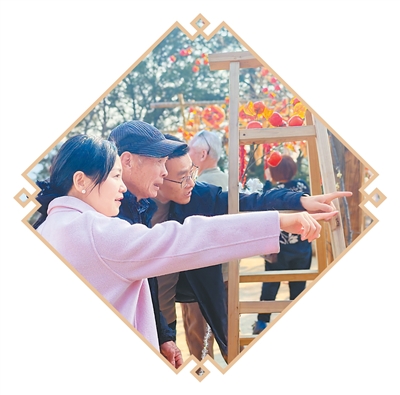
A "village guide" instructs seniors in Chenjiapu village, Songyang county, east China's Zhejiang Province. (Photo/Wang Zejun)
"We will keep working to better meet rural residents' cultural needs, build up rural cultural talent, and stimulate endogenous momentum for rural culture," Zhang Yiyan said.
In Songyang county, Lishui city, a team from the city's cultural center tried something different: teaching residents to serve as tour guides who share their villages' stories and daily lives with visitors. They interviewed more than 80 households across six villages, then designed personalized coaching in storytelling and smartphone videography. The "village guide" program has since expanded across Lishui, training more than 200 guides.
Small scale, wide reach
Young staff are reshaping what cultural centers do. Many were born in the 1980s, 1990s or younger, and they are bringing ideas these institutions have not tried before.
A singing contest launched by the cultural center of Wenzhou city turns "have you sung today?" into a local greeting.
The cultural center in Anji county runs night schools and organizes activities where people can learn new skills, make friends after work, and enjoy the arts even while taking a casual stroll, helping make art and culture part of everyday life.
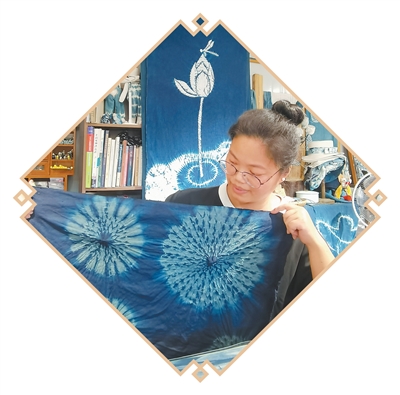
A villager shows her tie-dye work in a class at a rural art school in Wenling, east China's Zhejiang Province. (Photo/Zheng Haiou)
In Tongxiang city, open rehearsals for village galas give residents a chance to watch the performances and offer feedback. On the day of the performance, they turn out in high spirits, cheering and applauding enthusiastically.
"Young workers of cultural centers are winning over the public — especially young people — through professional skills, energy and creativity. We believe there's much more good to come," said Ruan Jing, head of the Zhejiang Provincial Cultural Center.