


Silk thread across the Pacific: Cantonese embroidery and Mexican Tehuana dress
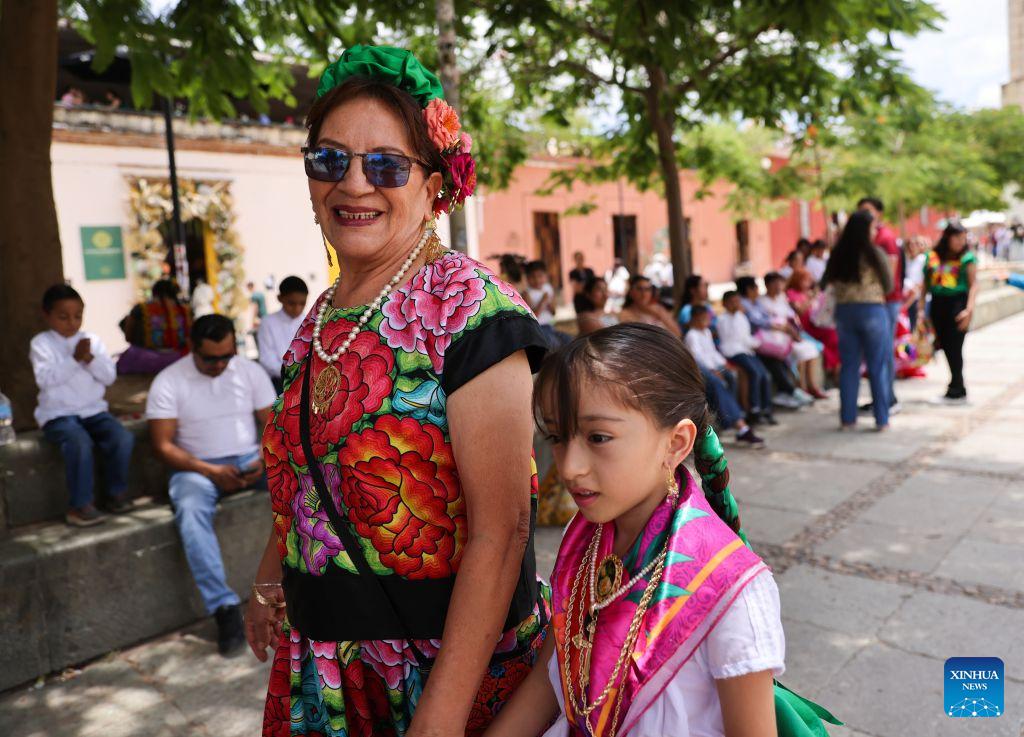
Citizens wearing traditional Tehuana attire walk along a street in Oaxaca City, Oaxaca State, Mexico, July 29, 2026.
Centuries ago, Chinese silk and porcelain products were shipped to the Americas via the Manila-Acapulco galleon trade route.
Cantonese embroidered shawls made in China's Pearl River Delta were transported through Manila and eventually sold in Spain and elsewhere, giving rise to the name "Manila shawl."
Mexican costume researchers note that the embroidered motifs on the short blouses of modern Tehuana dress are linked to classic "Manila shawl" designs. According to Mexican cultural archives, Chinese fabrics brought by the maritime trade shifted Tehuana dress decoration from geometric patterns to predominantly floral motifs by the early 20th century.
Today, Cantonese embroidered shawls continue to evolve, while Tehuana floral garments remain part of festivals and daily life, reflecting how cultures draw from one another and grow through exchange. (Xinhua/Liu Wenhui)
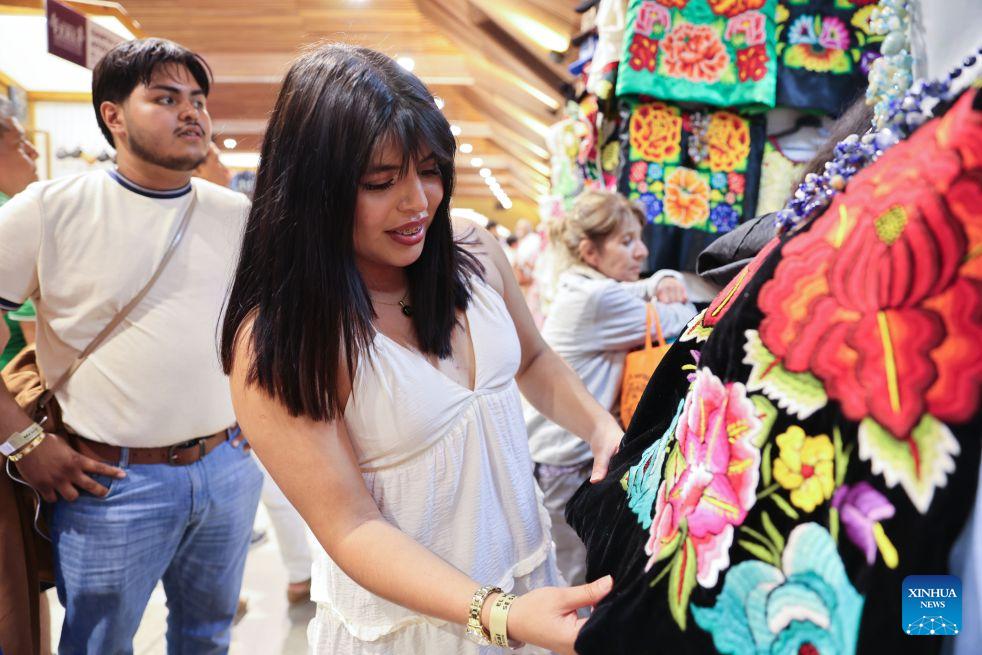
A customer selects a hand-embroidered garment at the 2026 Guelaguetza Handicrafts Fair in Oaxaca City, Mexico, July 26, 2026.
Centuries ago, Chinese silk and porcelain products were shipped to the Americas via the Manila-Acapulco galleon trade route.
Cantonese embroidered shawls made in China's Pearl River Delta were transported through Manila and eventually sold in Spain and elsewhere, giving rise to the name "Manila shawl."
Mexican costume researchers note that the embroidered motifs on the short blouses of modern Tehuana dress are linked to classic "Manila shawl" designs. According to Mexican cultural archives, Chinese fabrics brought by the maritime trade shifted Tehuana dress decoration from geometric patterns to predominantly floral motifs by the early 20th century.
Today, Cantonese embroidered shawls continue to evolve, while Tehuana floral garments remain part of festivals and daily life, reflecting how cultures draw from one another and grow through exchange. (Xinhua/Liu Wenhui)
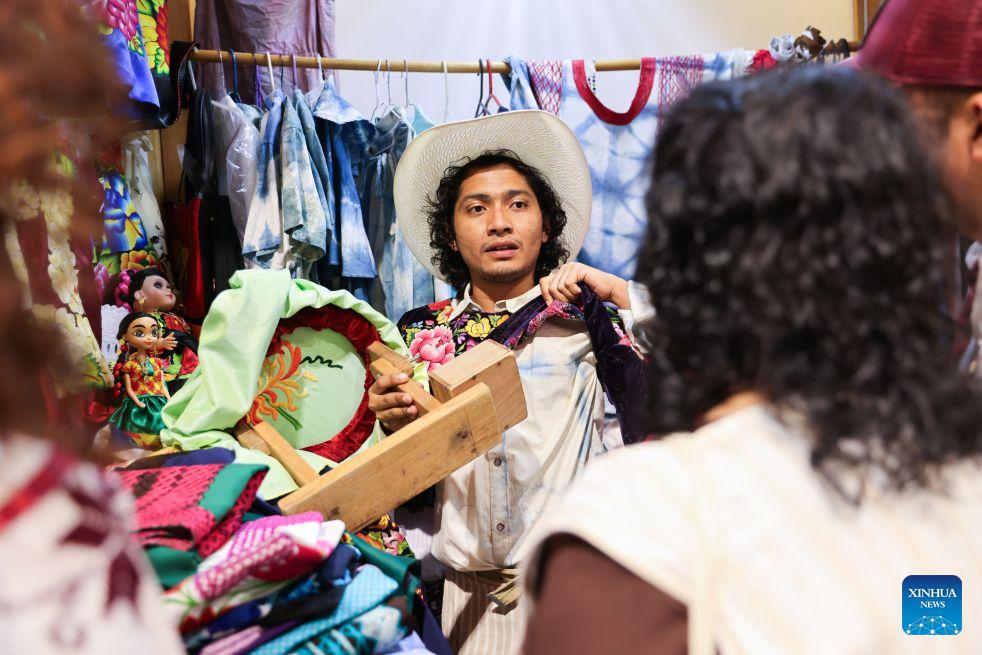
An artisan shows a hand-embroidered garment to customers at the 2026 Guelaguetza Handicrafts Fair in Oaxaca City, Oaxaca State, Mexico, July 26, 2026.
Centuries ago, Chinese silk and porcelain products were shipped to the Americas via the Manila-Acapulco galleon trade route.
Cantonese embroidered shawls made in China's Pearl River Delta were transported through Manila and eventually sold in Spain and elsewhere, giving rise to the name "Manila shawl."
Mexican costume researchers note that the embroidered motifs on the short blouses of modern Tehuana dress are linked to classic "Manila shawl" designs. According to Mexican cultural archives, Chinese fabrics brought by the maritime trade shifted Tehuana dress decoration from geometric patterns to predominantly floral motifs by the early 20th century.
Today, Cantonese embroidered shawls continue to evolve, while Tehuana floral garments remain part of festivals and daily life, reflecting how cultures draw from one another and grow through exchange. (Xinhua/Liu Wenhui)
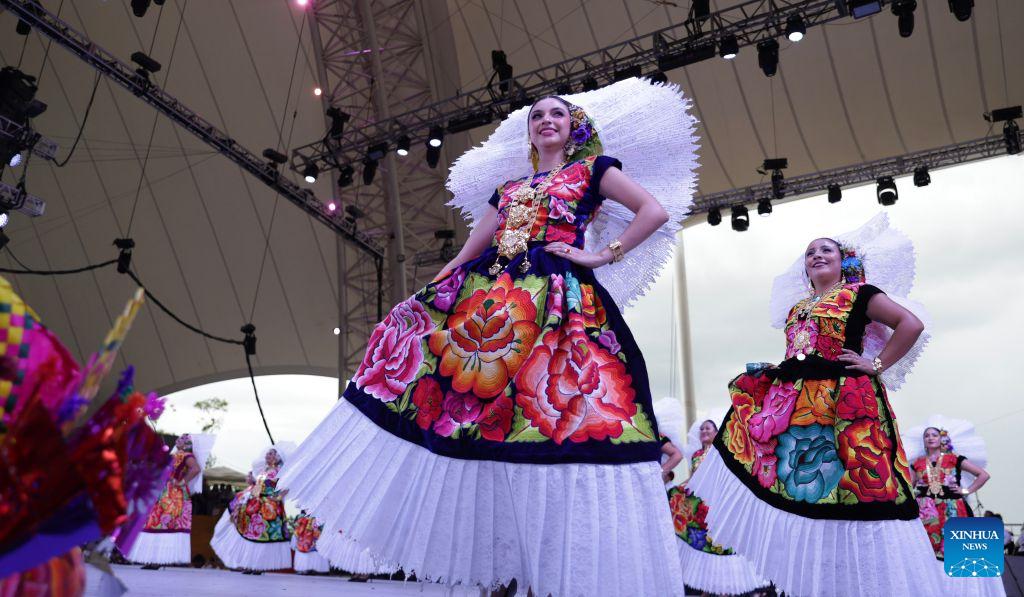
Performers wearing Tehuana dresses dance at the Guelaguetza festival in Oaxaca City, Mexico, July 27, 2026.
Centuries ago, Chinese silk and porcelain products were shipped to the Americas via the Manila-Acapulco galleon trade route.
Cantonese embroidered shawls made in China's Pearl River Delta were transported through Manila and eventually sold in Spain and elsewhere, giving rise to the name "Manila shawl."
Mexican costume researchers note that the embroidered motifs on the short blouses of modern Tehuana dress are linked to classic "Manila shawl" designs. According to Mexican cultural archives, Chinese fabrics brought by the maritime trade shifted Tehuana dress decoration from geometric patterns to predominantly floral motifs by the early 20th century.
Today, Cantonese embroidered shawls continue to evolve, while Tehuana floral garments remain part of festivals and daily life, reflecting how cultures draw from one another and grow through exchange. (Xinhua/Liu Wenhui)
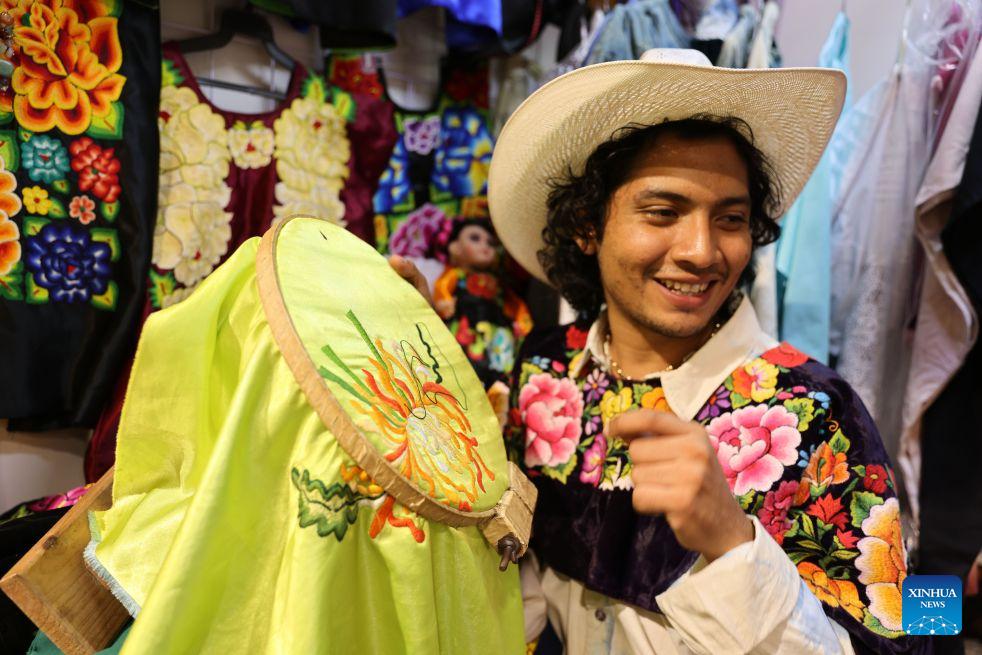
An artisan shows a hand-embroidered work to customers at the 2026 Guelaguetza Handicrafts Fair in Oaxaca City, Oaxaca State, Mexico, July 26, 2026.
Centuries ago, Chinese silk and porcelain products were shipped to the Americas via the Manila-Acapulco galleon trade route.
Cantonese embroidered shawls made in China's Pearl River Delta were transported through Manila and eventually sold in Spain and elsewhere, giving rise to the name "Manila shawl."
Mexican costume researchers note that the embroidered motifs on the short blouses of modern Tehuana dress are linked to classic "Manila shawl" designs. According to Mexican cultural archives, Chinese fabrics brought by the maritime trade shifted Tehuana dress decoration from geometric patterns to predominantly floral motifs by the early 20th century.
Today, Cantonese embroidered shawls continue to evolve, while Tehuana floral garments remain part of festivals and daily life, reflecting how cultures draw from one another and grow through exchange. (Xinhua/Liu Wenhui)
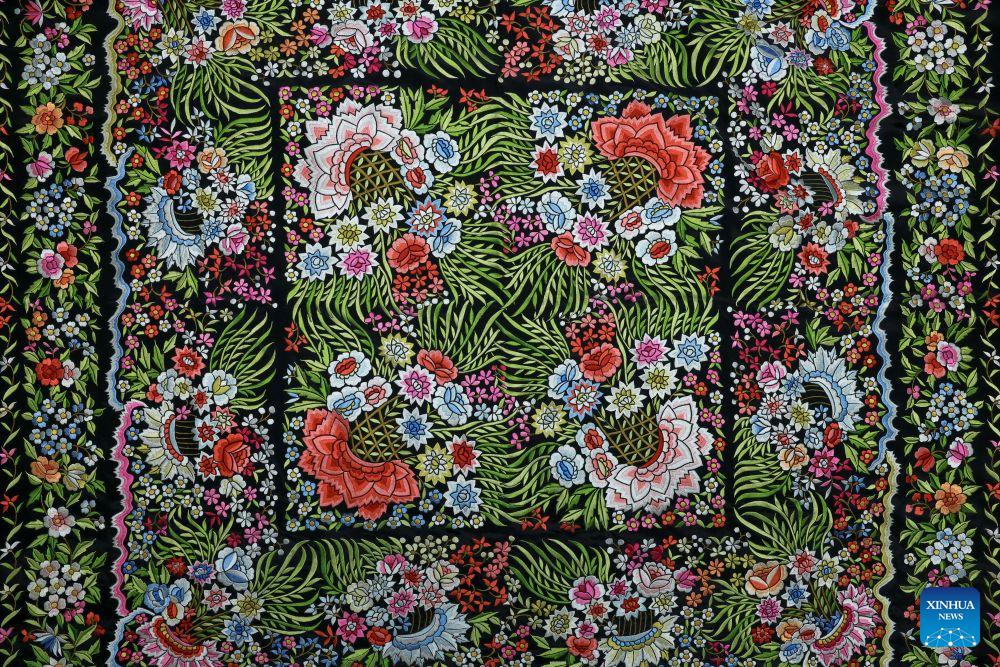
This photo taken on Aug. 20, 2026 shows a shawl that incorporates Spanish style at an embroidery workshop in Shunde, Foshan, south China's Guangdong Province.
Centuries ago, Chinese silk and porcelain products were shipped to the Americas via the Manila-Acapulco galleon trade route.
Cantonese embroidered shawls made in China's Pearl River Delta were transported through Manila and eventually sold in Spain and elsewhere, giving rise to the name "Manila shawl."
Mexican costume researchers note that the embroidered motifs on the short blouses of modern Tehuana dress are linked to classic "Manila shawl" designs. According to Mexican cultural archives, Chinese fabrics brought by the maritime trade shifted Tehuana dress decoration from geometric patterns to predominantly floral motifs by the early 20th century.
Today, Cantonese embroidered shawls continue to evolve, while Tehuana floral garments remain part of festivals and daily life, reflecting how cultures draw from one another and grow through exchange. (Xinhua/Mao Siqian)
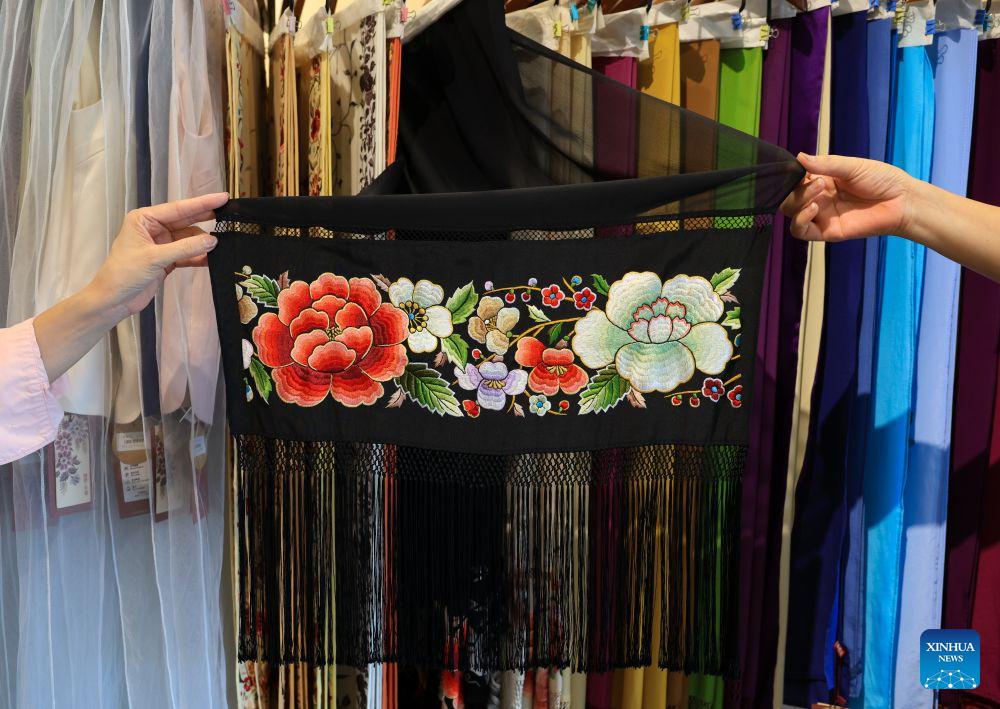
Staff members display a scarf that incorporates elements of the "Manila shawl" at an embroidery workshop in Shunde, Foshan, south China's Guangdong Province, Aug. 20, 2026.
Centuries ago, Chinese silk and porcelain products were shipped to the Americas via the Manila-Acapulco galleon trade route.
Cantonese embroidered shawls made in China's Pearl River Delta were transported through Manila and eventually sold in Spain and elsewhere, giving rise to the name "Manila shawl."
Mexican costume researchers note that the embroidered motifs on the short blouses of modern Tehuana dress are linked to classic "Manila shawl" designs. According to Mexican cultural archives, Chinese fabrics brought by the maritime trade shifted Tehuana dress decoration from geometric patterns to predominantly floral motifs by the early 20th century.
Today, Cantonese embroidered shawls continue to evolve, while Tehuana floral garments remain part of festivals and daily life, reflecting how cultures draw from one another and grow through exchange. (Xinhua/Mao Siqian)
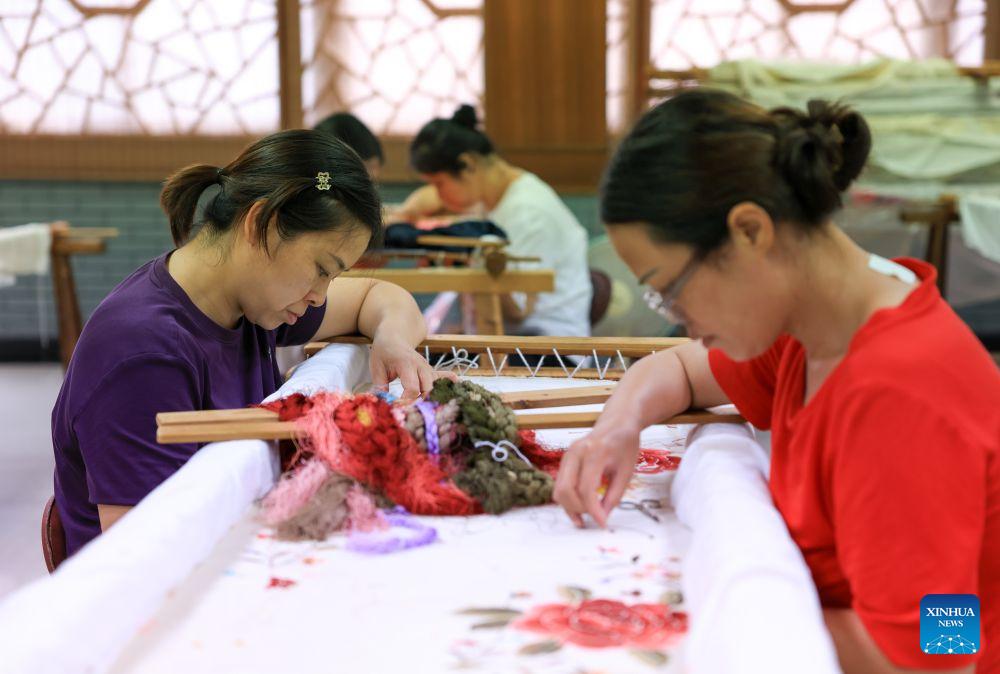
Staff members embroider flowers on shawls at an embroidery workshop in Shunde, Foshan, south China's Guangdong Province, Aug. 20, 2026.
Centuries ago, Chinese silk and porcelain products were shipped to the Americas via the Manila-Acapulco galleon trade route.
Cantonese embroidered shawls made in China's Pearl River Delta were transported through Manila and eventually sold in Spain and elsewhere, giving rise to the name "Manila shawl."
Mexican costume researchers note that the embroidered motifs on the short blouses of modern Tehuana dress are linked to classic "Manila shawl" designs. According to Mexican cultural archives, Chinese fabrics brought by the maritime trade shifted Tehuana dress decoration from geometric patterns to predominantly floral motifs by the early 20th century.
Today, Cantonese embroidered shawls continue to evolve, while Tehuana floral garments remain part of festivals and daily life, reflecting how cultures draw from one another and grow through exchange. (Xinhua/Mao Siqian)
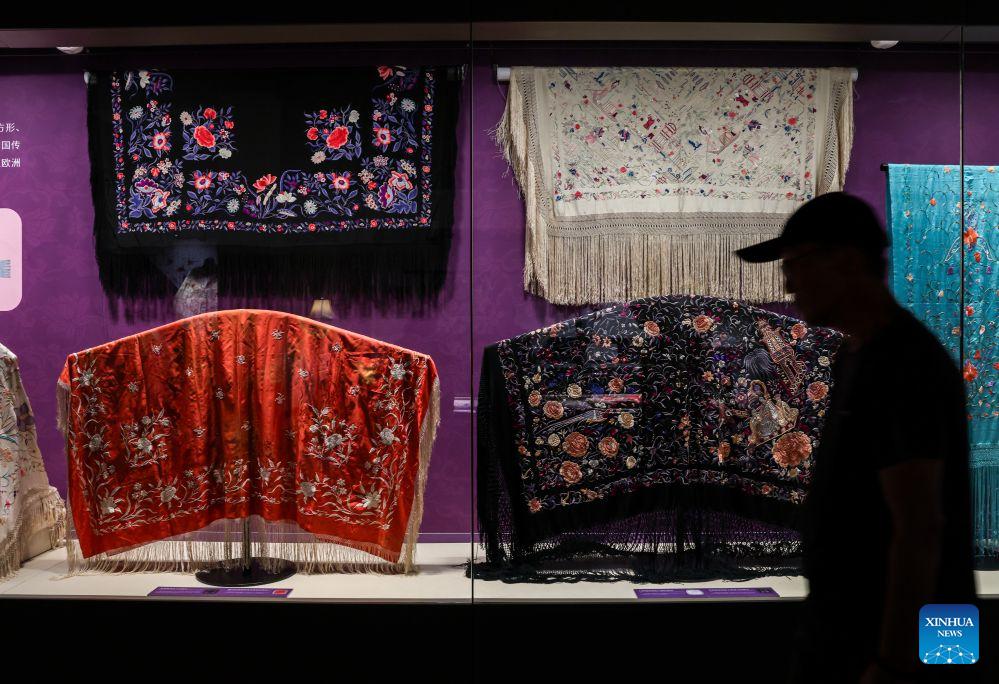
A visitor views embroidered shawls on display at the Guangzhou Museum in Guangzhou, south China's Guangdong Province, Sept. 20, 2026.
Centuries ago, Chinese silk and porcelain products were shipped to the Americas via the Manila-Acapulco galleon trade route.
Cantonese embroidered shawls made in China's Pearl River Delta were transported through Manila and eventually sold in Spain and elsewhere, giving rise to the name "Manila shawl."
Mexican costume researchers note that the embroidered motifs on the short blouses of modern Tehuana dress are linked to classic "Manila shawl" designs. According to Mexican cultural archives, Chinese fabrics brought by the maritime trade shifted Tehuana dress decoration from geometric patterns to predominantly floral motifs by the early 20th century.
Today, Cantonese embroidered shawls continue to evolve, while Tehuana floral garments remain part of festivals and daily life, reflecting how cultures draw from one another and grow through exchange. (Xinhua/Mao Siqian)
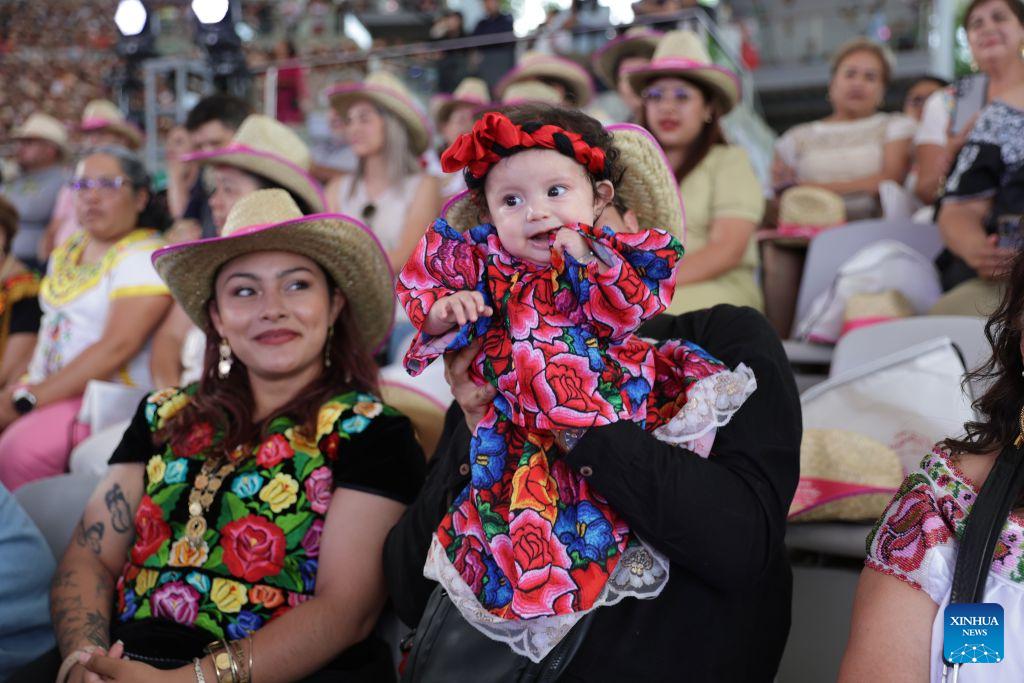
A baby wearing a Tehuana dress is pictured at the Guelaguetza festival in Oaxaca City, Mexico, July 27, 2026.
Centuries ago, Chinese silk and porcelain products were shipped to the Americas via the Manila-Acapulco galleon trade route.
Cantonese embroidered shawls made in China's Pearl River Delta were transported through Manila and eventually sold in Spain and elsewhere, giving rise to the name "Manila shawl."
Mexican costume researchers note that the embroidered motifs on the short blouses of modern Tehuana dress are linked to classic "Manila shawl" designs. According to Mexican cultural archives, Chinese fabrics brought by the maritime trade shifted Tehuana dress decoration from geometric patterns to predominantly floral motifs by the early 20th century.
Today, Cantonese embroidered shawls continue to evolve, while Tehuana floral garments remain part of festivals and daily life, reflecting how cultures draw from one another and grow through exchange. (Xinhua/Liu Wenhui)
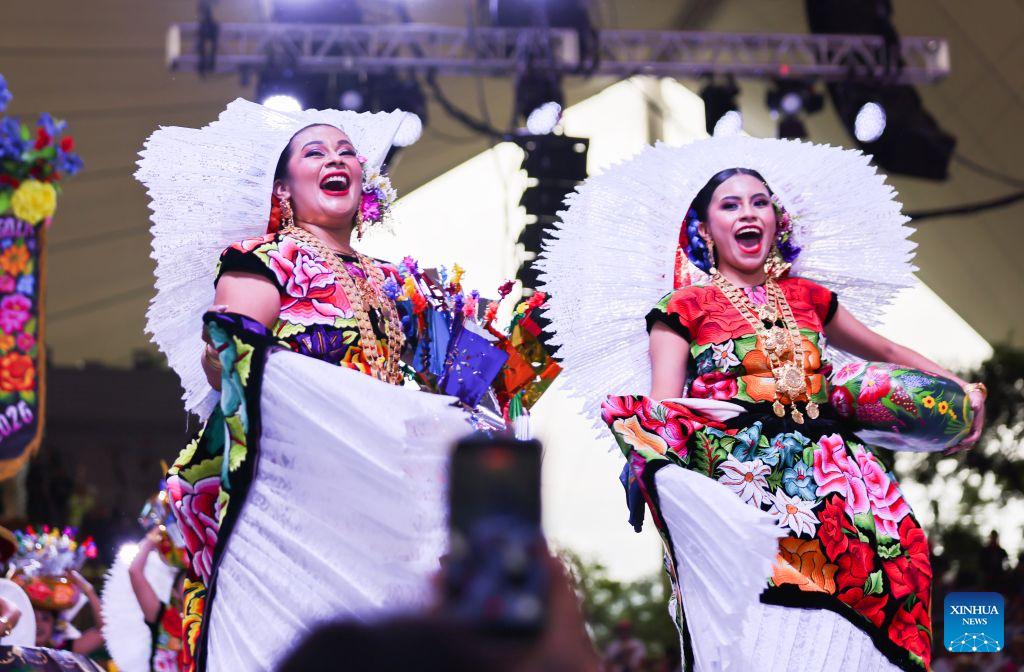
Performers wearing Tehuana dresses dance at the Guelaguetza festival in Oaxaca City, Mexico, July 27, 2026.
Centuries ago, Chinese silk and porcelain products were shipped to the Americas via the Manila-Acapulco galleon trade route.
Cantonese embroidered shawls made in China's Pearl River Delta were transported through Manila and eventually sold in Spain and elsewhere, giving rise to the name "Manila shawl."
Mexican costume researchers note that the embroidered motifs on the short blouses of modern Tehuana dress are linked to classic "Manila shawl" designs. According to Mexican cultural archives, Chinese fabrics brought by the maritime trade shifted Tehuana dress decoration from geometric patterns to predominantly floral motifs by the early 20th century.
Today, Cantonese embroidered shawls continue to evolve, while Tehuana floral garments remain part of festivals and daily life, reflecting how cultures draw from one another and grow through exchange. (Xinhua/Liu Wenhui)
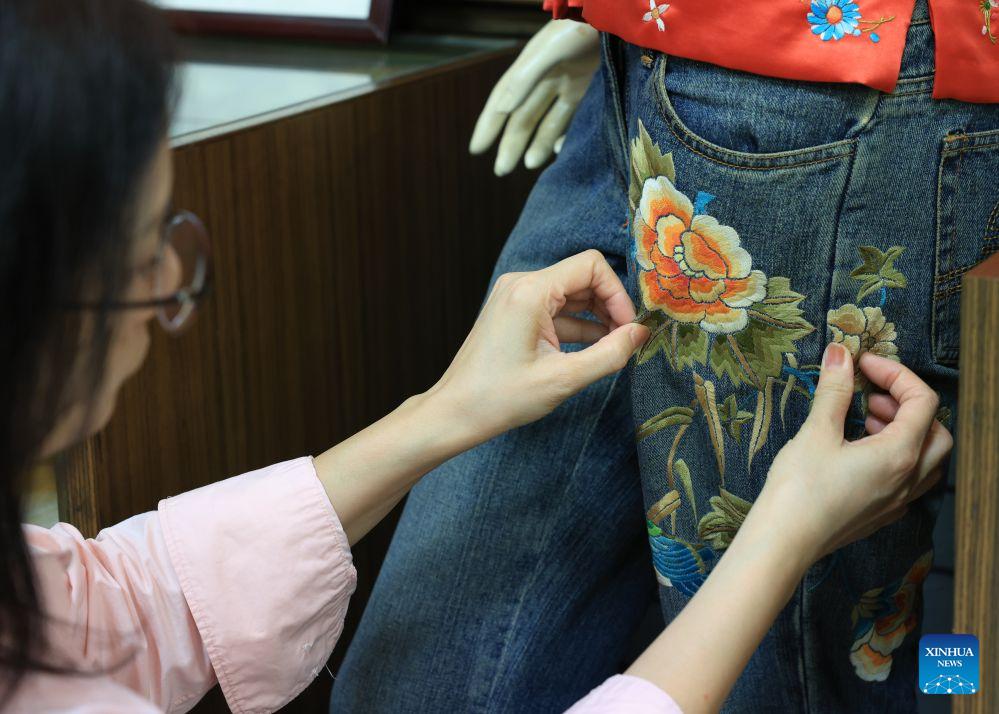
This photo taken on Aug. 20, 2026 shows Cantonese floral embroidery applied to a pair of jeans at an embroidery workshop in Shunde, Foshan, south China's Guangdong Province.
Centuries ago, Chinese silk and porcelain products were shipped to the Americas via the Manila-Acapulco galleon trade route.
Cantonese embroidered shawls made in China's Pearl River Delta were transported through Manila and eventually sold in Spain and elsewhere, giving rise to the name "Manila shawl."
Mexican costume researchers note that the embroidered motifs on the short blouses of modern Tehuana dress are linked to classic "Manila shawl" designs. According to Mexican cultural archives, Chinese fabrics brought by the maritime trade shifted Tehuana dress decoration from geometric patterns to predominantly floral motifs by the early 20th century.
Today, Cantonese embroidered shawls continue to evolve, while Tehuana floral garments remain part of festivals and daily life, reflecting how cultures draw from one another and grow through exchange. (Xinhua/Mao Siqian)
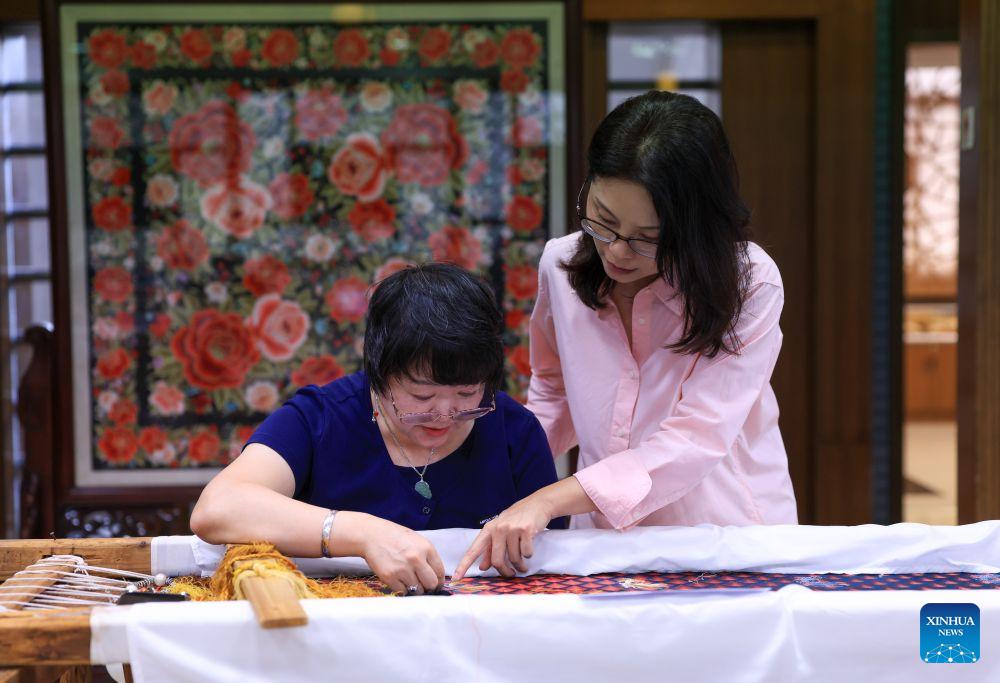
An inheritor of the Cantonese embroidery making skills and an embroiderer study an embroidery prototype in Foshan, south China's Guangdong Province, Aug. 20, 2026.
Centuries ago, Chinese silk and porcelain products were shipped to the Americas via the Manila-Acapulco galleon trade route.
Cantonese embroidered shawls made in China's Pearl River Delta were transported through Manila and eventually sold in Spain and elsewhere, giving rise to the name "Manila shawl."
Mexican costume researchers note that the embroidered motifs on the short blouses of modern Tehuana dress are linked to classic "Manila shawl" designs. According to Mexican cultural archives, Chinese fabrics brought by the maritime trade shifted Tehuana dress decoration from geometric patterns to predominantly floral motifs by the early 20th century.
Today, Cantonese embroidered shawls continue to evolve, while Tehuana floral garments remain part of festivals and daily life, reflecting how cultures draw from one another and grow through exchange. (Xinhua/Mao Siqian)
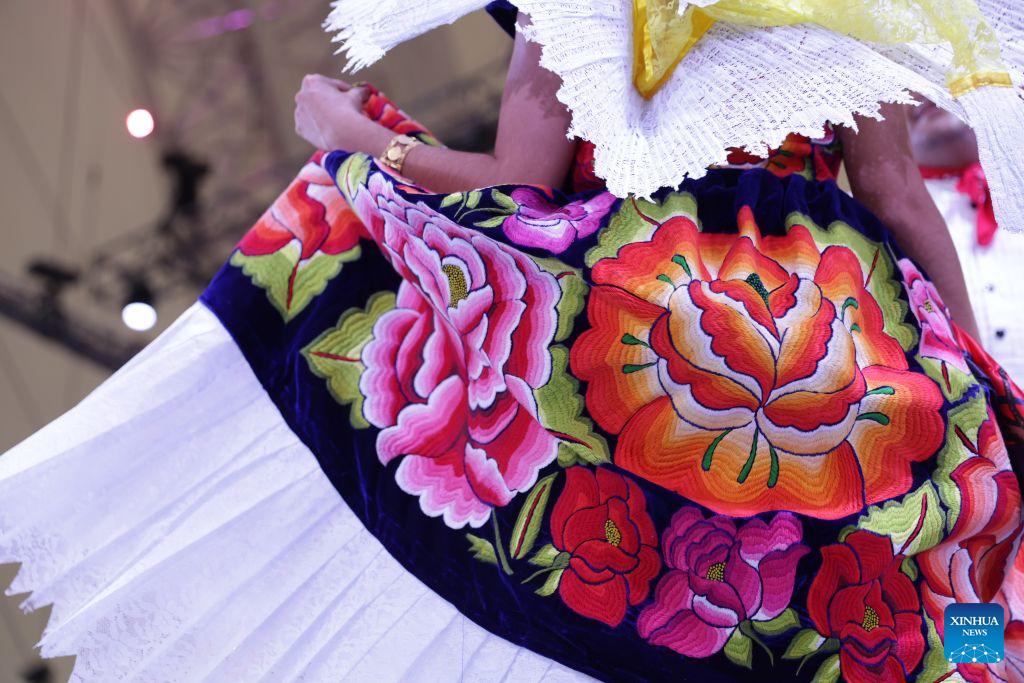
A woman wearing a Tehuana dress is pictured at the Guelaguetza festival in Oaxaca City, Mexico, July 27, 2026.
Centuries ago, Chinese silk and porcelain products were shipped to the Americas via the Manila-Acapulco galleon trade route.
Cantonese embroidered shawls made in China's Pearl River Delta were transported through Manila and eventually sold in Spain and elsewhere, giving rise to the name "Manila shawl."
Mexican costume researchers note that the embroidered motifs on the short blouses of modern Tehuana dress are linked to classic "Manila shawl" designs. According to Mexican cultural archives, Chinese fabrics brought by the maritime trade shifted Tehuana dress decoration from geometric patterns to predominantly floral motifs by the early 20th century.
Today, Cantonese embroidered shawls continue to evolve, while Tehuana floral garments remain part of festivals and daily life, reflecting how cultures draw from one another and grow through exchange. (Xinhua/Liu Wenhui)
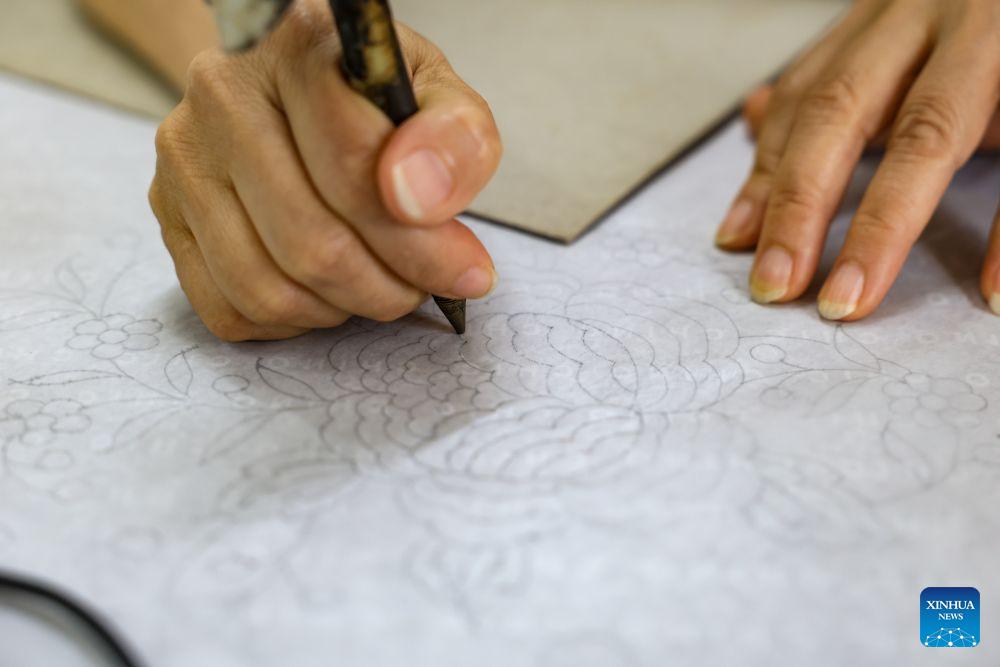
A designer draws a design for a large Cantonese embroidered shawl at an embroidery workshop in Shunde, Foshan, south China's Guangdong Province, Aug. 20, 2026.
Centuries ago, Chinese silk and porcelain products were shipped to the Americas via the Manila-Acapulco galleon trade route.
Cantonese embroidered shawls made in China's Pearl River Delta were transported through Manila and eventually sold in Spain and elsewhere, giving rise to the name "Manila shawl."
Mexican costume researchers note that the embroidered motifs on the short blouses of modern Tehuana dress are linked to classic "Manila shawl" designs. According to Mexican cultural archives, Chinese fabrics brought by the maritime trade shifted Tehuana dress decoration from geometric patterns to predominantly floral motifs by the early 20th century.
Today, Cantonese embroidered shawls continue to evolve, while Tehuana floral garments remain part of festivals and daily life, reflecting how cultures draw from one another and grow through exchange. (Xinhua/Mao Siqian)
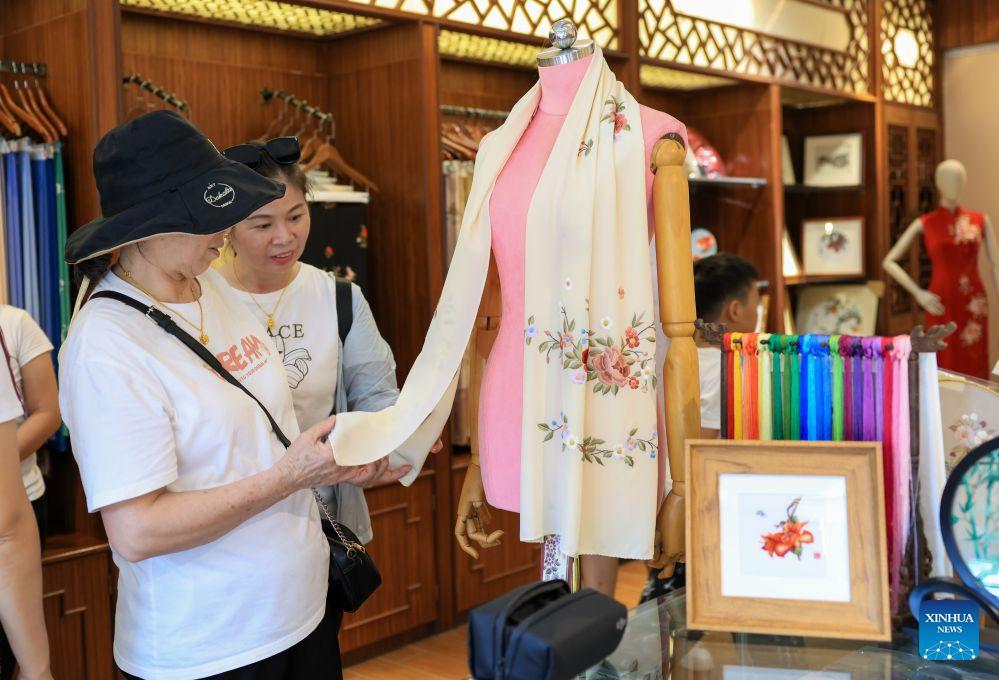
People buy Cantonese embroidered scarves at an embroidery workshop in Shunde, Foshan, south China's Guangdong Province, Aug. 20, 2026.
Centuries ago, Chinese silk and porcelain products were shipped to the Americas via the Manila-Acapulco galleon trade route.
Cantonese embroidered shawls made in China's Pearl River Delta were transported through Manila and eventually sold in Spain and elsewhere, giving rise to the name "Manila shawl."
Mexican costume researchers note that the embroidered motifs on the short blouses of modern Tehuana dress are linked to classic "Manila shawl" designs. According to Mexican cultural archives, Chinese fabrics brought by the maritime trade shifted Tehuana dress decoration from geometric patterns to predominantly floral motifs by the early 20th century.
Today, Cantonese embroidered shawls continue to evolve, while Tehuana floral garments remain part of festivals and daily life, reflecting how cultures draw from one another and grow through exchange. (Xinhua/Mao Siqian)
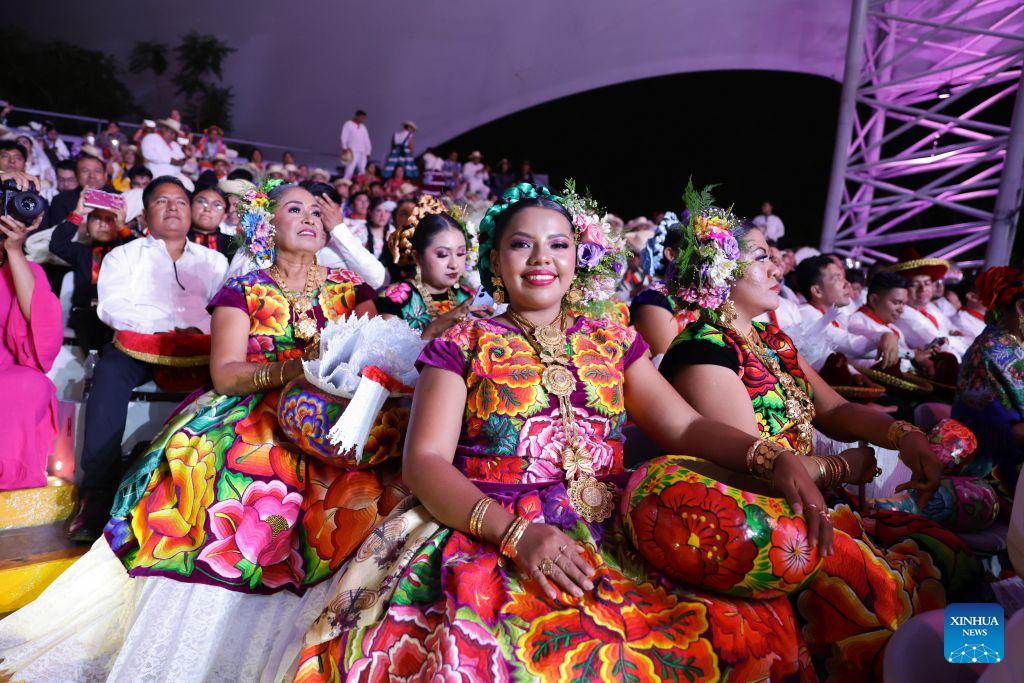
Performers wearing Tehuana dresses are pictured at the Guelaguetza festival in Oaxaca City, Mexico, July 27, 2026.
Centuries ago, Chinese silk and porcelain products were shipped to the Americas via the Manila-Acapulco galleon trade route.
Cantonese embroidered shawls made in China's Pearl River Delta were transported through Manila and eventually sold in Spain and elsewhere, giving rise to the name "Manila shawl."
Mexican costume researchers note that the embroidered motifs on the short blouses of modern Tehuana dress are linked to classic "Manila shawl" designs. According to Mexican cultural archives, Chinese fabrics brought by the maritime trade shifted Tehuana dress decoration from geometric patterns to predominantly floral motifs by the early 20th century.
Today, Cantonese embroidered shawls continue to evolve, while Tehuana floral garments remain part of festivals and daily life, reflecting how cultures draw from one another and grow through exchange. (Xinhua/Liu Wenhui)
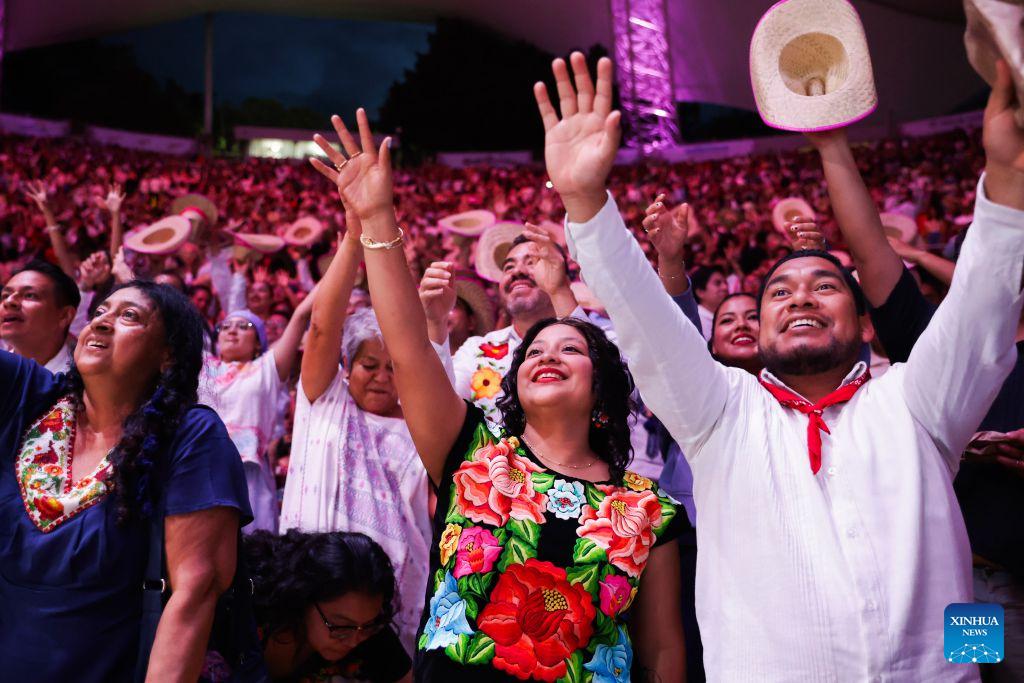
Audience dressed in floral-embroidered attire watch a performance at the Guelaguetza festival in Oaxaca City, Mexico, July 27, 2026.
Centuries ago, Chinese silk and porcelain products were shipped to the Americas via the Manila-Acapulco galleon trade route.
Cantonese embroidered shawls made in China's Pearl River Delta were transported through Manila and eventually sold in Spain and elsewhere, giving rise to the name "Manila shawl."
Mexican costume researchers note that the embroidered motifs on the short blouses of modern Tehuana dress are linked to classic "Manila shawl" designs. According to Mexican cultural archives, Chinese fabrics brought by the maritime trade shifted Tehuana dress decoration from geometric patterns to predominantly floral motifs by the early 20th century.
Today, Cantonese embroidered shawls continue to evolve, while Tehuana floral garments remain part of festivals and daily life, reflecting how cultures draw from one another and grow through exchange. (Xinhua/Liu Wenhui)