


Poet's Nobel win shines light on new approach
Canadian poet Anne Carson's Nobel Prize in literature has renewed attention on her unconventional approach to poetry, which challenges traditional literary forms and pushes the boundaries of language, Chinese scholars and translators say.
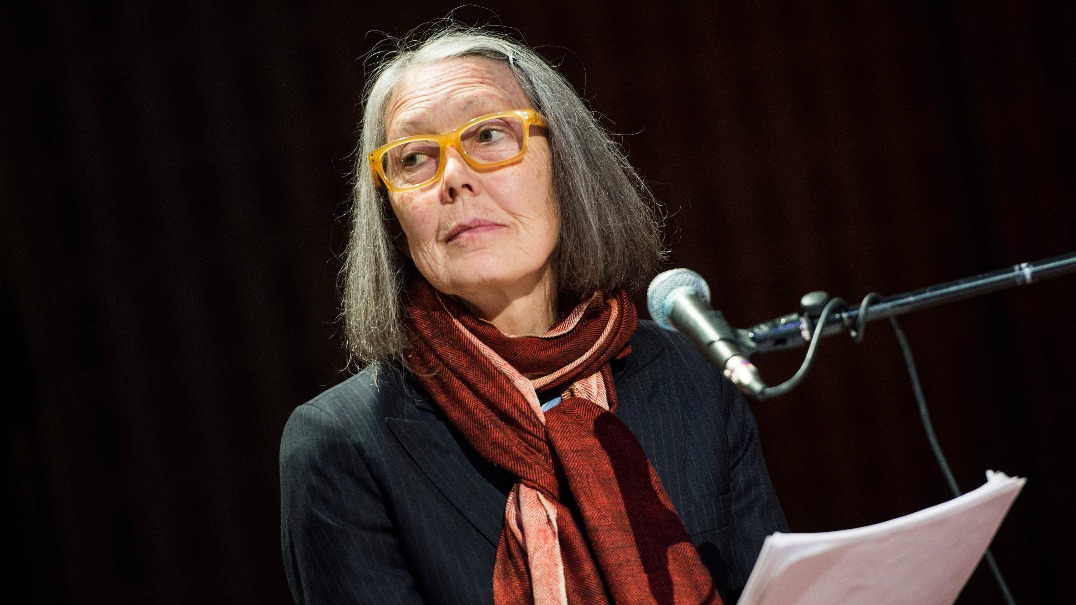
File photo: China Daily
"We sometimes say that poetry is an adventure of the imagination; Anne Carson is an especially bold adventurer," Chinese translator Ni Zhijuan said.
Carson, 76, won the 2026 Nobel Prize in literature for her "bold and inventive oeuvre that, in playful dialogue with the classical tradition, has created new forms for contemporary literature", according to the Swedish Academy.
Ni, a professor at the School of Law at Hangzhou Dianzi University who has translated Carson's poetry into Chinese, said the award was well deserved, citing the depth of thought behind the Canadian poet's unconventional literary forms.
"Her texts are difficult to enter, but once you enter them, their inner richness, individuality and innovation have a powerful impact," she said.
Carson's experiments with form do more than challenge literary conventions, Ni said.
"Her form is able to carry her thinking. It is not just innovation in form; it also conveys depth of thought."
Liu Chun, an associate professor at Peking University's Department of English Language and Literature, said Carson's work moves beyond academic writing conventions.
Liu translated Eros the Bittersweet, a book adapted from Carson's doctoral dissertation. She said she was struck by its poetic style.
"Rather than following the conventions of academic writing, which can feel heavy to ordinary readers and require repeated argumentation, it adopts a style that is light and nimble, like that of a poet, and sometimes quite unconventional," Liu said.
Ni said the word "playful" in the Nobel citation was significant. "In the Chinese literary context, we tend to think that the word 'play' weakens the seriousness of writing," she said. "But play has a structural quality in her work."
Carson seeks to challenge the authority of classical texts, bringing historical figures back into the present and creating connections across time.
Ni mentioned Carson's ability to make historical individuals feel alive rather than confining them to established narratives.
Carson's willingness to cross boundaries is also evident in the range of materials she brings into her work, Liu said.
In Eros the Bittersweet, Carson draws on ancient poetry, novels and philosophical works, as well as modern literature. She also incorporates painting, music and dance to explore the subject of love. "A classical studies paper in the traditional sense could not be written this way," Liu said. "But Carson has managed to cross those boundaries."