


Behind the craze: How AI powers China's global micro-drama boom
So popular have Chinese micro-dramas become abroad that the Mandarin word itself — duanju — has recently entered the global English lexicon and international encyclopedias.
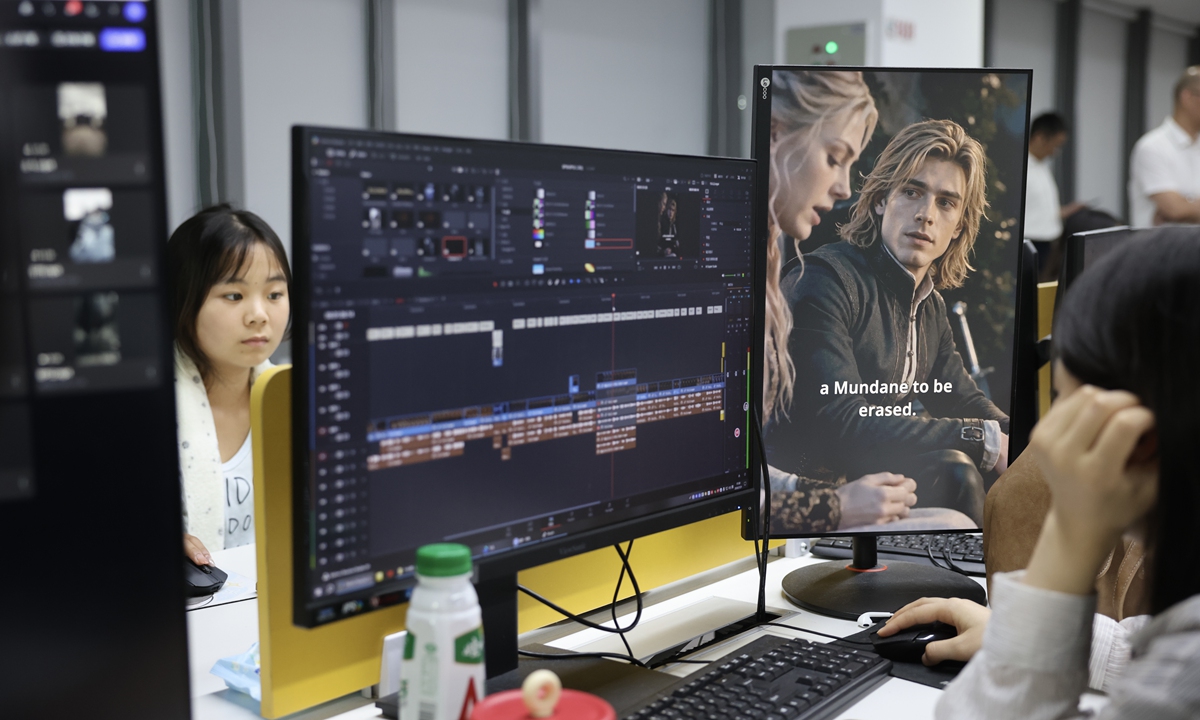
Staff members at a micro-drama company complete the full production cycle, from script revision and live shooting to AI-assisted post-production, overseas translation, and content distribution, on July 21, 2026. (Photo: VCG)
Supercharged by rapid breakthroughs in artificial intelligence (AI), this digital phenomenon is sweeping mobile screens from North America to Southeast Asia, emerging as a vibrant new calling card for China's cultural exports.
China is also taking steps to set standards and improve the quality of content localization as Chinese micro-dramas expand globally. In November, the Translators Association of China released its first group standard for AI-assisted localization of micro-dramas for overseas markets, covering translation procedures and quality assessment, which is set to take effect in January 2027.
Tested narrative, localized settings
Narrative craft and cultural adaptation are equally central to overseas appeal. Creators rely on what He Tianping, deputy director of the Audio-Visual Communication Department at the School of Journalism and Communication, Renmin University of China, describes as a "precise pairing of instant-reward storytelling with localized packaging."
"Chinese teams take tested narrative templates and dress them in Western genre shells, allowing overseas audiences to experience cross-cultural gratification inside a familiar visual framework," He told People's Daily in an exclusive interview.
Data from China's National Radio and Television Administration and industry reports point to explosive momentum. By the end of September 2026, China had exported roughly 290,000 micro-dramas — a nearly threefold jump from the end of 2025 — with AI-generated titles accounting for more than 60 percent of the total.
Meanwhile, Chinese-backed platforms swept all 10 spots among the world's most-downloaded micro-drama apps in the first three quarters of 2026.
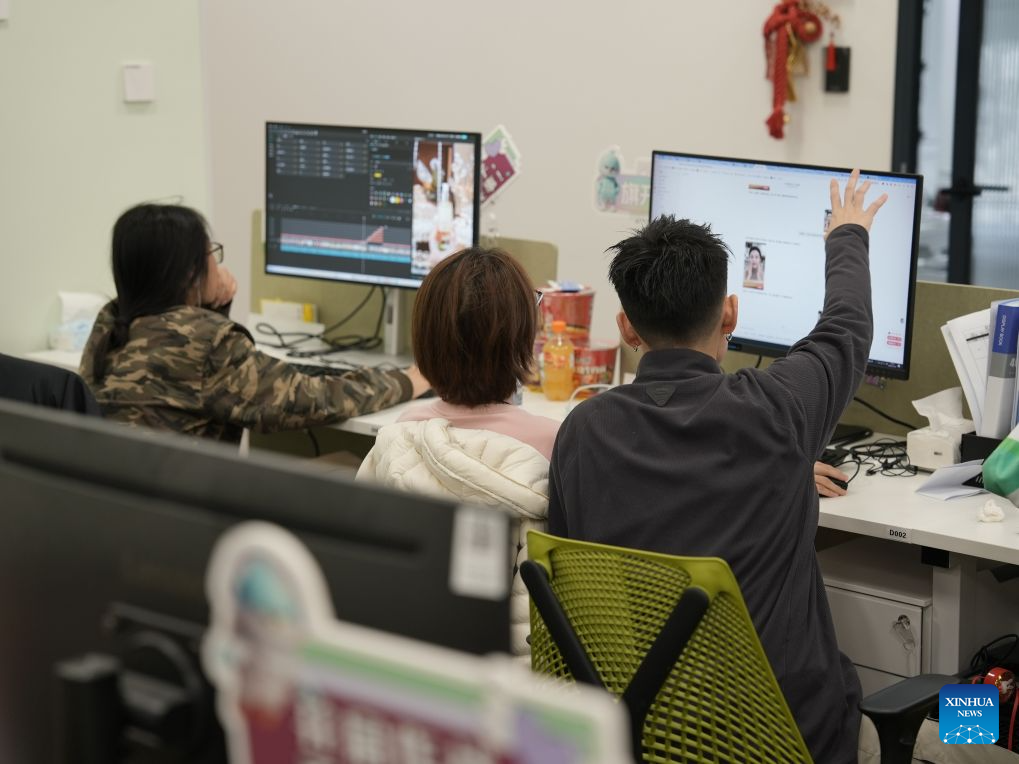
Staff members of cosmetics brand Pechoin produce AI micro dramas for advertising in east China's Shanghai, November 20, 2026. (Photo: Xinhua)
Evolving industry logic
Behind this boom, breakthroughs in AI video technology are rewriting the industry's cost logic, both in time and money. In February, Chinese tech company ByteDance unveiled Seedance 2.0, an advanced AI video generation model that drove video generation costs down to just 1 yuan per second.
Yet the value of AI goes well beyond cutting costs. Using AI for pre-visualization and visual validation allows creative teams to test and refine concepts early, significantly reducing the risk of costly post-production rework. More importantly, generative AI expands creative horizons, bringing high-concept sci-fi and fantasy visuals to life that were once out of reach due to budget constraints.
Beyond production, the global rise of Chinese AI micro-dramas reflects an end-to-end industrial upgrade.
Today, Chinese teams are exporting video tools, workflows and operational playbooks, creating an ecosystem export that essentially offers experience in how to make micro-dramas, said He.
Chinese-developed streaming apps now serve as direct global distribution channels, powered by AI-driven production workflows and real-time audience analytics that enable teams to tailor storylines to regional viewer preferences.
Meanwhile, AI-powered localization tools handle script translation, emotional voice dubbing and natural lip-syncing across dozens of languages, erasing traditional language barriers and cutting overseas rollout cycles.
The structural shift in drama exports reflects a move away from competing solely on content quality toward a combined race in model capability and localization efficiency, said He. "Sustainable cultural exports require creators to possess genuine cross-cultural storytelling capabilities and hold on to 'human judgment' on detail, logic and aesthetics."
(Intern Song Weihang also contributed to this story)