


Deep breath, feet slightly apart, arms rising from both sides of the body...That's the moves German fitness influencer Pamela Reif practices in her new video on Chinese video platform Bilibili.
Unlike most of her previous videos, where she teaches workout moves like jumping jacks, in the new video she is doing Baduanjin, a traditional Chinese qigong exercise similar to Tai chi.
Amazed by this contrast of styles, viewers flooded the video with comments like "What a marvelous combo!" "It's like seeing a pizza with moon cake filling!"
Baduanjin, featuring significant benefits for physical and mental health and low requirements for sites, time, facilities, and physical exertion, has become an ideal workout plan for thousands of Chinese youth.
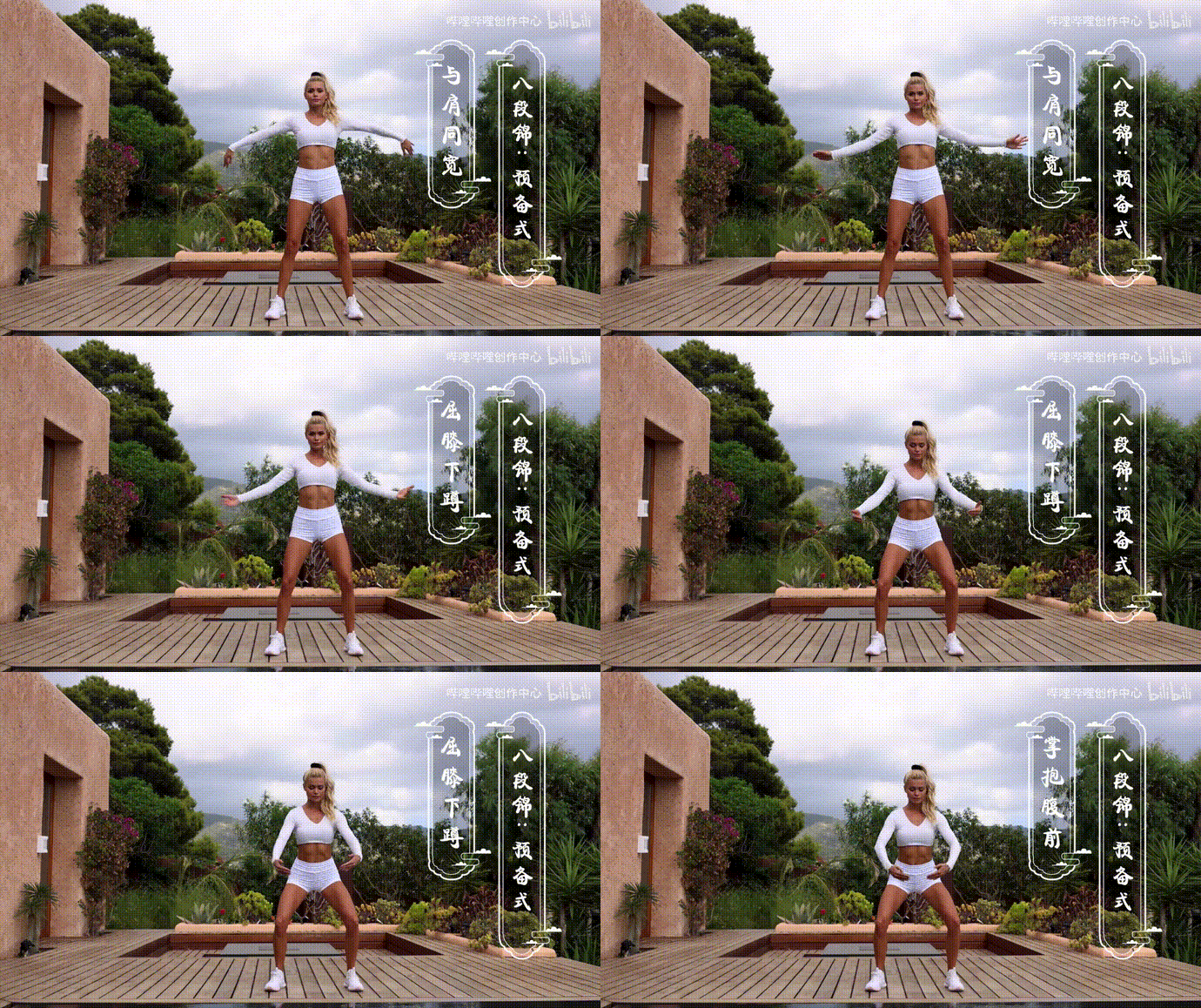
Pamela practices Baduanjin in her video. (Photo: Bilibili @帕梅拉PamelaReif)
800-year-old Chinese fitness regimen
Originating over 800 years ago in the Song Dynasty (960-1276), Baduanjin is one of the oldest health and fitness regimens in China. Some tales attribute it to General Yue Fei, a legendary Chinese folk hero, who allegedly used this exercise to keep his soldiers fit for battle.
Translated literally as "Eight Section Brocades," Baduanjin got the name due to its eight slow-flowing movements characterized by their silken quality, each focusing on a different physical area and qi meridian of the body.
For example, the second movement called "Hawk" imitates drawing a bow in a lower horse stance. It is said to stimulate the waist area, improving functions of the kidneys and spleen.
Compared to more intense and demanding exercises like cycling or weight-lifting, Baduanjin remains in a standing position, makes little noise, and takes only 12 minutes each time. It is therefore easier to get started and make a habit.
Choice of youth
Similar to Tai chi's pace and breathing techniques but simpler, Baduanjin has long been popular among the elderly and school PE classes.
Unexpectedly, it was the COVID-19 pandemic that made Baduanjin win over the younger generation.
"Right after I turned COVID-negative, even the slightest movements would leave me out of breath," said Xiao Mi, a Gen Z practitioner. "But I needed to improve my physique. That's when I found Baduanjin."
For many like Xiao Mi, as conventional exercises like the gym became less accessible, and strenuous sports like running and ball games bear risks after COVID like myocarditis, their ancestors' wise way of keeping fit sounded much more appealing.
Apart from its low impact and convenience, Baduanjin also takes off the pressure of socializing.
"I am always afraid of the eager personal trainers at the gym," Xiao Mi, an introvert, admitted. She likes that Baduanjin can be done at home alone.
Following tutorials online, Xiao Mi quickly picked up the moves and breathing techniques.
"Three times each morning for a few days, I soon found myself less and less likely to get tired," she recalled.
As early practitioners like Xiao Mi spread their stories by word of mouth and on social media, more and more of their peers began starting their own Baduanjin trials.
Under a Baduanjin tutorial video with over 15 million views and 7,000 comments on Bilibili, people keenly share how Baduanjin has helped them shake rhinitis, insomnia, neck pain, hair loss, pimples, and even mental distress.
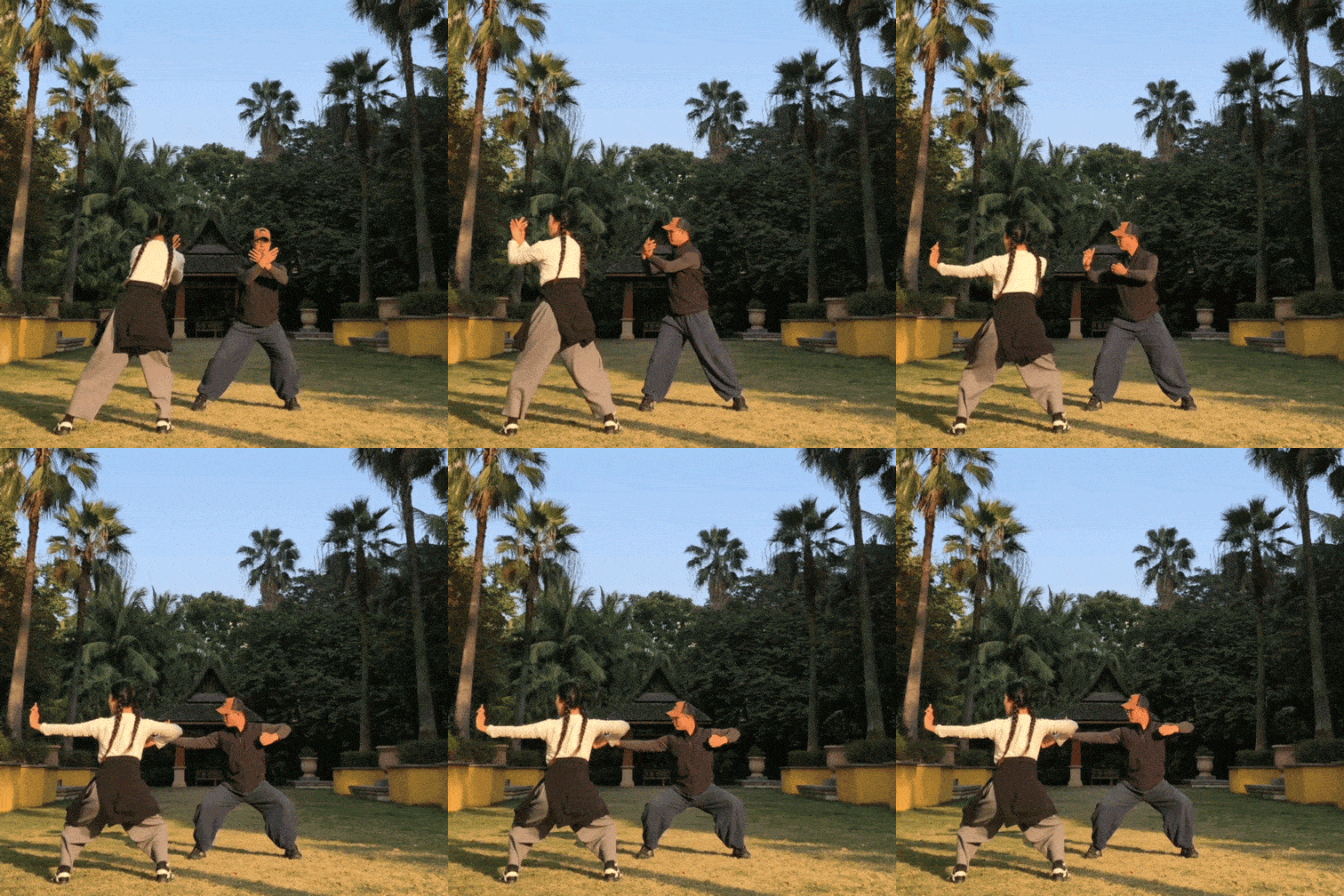
Young influencers practice Baduanjin. (Photo: Xinhua)
No magic, but a healthier lifestyle
"Is Baduanjin really that magical?" This is the question many young people have when they first encounter these enthusiastic recommendation stories on social media. And the answer is "no."
"Baduanjin's basic nature is just stretching,” explained Xiao Mi. For her and many others who have benefited from this ancient exercise, it's not that Baduanjin itself is magical, but the healthy lifestyle that comes with it.
First, like many other Chinese traditional qigong exercises, Baduanjin asks for concentration and stresses the coordination of movements and breathing with the mind. For many young people suffering anxiety from the fast-paced life, Baduanjin guarantees them time for meditation and self-reflection.
Second, in many instructions online provided by professional physicians, Baduanjin is best practiced in the morning and in places with trees and fresh air. That pushes young people to get rid of bad sleeping habits, and return from the concrete jungle to nature.
"To get up and practice Baduanjin, I now wake up at 7 am and sleep at 11 pm," said Vivi, a Gen Z who used to stay up until 3 am due to a sleep disorder. Now an avid ambassador for a healthy lifestyle among her friends, she joked, "It's like a decades-long smoker starting a campaign of no smoking."