


At Cuanlingmiao Martyrs' Cemetery in Tianjin's Jizhou district, 102 fallen heroes from a 1944 battle are laid to rest. Only two bear names. The remaining 100 tombstones simply read "Martyr's Grave."
For two decades, Fan Wenqing, now 79, has quietly watched over them, his hair turning gray with time.
"They gave their lives to protect us. Now it's my turn to protect them," he said when he started his job as caretaker for the cemetery.
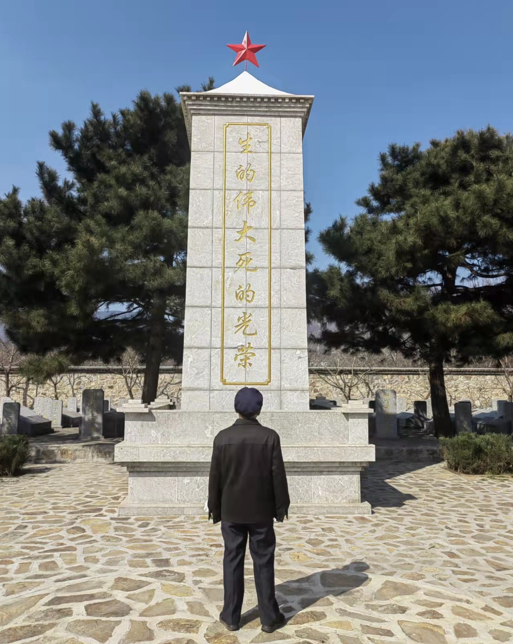
Fan Wenqing gazes at the monument in Cuanlingmiao Martyrs' Cemetery. (File photo)
Nameless graves
In 2004, then-59-year-old Fan took over guardianship from Zhang Shilong, a WWII veteran. On the day of the handover, Zhang leaned on his cane, repeating: "Guard this place well." For years, Zhang had tended the cemetery despite partial paralysis, even rebuilding collapsed walls stone by stone. Fan moved into the cemetery's gatehouse—a tiny room with a single bed and a worn desk—and began his daily routine of sweeping pine needles and polishing tombstones.
The stories happened here were etched into Fan's childhood. In 1944, during the Chinese People's War of Resistance Against Japanese Aggression, cadres held a secret meeting in the area, only to be ambushed by a traitor. Over 100 fighters battled, but only about 60 broke through the encirclement.
Afterward, villagers buried the fallen on a nearby hillside. In 1955, the Cuanlingmiao Martyrs' Cemetery was built and later relocated and rebuilt. The remains of 102 martyrs have rested here ever since. "Many had no names left, lost to the flames of war," Fan said.
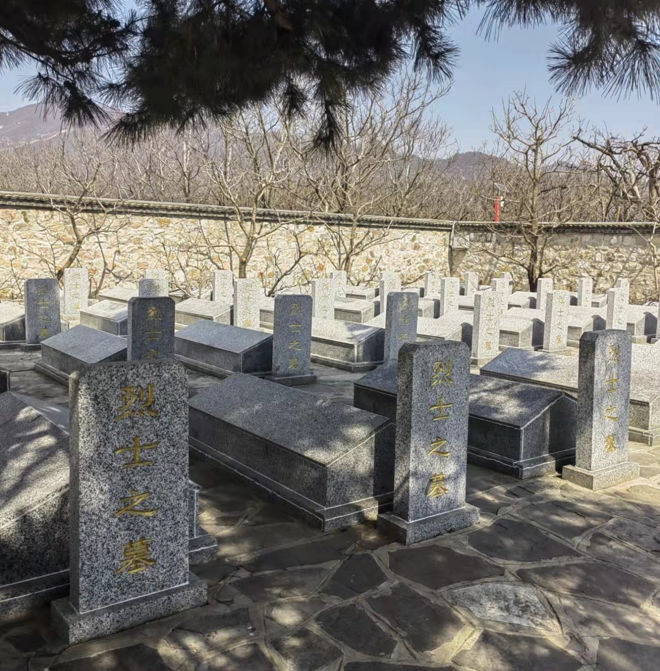
Rows of tombstones at Cuanlingmiao Martyrs' Cemetery. (File photo)
Meaning of sacrifice
The cemetery often witnesses quiet sorrow. One man in his 50s once knelt before the graves, weeping. "If my father lies here, he can finally rest," he said.
Liu Jikang, one of the battle’s survivors, would visit the cemetery to honor his fallen comrades whenever he returned to his hometown. After his death, his descendants donated his medals, military whip, uniform and photos from his youth.
"They were barely 30," Fan tells visitors. Yang Dazhang, a railway worker turned resistance leader, and Zhan Zhong, a carpenter who organized underground cells, both died at 35. "As a child, I admired their courage. Now, guarding them, I understand what 'sacrifice' truly means," Fan said.
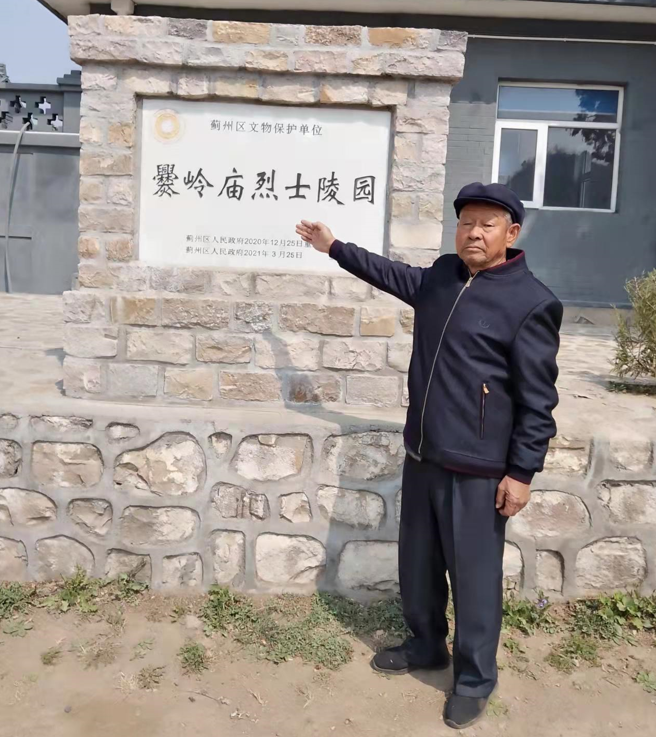
Fan Wenqing, caretaker of Cuanlingmiao Martyrs' Cemetery. (File photo)
Passing the torch
In 2021, the cemetery was designated a Patriotism Education Base by Tianjin. Among the new generation of caretakers is 30-year-old Zhai Yukun, a village official and engineering graduate who volunteered to succeed Fan. He rewrote the site's tour scripts and shares its stories through short videos. "Their blood bought our peace. We must keep their memory alive," he says. Another young volunteer, Chai Jiuzhou, trims hedges and maintains exhibits: "Grandpa Fan guarded them for half his life. Now it's our duty," he said.
The local government has also linked the cemetery to former wartime radio bunkers, creating a "Red Culture Corridor."
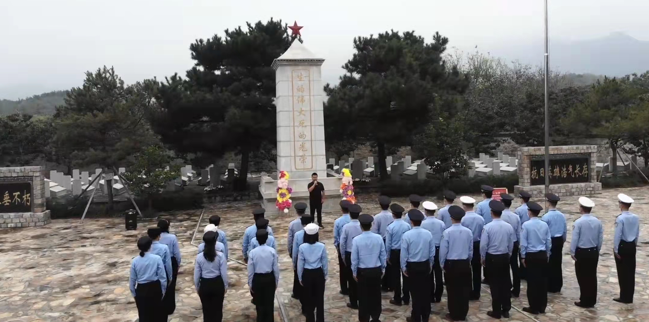
Zhai Yukun, the new caretaker of the cemetary, recounts the 1944 Cuanlingmiao Breakout to an assembly. (File photo)
Heart and soil
New saplings have been planted along the cemetery's edge, and tributes from visitors now fill the corridor's stone tablets. Even after retirement, Fan vows to return: "These 'family' tie my heart to this soil."
Wind rustles through the pines. Dew fades like spirits melting into the morning. Eighty years on, the 102 graves remain silent. But through the care of three generations, their legacy endures.