



Chinese drink brand Mixue has become the fashionable drink of choice among young people in Bishkek, Kyrgyzstan. (People's Daily Online/Chu Mengqi)
Walk into Bishkek, the capital of Kyrgyzstan, and Chinese elements are already woven into the city.
At Mixue, a Chinese drink brand, young people enjoy bubble tea cheerfully. On the road, electric taxis and buses made in China move through the streets. In an underground mall, HSK textbooks sit on shelves; young people stop to turn the pages. When locals meet Chinese visitors, greetings such as "ni hao," "xie xie," and "zai jian" roll off their tongues more easily than before.
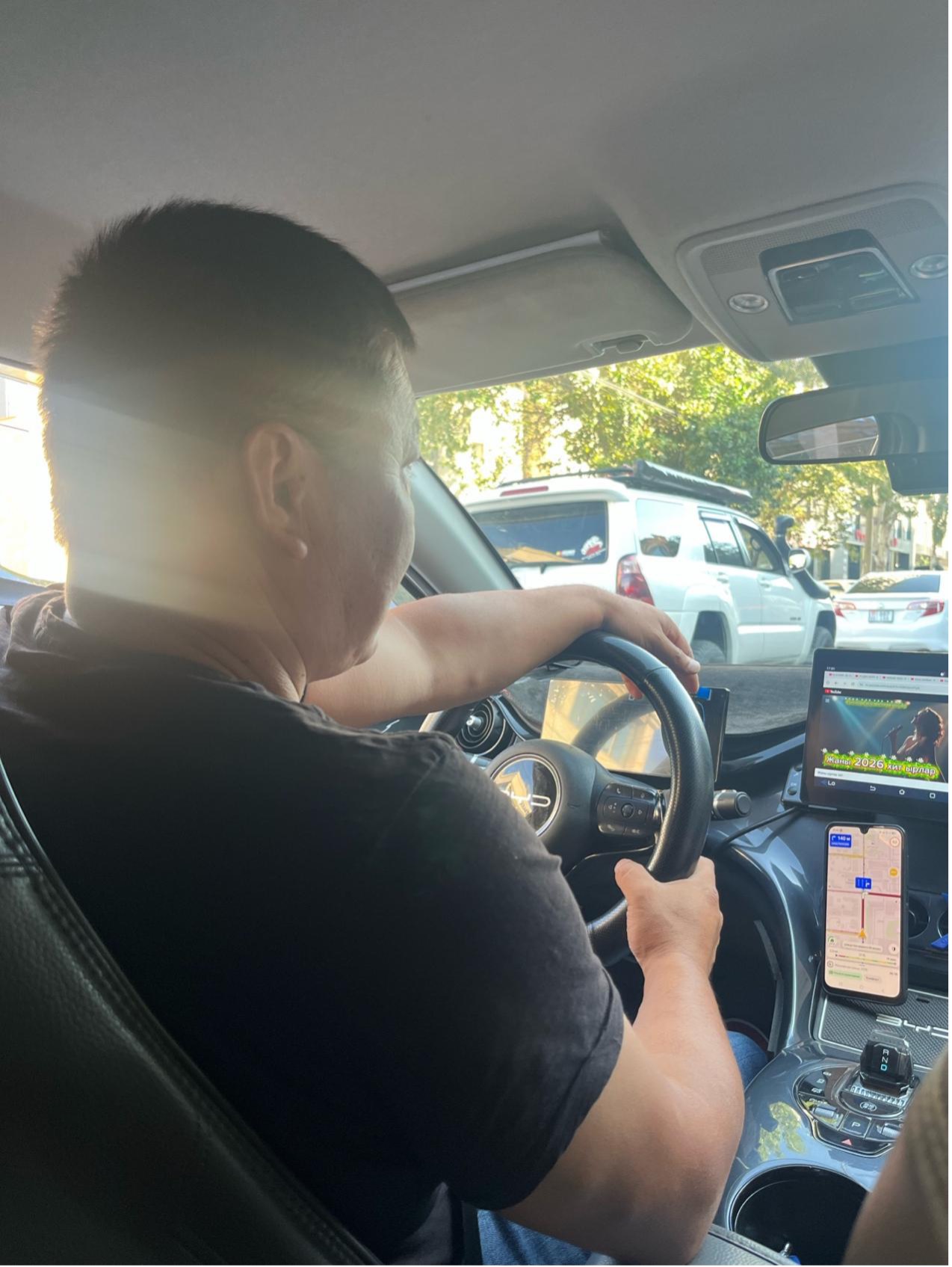
Ablaisov has driven a BYD taxi for two years. (People's Daily Online/Kou Jie)
Ablaisov, a local taxi driver, has driven a BYD taxi for two years. "Chinese new energy vehicles are environmentally sound and efficient, and the price is reasonable," he says. "People here recognize their quality. A Chinese car is now regarded as a high-end product."
Growing numbers of Chinese-made electric buses have also entered regular service. Drivers find the vehicles simple to operate and comfortable to ride, and passengers have responded positively.
The same presence fills the shopping centers. From smartphones to household appliances, Chinese goods occupy the shelves, and the brands are already familiar. Back at Mixue, Chinese fruit teas remain the most popular drinks, and regular customers return each day. Nearby, Chinese restaurants stay crowded. Xinjiang-style big-plate chicken has become a dish many locals order with genuine liking.
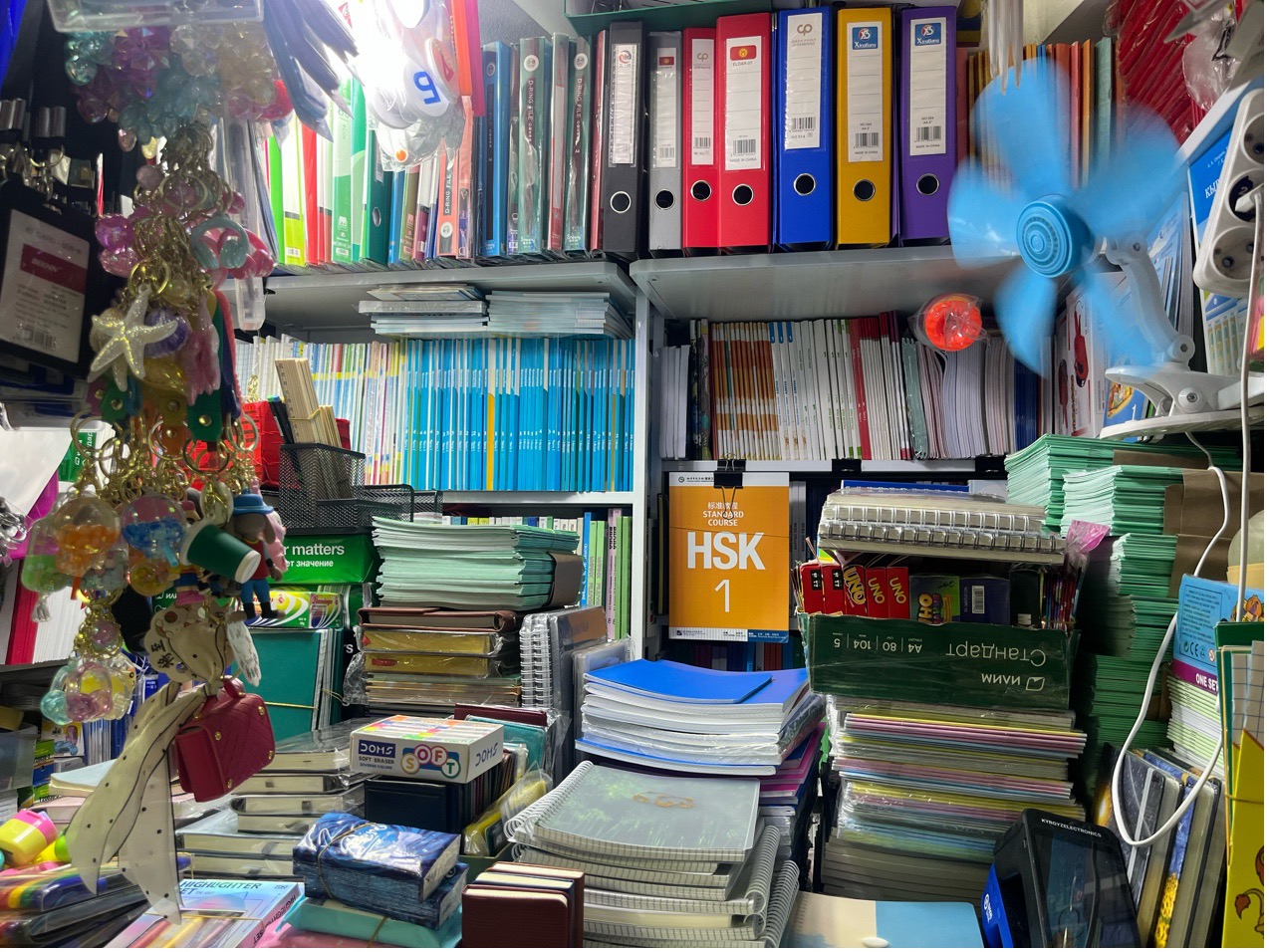
HSK Chinese textbooks sit on shelves in Bishkek's underground malls. (People's Daily Online/Kou Jie)
Chinese e-commerce is changing how people shop as well. Kanyshai Zhakhanshaeva, who is studying Chinese, often browses Chinese e-commerce platforms for small stationery she likes and has become a loyal buyer of Chinese products. Zhyrgalbaev Kanybek, also learning the language, notes that the two countries are not far apart. Goods arrive in about two weeks; prices are fair and quality is reliable, so many people here use Chinese platforms. Phone cases, small appliances, clothes, toys—a single parcel crosses mountains and rivers and draws two ordinary lives closer together.
Behind the flow of goods, language and culture are taking root. At the Confucius Institute of Bishkek State University, more young people are studying Chinese. Classrooms echo with the sound of students reading aloud; shelves are lined with textbooks and books on Chinese culture.
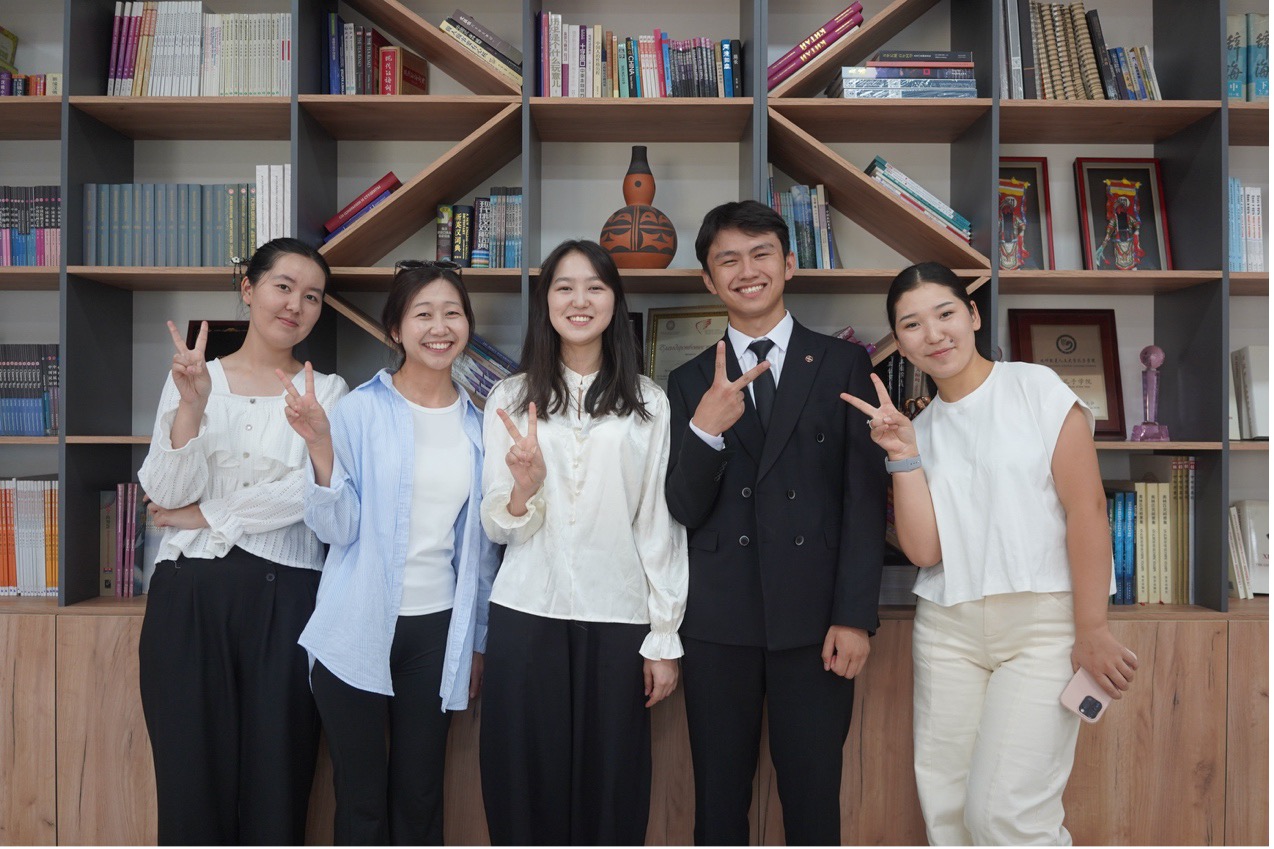
As exchanges between China and Kyrgyzstan grow closer, more local young people are taking up Chinese. (People's Daily Online/Chu Mengqi)
Batyrkanova Kanykei and Almazbek Kyzy Umut are both students at the university. Kanykei has studied Chinese for five years. In high school she read Chinese web novels and comics, and that reading grew into a lasting interest in Chinese culture. She now follows many Chinese social media platforms like Xiaohongshu and shops on e-commerce platforms like Taobao, encountering everyday Chinese life through the internet. Umut competed in the global finals of the "Chinese Bridge" Chinese Proficiency Competition last year and visited Beijing, Nanping, Fuzhou, and Quanzhou in China. This year she traveled to Guangzhou, Chengdu, Shenzhen, Shanghai, and Zhangjiajie. Of those cities, Chengdu left the strongest impression. "People there know how to enjoy life. In Chengdu you can unwind and feel completely at ease."
Sadygaliev Uran, associate professor at the Kyrgyz-Chinese Faculty at Bishkek State University, places the present in a longer history. "The foundation of China–Kyrgyzstan relations can be traced to the ancient Silk Road, and later to the Belt and Road Initiative. From the thousand-year ruins of the ancient city of Suyab to the classrooms of the Confucius Institute, the cultural exchanges between the two countries has continued for centuries."
These ties also create practical opportunities for young people. Orozbek, 29, works as a translator at Yutong Bus Co., a leading Chinese bus manufacturer, and has studied Chinese for five and a half years. After he took the position, his younger siblings became interested in Chinese and began to study it. Many of his friends now do business with China. "A great deal of Chinese merchandise is coming in. The market is huge."
From a cup of Mixue milk tea to the electric buses on the street, from cross-border parcels to Chinese-language classes at the Confucius Institute, the friendship between China and Kyrgyzstan is visible in ordinary life in Bishkek. The ancient Silk Road is gaining fresh vitality, witnessing the steady strides of the two peoples walking forward together.