


A guideline laying out key tasks for building a digital countryside in 2024 has been issued by the Cyberspace Administration of China, the Ministry of Agriculture and Rural Affairs, the National Development and Reform Commission, and the Ministry of Industry and Information Technology.
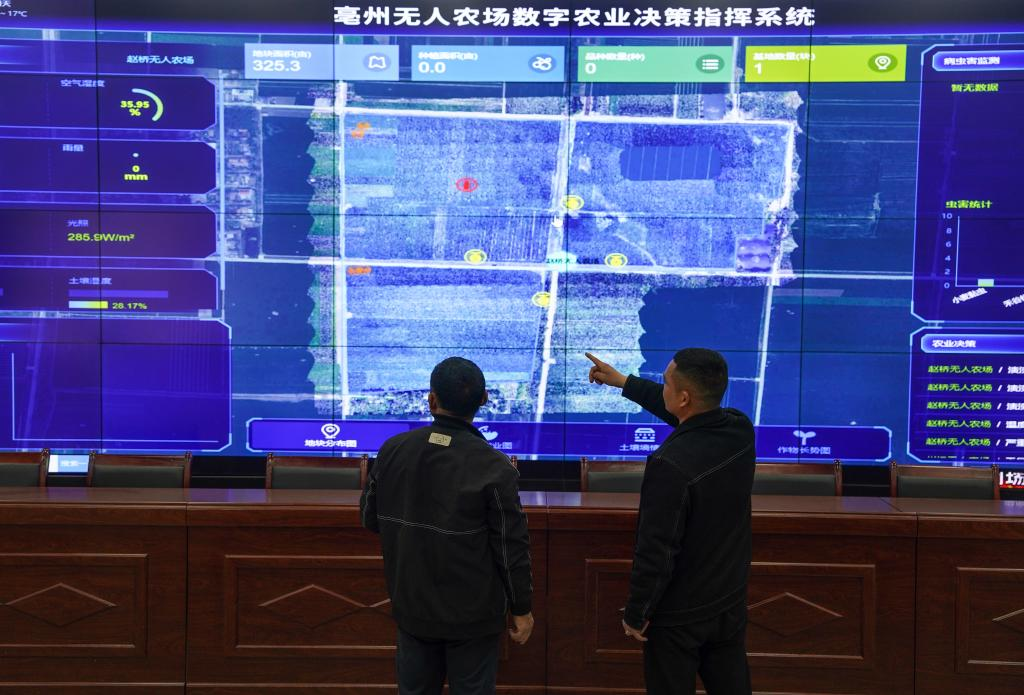
Jiao Rui (R) and his father Jiao Kui check data at the control room of the smart farm at Zhaoqiao Village, Bozhou City of east China's Anhui Province, March 19, 2024. (Photo: Xinhua)
The guideline set forth targets that rural broadband users will exceed 200 million, internet coverage in rural areas will rise by 2 percentage points and online retail sales of agricultural products through e-commerce platforms will surpass 630 billion yuan ($88.67 billion) by the end of 2024.
The gap in internet penetration rates stood at 16.8 percent between Chinese urban and rural areas at the end of 2023, 4.4 percentage points narrower than 2022, according to the 53rd Statistical Report on China's Internet Development released by the China Internet Network Information Center.
A further 2 percentage point increase in rural internet penetration means that data, information and other elements will flow more efficiently between urban and rural areas. This will not only bring new opportunities for the development of smart agriculture, the promotion and revitalization of traditional rural culture, and the improvement of rural governance systems, but also become a crucial force in bridging the urban-rural digital divide and promoting urban-rural integration.
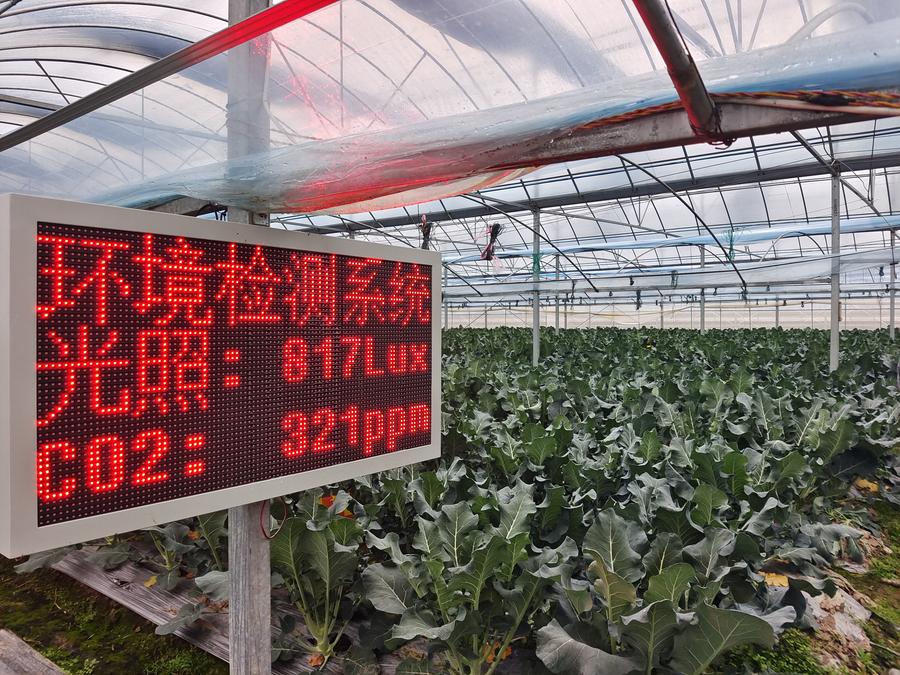
This photo taken on Feb. 1, 2024 with a mobile phone shows a greenhouse with a sensor which can monitor the intensity of illumination and carbon dioxide concentration in real time in Chongren County, East China's Jiangxi Province. (Photo by Wang Hongjuan/Xinhua)
Looking at the current state of rural development, as infrastructure such as the internet continues to extend into rural areas, digital information technology has already brought significant changes to these communities.
Agricultural production methods are changing: with just a smartphone tap, farmers can access information on environmental conditions, weather updates and crop growth. They can also receive alerts and decision-making notifications in real-time, manage pests and diseases as well as water and fertilizer management. This leads to a full-cycle digital management of agricultural production.
New technologies such as big data and Internet of Things (IoT) have become deeply integrated with agricultural production. Various digital applications and new agricultural tools continue to emerge, accelerating the transformation from traditional to digital agriculture. This shift provides new options to address the issue of who will farm the land. Statistics indicate that the digitization rate of China's agricultural production stands at 27.6 percent, with the digitization rate of field planting reaching 26.4 percent.
Rural lifestyles are changing: Rural-themed dramas have become popular on internet platforms, showcasing a plethora of rural beauty and cuisine through natural and artistic expressions. Digital influencers are active in the countryside, revitalizing folk crafts such as rolling lanterns and lacquered fans, allowing people to witness a different side of rural China through the captivating interplay of light and shadow.
By the end of last year, the number of internet users in China had reached 1.092 billion, of which rural internet users accounted for 326 million. Among these over 300 million rural users, the number of new farmers are emerging equipped with smartphones as modern farming tools and capable of live streaming new rural activities. They are showcasing rural lifestyles online, becoming a significant window for urban residents to understand and develop affection for rural
Village development methods are changing: We Chat groups, digital screens and mobile apps connect digitized governance platforms. These effectively communicate local sentiments, provide convenient services, and promote community building and sharing, thereby revitalizing rural development. Events like Village Super Leagues, village performances and Village Basketball Association tournaments have transformed their traffic into economic increments, significantly promoting the integrated development of agriculture, culture, sports, tourism and business. With internet connectivity bridging urban-rural divides, agricultural products reach cities while industrial goods reach rural areas. The scale of rural consumption continues to expand and consumption potential is rapidly unleashed.
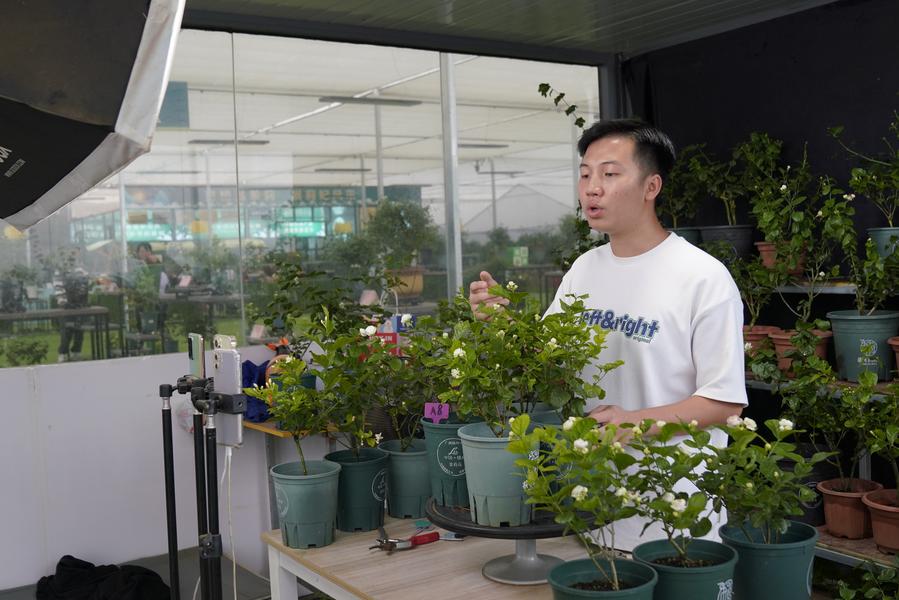
Mo Dianjin sells jasmine potted plants via lives tream at a jasmine planting base in Hengzhou, South China's Guangxi Zhuang Autonomous Region, May 10, 2024. (Xinhua/Zhao Huan)
National online retail sales of agricultural products reached 165.395 billion yuan in the first two months of this year, a year-on-year increase of 10.59 percent, according to the Big Data Development Center of the Ministry of Agriculture and Rural Affairs. This has provided strong momentum for expanding domestic demand, stabilizing growth and supporting comprehensive rural revitalization.
From the perspective of integrated urban-rural development, the increasingly powerful digital engine will further stimulate new driving forces for rural development.
At the core of modernization is the modernization of individuals. To achieve modernization in agriculture and rural areas, the vast majority of farmers are the main force.
Enhancing farmers' digital skills and improving their ability to use modern digital farming tools are crucial for activating and unleashing the intrinsic development potential of agriculture and rural areas, and are significant for promoting integrated urban-rural development.
Research indicates that higher levels of digital economic development contribute significantly to narrowing the income gap between urban and rural residents. Data shows that among individuals returning to rural areas for entrepreneurship in China, over 50 percent adopt internet technologies. These new farmers with an internet mindset will play a crucial role in enhancing overall productivity and resource allocation efficiency, promoting the vibrant development of new industries and business models in rural areas, and driving stable income growth for farmers.
The construction of a digital countryside has entered a new stage. Looking ahead, it is crucial to continue expanding the application of digital technologies in rural areas, accelerating the flow of data elements across agricultural fields, and explore new digital models and methods to assist farmers. This will improve farmers' digital literacy and skills, allowing them to gain a greater sense of fulfillment, happiness and security in rural development.
(Translated by intern Zhou Kaihua and Shen Niming, edited by Qiao Wai)