


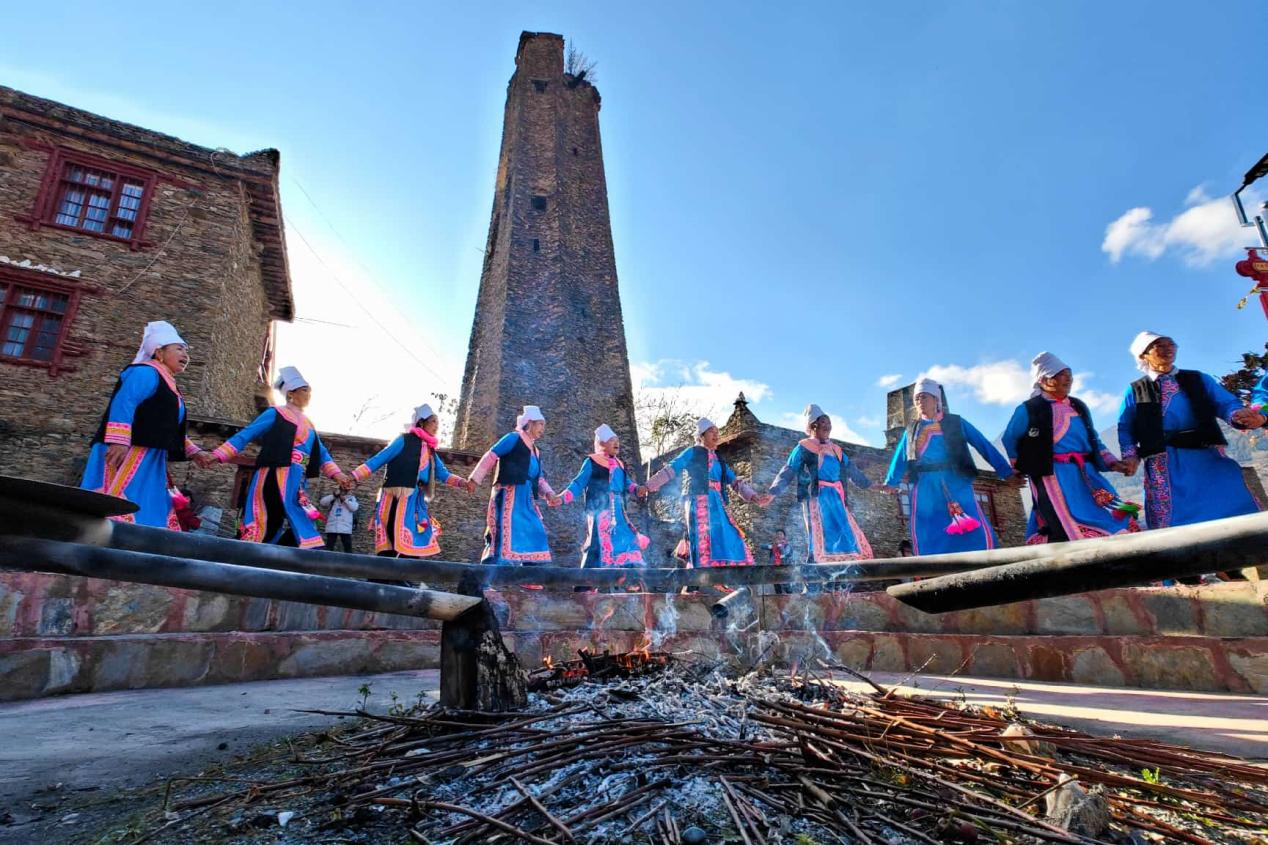
Qiang women dance around a bonfire in Heihu Qiang village in Maoxian county, southwest China's Sichuan province. (Photo/Wang Chu)
Last December, at its 20th session, the Intergovernmental Committee for the Safeguarding of the Intangible Cultural Heritage under UNESCO decided to move China's "Hezhen Yimakan storytelling" from the List of Intangible Cultural Heritage in Need of Urgent Safeguarding to the Representative List of the Intangible Cultural Heritage of Humanity.
It was another item from China to be moved to the Representative List after the traditional Li textile techniques of spinning, dyeing, weaving and embroidering, the traditional design and practices for building Chinese wooden arch bridges, and the Qiang New Year festival, which joined the list in 2024.
Intangible cultural heritage is living heritage, and its protection is an ongoing, dynamic process.
Under the framework of the Convention for the Safeguarding of the Intangible Cultural Heritage, intangible cultural items that are endangered and in need of immediate protection should be included in the List of Intangible Cultural Heritage in Need of Urgent Safeguarding.
If an item is removed from the list and added to the Representative List, it signals that the item has been effectively preserved, revitalized and strengthened, with its viability significantly enhanced.
The addition of the four Chinese items to the Representative List not only reflects the effectiveness of China's systematic safeguarding efforts, but also offers useful reference for other countries. It is, at the same time, a recognition by the international community of China's achievements and its fulfillment of convention obligations.
Take the Qiang New Year festival as an example. The Qiang-inhabited areas, primarily located in Aba Tibetan and Qiang autonomous prefecture in southwest China's Sichuan province, were severely damaged in the 2008 Sichuan earthquake. This once put the continuity of the festival at risk.
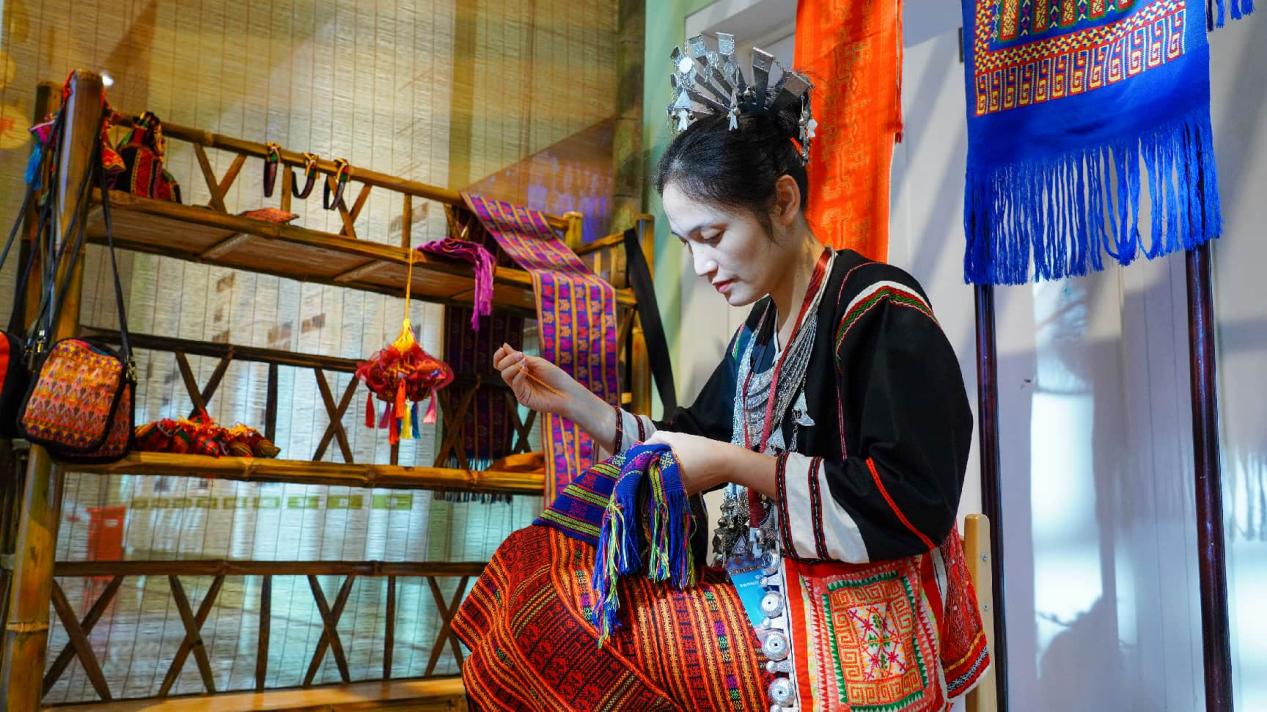
An inheritor of traditional Li textile techniques makes a piece of embroidery at the Chinese Traditional Culture Museum in Beijing. (Photo/Zhang Yongxin)
In response, a national-level Qiang cultural and ecological protection zone was established in October of that year to provide comprehensive protection for Qiang-inhabited areas as a whole. This timely intervention enabled the Qiang New Year festival to be preserved without interruption, even in the aftermath of the major natural disaster.
Moreover, the festival has evolved significantly. A rotating system has been introduced, with host celebrations held in Wenchuan, Lixian, Maoxian and Beichuan counties, replacing the earlier village-based observances. What was once celebrated within individual communities has now become a regional event, attracting participation not only from the Qiang people but also from Han, Tibetan, Hui and other ethnic groups.
China has adopted a multi-pronged approach to safeguarding its intangible cultural heritage, including legislative protection, rescue-oriented safeguarding, productive conservation, holistic preservation and digital preservation. These efforts are aimed at strengthening the capacity for heritage transmission, protecting spaces where heritage is practiced, and continuously enhancing the viability of intangible cultural heritage.
Traditional Li textile techniques, once endangered by industrialization, were revived through government funding, policy support, and multi-stakeholder collaboration involving skill training, cooperative production, and sustainable market development.
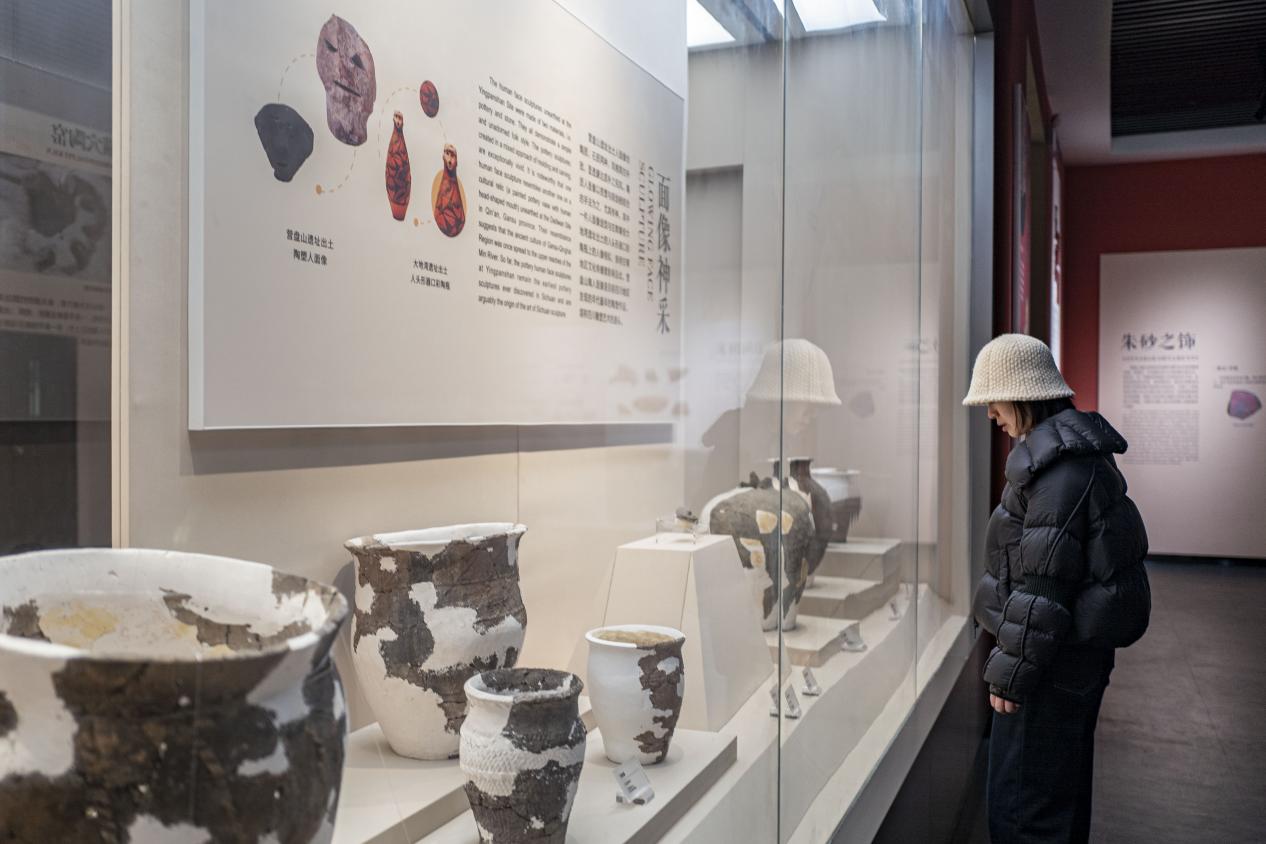
A woman visits the Qiang Museum of Maoxian in Maoxian county, southwest China's Sichuan province. (Photo/Wang Chu)
The addition of these items in the Representative List reflects not only outcomes, but also the accumulation of valuable experience. Strong support from the Communist Party of China and the Chinese government for the preservation and development of fine traditional Chinese culture has provided a solid foundation for high-quality intangible cultural heritage protection.
In recent years, China has established a protection system for intangible cultural heritage that is tailored to its national conditions and provides essential institutional safeguards. With the government playing a leading role to clarify responsibilities, it encourages public participation to uphold people's cultural rights. The system is guided by long-term planning rooted in a science-based approach to development, adheres to the principle of "protection first" as its fundamental direction, and prioritizes emergency safeguarding to address the most pressing tasks.
Rooted in the daily lives and cultural practices of diverse countries and ethnic groups, intangible cultural heritage embodies how people think, what they do, and the aspirations they hold.
Through its engagement in the global effort to safeguard intangible cultural heritage, China is presenting captivating stories of its heritage, sharing its experience, and contributing its vision.
In doing so, it conveys a distinctive Chinese cultural ideal -- one that celebrates one's own heritage, appreciates that of others, and seeks harmony in diversity, envisioning a world of shared beauty.
(Luo Wei is director of the center for cultural development strategy studies at the Chinese National Academy of Arts.)