


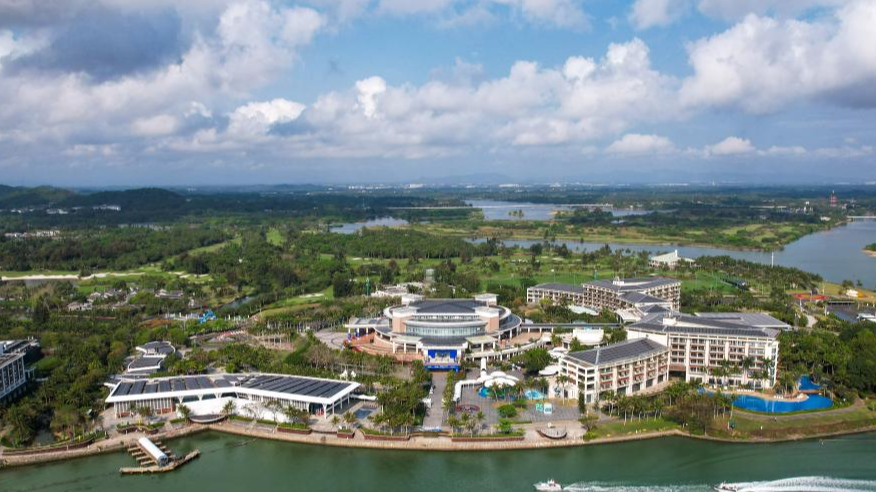
An aerial drone photo shows a view of the Boao Forum for Asia (BFA) International Conference Center in Boao Town, Qionghai City, south China's Hainan Province, March 20, 2026. /Xinhua
Editor's note: Matteo Giovannini, a special commentator on current affairs for CGTN, is a finance professional at the Industrial and Commercial Bank of China, a non-resident associate fellow at the Center for China and Globalization, and a member of the Global Young Leaders Dialogue. The article reflects the author's views and not necessarily those of CGTN.
At a time when the global economy faces rising fragmentation, the importance of regional platforms for dialogue and cooperation has become increasingly evident. The Boao Forum for Asia (BFA) Annual Conference 2026, themed "Shaping a Shared Future," arrives at a critical moment when tariff tensions, geopolitical rivalry and growing skepticism toward globalization risk undermining decades of economic integration. Against this backdrop, the Boao Forum continues to serve as one of Asia's most important platforms for promoting economic connectivity, policy coordination, and a stronger collective voice for the region.
Founded in 2001, the BFA was designed to facilitate high-level dialogue among governments, business leaders and academics across the continent. The forum has gradually evolved beyond a traditional conference format into a venue where ideas about regional cooperation are tested, debated and refined. Over the years, it has mirrored Asia's broader transformation from a peripheral actor in global governance to a central pillar of the world economy.
Today, Asia accounts for more than half of global economic growth and plays an increasingly prominent role in trade, finance and technological innovation. Yet the region also faces significant challenges, including supply chain disruptions, uneven development and growing geopolitical tensions. In such an environment, platforms like BFA are essential not only for dialogue but also for building consensus around practical solutions that support sustainable growth.
One of the most significant contributions of the forum lies in its ability to strengthen regional economic connectivity. Asia's development has been deeply intertwined with cross-border trade, infrastructure integration and increasingly sophisticated financial networks. Through discussions that bring together policymakers and industry leaders, the forum provides a space to explore new frameworks for cooperation that can enhance these linkages.
For example, emerging sectors such as renewable energy and green technology have become key topics on the BFA's agenda. Asia is one of the world's largest energy consumers as well as a leading driver of the global energy transition. By encouraging collaboration in areas such as clean energy investment, technology sharing and sustainable infrastructure, the forum contributes to building a regional ecosystem capable of addressing climate challenges, while supporting economic development.
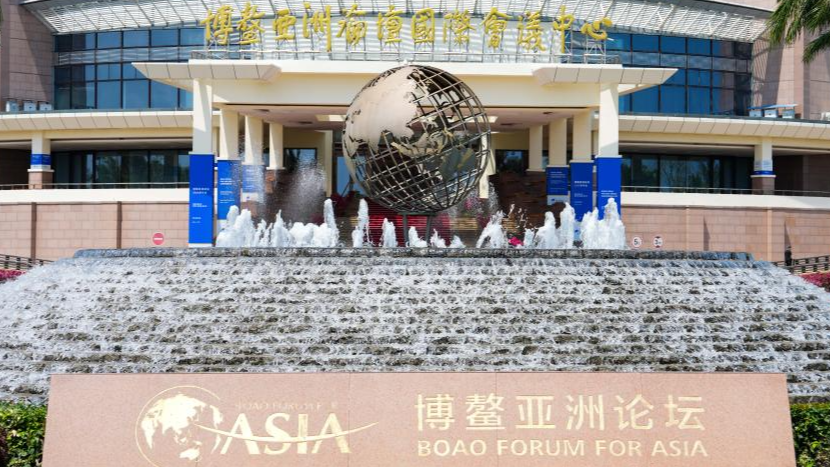
A view of the Boao Forum for Asia (BFA) International Conference Center in Boao Town, Qionghai City, south China's Hainan Province, March 23, 2026. /Xinhua
Another important area of discussion is the modernization of financial infrastructure, particularly in cross-border payments. As trade and investment flows across Asia continue to expand, efficient and secure payment systems have become essential to supporting regional commerce. Initiatives aimed at improving financial connectivity, including digital payment technologies and new settlement mechanisms, hold the potential to reduce transaction costs and strengthen economic integration throughout the region.
Beyond specific sectors, the broader value of the BFA lies in its ability to reinforce Asia's collective voice in global economic governance. For much of modern economic history, Asian economies were largely "rule takers," operating within frameworks designed elsewhere. However, the region's rapid economic rise has fundamentally altered this dynamic.
Today, Asian countries are increasingly contributing to the development of new rules, standards and institutions that reflect the realities of a more multipolar global economy. Platforms such as the BFA allow policymakers and thought leaders from across the region to exchange perspectives and identify areas where shared interests can translate into coordinated action.
This process is particularly important at a time when global governance institutions face mounting pressure. The growing complexity of international challenges, from climate change to financial stability, requires greater cooperation rather than fragmentation. In this context, regional forums can complement global institutions by providing spaces where trust and understanding can be built incrementally.
The theme of this year's conference, "Shaping a Shared Future," captures this broader aspiration. Asia's economic success has been built on openness, connectivity and collaboration. Preserving and strengthening these principles will be essential as the region navigates the uncertainties of the coming decades.
Rather than retreating into protectionism or economic nationalism, Asia has an opportunity to demonstrate that cooperation remains the most effective path toward sustainable development. By fostering dialogue, encouraging innovation and promoting practical partnerships, the BFA plays a crucial role in advancing this vision.
As the global economic landscape continues to evolve, the forum's significance is likely to grow. Its ability to convene diverse stakeholders and facilitate constructive discussions makes it an indispensable platform for shaping the next chapter of Asian economic integration.
In an era defined by uncertainty, the BFA reminds us that dialogue and cooperation remain powerful tools for building a more connected and resilient regional economy. Through initiatives that promote shared development and collective problem-solving, Asia can continue its transition from a participant in global governance to an active architect of its future.