


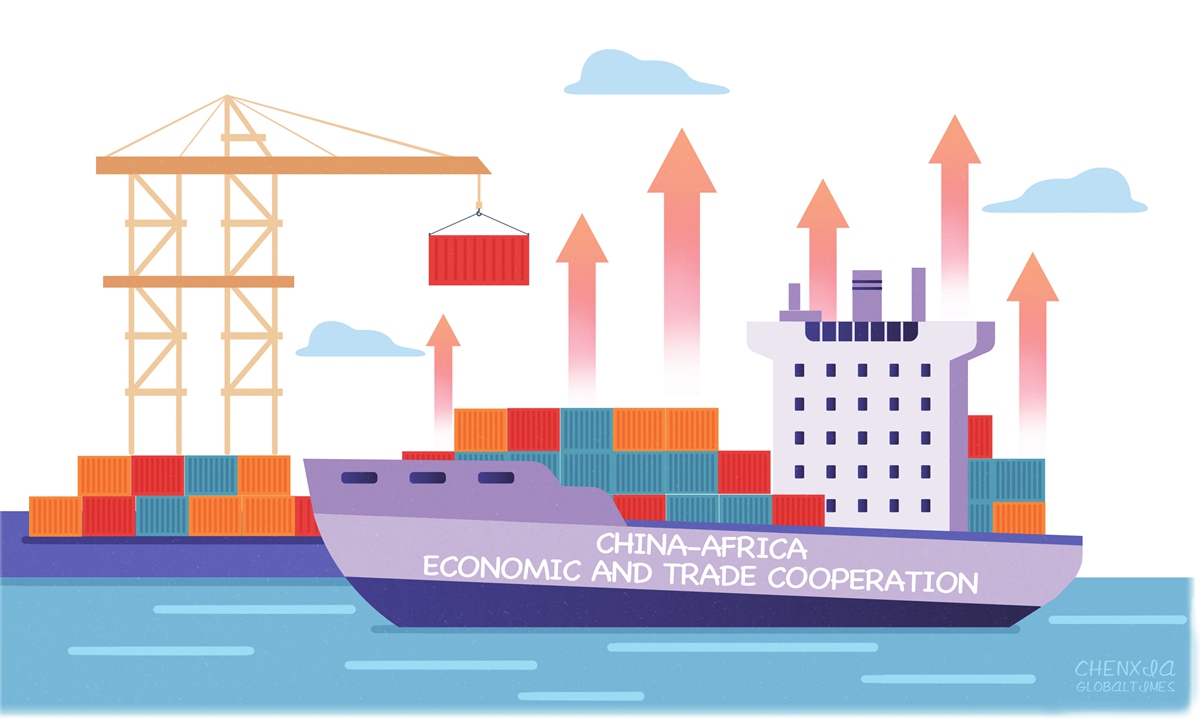
Illustration: Chen Xia/GT
The China-Africa Building, located in Yiwu, East China's Zhejiang Province, epitomizes the growing momentum of trade between China and Africa. Inside its showrooms, a wide range of products - from hardware and electrical appliances to bathroom fixtures and solar storage systems - are on display, each crafted to meet the needs of the African market. While many of these items are everyday consumer goods, they underscore the expanding scope of China-Africa trade.
According to a report by Yiwu Shangbao on Thursday, trade between Yiwu and Africa totaled 35.41 billion yuan ($5.13 billion) in the first two months of this year, marking an impressive 84.7 percent year-on-year increase. This figure represents 20.4 percent of the city's overall trade, making Africa its largest trading partner.
Yiwu has long been recognized as a hub for small commodity trade, and its expanding trade with Africa reflects the continent's evolving demand. Beyond the competitive pricing and quality of the goods on offer, Yiwu's products align closely with Africa's current economic growth in structural terms. As the continent continues to develop, these goods directly address the areas driving that growth, from infrastructure to renewable energy solutions.
Expanding the perspective to the China-Africa Building, the products on display provide a snapshot of Africa's evolving economic needs. For instance, hardware tools support infrastructure development, while solar storage systems facilitate the continent's transition to renewable energy. Bathroom and plumbing fixtures highlight the ongoing improvements in living standards. These products not only meet immediate types of consumer demand but also contribute to the broader, long-term objectives driving Africa's transformation.
The growing trade between Yiwu and Africa is driven by market forces, which have fostered an organic momentum, creating a strong trade network that steadily connects the two regions. According to Yiwu Shangbao, approximately 4,000 African traders now reside in Yiwu, acting as an important link for the flow of goods to Africa.
The trade channels between Yiwu and Africa have become increasingly efficient. African buyers can browse products online and utilize a well-established logistics network to place orders remotely. With export methods such as sea-rail intermodal transport, goods are efficiently delivered to Africa, where they are stocked and sold. This seamless process ensures that Yiwu's products reach the African market with greater speed and reliability, further strengthening trade between the two regions.
While Yiwu's exports to Africa have grown, there remains considerable untapped potential in the city's imports from the continent. Demand for African products in China, particularly in sectors such as fruit and food, is gradually increasing. With its established logistics infrastructure and market expertise, Yiwu is well-positioned to become a transit hub for African imports, creating new opportunities for trade and diversifying the range of products available in China's domestic market.
The growing trade ties between Yiwu and Africa do not represent an isolated case. Some other Chinese cities are also seeing an upward trend in their trade with Africa, reflecting a broader pattern of growth. According to customs data, China-Africa trade grew by 17.7 percent in 2025, notably higher than China's overall foreign trade growth of 3.2 percent.
In a global landscape marked by increasing trade uncertainties, the growth of China-Africa trade is notable. It reflects the strengthening of complementary industrial chains, driven by market forces and the evolving demands of Africa's development.
This growing trade has contributed to supporting Africa's development, addressing demand across sectors such as infrastructure, energy, and consumer goods. The alignment between these needs and China's offerings has prompted some African entrepreneurs to explore business opportunities in China.
The China-Africa Building provides a snapshot of the evolving trade landscape, with dozens of African traders based inside. Yiwu, as a barometer of China's foreign trade, offers a useful example of the broader trend in China-Africa commerce. The growth seen in this area is not incidental; it reflects the strengthening of economic complementarities and the ongoing optimization of trade channels. These long-term efforts are laying the groundwork for continued growth in China-Africa trade, highlighting the potential for deeper bilateral collaboration.
The author is a reporter with the Global Times. bizopinion@globaltimes.com.cn