



Workers carry out welding operations on metal structural components in Huzhou, Zhejiang Province, March 16, 2026. / VCG
Editor's note: Warwick Powell is an adjunct professor at Queensland University of Technology. The article reflects the author's opinions and not necessarily the views of CGTN.
The latest figures from China's National Bureau of Statistics show industrial profits rose strongly in early 2026, with rapid growth in high-technology manufacturing and upstream materials. Electronics surged, while non-ferrous metals and chemical sectors also rose simultaneously. The manufacturing industry performed better than the overall market.
Profit growth is not evenly distributed but concentrated in sectors central to China's industrial transformation.
At the macro level, profits must come from somewhere. There are only a few ways aggregate profits can rise.
One is redistribution from labour to capital. This has occurred in many Western economies. But this does not fit China: Real wages have risen over time, and labour's share has generally increased.
A second is redistribution across sectors. Yet data show profit growth is relatively broad-based, suggesting something more fundamental.
The third explanation is expansion of system liquidity. In a monetary economy, profits arise through money circulation. Firms invest and produce using financing from credit creation or fiscal spending. When revenues exceed costs, profits emerge.
Thus, today's profits reflect yesterday's liquidity expansion.
China's macro management has relied on such mechanisms. Policy banks, targeted credit and infrastructure investment have injected liquidity into the real economy, largely into manufacturing capacity.
This expands demand across production networks: Suppliers receive orders, factories increase output and workers earn wages. Profits arise not from extraction but from an expanded monetary circuit.
This also explains why strong profits coexist with low inflation. Productivity gains and supply expansion mean capacity rises with demand, moderating inflation while allowing profits to grow.
From an industry perspective, high-technology manufacturing leads, especially electronics and advanced equipment. These sectors are central to "new quality productive forces," referring to more advanced, higher value-added activities such as semiconductors, EVs and renewable energy.
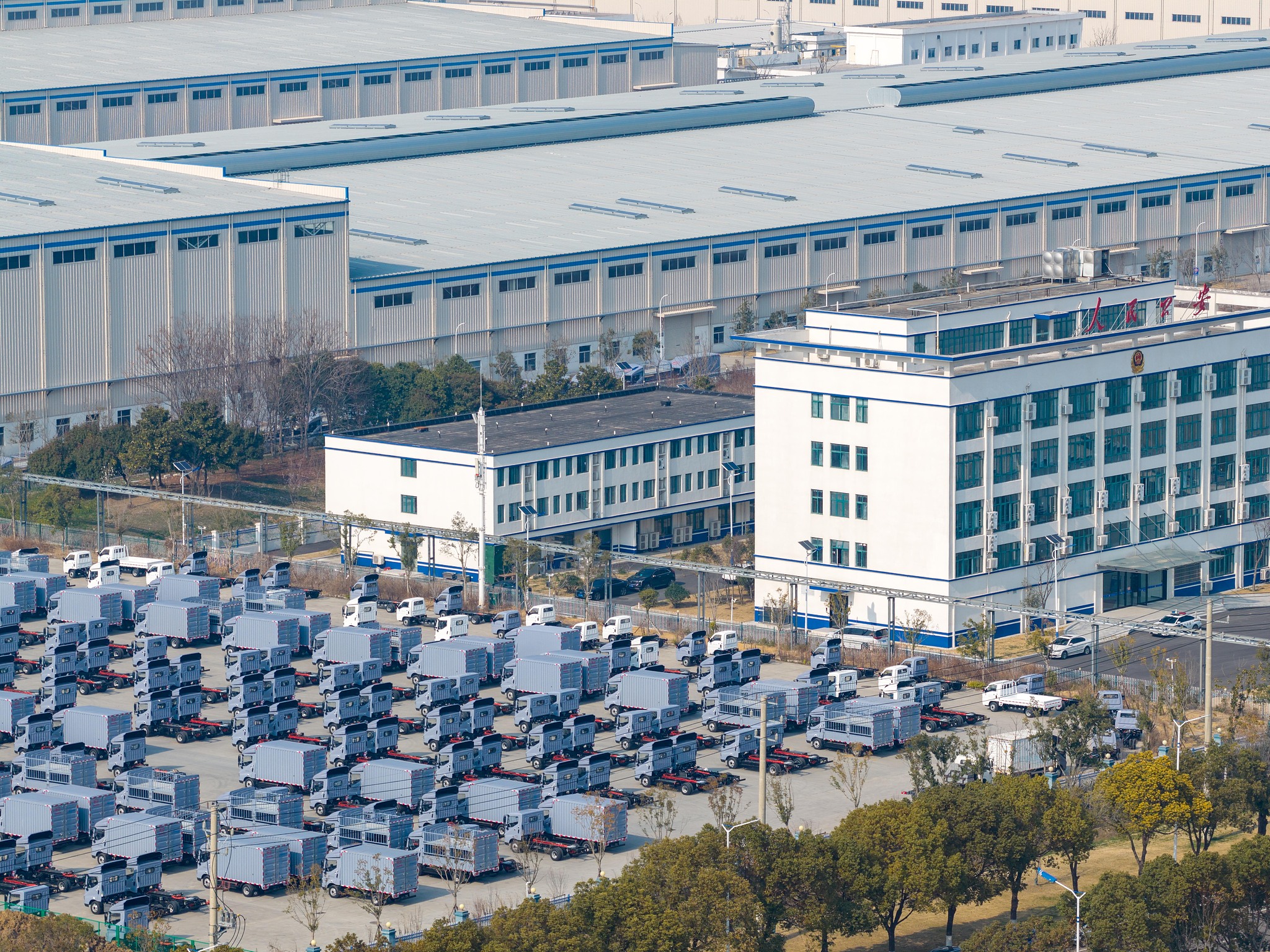
An exterior view of BYD's production base for new energy trucks in Huai'an, Jiangsu Province, March 14./ VCG
These industries generate higher value per input. When liquidity expansion meets structural upgrading, profits are amplified. Profits rise not just because more money circulates, but because it flows through higher-surplus sectors.
Policy also shapes competition. Authorities aim to curb "involution," or destructive price competition. While competition drives efficiency, excessive price wars erode margins.
Recent policies encourage firms to compete through technology and quality rather than price cutting. The goal is to structure competition, sustaining innovation without destroying profitability.
This is visible in EVs, solar and digital platforms, where regulators stabilize markets to preserve investment incentives.
Together, three factors define the dynamic: Liquidity expansion raises revenues, structural upgrading boosts productivity, and moderated competition protects margins.
The result is rising profits without wage suppression or asset speculation.
This contrasts with many Western economies, where profits often rely on financialization or rent extraction. China's model links profitability to industrial expansion and technological upgrading.
Profits should be seen as systemic outcomes, shaped by money circulation, production structures and regulation. In China, these are coordinated through policy: Credit supports investment, policy directs resources and regulation shapes competition.
Challenges remain, including managing liquidity and handling structural transitions. Yet the data show more than cyclical recovery — they indicate structural transformation supported by policy and liquidity.
Rising profits signal that China's production system is generating greater economic surplus through upgrading and monetary expansion.
Ultimately, profits reflect how effectively an economy mobilizes resources and channels liquidity into productive activities. The latest data suggest that this process is still ongoing, with China's industrial transformation firmly underway.