


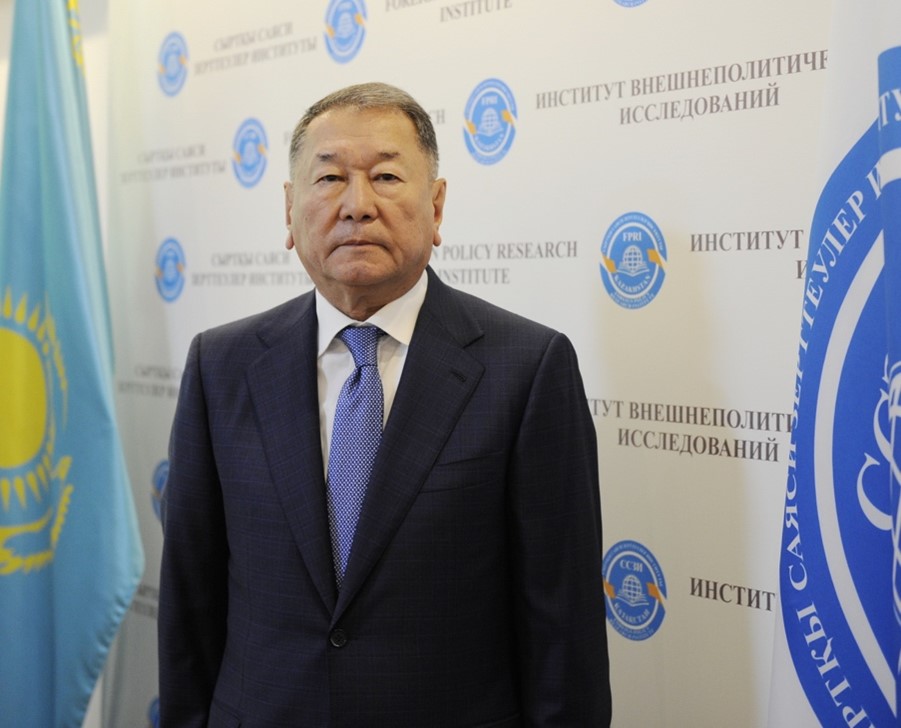
Bolat Nurgaliyev Photo: Courtesy of Nurgaliyev
The Chinese nation made the historic choice to pursue its own development goals in strict accordance with the prevailing conditions and objective reality. The fact that Chinese leadership in several decades has managed to advance the once backward country to the undisputed rank of a global power is recognized throughout the world as the most outstanding achievement of the 21st century.
Nowadays it is impossible to review the current state and future contours of the whole structure of international relations without taking into consideration the effects of the Belt and Road Initiative, and more recent far-reaching initiatives on global governance, security and cooperation based on openness, inclusivity, diversity and common benefit.
These initiatives are invaluable contributions of China to the progress of the whole humanity on the path of peace, development and partnership in pursuit of a common destiny.
Philosophically speaking, the Chinese initiatives are motivated by conviction that only by rejecting hostility and mutual suspicion, by embracing interconnectivity and interdependence can countries different from each other in terms of their political, military and economic size, geographic location, and historical background can be effective in overcoming common challenges.
Given growing tensions in international relations and continuing armed clashes in regional hotbeds it is becoming more and more imperative to accept the wisdom of the Chinese approach to move away from the pursuit of egoistic interests of individual states and to assume responsibility for uniting peace efforts and to start coordinating collective actions. Unless the realization of urgency of this imperative by the entire community of civilized nations happens, I am afraid we will be facing global uncertainty and turbulence unprecedented in the history of the humankind.
The Chinese economic model is not a rigid, dogmatic system detached from long-term and everyday needs of the nation. On the contrary, in my understanding, socialism with the Chinese characteristics is a constantly evolving process, vividly reacting to internal and external changes and demands.
Decisionmakers in Beijing while advancing the goals of Chinese socialism in the fields of market economy, political democracy, culture, social life, responsible environmental practices always set as the priority the comprehensive development of human potential, social equality and justice. This is exactly the "people-centered" attitude that should be the norm everywhere.
As for the Chinese contribution to inject momentum into the global economic performance - the well-known facts are totally convincing. The economic health of the overwhelming majority of countries in the world is inextricably tied to what China does in industrial production, trade, technology, innovation. What is essential is that China recognizes its unique responsibility to maintain the stability of global supply chains and alleviate the negative effects of disruptive actions of some other important international actors.
Chinese leadership constantly underlines that China's development will always be in harmony with trends in global development, in accordance with the role as a provider of stability, driver of the global economy, and a facilitator in the process of addressing common challenges faced by humanity, be they geopolitical or geoeconomic.
Within the international community, the specifics of the 15th Five-Year Plan drew heightened attention because of the special emphasis on result-oriented indicators and reasonable pragmatism, given the peculiarities of current economic situation in the world.
Based on the previous exemplary performance of ensuring the GDP growth throughout recent years and meeting all targets set in the development strategy, I am definitely confident that China as the world's workshop and the largest consumer market will continue to play its positive and inspiring role in the functioning of the global economy in the next five years and beyond.
The article is compiled based on an interview Bolat Nurgaliyev, chairman of the Board of Foreign Policy Research Institute under the Ministry of Foreign Affairs of the Republic of Kazakhstan and former secretary-general of the Shanghai Cooperation Organisation.